



Fair Workplace Practices

Interview Feedback Examples for Modern Recruiting

Most candidates want feedback, yet only 17% get it. See real examples and frameworks to fix and strengthen your hiring process.
In This Post:
Expert Contributors:
Picture of Grant Aldrich

Grant Aldrich

CEO, Preppy

Picture of David Quintero

David Quintero

CEO, NewswireJet

Picture of Tetiana Hnatiuk

Tetiana Hnatiuk

Head of HR, Skylum

Imagine going through multiple interviews for a role then never hearing why you weren’t hired for the job. How would that shape your view of a company? 

Unfortunately, this scenario is far too common and what many job seekers experience. 

In today’s hiring market, providing feedback isn’t just a polite gesture – it’s a strategic tool that shapes your employer brand and improves decisions.

In this article, we explain why feedback matters in modern recruiting and provide interview feedback examples and best practices for giving clear, fair, and helpful feedback.

The Current State of Modern Recruiting

For 73% of applicants, job hunting ranks among life’s most stressful experiences. Given the poor conditions of the current job market, this is not a surprising figure.

Fewer openings, heavier competition, and employer “ghosting” have all become an unfortunate norm. Many candidates are expected to complete multiple rounds of interviews, invest hours in take-home projects, and often never hear back.

However, the recruitment process today is no longer a one-sided evaluation.

Candidates scrutinize employers as much as employers evaluate them. These negative experiences, whether it be delays, lack of communication, or unprofessional interviews, can directly impact offer acceptance.

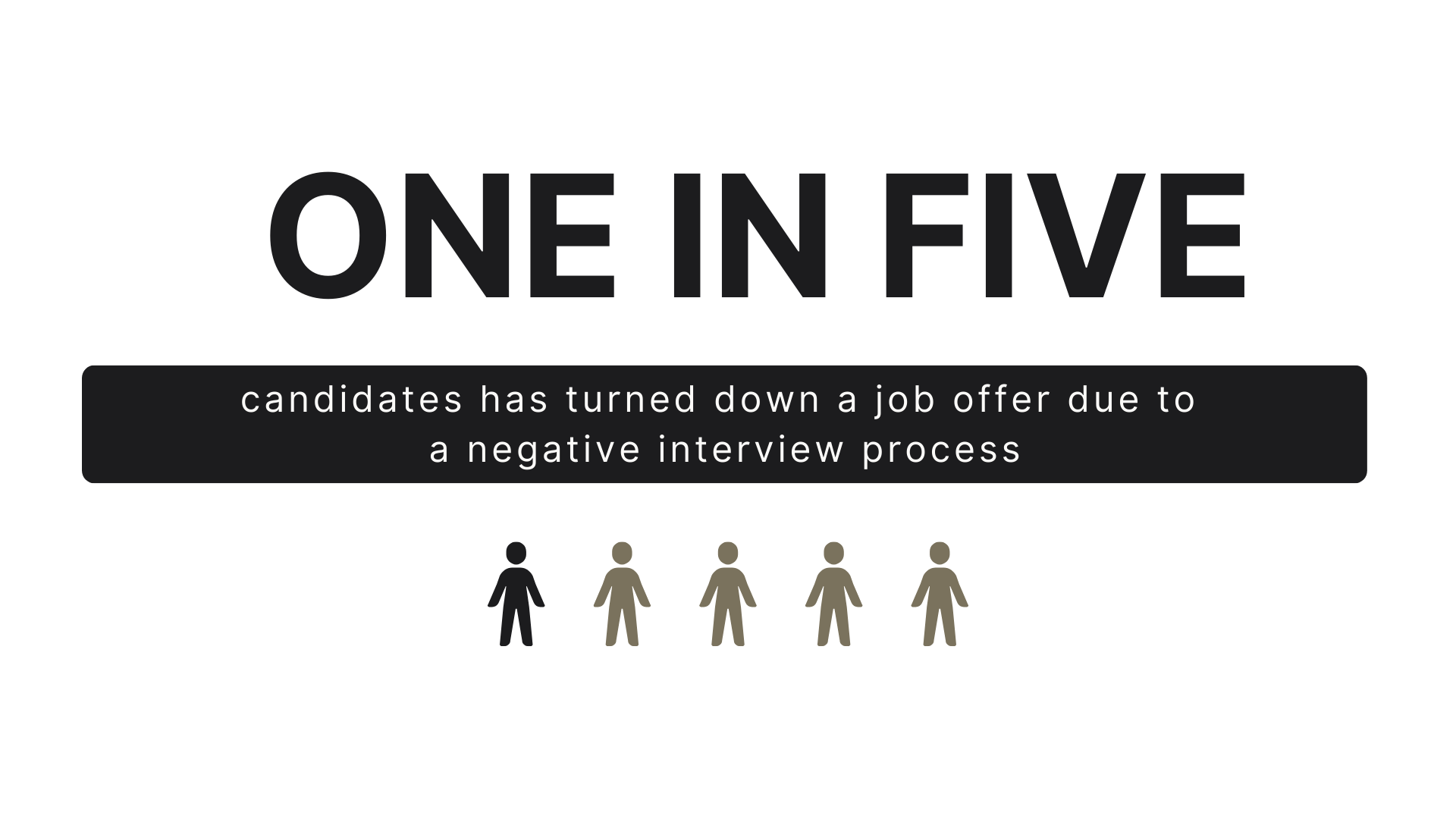
In fact, one in five candidates has turned down a job offer due to a negative interview process.

Furthermore, frustrated applicants can share their experiences on platforms like Glassdoor or LinkedIn, meaning a poor process can quickly damage an employer’s brand beyond the immediate hire.

What Makes Interview Feedback Useful?

Why is interview feedback gaining so much attention now?

Simply because providing interview feedback is a win-win scenario: candidates get clarity, and companies build goodwill. Consider the experience from the candidate’s perspective – being left in the dark after investing hours in an interview is frustrating to say the least.

As many as 94% of professionals want to hear interview feedback when they’re rejected, and nearly 80% of candidates would consider reapplying to a company in the future if they received helpful feedback after an interview.

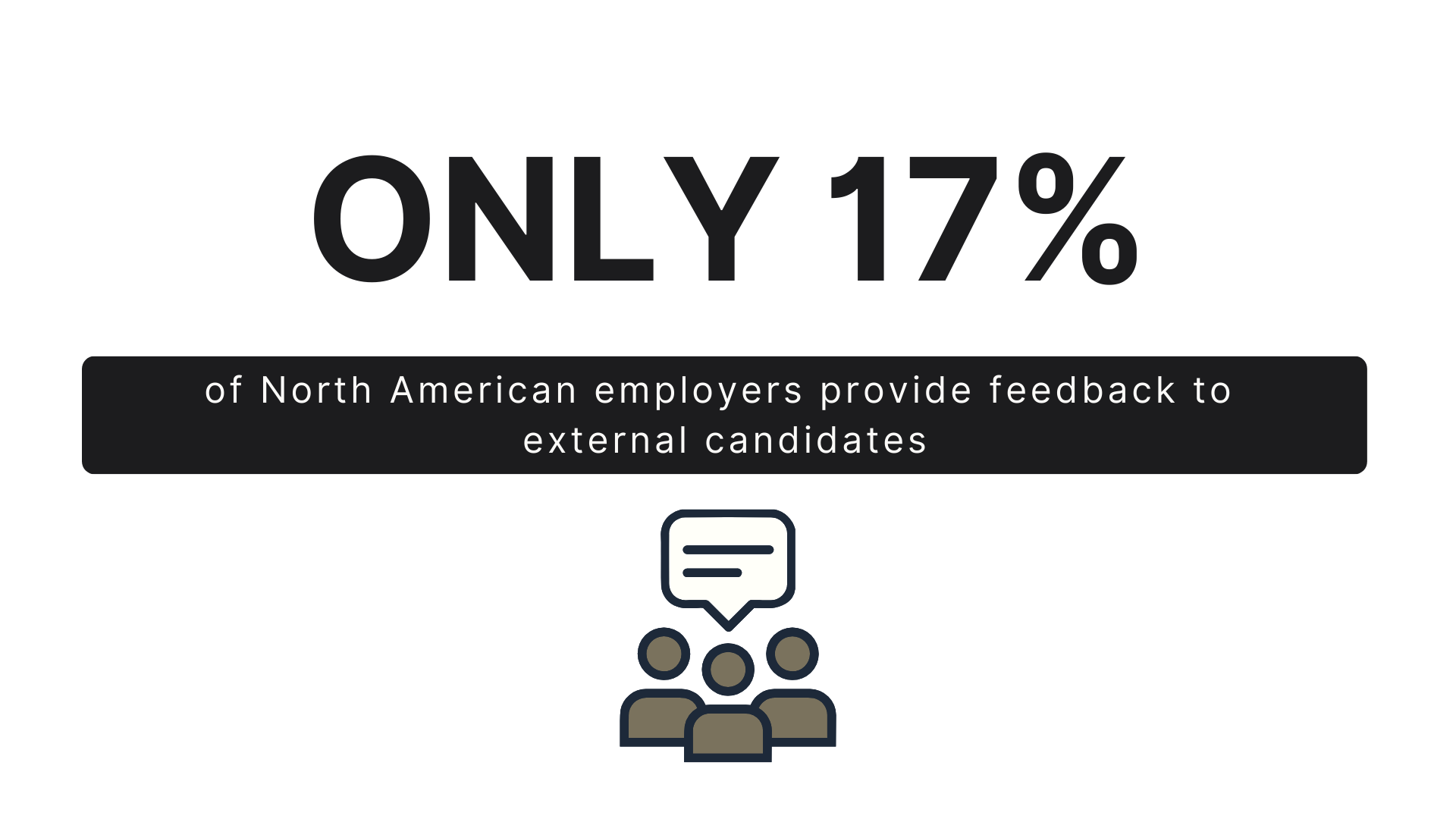
Despite this, only 17% of North American employers provide feedback to external candidates.

The disconnect between what candidates expect and what most employers provide is a major opportunity for organizations to stand out.

Positive Interview Feedback Examples

Truly useful feedback goes beyond generic statements like “not a good fit” or “impressive background.” 

Grant Aldrich, CEO of Preppy, emphasizes that, “the real job of the hiring manager is to be an editor and find the single, primary reason for the decision from all the internal noise and deliver that one clear, honest message.

So, what are some examples of positive interview feedback?

The examples below cover common strengths and qualities that can be applied across most interviews.

Communication

Strong communication skills are almost universally expected, no matter the role or level of seniority. During interviews, they signal how effectively someone might collaborate as a future colleague.

So, if a candidate clearly explains their thoughts and listens actively, it’s worth mentioning.

For example, you might say: “Your answers were concise and well structured. You listened, asked for context, and summarized key points effectively.”

Communication feedback should highlight both verbal and non-verbal strengths.

Technical or Role Skills

In modern recruiting, where skills-based hiring is on the rise, acknowledging technical strengths is also essential.

For instance, for a software developer position, you could note: “You demonstrated solid Python proficiency and explained trade-offs in system design clearly.”

Technical feedback works best when it connects skills to actual job requirements. Avoid vague statements about being “technically strong.”

Problem-solving

How an individual approaches problems can be even more important than getting the correct answer. If a candidate shows good analytical thinking or creativity, let them know.

“When we presented the customer retention scenario, you discussed the problem before jumping to solutions. You also acknowledged what you didn’t know and asked clarifying questions, which we value highly.”

Problem-solving feedback should acknowledge both process and outcome.

Collaboration and Culture Add

Forward-thinking companies look for candidates who not only work well with the team but also bring something new. 

So, when a candidate shows they’d be a good teammate, acknowledge it.

“Your questions about our team dynamics and collaborative processes showed genuine interest in how we work together. When discussing past projects, you consistently credited team members and described how you elevated others’ contributions. You’d bring fresh perspectives from your nonprofit background that could challenge our thinking in productive ways.”

Preparedness and Motivation

Did the candidate come well-prepared and enthusiastic? If so, give them positive feedback on that. For example: “It was clear you researched our company and asked insightful questions. Your preparation and genuine interest in our recent product launch really stood out.”

When candidates hear this, they know their extra effort was appreciated. It reinforces a positive emotional connection to your company, whether they receive an offer.

Constructive Interview Feedback Examples

Not every candidate can be hired, but every candidate can be left with something useful. 

Constructive feedback can highlight specific areas for improvement, and the goal is to be honest but helpful. How do you give critical notes without demoralizing someone or sounding rude?

The key is to be specific, objective, and compassionate. For example:

  • When we explored Excel use in weekly reporting, you were unsure about pivot tables. For this role, advanced Excel is used daily, so building that skill would help.
  • On discovery calls, you focused on features before clarifying buyer pain. Practicing open-ended questions would improve qualification.”

One simple framework that many hiring teams use is SBO – Situation, Behavior, Outcome. 

As NewswireJet CEO David Quintero explains, “For every candidate, we note the specific question we asked (the Situation), what the candidate actually said or did in response (the Behavior), and how that answer lined up with what the job really needs (the Outcome).”

Quintero’s team uses SBO so that feedback “stays honest and focused on facts, not feelings.”

“For every candidate, we note the specific question we asked (the Situation), what the candidate actually said or did in response (the Behavior), and how that answer lined up with what the job really needs (the Outcome)."

Unsuccessful Interview Feedback Examples

Rejection feedback requires the most care. You’re balancing legal compliance, candidate dignity, and employer brand protection.

As David Quintero warns, teams sometimes hide behind phrases like “I just didn’t feel it” or “not a culture fit.” That kind of feedback is “unfair to the candidate and tells us nothing about how they actually performed,” he says. 

Instead, pinpoint what skill or experience was lacking. 

Here are a couple of unsuccessful interview feedback examples:

  • After careful consideration, we decided to move forward with another candidate with direct industry experience and a proven history of success in similar positions.
  • You have solid project management experience, but for this role we were looking for deeper expertise in data analysis. Gaining more hands-on analytics experience would strengthen your profile for similar positions in the future.

Notice that even in a rejection context, the feedback avoids any phrasing that sounds like a personal flaw. Instead, it’s about the match for this role. That distinction is important for both fairness and legal safety, but we’ll touch on that more on that later. 

Role-Specific Feedback Snippets

No two jobs are evaluated on the same criteria. Therefore, let’s look at a few role-specific examples of interview feedback to see how you might tailor your comments for different positions.

Software Engineer

  • Strength: debugging approach was methodical, good test cases. Gap: struggled to optimize time-complexity under constraints.
  • Clear grasp of microservices trade-offs; limited experience running on-call rotations.

Frontline Retail

  • Strength: warm customer rapport and upsell examples. Gap: cash-handling accuracy below standard in simulation.
  • Handled conflict calmly; needs practice closing with loyalty pitch.

People Ops

  • Strong compliance knowledge and vendor coordination. Gap: limited experience with change communications for policy rollouts.
  • Good analytics instincts; needs deeper HRIS reporting.

Sales Development Representative (SDR)

  • Strong call opener and objection handling. Gap: light on account research and personalization in emails.
  • Resilient mindset; needs a clearer qualification framework.

Each of these snippets is what an interviewer might write in an ATS note or give as a comment to a candidate. It is important to keep applicant tracking system notes factual and job-relevant. This type of documentation matters for both legal compliance and future reference. 

Best Practices for Giving Feedback to Candidates

We’ve seen why giving feedback about the interview matters and how to phrase it, but what about the overall approach? 

Here are some best practices to ensure your feedback process is effective and professional. 

1) Be Timely

Don’t leave candidates waiting or force them to chase you down. 

Tetiana Hnatiuk, Head of HR at Skylum, shares, “When it comes to timing, feedback lands best within two to three days of the interview. The responsibility shifts by stage: interviewers capture detailed notes, recruiters pull everything together, and the hiring manager communicates the final decision.”

Research confirms this: 56% of employers with exceptional candidate experience give status updates (or dispositions) within 3-5 days after interviews.

When it comes to timing, feedback lands best within two to three days of the interview. The responsibility shifts by stage: interviewers capture detailed notes, recruiters pull everything together, and the hiring manager communicates the final decision.

2) Use a Structured Framework

Unstructured feedback can be all over the place. Instead, choose a framework to standardize how your team evaluates and discusses candidates. For example, Grant Aldrich uses the “3 Cs” framework: Competency, Curiosity, and Culture.

“We like using the 3 Cs, because they cover everything from how well someone can do the job to how well they’ll fit in with their teammates.

Competency is just the bare minimum, but we want to see if they can actually do the job we need done without a ton of hand-holding. We also want to see real curiosity, and culture is the final piece,” Aldrich says.

3) Be Empathetic and Respectful

Deliver feedback in the same tone you’d use with a valued colleague. Even if a candidate was not right for the job, recognize their effort and treat them kindly. Use polite language and avoid any condescending or overly harsh remarks.

4) Keep It One Clear Message

Internally, make sure your team aligns on the feedback theme before communicating it. Conflicting feedback from multiple interviewers can confuse and alienate candidates. The worst thing you can do is overwhelm the candidate with a dozen mixed comments. Instead, determine the key reasons for rejection or hiring and focus on that in your communication.

5) Encourage Future Engagement

End your feedback interactions on a positive note. Even if a candidate failed the interview, you could thank them for their time and interest. If you see potential in them for a different role or a future opening, encourage them to stay in touch or reapply. Many companies maintain a talent community or silver-medalist list for good candidates who didn’t fit one role but might fit another.

Legal and Fairness Guardrails

While giving feedback has many benefits, it’s important to do it correctly. Some HR departments historically discouraged giving detailed feedback to rejected candidates out of fear of liability. 

They worry that a genuine reason might be misinterpreted or used against the company in a discrimination claim.

For example, saying “we went with someone who has more energy” could be misconstrued as age bias. In fact, it’s not uncommon for HR policies to forbid feedback precisely because of this concern.

As a result, interviewers must stick to objective, job-related criteria when providing feedback. Never mention a candidate’s protected characteristics, such as age, race, gender, religion, family status, and others, in feedback, even indirectly. 

Instead, focus on skills, experience, and behaviors that are relevant to the role.

Conclusion

As recruiting statistics remind us, almost everyone wants feedback – so why not use it to leave a lasting, positive impression? Giving thoughtful interview feedback may seem like extra effort, but it pays off.

By using clear and constructive interview feedback examples, hiring managers can highlight strengths, point out growth opportunities, and show candidates that their time was valued. 

Ultimately, when delivered thoughtfully, feedback builds goodwill, strengthens your employer brand, and sets the tone for future interactions.

Written by Ivana Radevska

Senior Content Writer at Shortlister

ATS Systems

Browse our curated list of vendors to find the best solution for your needs.

Stay Informed

Subscribe to our newsletter for the latest trends, expert tips, and workplace insights!

Related Posts

What is Pharmacy Benefit Management (PBM)?

If two different people with the same prescription medicine get two different bills for the same medicine, it makes you wonder – how is the price of the prescription medicine determined?