
In This Post:
Presenters:

Jon Simon
VP of Sales

Kat Frosolone
Director of Strategic Sales, Midwest & West Region
Caregiving isn’t going away and doesn’t stop during 9-to-5 work. It’s increasing, and it’s truly a 24/7 challenge. It’s a growing reality that’s affecting the workforce. Employees are balancing their caregiving responsibilities with their professional lifes. This reality places unprecedented demands also on the organizations that depend on them.
Supporting caregivers is a strategic investment in organizational resilience and employee well-being. The companies that recognize this are the ones that build stronger cultures, retain top talent, and remain competitive in the years ahead. That’s where Care for Business can help, explaining that employers who invest in caregiving benefits see a positive return on investment through increased productivity, higher loyalty, and decreased absences.
After Care for Business’s webinar, we have gained a far better understanding of the caregiving landscape, the challenges associated with the cost of care, and why this matters not only to employees but also to employers. We welcomed Jon Simon, VP of Sales, and Kat Frosolone, Director of Strategic Sales, Midwest & West Region at Care for Business, who showed us a high level of understanding of how Care.com’s caregiving benefits work. We learned about the challenges that employees face in finding, affording, and navigating care, as well as the burdens that employees bring to work associated with caregiving responsibilities.
About Care for Business
Care for Business works with hundreds of organizations to design care benefit packages that work for their teams. The benefits help individuals manage the chaos, so they can bring their best to work. Whether they want to ease caregiving stress, improve retention, or boost productivity, Care.com can help build a benefits strategy that supports the whole team.
The Hidden Cost of Caregiving
Today’s workforce is carrying more than job responsibilities. A growing number of employees are simultaneously caring for children, aging parents, or both. This group, which is commonly known as the “sandwich generation”, is predominantly made up of employees in their 40s and 50s who are essentially holding everything together while being pressed on both sides.
In fact, 1 in 4 U.S. adults fits this category, often juggling work, caregiving, and personal well-being all at once. When caregiving pressures go unsupported, the impacts are clear:
- higher stress,
- increased absenteeism,
- reduced productivity,
- higher turnover.
Caregiving requires emotional labor, and in most cases, it also comes with a significant financial strain. According to recent care cost data, 40% of household income is now spent on care, with 22% going to childcare and 18% to other caregiving needs, such as elder support, home care, or even pet care
As costs continue to rise, many employees are forced to make difficult decisions about their work schedules and career paths. Recent research shows that caregiving demands have already led to:
- 15% of parents are reducing their working hours
- 15% juggling remote work without paid childcare
- 20% leaving their jobs entirely or stepping out of the workforce
When talented employees feel they must choose between work and family, employers lose in multiple ways:
- productivity stalls,
- hiring costs increase, and
- institutional knowledge walks out the door.
The Emotional and Organizational Toll
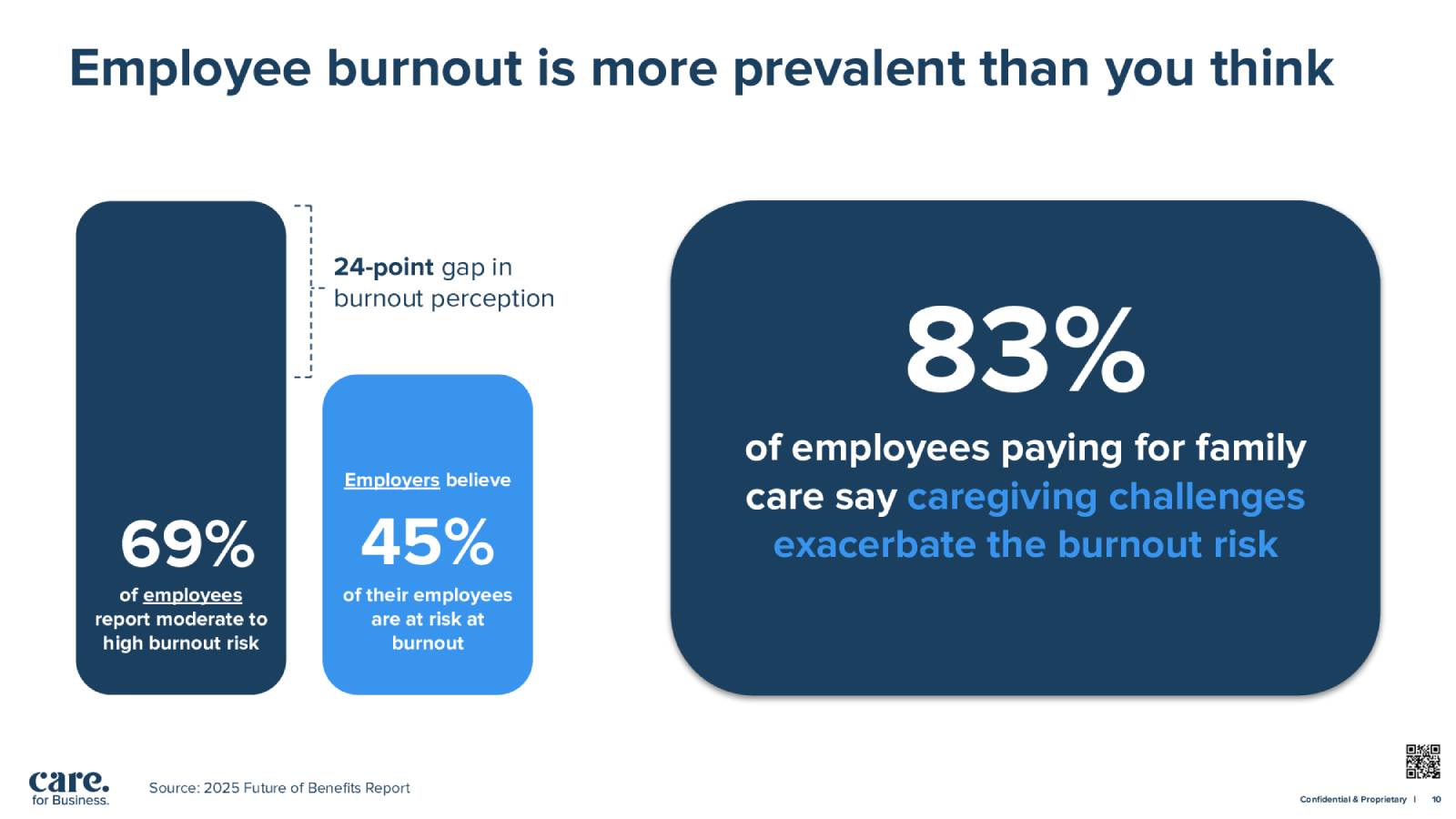
Burnout is one of the most direct consequences of managing work alongside caregiving. However, there’s a striking gap in perception: while 69% of employers believe their employees are at risk of burnout, 45% of employees themselves report moderate to high burnout risk.
Even more compelling, 83% of employees paying for family care say caregiving responsibilities worsen their burnout.
The misalignment between employer perception and employee reality highlights an essential truth: employers must be proactive, not reactive, when it comes to supporting caregivers.
Why Caregiving Support Benefits Employers
Organizations that provide caregiving benefits, whether backup care, family care stipends, on-demand caregiver networks, or elder care navigation, achieve meaningful business outcomes.
Employers offering family care benefits report:
- 45% higher productivity
- 40% lower absenteeism
- And 71% say these benefits significantly improve retention
These are not soft statistics. They demonstrate that caregiver support programs are strategic organizational investments, not simply “nice-to-have” perks.
Additionally, employees themselves confirm the stakes. Nearly:
- 19% have left a job due to a lack of caregiving benefits
- 18% would consider leaving for child care benefits elsewhere
- 20% would move for senior care support
Policy Shifts Are Making Support More Accessible
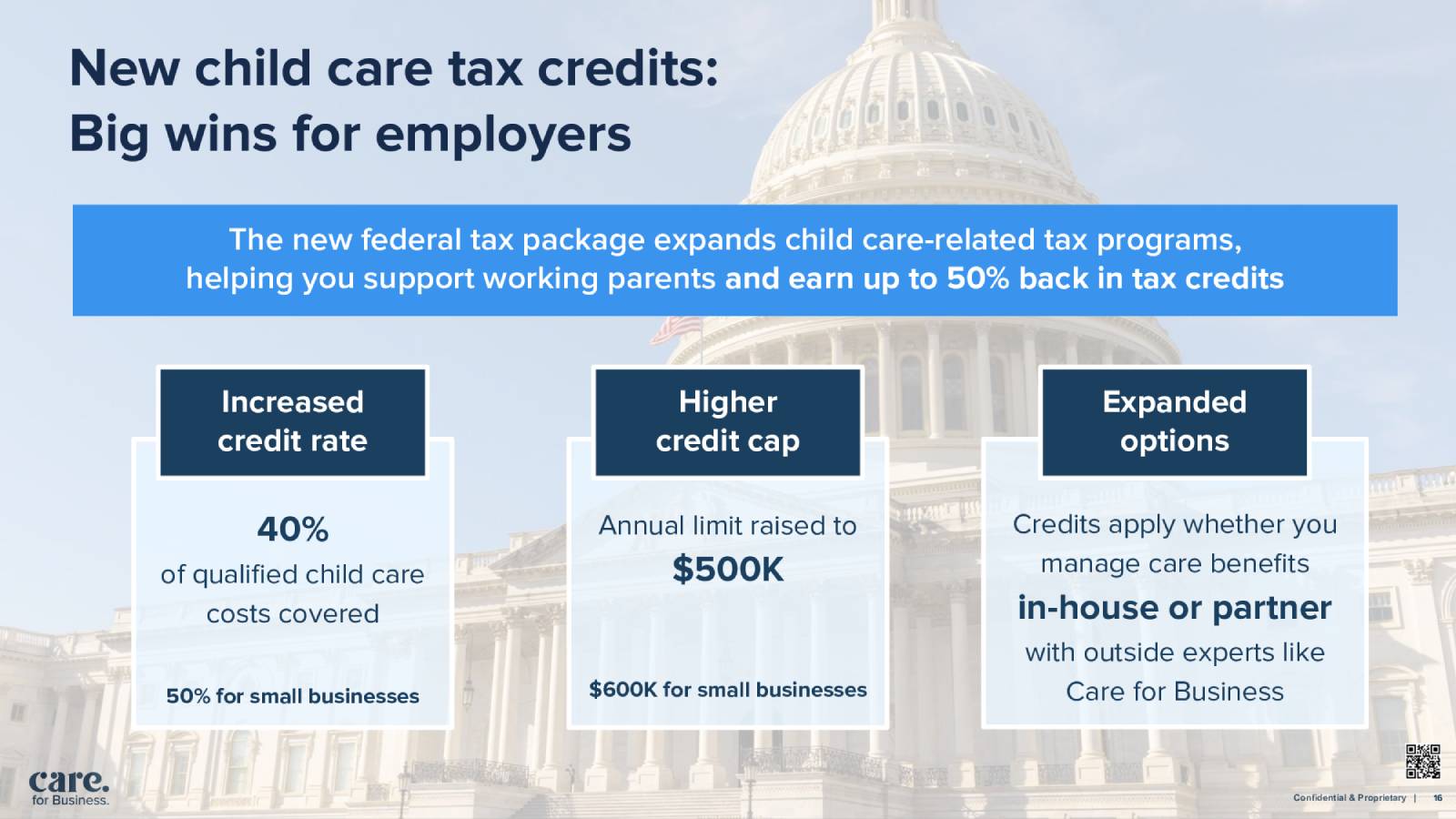
Recent federal tax changes have expanded child care tax credits, offering up to 50% reimbursement on qualified childcare costs for employers. The annual cap now reaches $500K (or $600K for small businesses), and these credits apply whether companies manage care benefits in-house or through a partner
This creates a win-win scenario:
- Employers lower their financial burden.
- Employees receive much-needed support.
- Companies strengthen long-term workforce stability.
What Effective Support Looks Like
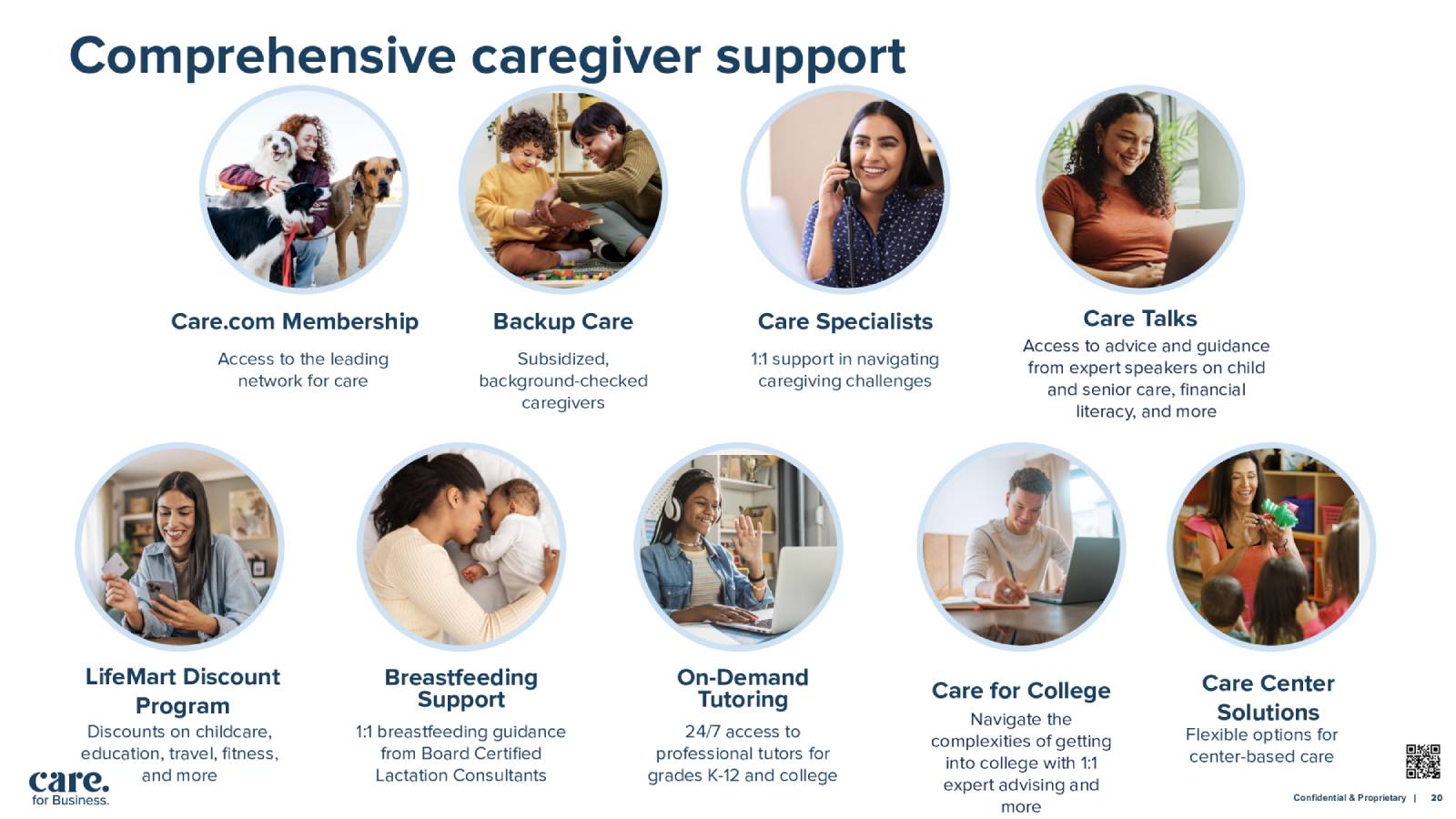
Supporting caregivers goes beyond offering generic leave policies. Modern family care benefit programs take a holistic approach, offering flexibility and personalization, including:
- Backup Care for children, aging relatives, or even pets
- Access to trusted caregiving networks
- 1:1 Care Specialists to help navigate complex care decisions
- On-demand tutoring for school-age children
- Breastfeeding and family health support
- Discount programs for everyday family costs
These solutions acknowledge that every family’s needs are different, and they evolve over time.
How Organizations Can Take Action
Here are three meaningful steps employers can take now:
- Start by Understanding Your Workforce. Conduct surveys, listening sessions, or benefits usage reviews to understand what caregivers within your organization are struggling with most.
- Offer a Range of Care Solutions. Not every employee needs daily childcare. Сome may require assistance with caring for aging parents, navigating college planning, or securing last-minute backup support.
- Communicate the Benefits Clearly and Often. Even the best benefits are underused if employees don’t know they exist or don’t understand how to access them. Consistent, targeted messaging builds trust and ensures utilization.
Get in touch with the Care for Business team today!
Care benefits have become a competitive advantage in attracting and retaining talent.
When employees feel supported at home, they show up stronger at work.
When employers choose to support caregivers, the benefits ripple throughout the organization, improving:
- retention,
- engagement,
- performance, and
- overall well-being.
To learn more about how Care for Business can support your employees with comprehensive caregiving solutions, reach out to their team today.
In case you missed it: Log in to access the full Meet A Vendor Presentation!
Not a subscriber? Request access.
Did you find this article interesting?
Don’t keep this knowledge to yourself – share it on your social media channels and spark engaging conversations!