
In This Post:
Presenters:

Chad Deshler
Senior GTM Executive
Employee expectations around workplace benefits have changed, and one-size-fits-all programs are no longer enough. They want flexibility, personalization, and benefits that feel relevant to their personal lives and circumstances that reflect their unique lifestyles, health goals, financial priorities, work environments, well-being priorities, and career goals.
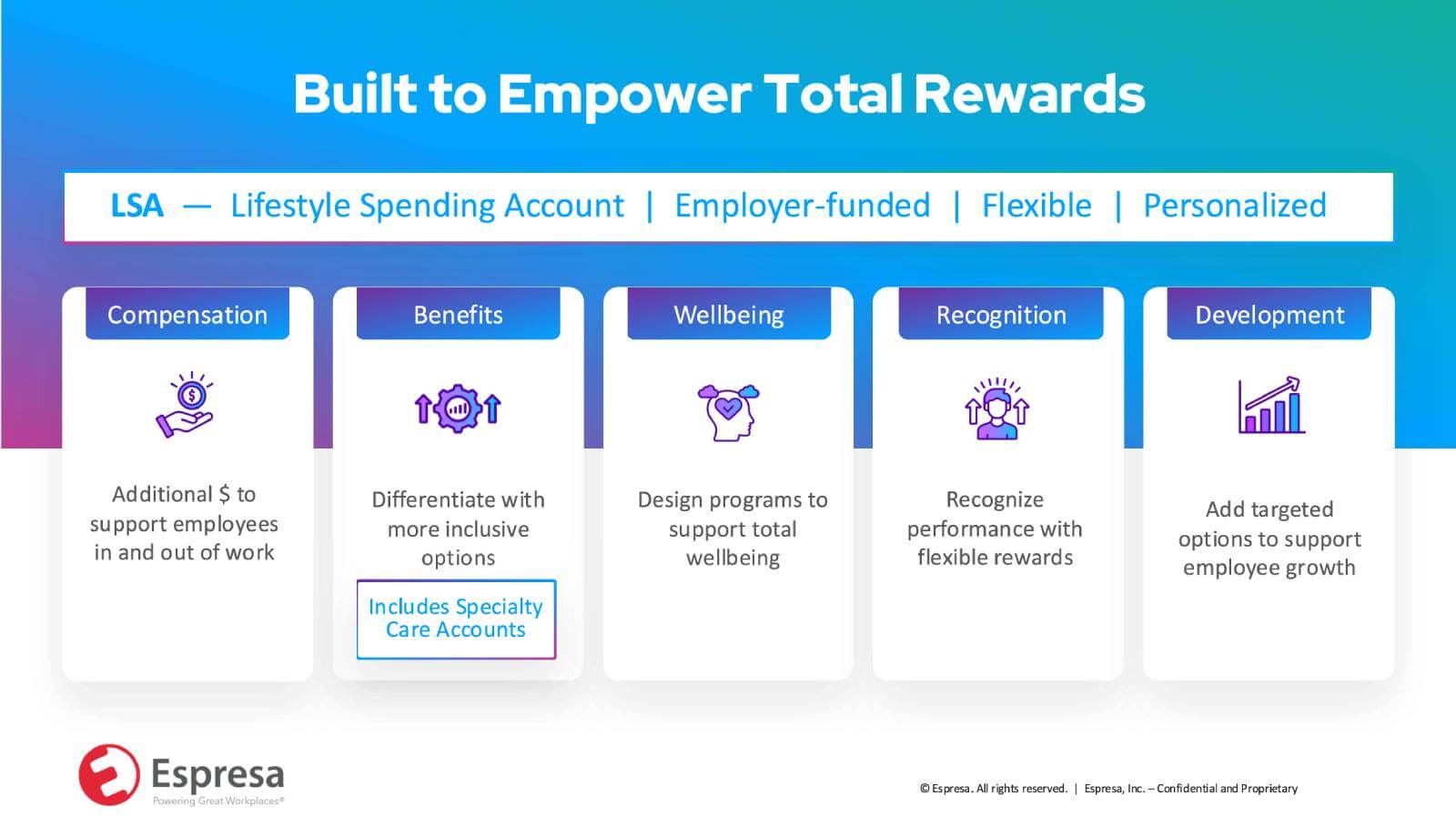
Organizations are moving away from fragmented benefits programs toward unified, flexible employee experiences powered by Lifestyle Spending Accounts (LSA), wellbeing engagement, and Specialty Care Accounts(SCA). Employers need a more personalized benefits experience without more operational burden. That’s where LSAs come in. It empowers employees with more choice while helping organizations simplify administration and improve participation.
We had Chad Deshler, Senior GTM Executive at Espresa, on our webinar sharing how LSAs are helping employers unify fragmented benefits, simplify strategies into more meaningful employee experiences, and create greater flexibility for today’s evolving workforce. Chad touched on several considerations employers look for when they seek to expand and become more flexible with their benefits, and wrapped up the webinar with a few examples and case studies to consider.
About Espresa
Espresa is a unified employee benefits platform specifically focused on global benefits, bringing employers all the different lifestyle benefits they offer, wellbeing solutions, recognition programs, and employee community programs. By bringing all those solutions together, HR leaders can streamline administrative duties in the marketplace and enjoy the benefits that are offered to all of those employees. The benefit world that is more flexible and customizable is something Espresa pioneered by shifting from what we call traditional benefits.
Established over 10 years ago, having over 150 clients globally, and active in over 100 countries throughout the world, Espresa helps HR leaders tackle some of their most complex workplace problems. Through their expansive benefit offerings, Espresa helps organizations attract and retain top talent. Key areas of focus for many HR leaders are compensation, benefits, wellbeing solutions, recognition programs, and even professional development. Recognizing that, Espresa developed a platform around these core pillars, providing employers with a comprehensive solution to support all aspects of employee benefits without introducing administrative burdens.
The Growing Shift Toward Personalized Benefits
Traditional benefits programs often create frustration for both employers and employees. Companies invest heavily in multiple disconnected vendors and reimbursement systems, while employees struggle to find benefits that actually fit their lives. Lifestyle Spending Accounts (LSA) offer a more flexible approach. Unlike traditional health plans, LSAs are an employer-funded benefit where funding eligibility is all controlled by the employer. Furthermore,as a post-tax benefit, LSAs offer unique advantages compared to traditional pre-tax spending accounts like HSAs and FSAs.
LSAs provide employer-funded accounts that employees can use toward approved wellbeing, lifestyle, and personal development expenses. Instead of forcing employees into rigid programs, organizations can offer flexible funding that empowers employees to choose benefits that are meaningful to them.
Why Flexibility Matters More Than Ever
Espresa positions LSAs as part of a broader total rewards strategy that connects benefits, wellbeing, recognition, and Specialty Care Accounts(SCA) into one cohesive employee experience. The result is a more inclusive and engaging approach to benefits, designed around employee choice rather than employer assumptions.
The demand for flexible benefits is growing globally, especially as companies compete for talent in hybrid and remote work environments.
Global flexibility is very important for employers to consider in the market.
For global employers, consistency and local relevance are both critical challenges. Employees in different countries often have very different expectations, regulations, and wellbeing priorities.
A flexible benefits model allows employers to maintain global consistency while still supporting regional personalization. Instead of creating entirely separate programs for every region, employers can offer adaptable frameworks that give employees greater autonomy while maintaining operational simplicity.
This balance between standardization and personalization is becoming a major differentiator for employers looking to improve engagement and retention across distributed workforces.
Simplifying the Employee Experience
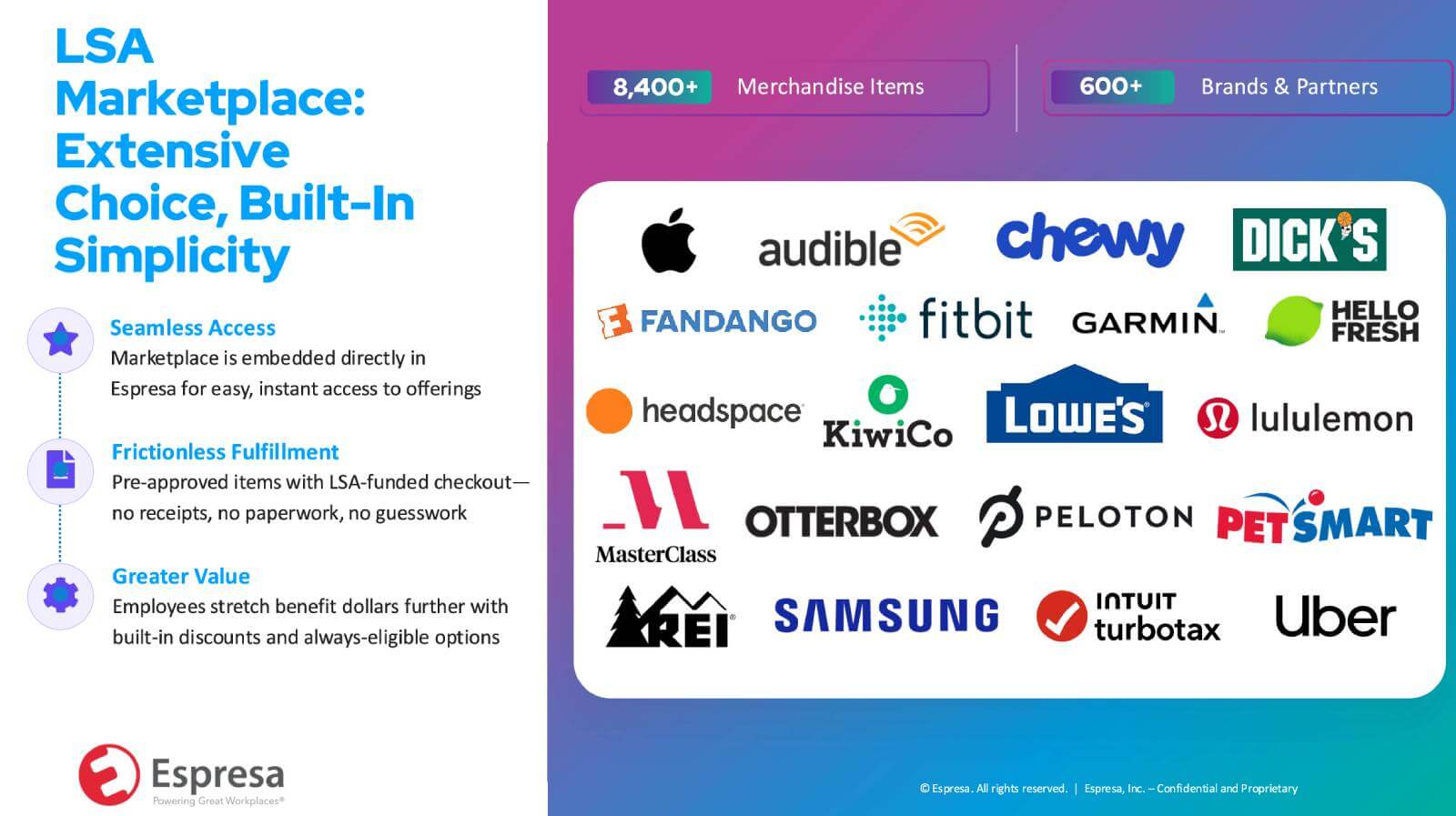
Employees often need to submit receipts, navigate approval processes, and wait for reimbursements. Complicated workflows reduce participation and create administrative headaches for HR teams. Espresa’s platform addresses this challenge through an integrated marketplace model that embeds approved products and services directly into the employee experience.
Employees can access thousands of pre-approved items and services through the platform without worrying about paperwork or reimbursement uncertainty. Built-in eligibility rules and automated fulfillment simplify the process while increasing confidence and participation.
This type of streamlined experience matters because employees are far more likely to engage with benefits that are easy to understand and use.
The Rising Importance of Specialty Care Benefits
Another major trend Chad discussed during the webinar was the rapid increase in demand for specialty healthcare support, particularly in areas like GLP-1 medications, mental health services, and hormone therapy. These categories are creating new challenges for employers as healthcare costs continue to rise.
Many organizations want to expand access to these high-demand services without dramatically increasing medical plan expenses or disrupting existing healthcare structures. Espresa introduced Specialty Care Accounts as one possible solution. These employer-defined accounts allow employees to access specialty care services through digital, retail, or local providers while giving employers more predictable spending controls.
Rather than embedding every new healthcare category directly into traditional medical plans, employers can create flexible funding models that support employee needs while maintaining budget visibility. Eliminating open-ended medical costs in exchange for capped, predictable funding that preserves specialty care access.
Real-World Results from Global Employers
The webinar also highlighted how large organizations are using LSAs and unified engagement strategies to improve participation, satisfaction, and long-term employee engagement.
One example featured Avalara, a global organization with employees across more than 14 countries. The company sought a solution that could provide greater equity, improve operational efficiency, and simplify fragmented global benefits programs.
After implementing Espresa’s flexible benefits platform, Avalara achieved strong employee engagement outcomes, including high participation rates and increased benefit utilization across multiple regions.
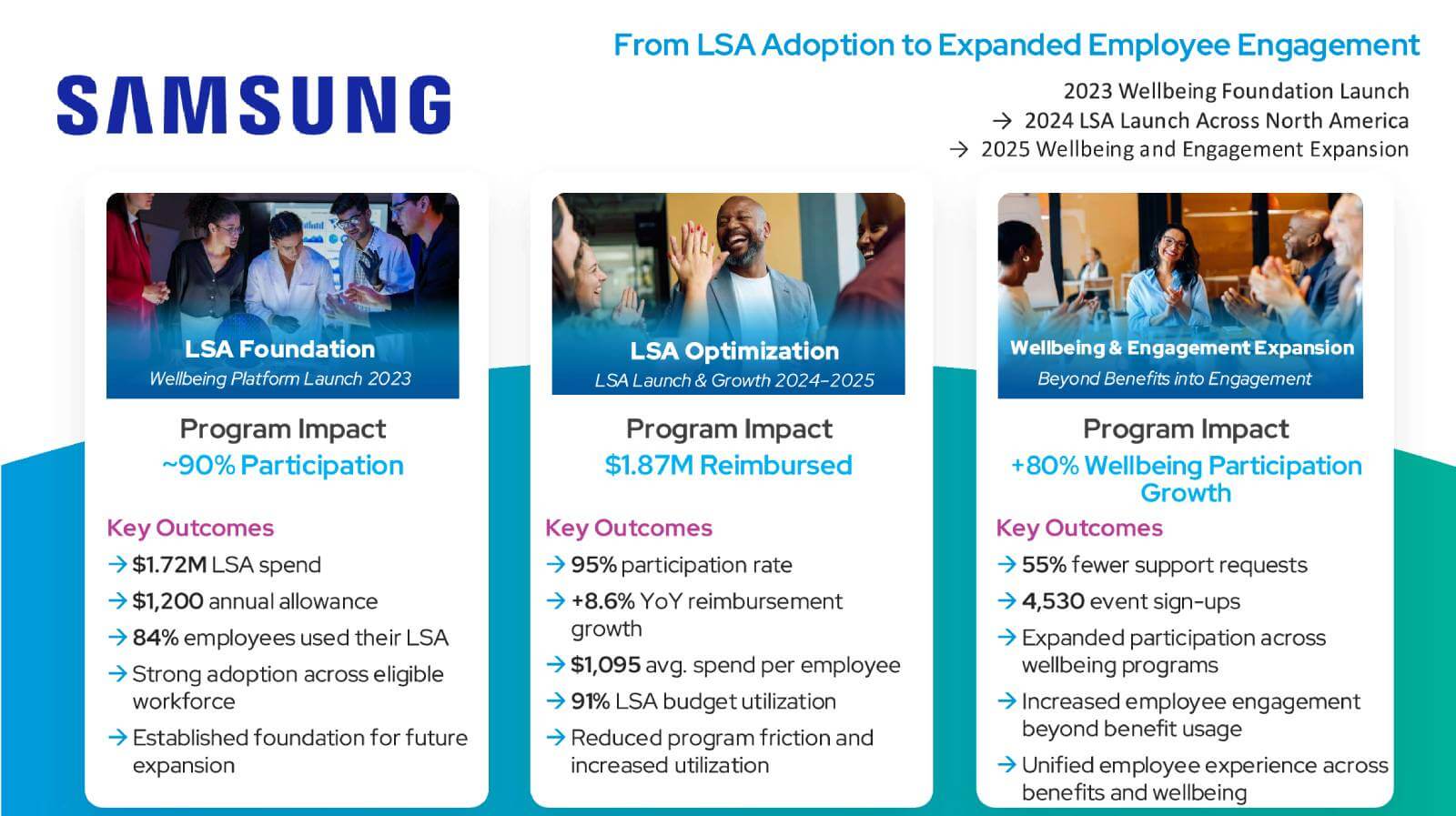
Another case study featured Samsung, which focused on improving wellbeing participation while reducing administrative complexity. The organization reported significant participation growth, strong utilization rates, reduced support requests, and increased employee engagement after consolidating wellbeing and reimbursement experiences into a more unified platform.
Benefits are About Creating Meaningful Employee Experiences: Engagement and Retention Are Closely Connected
When employees feel supported in ways that align with their personal needs and lifestyles, organizations often see stronger engagement, higher participation, and improved retention. One of the most compelling insights from the webinar involved the relationship between benefits engagement and employee retention.
Espresa shared proprietary data showing that employees who actively participate in multiple engagement programs demonstrate significantly stronger retention outcomes compared to employees who engage with fewer programs.
Employees who participated across multiple areas, such as LSAs, wellbeing programs, and recognition initiatives, showed the highest retention impact overall. This reinforces the idea that employee experience is not driven by a single program or benefit. Instead, engagement grows when organizations create connected ecosystems that support employees holistically.
Get in touch with the Espresa team today!
As workforce expectations continue evolving, employers are being challenged to rethink how benefits are delivered, experienced, and measured. The future of total rewards is likely to be more flexible, more personalized, and more integrated than ever before. Simplicity and accessibility are becoming just as important as the benefits themselves. Benefits, well-being, recognition, and culture are becoming increasingly interconnected.
Forward-thinking employers are recognizing that employee engagement strategies cannot exist in silos anymore. Lifestyle Spending Accounts are emerging as an important piece of that future because they give organizations the ability to adapt quickly while empowering employees with greater choice and autonomy.
Unified engagement platforms are helping employers simplify fragmented systems, improve participation, and build stronger connections between wellbeing, recognition, and overall employee experience.
For more information, contact:
Chad Deshler – chad.deshler@espresa.com
or
Consultants – consultants@espresa.com
In case you missed it: Log in to access the full Meet A Vendor Presentation!
Not a subscriber? Request access.
Did you find this article interesting?
Don’t keep this knowledge to yourself – share it on your social media channels and spark engaging conversations!