
In This Post:
Presenters:

Steven Parker
Senior Vice President

Ellen Geraghty
Vice President of Solutions Consulting
Healthcare costs continue to rise, turning employers almost into actuaries, searching for ways to control another year of nearly double-digit, or in some cases double-digit, healthcare cost increases without sacrificing employee well-being. Things like raising premiums or deductibles and narrow provider networks actually make it harder for employees to access care.
For Mobile Health, it was a challenge going forward, having spent the last few years dealing with these cost increases by shifting them onto employees. Steven Parker, Senior Vice President at Mobile Health, and Ellen Geraghty, Vice President of Solutions Consulting at Mobile Health, explained how to help organizations lower their costs without shifting the pain onto employees. The conversation centered around a new approach: lowering healthcare spend by making better care easier to access.
About Mobile Health
Mobile Health is an AI-driven digital health and wellbeing platform. The main focus is on lowering healthcare spending in a significant way by making better care easier to access. Having 91,000 clients and 6 million members, Mobile Health serves mid-market, small organizations, as well as big companies that are facing similar trends. That is cost-sharing was designed to make people shop smarter, but in practice, it just makes them skip care. And that skipped care comes back as a big claim a year or so later.
Mobile Health works with clients to identify where their current benefits are effective, where costs are quietly leaking, and how to close those gaps.
The Hidden Cost of Delayed Care
For years, the standard approach has been predictable: raise premiums, increase deductibles, narrow provider networks, and ask employees to shoulder more of the burden. Although these strategies have created short-term savings on paper, they have often led to much higher downstream costs:
- Employees faced with higher out-of-pocket expenses frequently postpone care.
- Preventive visits were skipped.
- Mental health concerns went untreated.
- Small musculoskeletal issues become chronic pain conditions.
And when employees finally seek care, the issue has often escalated into something significantly more expensive.
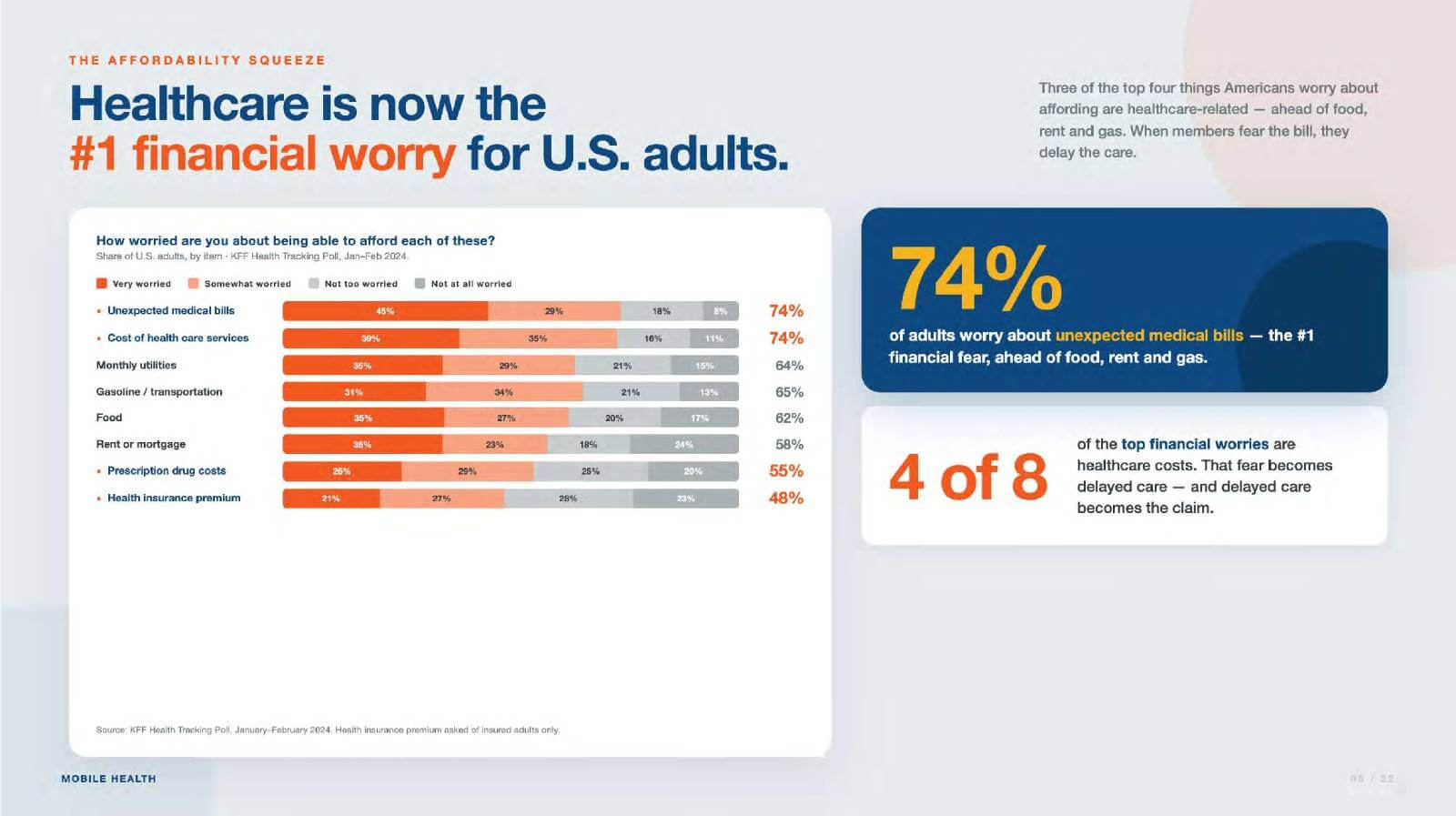
According to data shared during the webinar, projected healthcare costs are expected to rise by 9.5% in 2026. Mobile Health shared that nearly half of Americans report worrying about unexpected medical bills, creating a dangerous cycle, which was illustrated by several real-world scenarios showing how difficult access to care quietly drives unnecessary spending:
- Mental Health Delays – An employee struggling with anxiety or depression may wait weeks or even months to see an in-network therapist. During that waiting period, symptoms worsen. Productivity declines. Absenteeism increases. In severe cases, employees may end up in urgent care or emergency rooms before they ever receive proper support.
That delay becomes costly not only for the employee but also for the employer through lost productivity, disengagement, turnover, and escalating claims.
- Musculoskeletal (MSK) Conditions – What begins as a manageable issue can quickly spiral into: PCP visits, imaging, MRIs, physical therapy, prescriptions, and specialist appointments.
In many cases, a guided digital exercise plan, coaching support, or earlier intervention could have prevented the entire cascade.
Employees Want Better Benefits
The webinar also emphasized the growing connection between healthcare benefits and employee retention. Research shared during the presentation showed:
- 54% of employees say benefits are a major reason they stay with an employer
- Many workers would switch jobs for stronger benefits alone, even without a pay increase
- Some employees would even accept lower pay in exchange for better healthcare benefits
This creates an important shift for employers. Healthcare strategy is more than a financial conversation. It’s also a workforce strategy.
Employers who continue relying on restrictive benefit models risk damaging employee trust, satisfaction, and retention.
A Different Approach: Make Better Care Easier to Access
Rather than focusing on limiting access, Mobile Health presented a model centered around improving access to care.
When employees can access the right care quickly and conveniently, they are more likely to address issues early, before they become expensive claims.
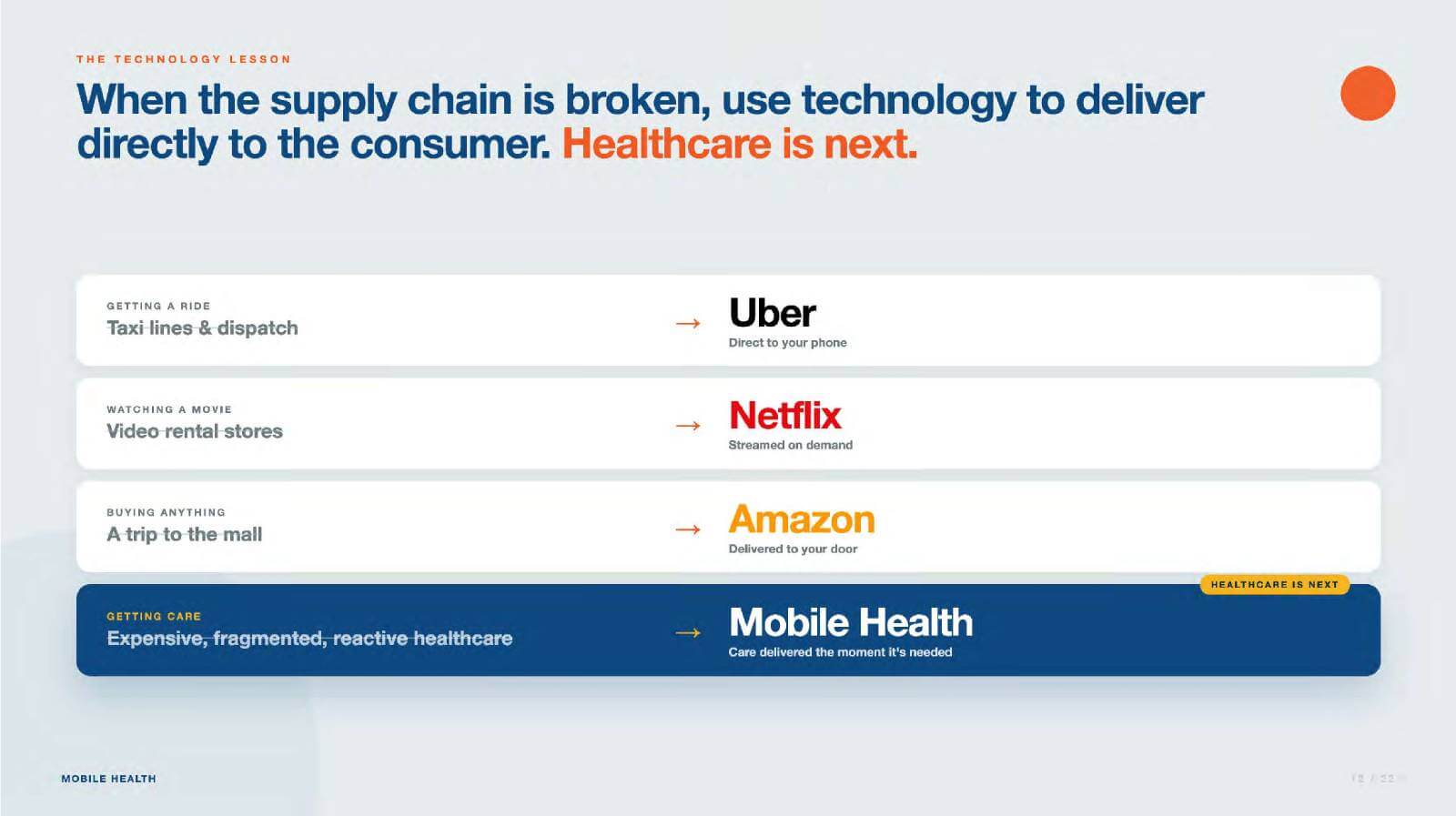
Just as companies like Uber, Netflix, and Amazon simplified consumer access through technology, healthcare is now moving toward more immediate, digital-first experiences.
Instead of long appointment wait times, fragmented provider experiences, confusing navigation, and reactive treatment, employees increasingly expect:
- Fast digital access
- Personalized guidance
- Immediate support
- Simpler healthcare experiences
Mobile Health’s platform proactively identifies and engages employees most likely – at the moment of need – in digital care programs that are always available and proven to improve health.
The goal is to help employees actually use their benefits effectively.
How Mobile Health is Different
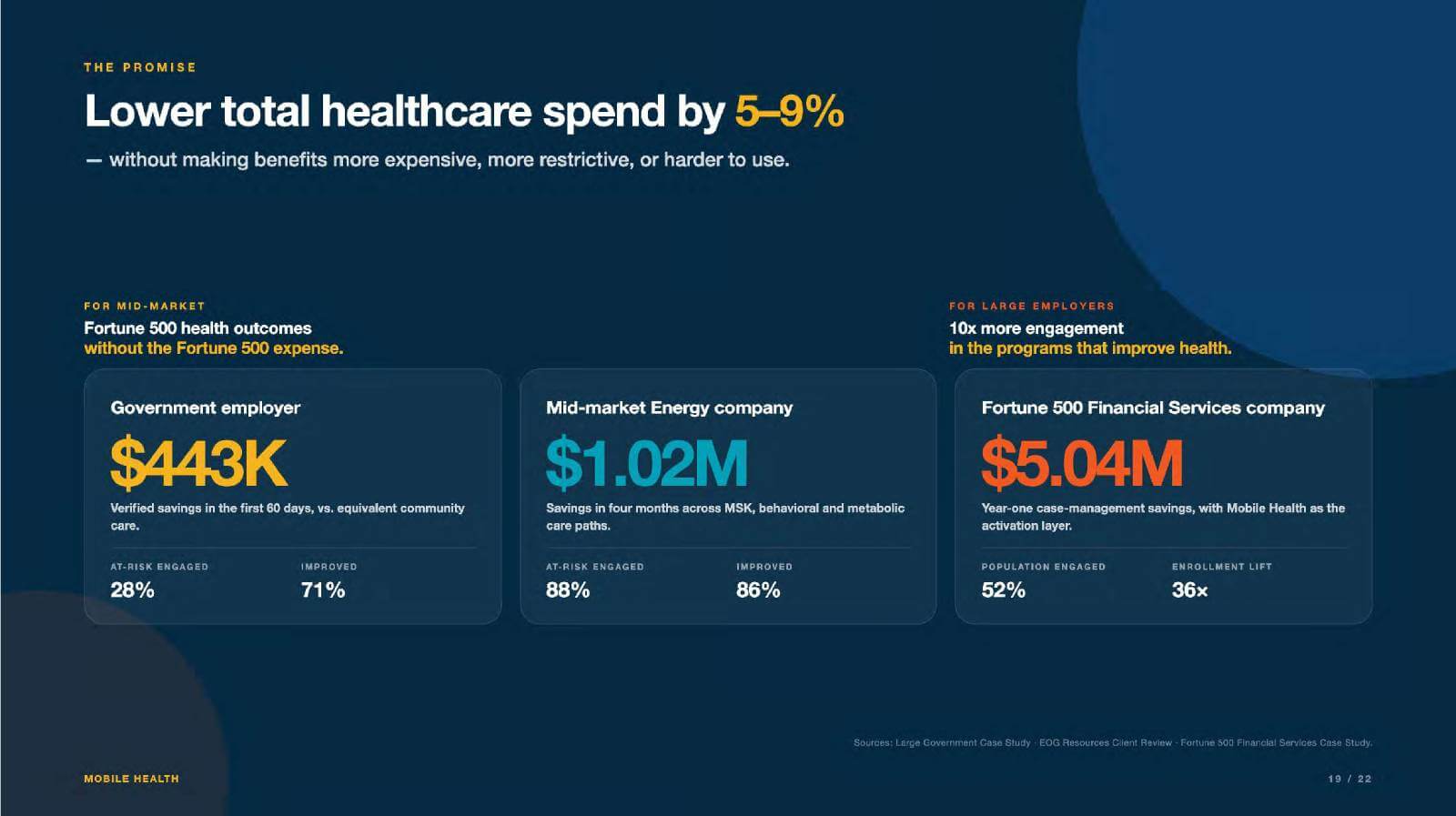
Mobile Health is redefining how employers improve health outcomes and reduce healthcare costs by identifying risk before it becomes a claim, engaging members in the moment they need support, and guiding them through personalized digital care paths that adapt over time.
The platform brings together holistic wellbeing, behavioral health, MSK, metabolic health, heart health, women’s health, and more into a single AI-powered experience.
Clinically grounded AI Health Coaches deliver personalized, safe, and contextual guidance directly within each care path, helping employees access the right support sooner while enabling employers to achieve measurable improvements in engagement, health outcomes, and total healthcare spend.
Get in touch with the Mobile Health team today!
Employers cannot cut their way out of the healthcare crisis by continuously shifting costs onto employees. The future of healthcare cost containment lies in:
- Earlier intervention
- Better access
- Simpler navigation
- Digital-first experiences
- Proactive engagement
When employees receive support before conditions escalate, everyone benefits:
- Employees experience less stress and better health outcomes
- Employers reduce avoidable claims and productivity loss
- Healthcare becomes more sustainable overall
It is time for organizations to rethink traditional strategies and focus on creating benefit experiences that employees can actually use.
The companies that succeed will be the ones that make better care easier to find.
For more information, contact:
Steven Parker – steven@mobilehealthconsumer.com
In case you missed it: Log in to access the full Meet A Vendor Presentation!
Not a subscriber? Request access.
Did you find this article interesting?
Don’t keep this knowledge to yourself – share it on your social media channels and spark engaging conversations!