
In This Post:
Presenters:

Ashley Hewitt
Product Manager
Empower is a key. Organizations are increasingly recognizing that supporting the whole person, their physical, mental, emotional, and social well-being is the key to cultivating a resilient and engaged workforce. In most cases, the person needs to be empowered to make changes. Depending on how people work, independently or in groups, the whole empowerment of the individual is what leads to impressive numbers.
At the heart of this evolution is wellness coaching. It’s a personalized, results-driven approach that empowers employees to make meaningful lifestyle changes, sustain healthy habits, and ultimately thrive at work and in life.
Ashley Hewitt, Product Manager at Optum Workplace Well-being, explained the strategies that have been most effective in driving sustained employee engagement in coaching programs across diverse workforces. Accessibility, timing, and delivery method are the three key questions we need to address before determining a suitable coaching strategy.
About Optum Workplace Well-being
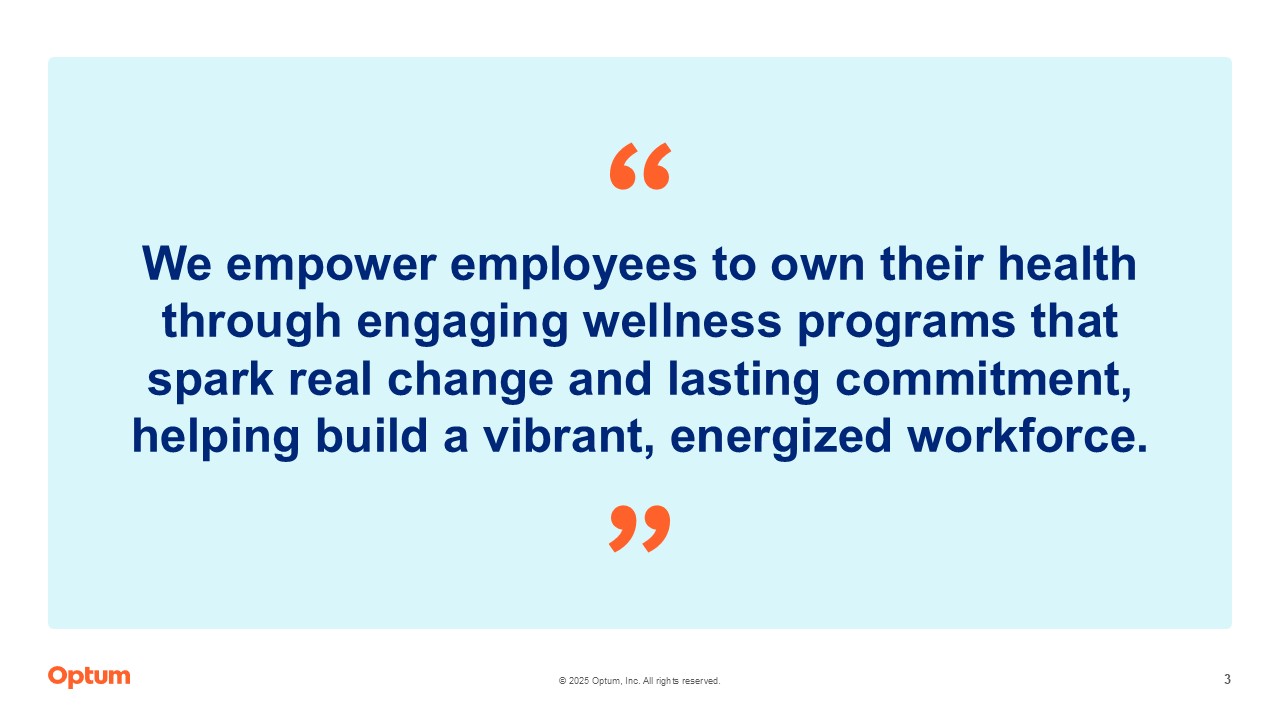
Optum Workplace Well-being is a part of the greater Optum Enterprise, with a mission to empower employees to take control of their health through a comprehensive suite of wellness programs that promote healthy behavior change and drive lasting engagement.
Optum’s mission is to empower employees to take control of their health through a comprehensive suite of wellness programs that promote healthy behavior change and drive lasting engagement. The programs are designed to support employee health through a whole-body, whole-person approach. The focus is in three areas: population health, movement, and coaching.
The Shift Toward Whole-Person Wellness
Modern employees expect and want dedicated, personalized support that acknowledges their individual challenges, lifestyles, and motivations. Integrating diverse areas of support, including nutrition counseling, fitness design, mental health programming, and ergonomic guidance, we get to have a comprehensive approach.
This comprehensive approach addresses the dimension of health, and it builds a culture of inclusion, connection, and sustainable well-being that reaches employees wherever they are. Not everybody works in a place where they sit at a desk and come in at 8 and go home at 5. There are many jobs where people work remotely or are not physically present at their desks.
Coaching: The Catalyst for Behavior Change
Research consistently shows that information alone rarely changes behavior. What makes the difference is guided, personalized coaching where employees work one-on-one or in small groups with trained wellness professionals to identify barriers, set achievable goals, and stay accountable over time.
There are three key questions we need to address before determining a suitable coaching strategy:
- Accessibility – Is the program convenient for employees in a way that they can easily access it? If the teams are in multiple office locations, offering on-site coaching at each office location would be ideal to foster strong relationships. And then those relationships can be continued virtually.
- Timing – Does the team have early, late, or third shifts? How can a couch be available around the times that the employees are available? And not necessarily cutting into their family time outside of work. Consider how a coach can be available during their work hours, ensuring that support is provided without intruding on their precious family time.
- Delivery Method – individual or in groups? If employees work outside, they may come to a central location before heading out. That’s an excellent opportunity to explore group coaching in small groups, and in addition to be able to empower them to make these changes, it also helps to create a little bit of a community within their own team. Show them it’s OK to participate, allowing things to be done during work.
Optum’s wellness coaching programs focus on exactly that: helping employees develop and manage healthier lifestyles through practical, action-oriented strategies.
By focusing on sustainable habit-building and self-awareness, wellness coaches empower individuals to take their health into their own hands.
Discharge is not the finish line. It’s the beginning of the highest-risk recovery window.
The Measurable Impact of Wellness Coaching
The results speak for themselves. Participants in wellness coaching programs report impressive improvements in their health and overall engagement:
- 98% saw improvement in their overall health habits
- 88% learned effective stress management techniques
- 83% became more physically active
- 92% reduced their weight or body fat
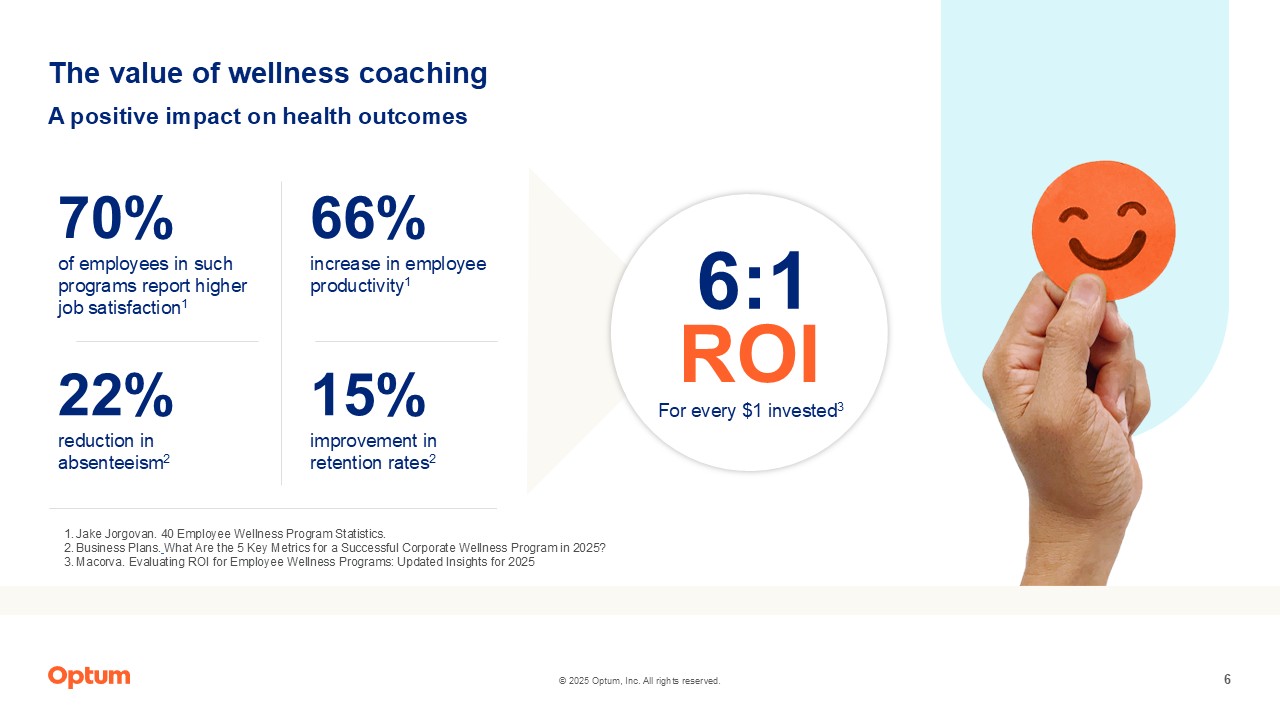
Beyond individual outcomes, companies implementing wellness coaching programs report that their benefits are equally compelling. Studies show that companies investing in comprehensive wellness programs see:
- 22% reduction in absenteeism
- 15% improvement in employee retention rates
- 66% increase in productivity
- A 6:1 return on investment for every dollar spent
These metrics make a clear business case. Investing in wellness coaching is more than caring for employees. It’s a strategic decision that fuels engagement, retention, and overall performance.
How Coaching Works
Optum’s wellness coaching framework is built on a structured three-step process:
- Assessment and Awareness
- Action Planning
- Progress Check and Support
This continuous loop of reflection, action, and reinforcement leads to lasting behavior change, not short-term fixes.
The “Healthy Foundations” group coaching program helps employees develop healthier eating habits and lifestyle routines through nutritional education and mindful goal setting. The results from recent sessions were remarkable:
- 95.7% increased fruit and vegetable intake
- 86.9% reduced consumption of ultra-processed foods
- 73.9% increased daily movement
- 69.6% felt extremely confident about maintaining positive changes
Testimonials highlight the real human impact of workplace wellness beyond numbers.
These programs change lives
Behind every successful wellness initiative are personal transformations. An employee in search of preventive support can, with his coach’s guidance, build a sustainable wellness routine that not only improves his metrics but also boosts his confidence and long-term outlook on health.
These programs can help stay accountable and share helpful tips. Coaches are knowledgeable, encouraging, and give the motivation individuals need to remain consistent. Beside delivering advice, they listen, adapt, and guide individuals to discover their own potential for change.
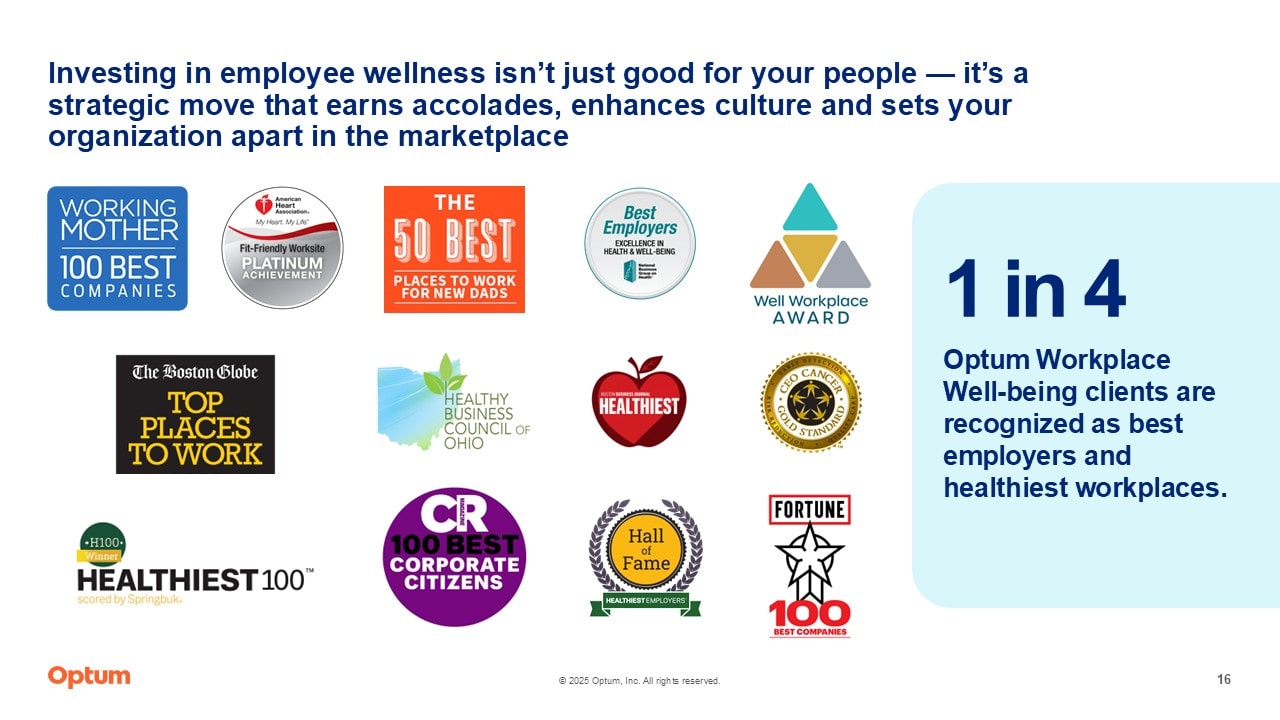
One in four Optum Workplace Well-being clients is recognized among the nation’s best employers and healthiest workplaces.
When employees feel supported, valued, and equipped to manage their health, they bring more energy, creativity, and focus to their roles. That positive energy ripples throughout the entire organization, strengthening culture, collaboration, and long-term success.
Get in touch with Optum today!
The future of work demands adaptable, energized employees, and that starts with a culture of wellness. Optum empowers employees to own their health. On the other side, Optum redefines how companies approach employee well-being, making it a strategic advantage.
With the proper support and coaching, employees perform better and thrive.
For more information, contact:
Alex Greenberg – alex.greenberg@optum.com
In case you missed it: Log in to access the full Meet A Vendor Presentation!
Not a subscriber? Request access.
Did you find this article interesting?
Don’t keep this knowledge to yourself – share it on your social media channels and spark engaging conversations!