In This Post:
Presenters:

Abbe Hoffman
Sr. Product Manager and
Mental Health First Aid Instructor
Innovative companies are moving beyond basic benefit offerings to design wellness programs that genuinely reflect the needs of their workforce. For decades, employers have invested heavily in wellness initiatives and mental health resources – and today, employees have more choices than ever. Yet even the most robust benefits can fall flat. The missing link? Engagement. A comprehensive benefits strategy delivers real impact only when employees are inspired to participate and make it their own. That’s where Optum Workplace Well-being stands apart.
In this webinar, Abbe Hoffman, Sr. Product Manager and Mental Health First Aid Instructor at Optum Workplace Well-being, passionately conveyed that engagement doesn’t happen by accident and is not a matter of luck. It requires a proactive, strategic approach. Employers have provided resources. What is needed now is to show how they can move beyond simply offering benefits and improve outcomes that deliver measurable results.
About Optum
Optum Workplace Well-being offers a wide suite of programs for workplaces. As part of the broader Optum enterprise, they deliver employee wellness solutions with a mission to help organizations cultivate meaningful employee engagement through accessible, personalized experiences that inspire healthy habits and long-term participation.
Creating cohesion within a client culture is an important part of moving the engagement needle. Optum recognizes that the programs employers invest in are intended to complement and support the population, so they create referral points, help enable integration, and ensure alignment with client goals and objectives, acting as the glue in many ways.
The Engagement Gap in Workplace Well-being
Despite expanded offerings, many organizations struggle with low participation across well-being programs. Employees are unaware of all the benefits available to them or just don’t feel motivated to engage. Overall, the result is underutilized programs, missed opportunities for early intervention, and rising healthcare costs.
To close this gap organizations need to rethink how engagement is approached and activate it effectively. Research and real-world data consistently show that when employees do engage, the outcomes are significant. In fact, 81% of employees report that wellness initiatives positively impact their health, reinforcing the value of a comprehensive approach.
The Role of Health Promotion Specialists
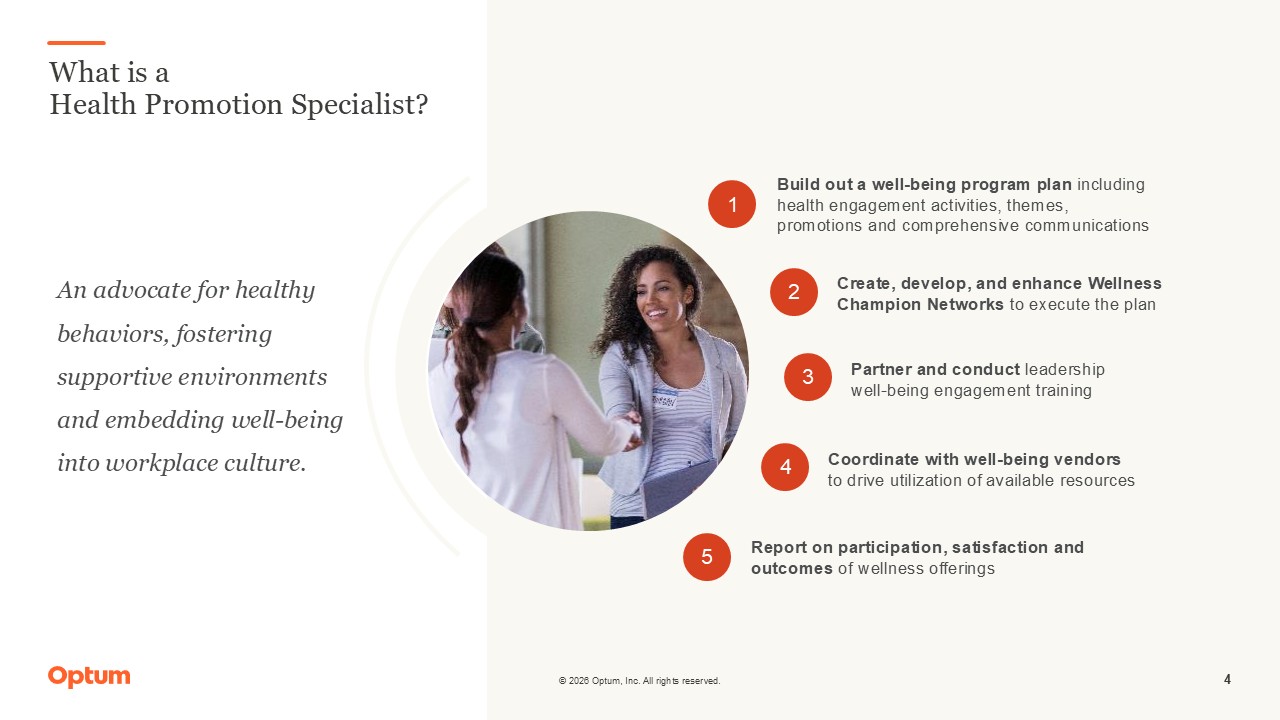
This webinar focused on population health services, particularly the health promotion specialist. A strategic approach to health promotion that shifts the focus from simply offering benefits to actively driving engagement across the entire workforce. As Abbe said, it’s an ongoing, evolving strategy.
It means meeting employees where they are, whether in the office, working remotely, or navigating a hybrid environment. And it requires a more coordinated and intentional effort to connect people with the resources designed to support them. That’s where Health Promotion Specialists come in with a dedicated focus on wellness activation.
This is one of the most effective ways organizations are bridging the engagement gap. These Optum professionals play a critical role in turning strategy into action and act as the connective tissue between employees, leadership, and wellness resources, ensuring that programs thrive.
This often involves simplifying what can otherwise be a complex ecosystem of vendors and services. When employees are faced with too many disconnected options, engagement drops.
The goal is to make it easy for employees to understand, access, and use the resources available to them.
Real-World Impact: Engagement in Action
The power of strategic health promotion becomes clear when looking at real-world outcomes. One of the biggest drivers of success in health promotion is the ability to remove barriers that prevent employees from participating.
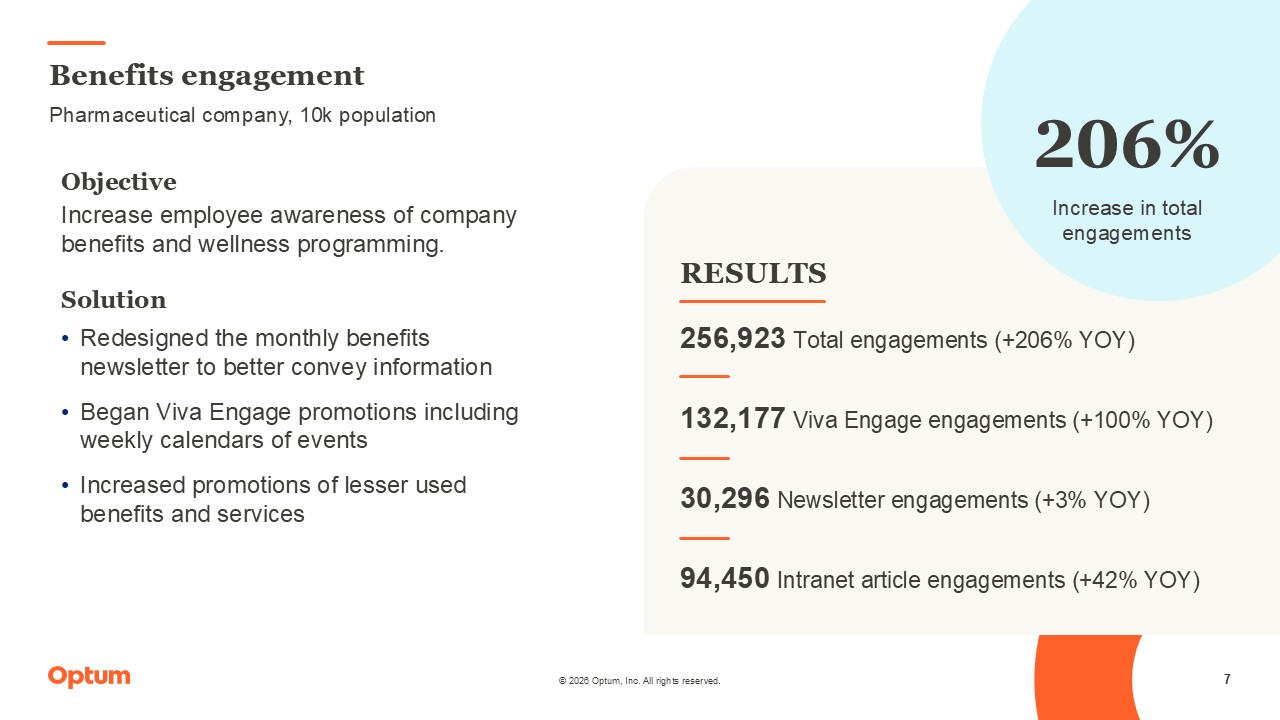
In one case, Abbe shared in this session, a global pharmaceutical company aimed to increase engagement with a newly introduced Employee Assistance Program (EAP) focused on supporting mental health concerns such as depression and anxiety.
Rather than relying on passive communication, they implemented a multi-channel outreach strategy that included targeted campaigns, enhanced messaging, and ongoing promotion of services.
The results were striking:
- 206% increase in total engagement year-over-year
- Significant growth across internal communication channels, including intranet and social platforms
- Increased awareness and utilization of mental health resources
In another example shared on this webinar, a retail organization sought to scale its team activation program to reach more employees with holistic health education.
By promoting offerings across key areas: movement, mindset, nutrition, recovery, and sleep – and incorporating employee feedback, the organization was able to deliver more relevant and culturally aligned programming, strengthen collaboration with employee resource groups, and ensure consistent quality through facilitator training and audits.
These examples truly highlight engagement growth.
Discharge is not the finish line. It’s the beginning of the highest-risk recovery window.
Building a Culture of Well-being
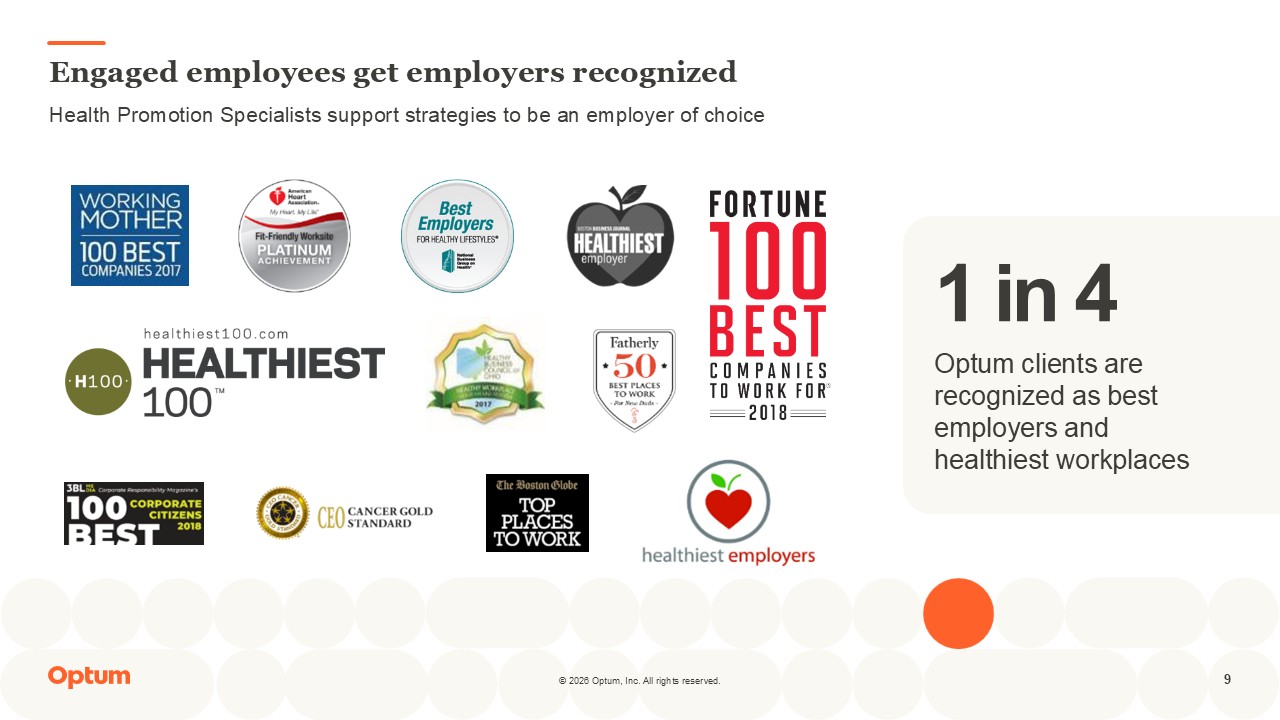
Organizations that successfully activate their well-being strategies see healthier employees, and they position themselves as employers of choice.
This has a direct impact on talent attraction and retention, employee satisfaction, and productivity and overall organizational performance. When employees feel supported in their well-being, they are more engaged and more committed to their work. Health promotion is about creating a culture of well-being through:
- Leadership commitment and visible support
- Consistent messaging that reinforces the importance of health
- Opportunities for employees to connect, participate, and provide feedback
- A long-term vision that integrates well-being into every aspect of the organization
Get in touch with Optum today!
The future of workplace well-being lies in engagement. Organizations that move beyond simply offering benefits will see the greatest impact. They will improve health outcomes and drive meaningful business results, from reduced healthcare costs to stronger employee performance.
For organizations willing to invest in that bridge, the returns are substantial.
Interested in learning more?
Connect with corporate wellness expert:
Alex Greenberg – alex.greenberg@optum.com
In case you missed it: Log in to access the full Meet A Vendor Presentation!
Not a subscriber? Request access.
Did you find this article interesting?
Don’t keep this knowledge to yourself – share it on your social media channels and spark engaging conversations!