In This Post:
Presenters:

Ashley Hewitt
Product Delivery Manager

Abbe Hoffman
Senior Product Manager
Employees have access to more well-being resources than ever before. Digital health platforms, wellness apps, virtual care and personalized benefits have made support easier to access and more personalized.
Yet access alone does not guarantee engagement. Many employees still struggle to navigate available resources, determine which benefits are right for them and take meaningful action toward better health.
During a recent webinar, Optum Workplace Well-being explored how human connection can help bridge that gap by turning awareness into action.
About Optum
Optum Workplace Well-being supports employers through programs focused on population health, coaching, movement, and employee engagement. Through a whole-person approach, Optum helps create a more integrated well-being experience by raising awareness, simplifying access and helping employees understand, navigate and use the resources available to them. By connecting employees with relevant support at the right time, Optum helps organizations improve engagement across the broader benefits ecosystem.
Moving Employees from Awareness Into Action
Although employers have invested heavily in creating an expanded benefits ecosystem to support physical and mental health, financial well-being, nutrition, and preventive care, there is no guarantee employees will use them. Instead of feeling empowered by a broad benefits portfolio, employees can experience digital fatigue and become overwhelmed by the number of options available to them. Many struggle to determine where to start, which resource is right for their situation, or how to turn information into meaningful action.
This is where human support becomes essential. Employees often benefit from guidance, encouragement, accountability and trusted relationships. These human elements help transform information into action and make it easier to navigate and engage with available resources.
Technology creates access, but human connection creates action.
Wellness Coaching Is a Partnership
Wellness coaches help employees turn good intentions into meaningful action. Through one-to-one or group coaching, personalized goal setting and ongoing accountability, they support employees as they build healthier habits, navigate available wellness benefits and connect with resources that align with their needs.
Many employees already know what they should do to improve their health. The challenge is translating information into consistent action. Behavior change often requires support beyond information alone. Coaching helps employees overcome barriers, stay engaged and make progress that feels realistic and sustainable while also helping them understand and access the support available through their benefits program.
Health Promotion and Coaching: Better Together
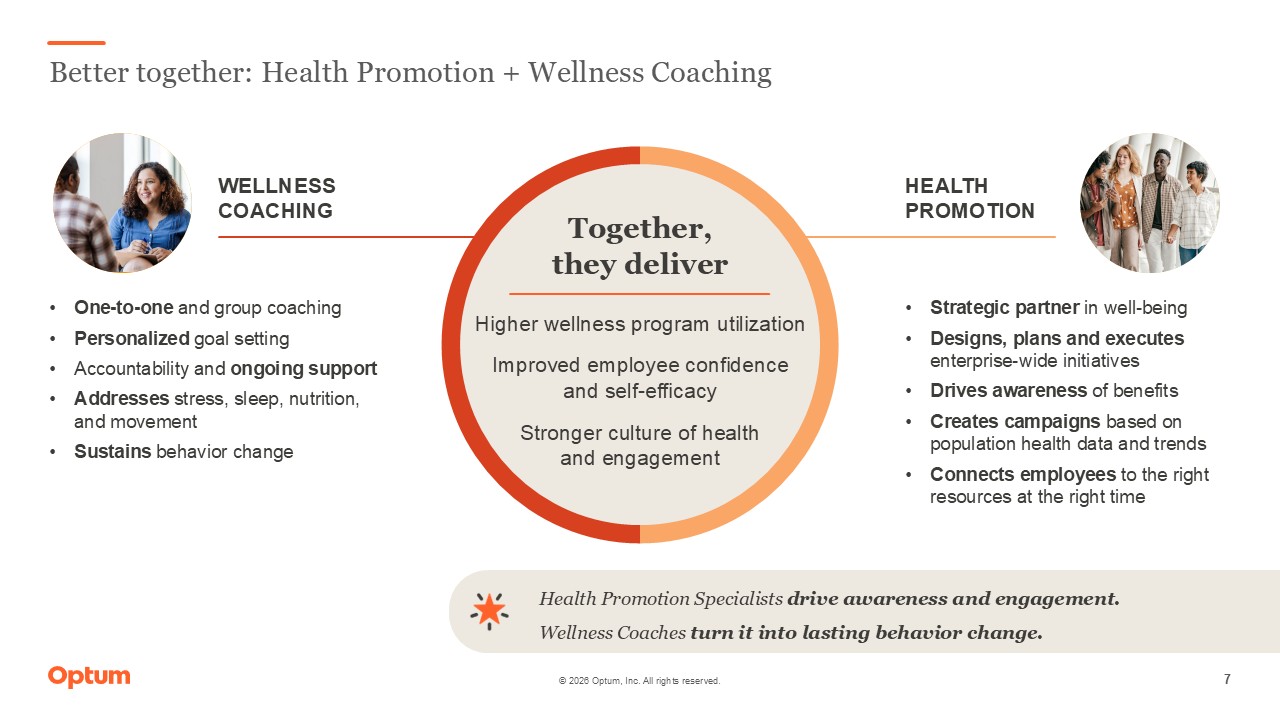
Health Promotion Specialists help employees discover, understand and engage with the well-being resources available to them. Through targeted communications, population-based campaigns and benefit education, they increase awareness of wellness programs and connect employees with relevant resources, referrals and support at the right time.
While health promotion specialists drive visibility and participation, wellness coaches provide personalized guidance, accountability, and ongoing support that help employees build healthier habits and make meaningful progress toward their goals.
Together, these functions create a more connected well-being experience. Employees gain greater confidence navigating their benefits, employers may see stronger program utilization and organizations can build a more engaged culture of health.
This combination is especially valuable in organizations with geographically dispersed or diverse workforces. Employees do not all encounter benefits in the same way, making it essential to provide multiple pathways for awareness, engagement, and support.
There Is No Single Communication Channel That Reaches Every Employee Effectively
A strong engagement strategy recognizes that employees access information differently and requires multiple touchpoints across the benefits experience. Human connection becomes especially important when employees need help understanding available resources and determining which support is most relevant to their needs.
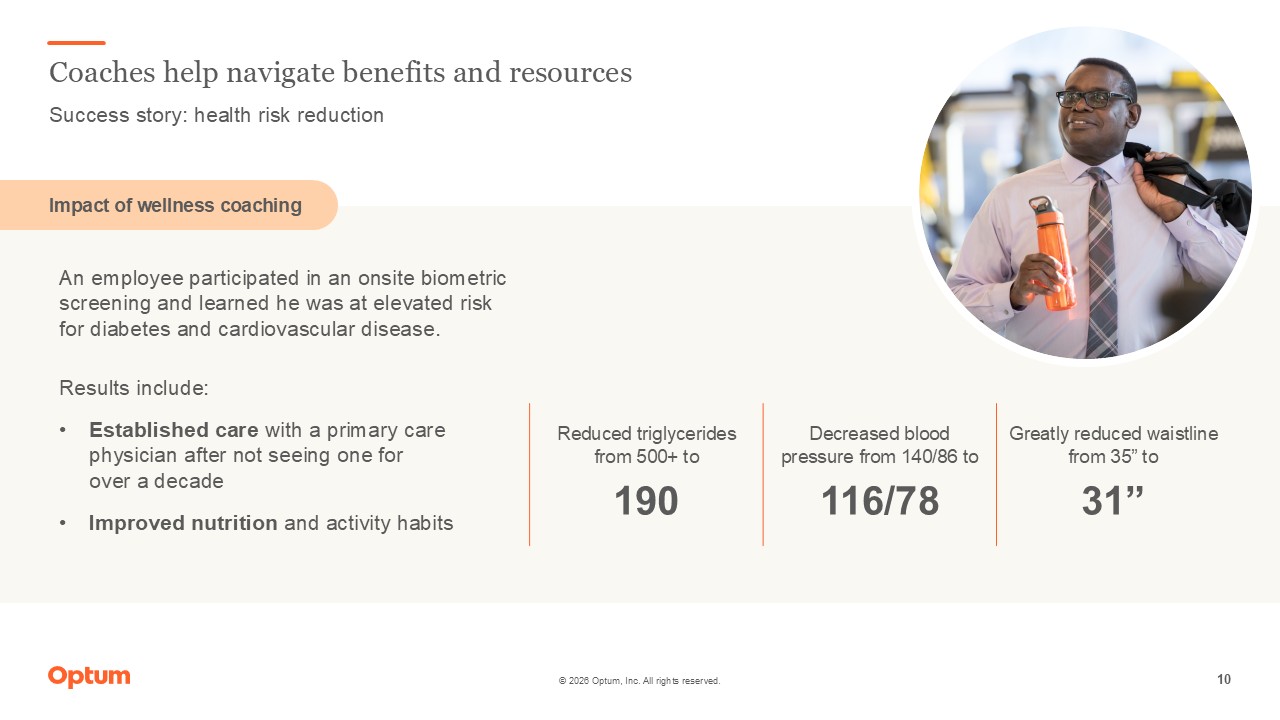
An employee may complete a biometric screening and learn they have elevated health risks, but that information alone does not always clarify what to do next. This is where coaching and health promotion support can play an important role.
Beyond increasing awareness, these teams help employees navigate available benefits, identify appropriate resources, and connect with the support that best aligns with their goals. In many cases, they serve as a bridge between screenings, preventive care, provider relationships, and well-being programs, making it easier for employees to take meaningful next steps.
Measuring More Than Participation
Participation metrics remain important, but they only tell part of the story. Employers should also look at whether employees are building healthier habits, taking action on recommendations and becoming more confident using the benefits and resources available to them.
By asking the right questions, organizations can shift the conversation from participation to impact. This provides a clearer view of whether well-being programs are driving meaningful behavior change, supporting better outcomes and creating value for both employees and the organization.
Looking Ahead
One of the most important lessons for designing the next generation of workplace well-being programs is that engagement is not just about what employers offer. It is about how effectively employees are supported in understanding, accessing, and using those resources.
The opportunity lies in helping employees take action, build healthier habits and confidently navigate the support available to them.
To learn more about how Optum Workplace Well-being helps organizations create connected and engaging well-being experiences, visit Optum Workplace Well-being.
In case you missed it: Log in to access the full Meet A Vendor Presentation!
Not a subscriber? Request access.
Did you find this article interesting?
Don’t keep this knowledge to yourself – share it on your social media channels and spark engaging conversations!