
In This Post:
Presenters:

Taylor McMurray
Associate Director, SmartDollar
Financial stress has become a growing concern for employees and employers alike.
Compensation remains a critical component of the employee experience and will continue to be so in the years ahead as AI evolves. What’s more interesting is that financial stress affects all, not just employees earning lower wages.
According to SmartDollar statistics, 52% of Americans live paycheck to paycheck. This includes 48% of people earning more than $100,000 annually and 36% of households earning more than $200,000 annually.
For employers and benefits professionals, this creates an opportunity to consider financial wellness as part of the broader benefits strategy.
Employees at a wide range of income levels may still struggle to manage debt, build savings, prepare for retirement, and handle unexpected expenses.
Financial wellness is more than simply about how much an employee earns. It is also about whether employees have the knowledge, tools, and behaviors necessary to manage their money.
That’s where SmartDollar can help.
In our recent webinar, Taylor McMurray, Associate Director at SmartDollar, explored how employers can address these challenges through financial wellness.
He examined the affordability challenges employees are facing, how financial stress can affect workplace performance and retention, and how an employee financial wellness benefit can help them build healthier financial behaviors.
About SmartDollar
Smart Dollar allows employees to take control of their finances, moving to actually save for life goals such as cars, homes, and rental deposits. The beauty of this financial literacy program lies in its simplicity and effectiveness.
Employees can receive high-quality instruction in an easy-to-understand way, backed by incentives and helpful resources, to make meaningful financial lifestyle changes and progress toward their financial goals.
Most people don’t know where to start when it comes to saving and paying off debt, or even how to start a budget.
SmartDollar covers all of it in one place and creates very little extra work for the HR department. It’s designed as a mobile-first benefit, allowing it to reach employees working in an office, on a factory floor, or on the road. That flexibility can be particularly relevant for employers with diverse or distributed workforces.
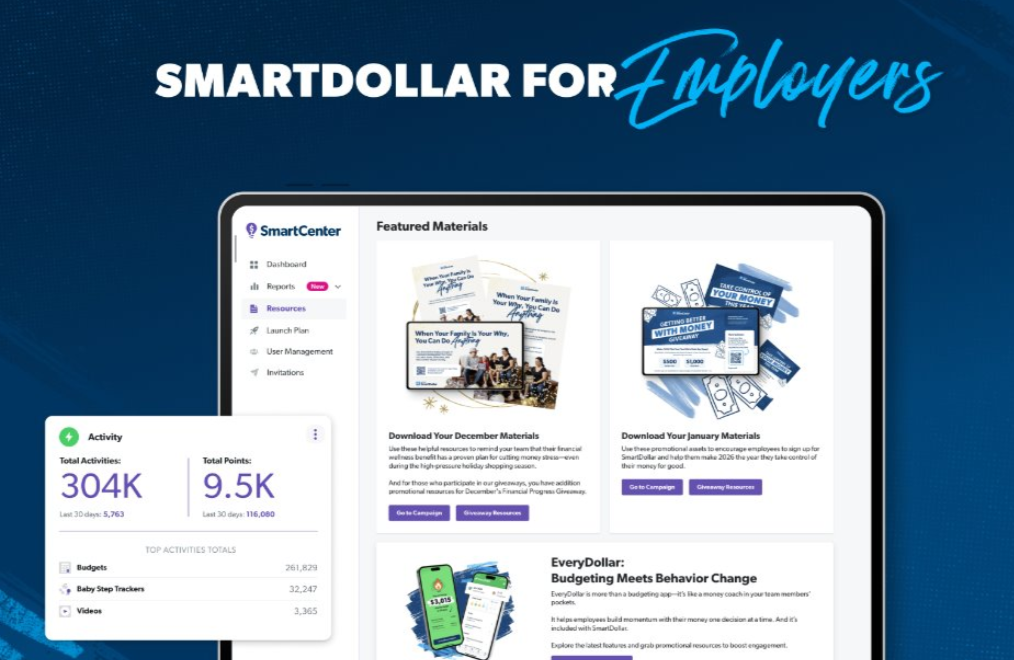
The Affordability Challenge goes Beyond Income
The numbers that SmartDollar shared in their statistics illustrate an important distinction: financial stress is not limited to lower-wage employees.
In fact, 43% say paying their bills is difficult, and 40% do not believe they will ever reach their financial goals. One in five adults over age 30 reportedly has no retirement savings at all.
Financial stress affects employee well-being more than a bank account. SmartDollar reported that:
- 82% of employees feel stressed about money, with more than half worrying about it every day. Nearly half say financial concerns keep them awake at night, and one-third experience anxiety related to money.
- 51% say money stress has negatively affected their mental health. This makes financial wellness part of a larger conversation about employee well-being.
- 36% of employees have missed work because of a money problem, and 45% say their personal finances get in the way of doing their jobs.
- 73% wish their employer offered more financial resources.
For employers already investing in physical health, mental health, retirement, and other areas of employee well-being, financial wellness can complement those existing programs by addressing another source of stress.
A financial wellness benefit is most useful when employees can actually access and engage with it, regardless of where or how they work.
Moving from Financial Education to Behavior Change
SmartDollar is built around Dave Ramsey’s 7 Baby Steps and provides employees with a structured, step-by-step approach to paying down debt and building savings. It’s designed to help employees put that information into practice and develop sustainable financial habits.
That distinction is important.
Employees may already have access to retirement plans, health savings accounts, flexible spending accounts, life insurance, and other financial benefits through their employer.
However, having access to a benefit does not necessarily mean employees understand how to use it effectively.
Financial wellness education can help employees understand how different benefits fit into their broader financial picture.
As employees make progress with budgeting, debt reduction, and savings, they may also be better positioned to take advantage of the benefits their employers already provide.
Every employee has different needs.
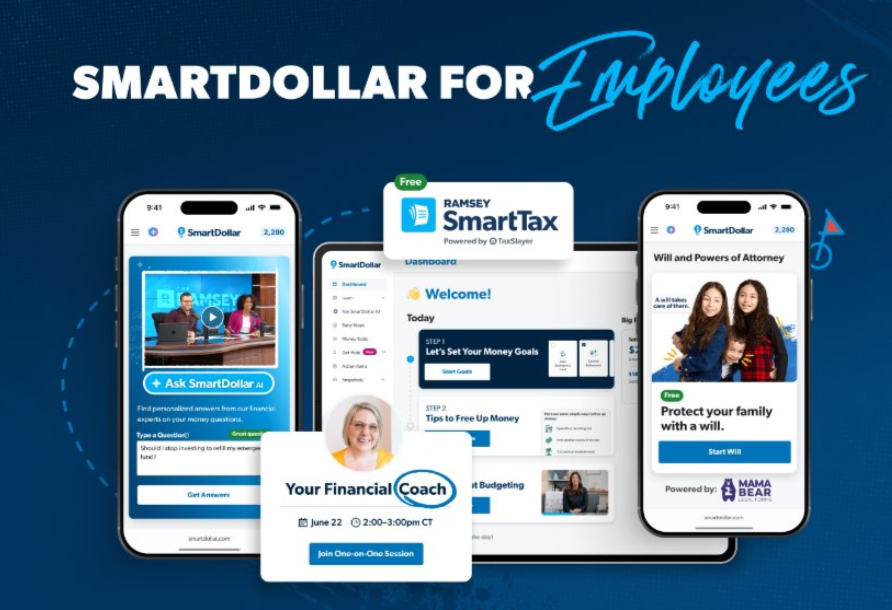
That’s where the SmartDollar platform can help. The employee experience moves through three primary components: education, tools, and accountability.
- Employees receive a personalized journey based on where they are in the financial wellness process.
- The platform provides financial tools, including the EveryDollar budgeting app, Ramsey SmartTax, and resources for creating a will and power of attorney.
- Employees can use coaching sessions to discuss topics such as creating a budget, managing debt, understanding their retirement plan, or getting on the same page financially with a spouse.
SmartDollar also discussed its integration of mental health resources through its partnership with BetterHelp, recognizing that financial stress can overlap with broader mental health concerns.
Giving Benefits Professionals Another Tool
One of the most memorable parts of the webinar was Taylor’s personal story.
With $123,000 in student loan debt after graduation, Taylor described the impact that financial uncertainty had on his mental health, work life, and future plans. Using the same approach SmartDollar teaches, Taylor and his wife eliminated the debt within 25 months.
Financial stability opened the door to goals that once seemed out of reach, including marriage and starting a business, along with bigger contributions to retirement and other savings accounts.
The importance of having a financial wellness solution is that it can fit into an employer’s existing benefits strategy without creating significant additional administrative work.
SmartDollar offers several pricing and implementation models, including annual all-access, utilization-based pricing, and pilot programs.
According to SmartDollar, the average user pays off approximately $10,000 in debt per year and saves $6,200 toward retirement. 57% of users have paid off debt since starting SmartDollar, while 74% can cover a $1,000 emergency without turning to a 401(k) loan, an employer loan, or a pay advance.
Get in Touch with SmartDollar Today!
Financial wellness is becoming an increasingly relevant part of the employee benefits conversation, connecting affordability, financial security, employee well-being, retirement readiness, and the overall employee experience.
91% of benefits leaders say financial wellness programs help them recruit and retain talent.
Employers can play an important role in helping employees build the knowledge, confidence, and habits they need to manage their financial lives. Companies using the platform see 27% less turnover on average among employees who use SmartDollar, while 73% of companies using SmartDollar report reducing turnover, and their users feel their employer cares about their financial concerns.
For more information, get in touch here: https://www.ramseysolutions.com/get-started
In case you missed it: Log in to access the full Meet A Vendor Presentation!
Not a subscriber? Request access.
Did you find this article interesting?
Don’t keep this knowledge to yourself – share it on your social media channels and spark engaging conversations!