
In This Post:
Presenters:

Emily Roberts
Chief Sales Officer, ForeverFit by Tivity Health™

Katherine Saunders, MD, FTOS
Co-Founder, FlyteHealth
GLP-1 medications have reshaped the conversation around obesity and cardiometabolic health, giving employers a powerful new tool to support healthier populations. Yet as adoption continues to grow, so do questions about long-term outcomes, rising pharmacy costs, and how to help individuals sustain healthier behaviors beyond medication alone.
These challenges were the focus of a recent webinar featuring Emily Roberts, Chief Sales Officer at Tivity Health, and Dr. Katherine Saunders, MD, FTOS, Co-Founder of FlyteHealth. Together, they explored why medication alone isn’t enough and discussed how pairing physician-led clinical care with ongoing fitness engagement can help support lasting health outcomes.
The Rising Cost of Cardiometabolic Disease
GLP-1 medications have changed what’s possible in obesity care, but medication alone isn’t a complete long-term strategy. As discussed during the webinar, sustainable outcomes depend on ongoing engagement, healthy lifestyle behaviors, and coordinated clinical support. As employers evaluate the long-term impact of GLP-1 therapies, they’re also exploring how to support individuals beyond the prescription.
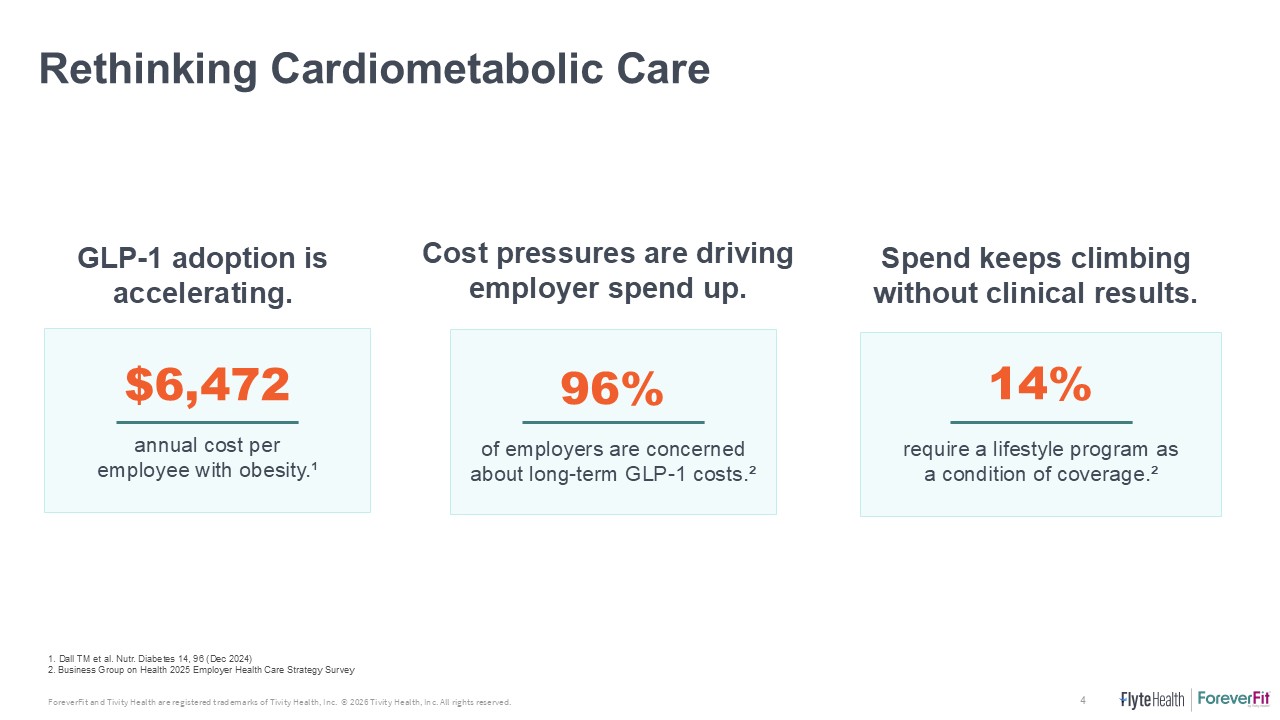
Cardiometabolic conditions, including obesity, diabetes, hypertension, and cardiovascular disease, continue to be among the most expensive drivers of employer healthcare spending. At the same time, GLP-1 adoption has accelerated dramatically, and employers recognize the potential benefits of these medications. But the concern about their long-term financial sustainability is rising.
According to research shared during the webinar, 96% of employers are concerned about the long-term costs of GLP-1 therapies1, while the average annual cost associated with an employee living with obesity exceeds $6,4002.
Only a small percentage of employers currently require participation in a lifestyle program alongside medication coverage.
Sustainable health outcomes require ongoing behavioral change that extends well beyond the prescription.
Why Medication Alone Falls Short
Obesity is a chronic disease that requires ongoing management, yet treatment is often fragmented. While medications can be highly effective, individuals may receive limited support for physical activity, nutrition, behavior change, and long-term health maintenance.
A pharmacy-first approach can present several limitations, including medication without ongoing clinical support and fragmented benefit experiences. Without coordinated support, individuals may struggle to maintain healthy habits, preserve lean muscle mass, or sustain progress after discontinuing medication.
For employers, this means investing heavily in treatment while potentially missing the opportunity to improve overall population health.
Introducing A Better Model by Connecting Clinical Care with Fitness Engagement
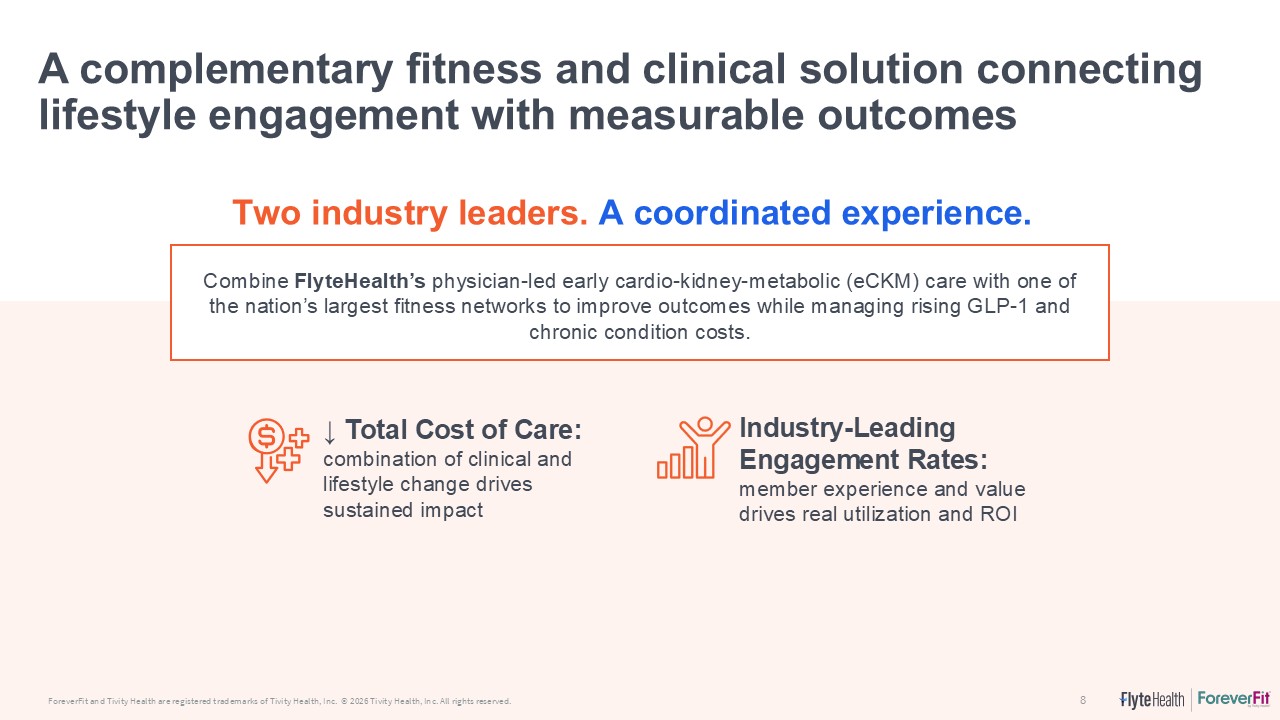
To address these challenges, the webinar introduced a model that pairs FlyteHealth’s physician-led cardiometabolic care with ForeverFit® by Tivity Health‘s nationwide fitness network. Together, the speakers demonstrated how pairing clinical care with ongoing fitness engagement can help individuals build healthier habits while supporting lasting health outcomes.
FlyteHealth’s integrated clinical care combines personalized treatment plans, medication stewardship, and longitudinal care coordination to address interconnected eCKM conditions and support lasting outcomes. Tivity Health’s fitness engagement helps individuals build sustainable habits through regular physical activity and continued participation.
This coordinated approach connects medical treatment with everyday behavioralchange, creating a more comprehensive path toward sustained wellness.
Engagement Is the Missing Ingredient
If you regularly follow our webinars, you have surely noticed that one thread runs through the benefit’s solutions recently. That’s engagement. And again, we come back to the fact that the biggest predictors of success in any healthcare program or solutions as such are no good if they are not used. Even the most advanced treatments cannot produce meaningful long-term outcomes if participants disengage after the initial stages of care.
Fitness has an essential role in creating opportunities for individuals to remain actively involved in their health journey. Regular exercise not only supports weight management but also contributes to:
- Improved cardiovascular health
- Better blood sugar regulation
- Increased energy levels
- Enhanced mental well-being
- Preservation of lean muscle mass
- Long-term lifestyle adherence
When fitness is paired with clinical care rather than offered separately, employees experience a more connected healthcare journey that encourages lasting participation.
Better Outcomes Through a Coordinated Approach
Research shared during the webinar highlighted the potential impact of pairing clinical care with lifestyle engagement, including:
- 86% medication adherence at 12 months3
- 15%+ average weight loss after 24 months4
- Nearly $30 million in pharmacy cost avoidance5
Additional research highlighted that individuals are more likely to enroll in weight management programs when fitness is included. Studies also suggest that combining exercise with GLP-1 therapy can significantly increase the likelihood of achieving greater than 15% weight loss while reducing lean muscle loss during treatment.
While specific results vary by population and program design, the broader message confirms that clinical treatment and healthy lifestyle behaviors are most effective when they work together.
Supporting Survivors for Long-Term Health
Survivorship care plays a crucial role in ensuring a confident return to health and work. Cancer survivors require ongoing monitoring, psychological support, and assistance in transitioning back to daily life. Key aspects of effective survivorship programs include:
- A structured 5-year survivorship plan to monitor health and prevent recurrence.
- Behavioral health support to address post-treatment emotional and psychological challenges.
- Guidance for returning to work and maintaining financial stability.
- Holistic care, including dietary, physical, and lifestyle recommendations to enhance long-term wellness.
About Tivity Health and FlyteHealth
Tivity Health® is a leading provider of healthy lifestyle solutions that helps health plans and employers improve health outcomes through fitness and whole-person health. Its portfolio includes SilverSneakers®, ForeverFit®, Prime® Fitness, and WholeHealth Living®, helping organizations support healthier lifestyles, increase member engagement, and manage healthcare costs.
FlyteHealth is a leading early cardio-kidney-metabolic (eCKM) care platform that helps organizations improve outcomes through integrated, whole-person care. Its model combines multidisciplinary clinical care, behavior change, medication stewardship, and advanced technology to slow disease progression, improve member engagement, and reduce healthcare costs.
To learn more about the approach presented during the webinar, connect with the Tivity Health or FlyteHealth teams. Email sales@tivityhealth.com or sales@flytehealth.com.
- Business Group on Health 2025 Employer Health Care Strategy Survey
- Dall TM et al. Nutr. Diabetes 14, 96 (Dec 2024)
- FlyteHealth Program Outcome Study: Independent Pharmacy Claims Analysis. January 29, 2025.
- 24-Month Book-of-Business Clinical Outcomes Analysis. 2025. Company data collected and validated.
- State of Connecticut FlyteHealth Program Evaluation. March 2026.
In case you missed it: Log in to access the full Meet A Vendor Presentation!
Not a subscriber? Request access.
Did you find this article interesting?
Don’t keep this knowledge to yourself – share it on your social media channels and spark engaging conversations!