
In This Post:
Presenters:

D Sharma
Co-Founder/CEO

Derek Nelson
VP of Revenue
What once was a way to boost morale, encourage healthier lifestyles, demonstrate an employer’s commitment to its workforce, today’s HR leaders, benefits consultants, and executives shift to asking a more important question: Can wellness actually improve business performance? And the answer is Yes. Organizations need benefits that deliver measurable business outcomes.
Recent data presented by Wellness Coach at the webinar suggests that when wellness programs are designed around personalized support, meaningful engagement, and long-term behavior change (integrated into employees’ daily lives), they can impact some of the metrics employers care about most: healthcare costs, retention, engagement, and productivity.
Derek Nelson, VP of Revenue at Wellness Coach, and D Sharma, Co-Founder and CEO at Wellness Coach shared compelling evidence showing how employee wellness can deliver measurable returns in two critical areas: retaining valuable employees and reducing healthcare costs. Supporting those findings were insights from Banner Bank, a long-time Wellness Coach customer, and claims data from one of the world’s largest insurance providers.
About Wellness Coach
Wellness Coach is a platform that makes holistic wellness accessible through coaching, digital tools, and clinical support. The mission is that the life-changing tools of personal coaching should be a right for everyone, not a privilege reserved for a few.
Wellness Coach encourages healthy habits and makes wellness feel supportive rather than overwhelming.
Wellness That Employees Actually Want
One of the strongest indicators of a successful employee benefit is simple: employees don’t want to lose it. That’s exactly what Banner Bank has experienced with Wellness Coach.
According to Brooke Stokes, Benefits Program Manager at Banner Bank, employees consistently advocate for renewing the program each year because they value the unlimited one-on-one coaching, engaging wellness challenges, and ongoing support.
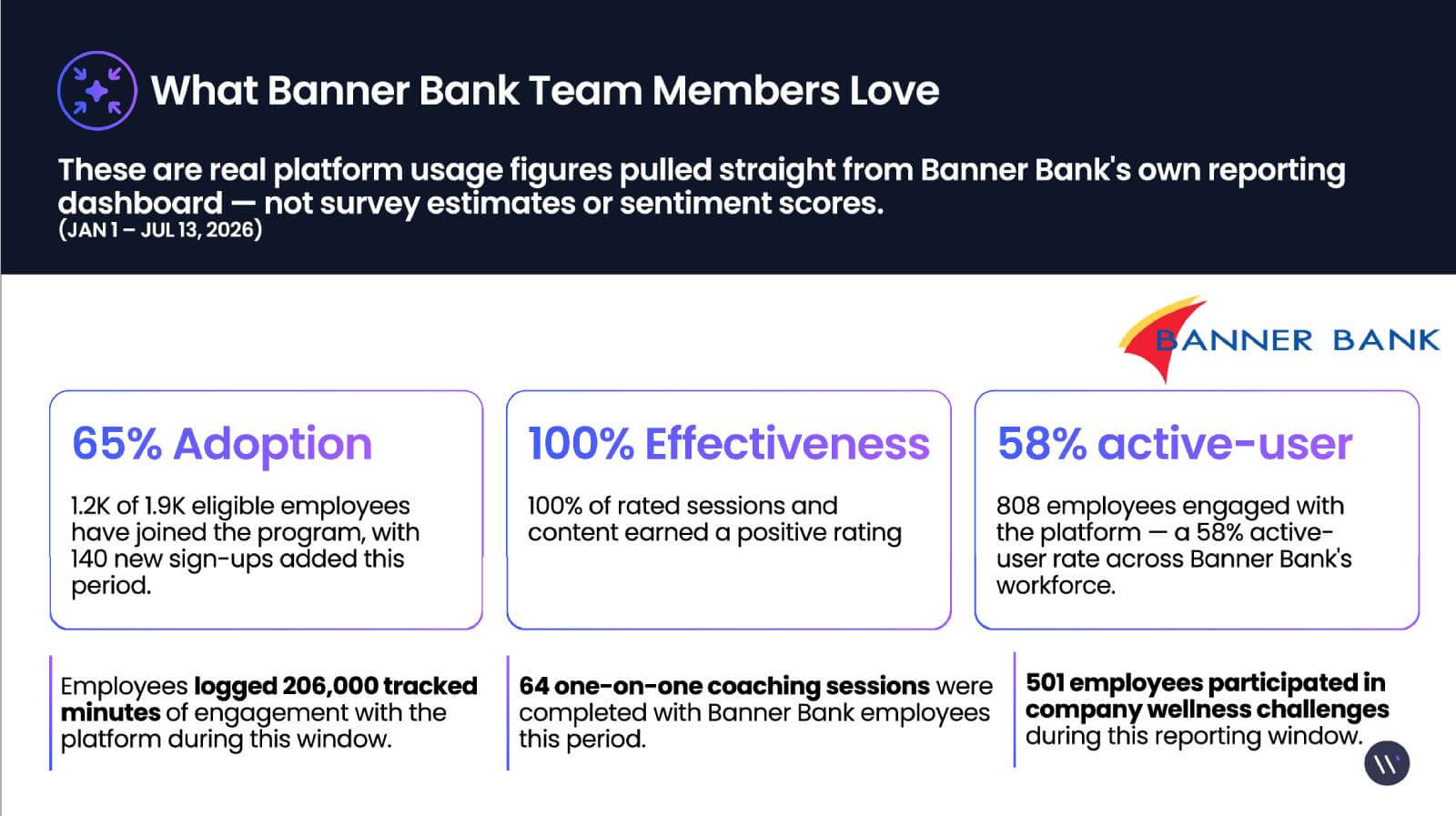
Instead of becoming another underutilized HR initiative, the platform has become part of the organization’s culture. Employees regularly participate and have remained consistently strong, with more than half of employees actively engaging with the platform at any given time, and approximately 65% overall adoption.
What’s more interesting is that employees have begun creating their own wellness challenges, demonstrating that healthy habits have become part of the workplace culture rather than something driven solely by HR.
Brooke shared data demonstrating how employee engagement with the wellness program correlated with improved retention. Over the measured period:
- Employees engaged with Wellness Coach had a turnover rate of 25.8%.
- Employees who did not engage experienced turnover of 39.5%.
To remain conservative, Wellness Coach attributed only half of this difference to the program itself. Even with that cautious approach, the analysis estimated approximately 109 employee departures avoided, nearly $2.69 million in turnover savings, and an estimated 25.1x return on investment for every dollar spent on the wellness program.
While correlation does not necessarily prove causation, these results highlight how employee engagement initiatives may contribute to a more positive workplace experience, one that encourages employees to stay with their employer longer.
Employees actively using Wellness Coach generated a 25x return on investment through improved retention.
During the first half of 2026, Banner Bank reported:
- 65% program adoption among eligible employees
- 58% active user participation
- More than 206,000 tracked minutes of engagement
- 64 completed one-on-one coaching sessions
- More than 500 employees participating in wellness challenges
- Positive ratings for every evaluated coaching session and piece of content.
Rather than focusing solely on step counts or wellness challenges, the platform combined coaching, educational content, incentives, and personalized support to keep employees engaged over time.
Measuring the ROI of Employee Retention
Replacing experienced employees is expensive. Organizations lose institutional knowledge, spend time recruiting replacements, invest in onboarding and training, and often experience decreased productivity during the transition.
Traditional wellness programs often focus on activity tracking or one-time challenges. Today’s workforce expects something different. Employees want personalized guidance, coaching, flexibility, and programs that fit naturally into their daily lives. At the same time, employers need evidence that these investments are reducing costs rather than simply increasing benefit spend.
Retaining experienced employees creates significant financial value. When employees feel supported, professionally and personally, they are more likely to remain engaged with their employer. That’s something that resonates with finance leaders and executive teams.
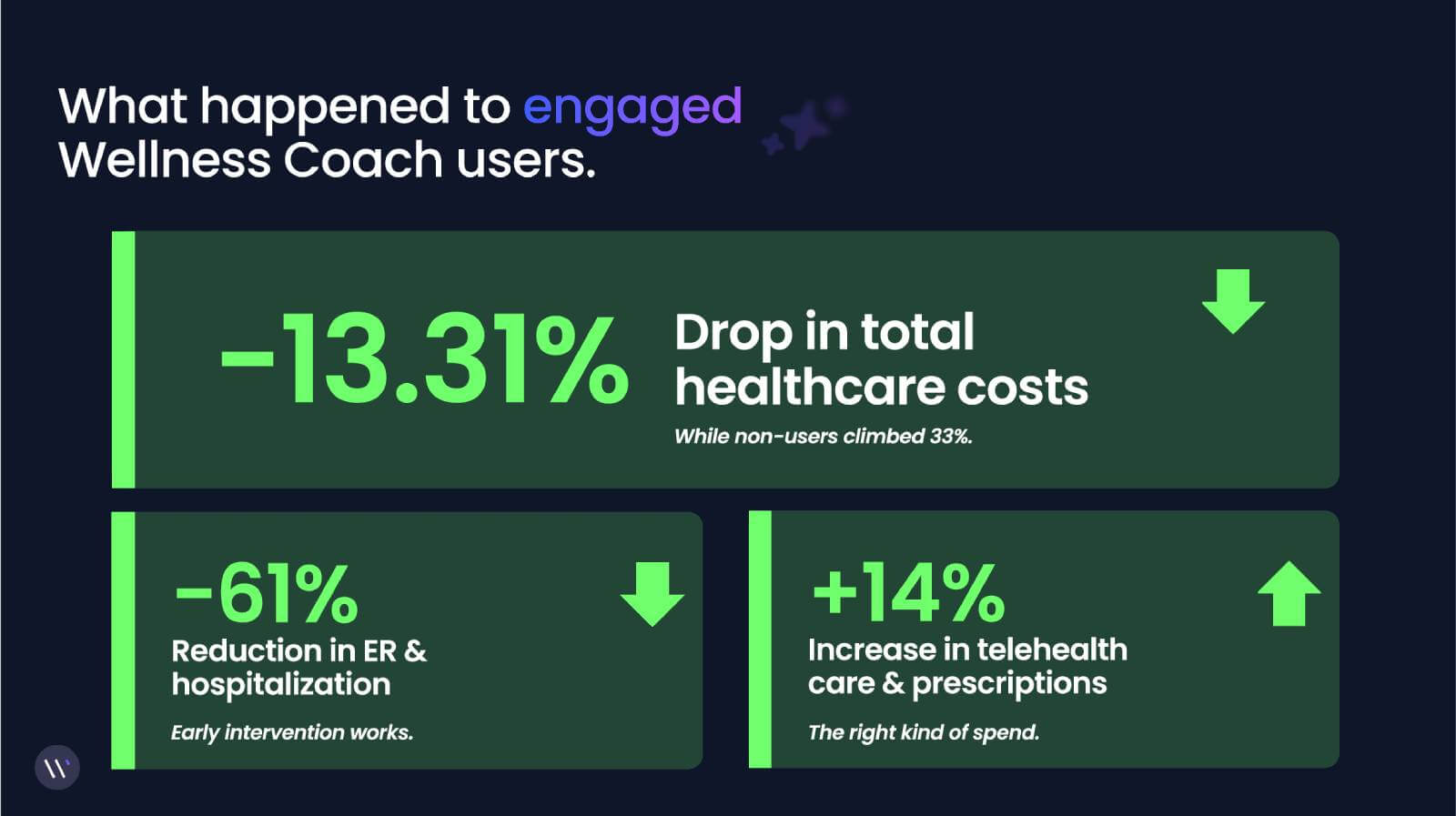
While retention demonstrates one side of wellness ROI, healthcare claims tell another. Working directly with one of the world’s largest insurance providers gave Wellness Coach a unique opportunity to analyze actual claims data across employee populations. Instead of relying on estimated savings or theoretical models, the organization compared healthcare costs between employees who actively used Wellness Coach and those who did not. The contrast was significant. Employees who did not actively engage with the wellness platform experienced:
- A 33% increase in total healthcare costs
- A 132% increase in hospitalization and emergency room utilization
Meanwhile, employees who actively participated in the program experienced:
- A 13.31% reduction in total healthcare costs
- A 61% reduction in emergency room visits and hospitalizations
- A 14% increase in telehealth utilization and prescription adherence, suggesting earlier intervention and more proactive care.
These findings reinforce an important principle in employee health: preventive care is often less expensive and more effective. Engaged employees were more likely to seek earlier intervention through primary care, telehealth services, and appropriate prescription management.
Employees receive guidance around nutrition, sleep, stress management, emotional wellbeing, and preventive healthcare. With these small steps, they create sustainable lifestyle improvements instead of short-term wellness campaigns.
The Human Element Still Matters
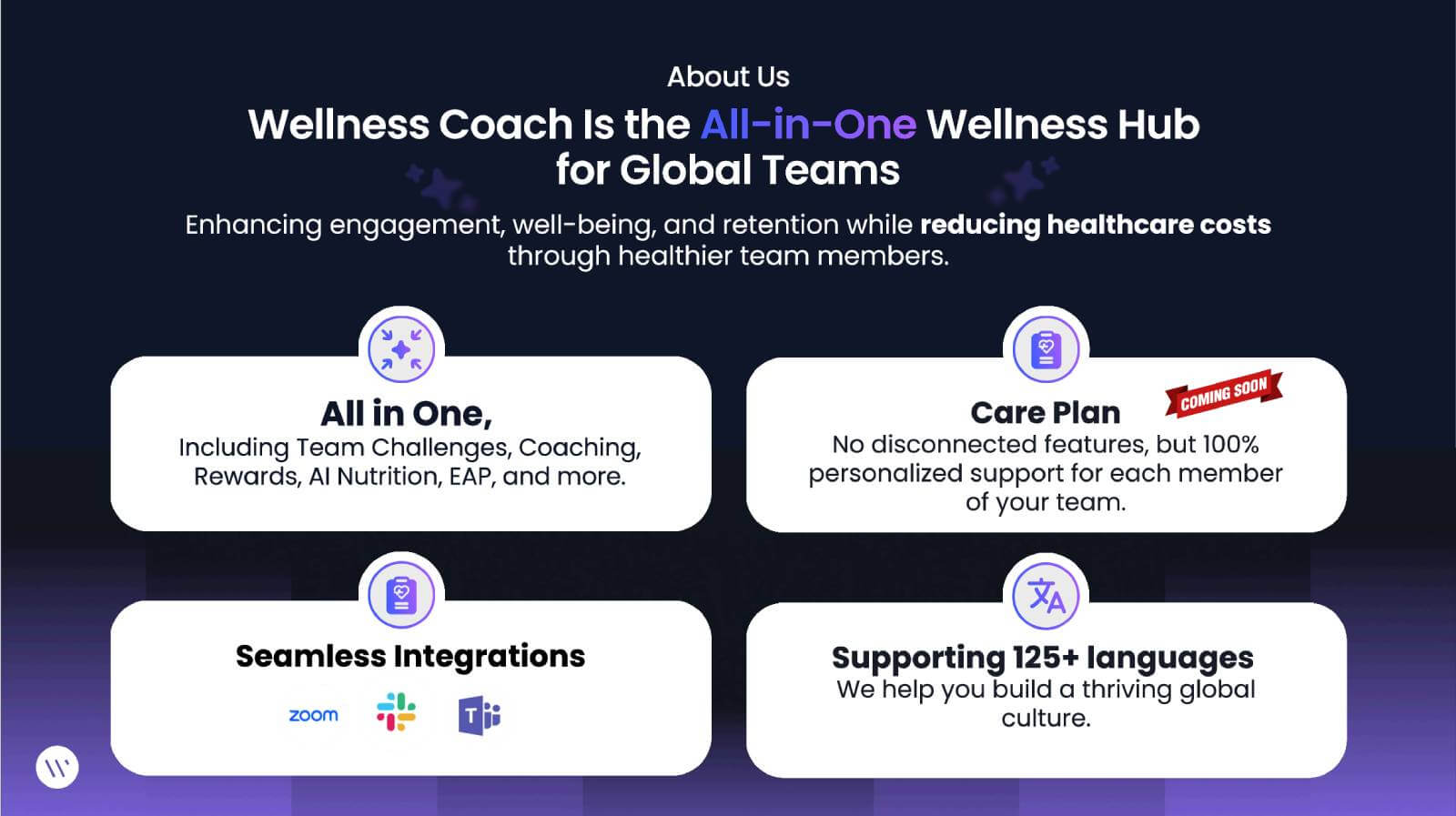
Technology continues to transform employee benefits, but Wellness Coach emphasizes that technology alone isn’t enough. Its approach combines digital tools with personalized coaching, which provides accountability and empathy, while digital tools make healthy choices easier and more accessible.
Some employees want to lose weight. Others need help managing stress, improving sleep, reducing back pain, or controlling chronic conditions.
Recognizing that challenge, Wellness Coach introduced its new Care Plan, a personalized experience designed to guide employees toward the resources that best support their individual goals. The Care Plan continuously adapts based on progress, helping employees build healthier habits over time while connecting them to the right support at the right moment.
Instead of adding another disconnected point solution, it creates a coordinated wellness experience.
Building Trust Through Privacy
As AI becomes increasingly common in healthcare and wellness, employee trust has never been more important. Wellness Coach emphasizes privacy by giving employees complete control over what information they choose to share.
Whether logging meals, tracking activity, or uploading health information, users decide if that information remains private or is shared with their coach.
Employers never receive individual health data without employee consent.
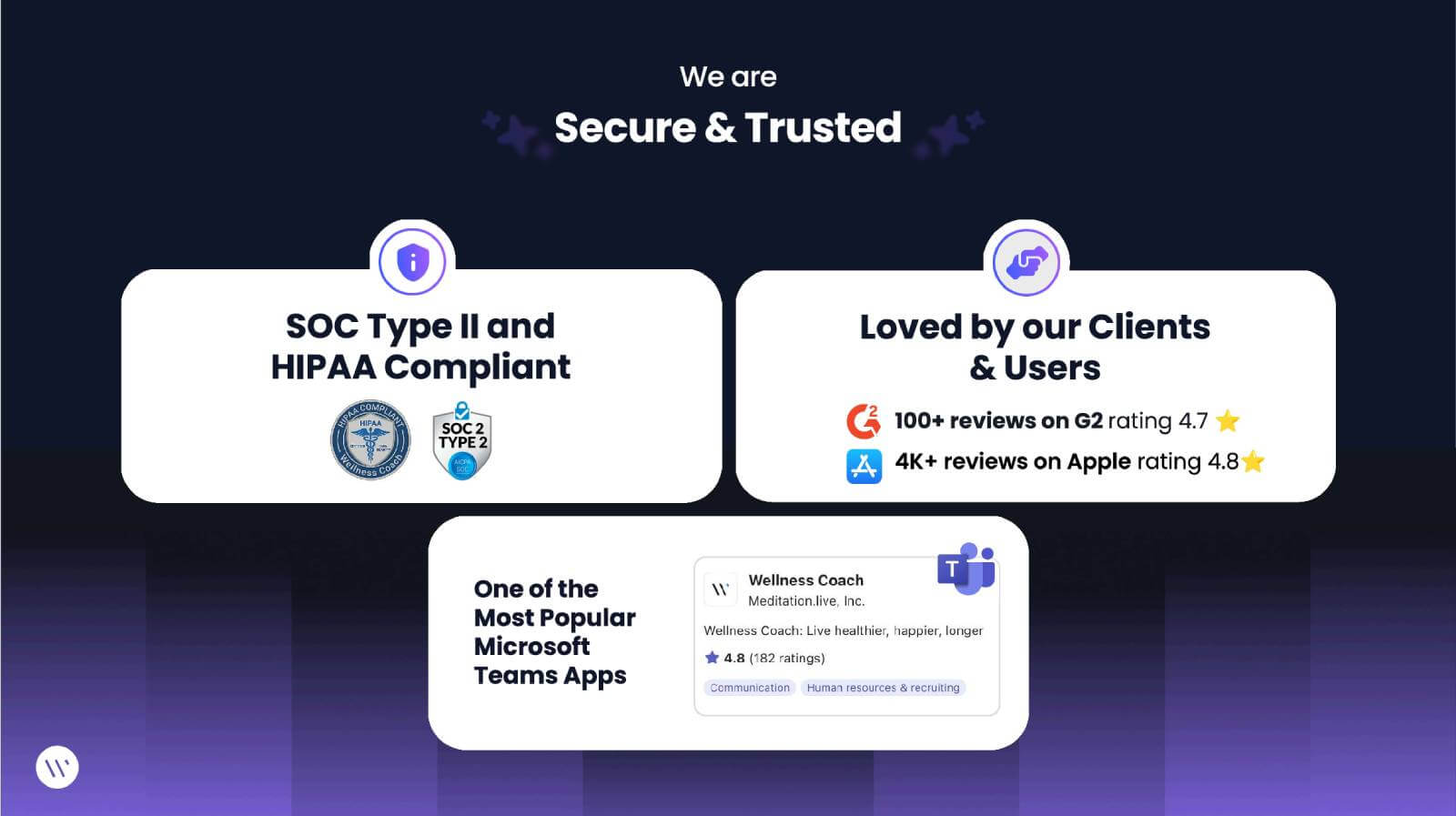
Combined with enterprise security standards, including HIPAA compliance and ISO 27001 certification, this privacy-first approach helps create the confidence necessary for meaningful employee engagement.
Get in touch with Wellness Coach today!
When wellness programs encourage preventive care, reduce avoidable hospitalizations, improve employee engagement, and help organizations retain valuable talent, they begin contributing to measurable business outcomes.
The strongest employee wellness programs create measurable business outcomes.
The case studies presented by Wellness Coach demonstrate that wellness programs have the potential to influence healthcare costs, employee retention, and workforce engagement in measurable ways.
Ultimately, the most successful wellness programs are about creating healthier employees, stronger organizations, and a measurable return on investment that extends well beyond healthcare costs.
Investing in employee health becomes an investment in organizational performance.
For more information, contact:
Derek Nelson – derek.nelson@wellnesscoach.live
In case you missed it: Log in to access the full Meet A Vendor Presentation!
Not a subscriber? Request access.
Did you find this article interesting?
Don’t keep this knowledge to yourself – share it on your social media channels and spark engaging conversations!