Expert Voices

Alaina Melena from Family First on Caregiving Costs

Caregiving comes with emotional and financial challenges. Alaina Melena of Family First shares practical tips to manage costs while keeping your family’s well-being front and center.
In This Post:

Disclaimer: The views and opinions expressed in this guest post are solely those of the author and do not necessarily reflect the official policy, position, or opinions of Shortlsiter, its owners, editors, or staff members.

Employers have long viewed rising medical and pharmacy costs as unavoidable. 

Still, in today’s healthcare environment, these steeply increasing costs are prompting a rethinking of the approach to employee benefits and talent management. 

Finance and HR leaders are sifting through medical, absence, and leave claims and employee performance and engagement dashboards to separate programs that deliver real value from those that drain budgets. 

Yet one of the expensive forces shaping those numbers rarely stands out in traditional data: inadequately supported employee caregivers.

The Hidden Drain on Your Benefit Costs and P&L

Across the US, healthcare and social-care systems are pushing more care into the home. 

This responsibility lands squarely on the shoulders of your workforce. On any given day, many employees may coordinate moms’ physical therapy sessions from three states away, arrange childcare, or manage a spouse’s chemotherapy aftercare.

Caregiving costs companies about $3.1 million per 1,000 employees per year in a combination of higher medical claims, absence and leave, productivity loss, and turnover. These costs are driven by caregiver burnout, and seventy percent of caregiver employees report delaying or neglecting their care, with 42% reporting having a chronic condition themselves. 65% report financial stress, and more than half experience strained relationships. Two-thirds missed workdays, on average, 7 days per year.

Caregivers often have exceptional time management, empathy, and problem-solving skills, making them highly effective and resilient employees. Their ability to juggle complex responsibilities translates into powerful performance, adaptability, and commitment in the workplace. However, employers need to understand the challenges caregivers face and provide support to ensure they can maintain high performance and avoid the excessive cost of burnout.

Why Caregiving Matters for Your Highest Cost Members?

Unsupported caregivers themselves have a higher prevalence and severity of:

  • Mental health and substance use disorders
  • Diabetes and obesity
  • Cardiovascular conditions
  • Digestive conditions 
  • Worsened menopause-related symptoms

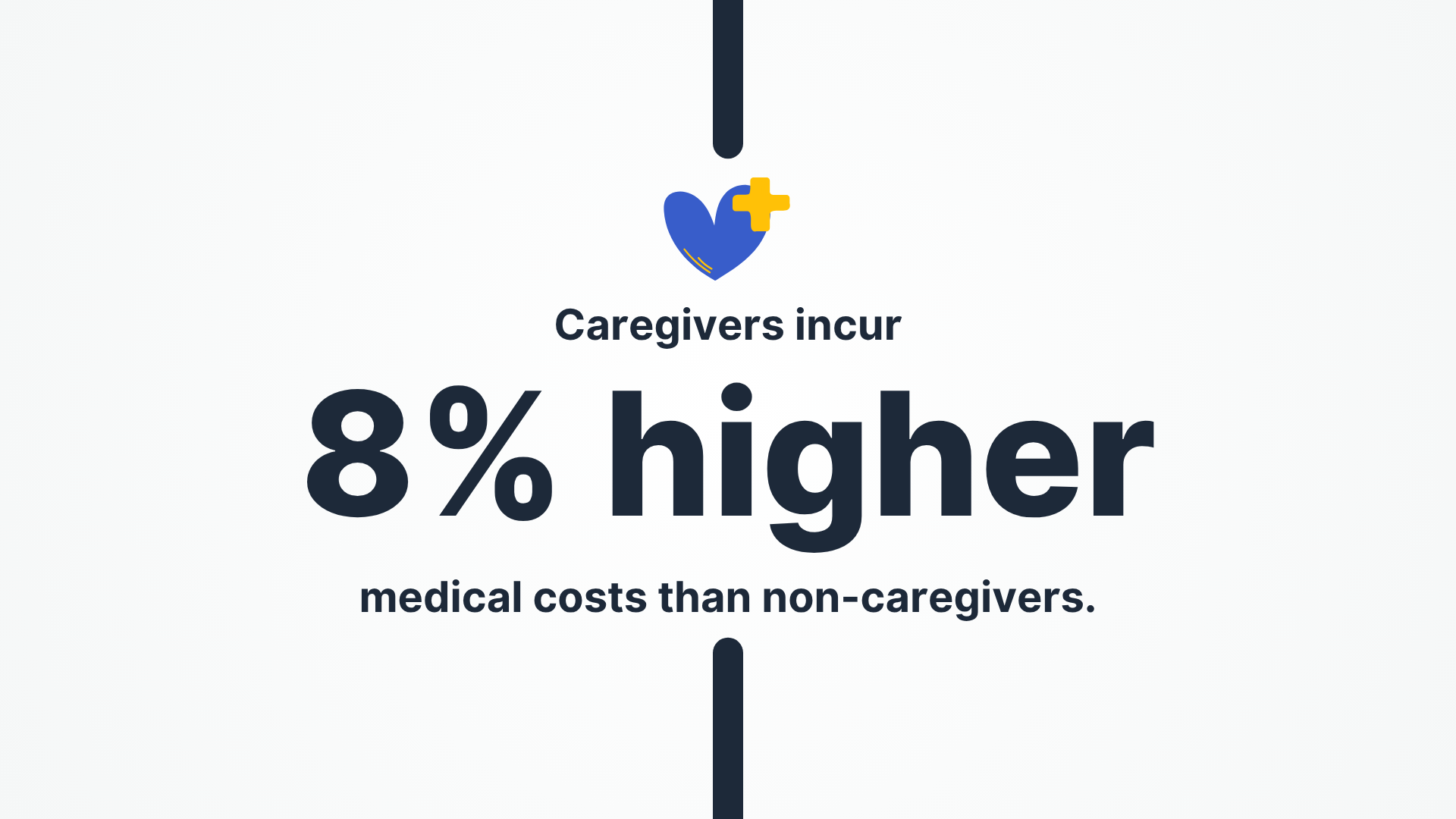
On average, caregivers incur 8% higher medical costs than non-caregivers. Caregivers are also key decision makers and home care providers to your sickest and highest cost members – those with serious illnesses and complex treatments such as cancer, mental health disorders, autoimmune disease, and orthopedic surgery – making caregivers critical to the best health outcomes for these members.

When caregivers are well equipped to manage the care of a loved one, adherence improves, complications decline, and avoidable admissions drop.

Why Traditional Benefits Fall Short?

Many employers already offer flexible schedules, PTO, or back-up childcare. These benefits matter, but they rarely address the root causes of caregiver challenges and burnout:

  • Employees may not know how to care for or advocate for a loved one – perform a wound dressing, navigate the education system for an autistic child, or locate a quality memory-care facility.
  • Family disagreements, varying expectations, and changes in family roles can be as draining as the day-to-day tasks of caregiving.
  • Costs for health care, equipment, home modifications, and personal care, as well as lost wages for time off, can be significant for caregivers, leading to financial strain.
  • Lack of reliable transportation, food insecurity, care access, and social support for caregivers and care recipients further compound challenges and opportunities for positive outcomes.

A true solution must go deeper than time-off policies or emergency care.

Building a Modern Benefits Strategy

Forward-thinking organizations are reframing benefit strategy through a lens for the vital role that caregivers play in better health outcomes and as a key influencer in employee experience and performance. 

Below is a roadmap to minimize the financial impact of caregiving on your organization:

Conduct a care-needs assessment. Start with data: an employee pulse survey or Employee Resource Group (ERG) feedback, review Family Medical Leave or disability-leave incidence with demographic variables, and review EAP utilization and need types. 

Look for patterns in claims like frequent unplanned absences or recurring codes for depression or hypertension among mid-career employees, for example, which point to caregiver stress and burnout. 

This baseline will inform both the scope of caregiver challenges and potential segments that require tailored resources.

Review the current benefit strategy from the caregiver’s perspective. Map each benefit against the pain points uncovered. Does your leave policy accommodate intermittent absences for the care of self or a loved one for treatment, therapy, or counseling meetings? 

Solicit open-ended feedback. Employees will tell you that downloading five separate apps – one for mental health, one for childcare, one for a chronic condition, etc. – is confusing and overwhelming.

Invest in a personalized, comprehensive, one-stop platform that gets at the root cause of caregiver challenges and burnout. 

The most effective solutions wrap clinical guidance, emotional coaching, advocacy, and logistical assistance into a single experience that follows employees through every life stage. 

Look for:

  1. In-the-moment access via live phone or video, chat, and mobile app
  2. Evidence-based education – from topic-specific toolkits to caregiver resiliency guidance
  3. Integrated social determinants of health resources, such as transportation or meal delivery scheduling
  4. Data-driven outcomes with clear ROI metrics: reduced health risk, reduced absence, improved employee satisfaction

Because these platforms capture real-time caregiving data, they can also fill the visibility gap to employee day-to-day challenges that plague traditional claims analytics, informing future program design and spending.

The Business Case in Numbers

Imagine a 5,000-employee organization. If caregiving costs an average of $3.1 million per 1,000 employees, the annual cost is roughly $15.5 million, a figure that dwarfs many wellness budgets. 

Even modest gains matter: a 15% reduction in caregiver-related absence, paired with a 5% drop in medical costs for both caregivers and their loved ones, can generate millions in savings and a compelling ROI story for finance. 

Beyond Savings: Culture, Brand, Retention

Finally, integrating caregiver-centric or family-supportive benefits is not just a cost-containment tactic. It signals empathy, drives engagement scores, and differentiates your talent brand, particularly among Millennials and Gen Xers who are sandwiched between child and elder-care duties

Employees who feel seen and supported are less likely to take a new job, more willing to recommend the company to peers, and are more productive day-to-day.

Conclusion

High medical and pharmacy trends may have nudged employers towards assessing the value and impact of their benefit programs, but they also offer an opportunity to rethink benefits holistically

By recognizing caregivers as pivotal influencers of health outcomes and employee experience and by equipping them with comprehensive, outcomes-driven support, you protect your people and manage costs. 

Caregiving is no longer a personal issue that stops at the office door; it is a strategic lever for business performance. 

Author Bio:

Alaina Melena is the Chief Strategy Officer at Family First and is a seasoned health and benefits strategist with over 20 years of experience advising mid-sized to multinational companies. A former consultant at Mercer and WTW, she has led transformative initiatives in health strategy, DEI, cost management, and workforce wellbeing. Alaina is known for developing data-driven, employee-centered solutions that align business and talent goals, with deep expertise across the healthcare and benefits continuum.

Elder Care Service Providers

Browse our curated list of vendors to find the best solution for your needs.

Stay Informed

Subscribe to our newsletter for the latest trends, expert tips, and workplace insights!

Related Posts

Heart Disease in the Workplace

As heart disease and work stress are closely linked, the question remains: Can the stress caused by work be so severe that it causes a heart attack?