
Fair Workplace Practices

How to Create Job Ads that Attract Talent

Would a top candidate choose your posting over a competitor’s in under a minute? The answer depends on whether your job ad sells opportunity or just lists demands.
In This Post:
Expert Contributors:
Picture of Jeffrey Zhou

Jeffrey Zhou

CEO & Founder of Fig Loans

Picture of Christopher Pappas

Christopher Pappas

Founder, eLearning Industry Inc

Picture of Edward Tian

Edward Tian

CEO, GPTZero

Your company posted another job opening. Within a few minutes, the first application and resume arrive. By the end of the week, you’ll have 250 applications in your inbox, as Glassdoor data shows happens with typical corporate job offers.

Yet, despite these overwhelming numbers, 69% of U.S. corporations still can’t find the talent they are looking for. What’s the reason for this disconnect?

The problem isn’t volume – it’s quality. While generic job postings pull in floods of resumes, they often miss the candidates who matter most. Top talent has options, and they’re scrolling past listings that read like every other corporate template.

The good news is that transforming your job postings doesn’t require a massive budget or a complete overhaul of your hiring process. 

In this article, we explain how to create job ads that attract talent using simple, research-backed steps.

Why Your Job Ad Matters More Than You Think

Many companies still treat job ads as an afterthought, without realizing that a job ad is essentially a candidate-facing sales pitch.

When done well, a job advertisement does far more than list duties – it answers nearly every question a qualified candidate would ask before deciding to apply. It helps them self-assess fit, saving time on both sides.

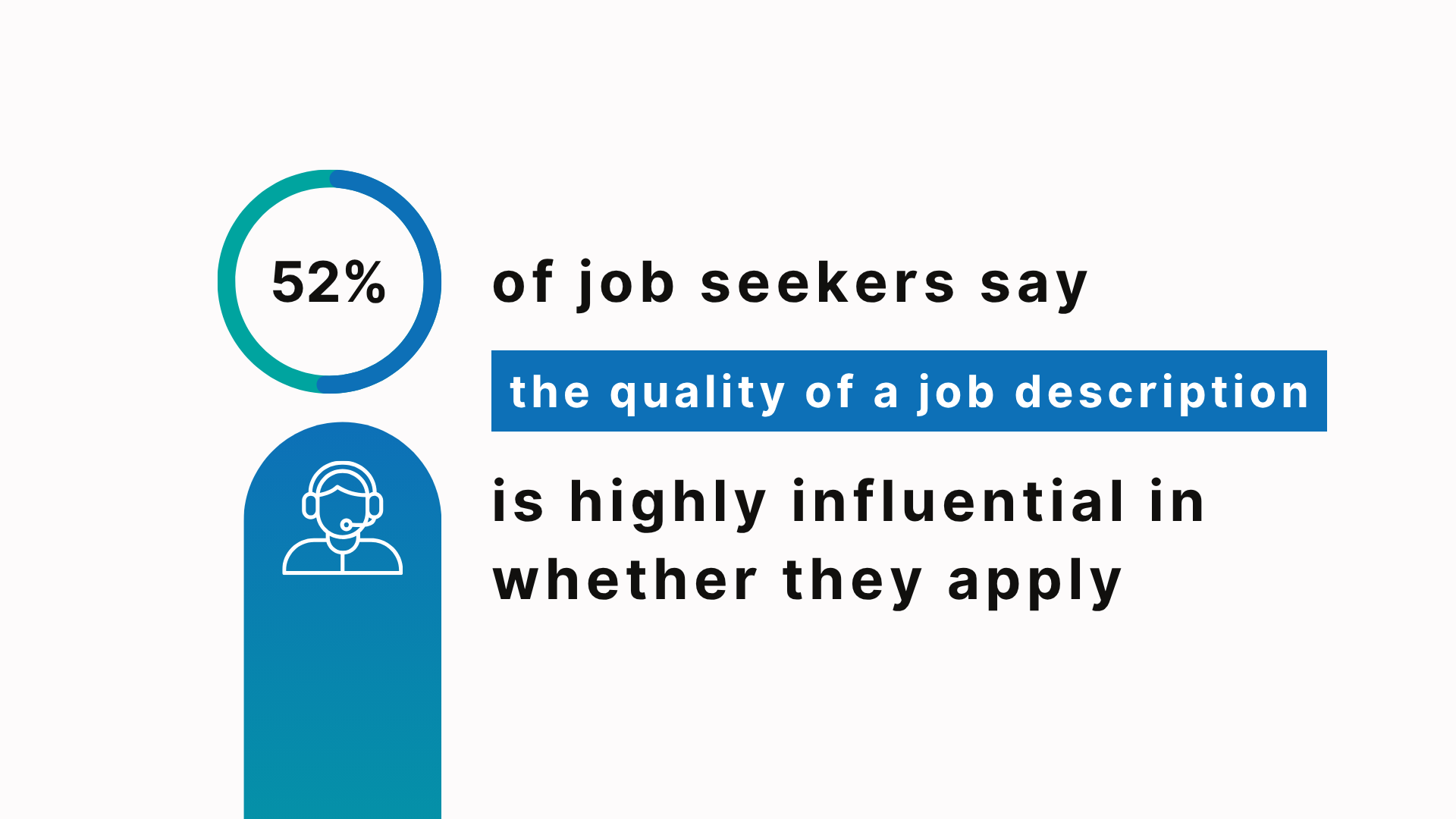
For many candidates, it’s also their first real impression of your organization. According to research, 52% of job seekers say the quality of a job description is highly influential in whether they apply. 

In other words, your posting is a marketing tool as much as it is a hiring one.

Difference Between Job Descriptions and Job Postings

Not all job documents serve the same purpose. It is important to distinguish clearly between the internal job description and the external-facing job posting or job ad.  

The internal job description document covers everything: responsibilities, reporting structure, requirements, and legal details. It’s what candidates review and sign during the interview and onboarding process.

The public-facing job posting, on the other hand, should feel like an invitation. It’s where you bring the role to life, showing how it fits into the company’s bigger picture and what makes it exciting to join.

Instead of copying directly from the internal job description document, HR professionals must summarize and translate it into a compelling external ad. 

The goal isn’t to make the ad sound exaggerated or exclusive, but instead to open the door wide enough to attract capable, motivated applicants who see themselves growing in your environment.

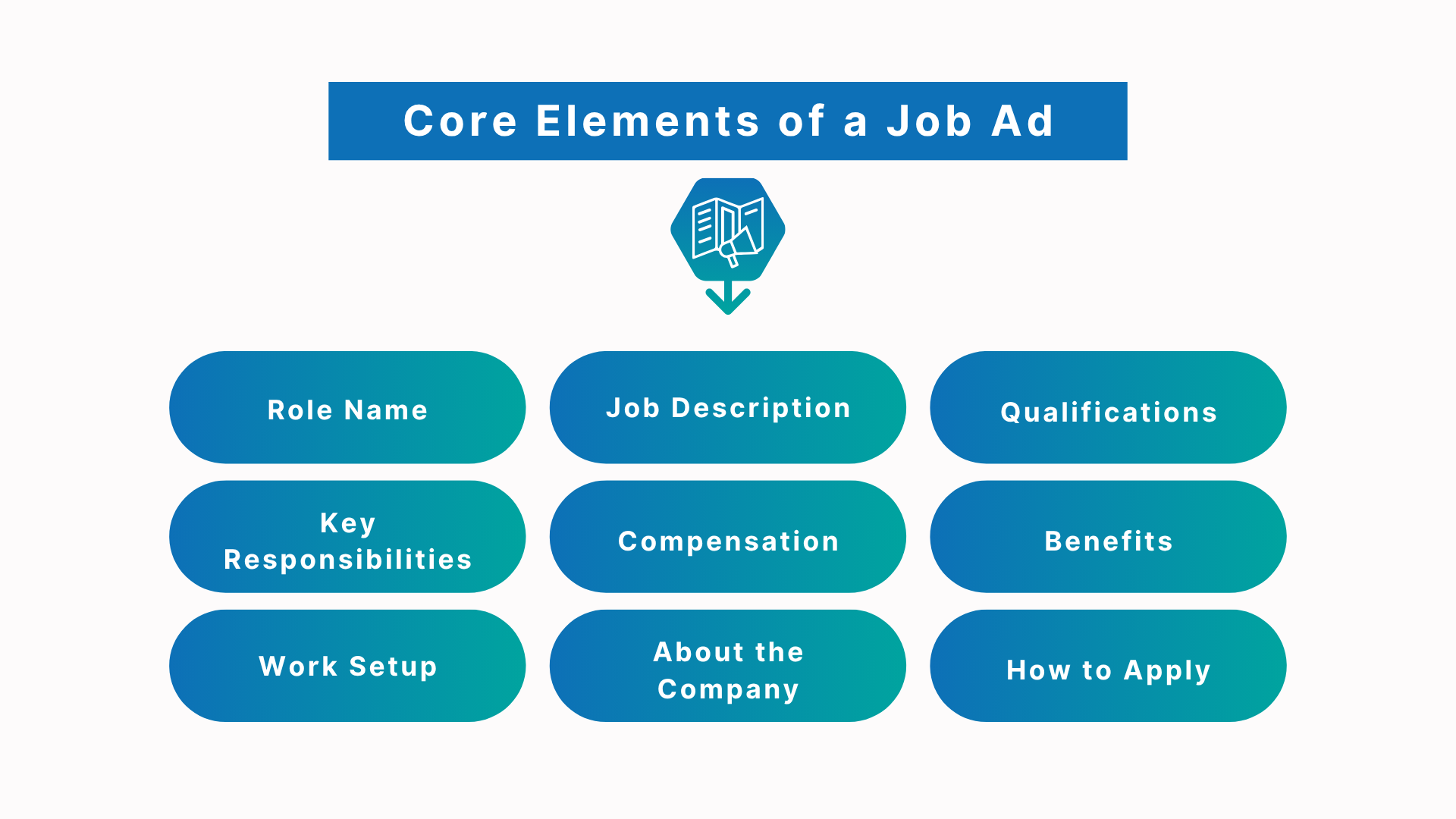
Core Elements of a Job Ad

What do great job adverts have in common? They tend to share a set of core elements that resonate with candidates. 

Below are the basic elements that every great job must include: 

  • Role Name – Use a clear, searchable title that matches industry conventions
  • Job Description – Two to three lines on why the role exists and the outcomes it drives
  • Qualifications – List must-have skills, education, and certifications; separate “required” from “nice to have”
  • Key Responsibilities – Bullet the core tasks; prioritize what happens weekly, not once a quarter
  • Compensation – Share the salary range and any bonus or commission structure, and note if pay is negotiable
  • Benefits – Summarize health coverage, PTO, retirement plans, relocation support, learning budgets, and other perks
  • Work Setup – State remote, hybrid, or on-site and add schedule expectations and any physical requirements
  • About the Company – One short paragraph on mission, products, market, and culture cues candidates care about 
  • How to Apply – Explain the application steps, deadline, and who to contact with questions

How to Write a Job Advertisement That Stands Out

Writing a job advertisement might seem simple, but as mentioned, it requires balancing structure and creativity. You must spell out the mundane everyday tasks, but you also need to market the role so that great candidates feel a pull. 

So, how to write a job advertisement that speaks to the best talent?

Here are eight key strategies focused on how to create job ads that attract talent and set your organization apart.

1) Know Your Audience and Use the Right Keywords

Before writing the posting, consider who your ideal candidate is. What would they search for? Which skills would they enter on a job board?

Search engine optimization isn’t just for marketing – it’s important in the recruitment process too. Job boards like Indeed and LinkedIn use keyword relevance to match listings with seekers, so without the right terms, your posting may never reach qualified candidates.

While creative titles like “Software Ninja IV” or “Tech Guru” might be fun to insiders, they can also confuse job seekers. Generally, a straightforward “Senior Software Engineer” will perform better in search results and immediately tell candidates what the role is. 

Similarly, avoid jargon in the title or location field that could limit visibility.

2) Lead With Value, Not a Checklist

Too often, generic job postings read like a checklist: looking for degree X, skill Y, 5+ years of Z. Would this ad excite you enough to apply? Great job adverts lead with what’s in it for the candidate. 

Front-load the exciting aspects: the technologies they will get to use, the real problems they will solve, company achievements worth boasting about, and the kind of impact they’ll make on their customers or the industry.

For example, swap “We are looking for a Marketing Manager” for “Are you a growth marketer who loves turning data into creative campaigns? Join our team to lead campaigns seen by millions and mentor a rising team.”

Recruiters rarely have full insight into the alluring elements of the position, so ideally, they shouldn’t craft job postings in isolation. Before publishing, schedule an alignment session with the hiring manager and interview key stakeholders to define what truly sells the role.

3) Write Clearly and Inclusively

Surprisingly, your word choice affects who applies. Research found that terms such as “aggressive,” “analytical,” or “assertive” lowered women’s interest and intent to apply for management roles. 

At the same time, terms like “dedicated,” “responsible,” “conscientious,” and “sociable” increased perceived fit among women. 

Studies also show that many women opt out of applying unless they meet every requirement, while men often apply when they meet most of them. 

Therefore, to widen the applicant pool, employers should keep requirements focused and relevant, maintain a welcoming tone, and remove gender-coded language.

In addition, avoid using catchphrases like “thrive in high-pressure environments”, “additional tasks as assigned”, or even any “we’re a family here” verbiage. These expressions are mainly viewed as red flags and raise concerns about a toxic work culture with poor work-life balance.

4) Highlight Your Employer Value Proposition

Today, top candidates research and vet employers as much as employers research them. Every job ad is a reflection of your company’s employer branding strategy, whether you intend it or not. 

Think about the core values and culture you promote on your careers site or social media. Are you all about innovation, or customer service, or teamwork? 

Highlight those traits in your job ad and emphasize fairness, transparency, and authenticity in your hiring approach. About 7 in 10 job seekers say it’s important to see details about company culture in the job post.

Many employers now go a step further by showcasing photos and short videos of their offices, work environment, and team-building activities to help candidates visualize what it’s like to work there. 

Strong employer branding not only differentiates you but also directly impacts your bottom line. According to Harvard Business Review, companies with a bad reputation must offer 10% higher salaries to convince people to join.

5) Be Transparent on Pay and Compensation

Pay transparency has become increasingly important nationwide, with many job seekers now viewing it as a non-negotiable factor in their job search

According to a Robert Half survey, more than 2 in 5 U.S. workers said they would lose interest in a position if the job posting lacked a salary range, which would be almost half your pipeline gone before they even click apply. 

However, the impact of pay transparency extends far beyond candidate interest. As many as 73% of U.S. employees say they’re more likely to trust companies that include salary ranges in their job postings compared to those that keep pay information hidden.

This trust deficit can have lasting implications and influences not only on whether candidates apply, but also how they view the organization’s culture, values, and commitment to fairness.

So, while pay transparency laws now cover multiple states, the benefits extend far beyond legal compliance.

6) Highlight Company Benefits and Perks

Does your company offer generous health coverage, parental leave, wellness programs, or flexible work options? These should be mentioned in the job ad, not just on your careers page or your official job description document.

If you’ve invested in unique perks, such as a personal development budget, volunteer days, or a pet-friendly office, those details can set you apart from a competitor with a similar role.
Data shows that job posts that mention two or three specific company benefits fill five days faster than those that don’t. 

Beyond benefits, explain what kind of autonomy and decision-making power the role provides. “The attractiveness of a role depends on how well it supports learning, respects individuality, and allows for a healthy balance between work and life,” says Christopher Pappas, Founder of eLearning Industry. 

So, rather than listing routine tasks, focus on what the employees can gain – not just what they’ll do

7) Emphasize Job Growth Opportunities

In addition to the basics, the most attractive job ads speak to deeper career motivations: growth and security

Ambitious professionals want to know how they can evolve in a role over time. 

Are there learning opportunities? Clear promotion tracks? Projects that will stretch their skills? Highlighting these aspects can significantly boost a job’s appeal. 

Research shows employees want to feel valued, see potential to grow, and have flexibility in a new job. 

“Employers can structure roles as dynamic growth loops where each task a person handles feeds their skill development and opens doors to new responsibilities,” observes Jeffrey Zhou, CEO of Fig Loans.

"Employers can structure roles as dynamic growth loops where each task a person handles feeds their skill development and opens doors to new responsibilities."

8) Consider Job Security

Job security is another increasingly important factor, especially in an era of mass layoffs and the rise of AI in the workplace.

Workers are understandably wary of roles that might be automated or disrupted. 

“One of the key factors that makes a job truly attractive today is when it doesn’t appear to have the potential to be eliminated or heavily changed by AI… that demonstrates job security, which people want,” explains Edward Tian, CEO of GPTZero. 

If AI plays a role in your field, address it directly. Show how your organization uses technology to amplify human expertise rather than replace it.

Furthermore, if your company has strong retention rates and good culture scores, highlight those metrics. Candidates want to see they’re joining a workplace that’s stable and well-managed.

Leverage Technology and Data for Wider Reach

Even the best-written job ad won’t attract talent if it’s not reaching the right eyes. Start by distributing your job ad across platforms where your ideal candidates already spend their time.

Consider the following channels for a well-rounded approach:

  • Professional networks: LinkedIn or industry-specific communities
  • Company platforms: your Careers page or internal job site
  • Job boards: general ones (Indeed, Glassdoor) and niche boards for your field
  • Social media: Twitter, Facebook, or Instagram for employer branding posts
  • Referral programs: mobilize your employees to spread the word

Using technology can dramatically extend the reach and efficiency of your job advertising. An Applicant Tracking System (ATS) is a popular tool that allows you to post to multiple sites in one go and then easily track and manage the applications that come in.

The bottom line is to meet candidates where they are. Every additional channel or tool increases your chances of catching that perfect applicant’s attention.

Turn Job Posts into Talent Magnets

Every hiring manager or HR professional ultimately wants the same thing: a high-quality applicant pool and a standout hire. 

Achieving this starts with rethinking the humble job advertisement. 

By now, we’ve seen that learning how to create job ads that attract talent has nothing to do with quirky titles or creative formatting – it’s about clarity, authenticity, and empathy for the candidate’s perspective.

Written by Ivana Radevska

Senior Content Writer at Shortlister

ATS Systems

Browse our curated list of vendors to find the best solution for your needs.

Stay Informed

Subscribe to our newsletter for the latest trends, expert tips, and workplace insights!

Related Posts

Unconscious Bias in the Workplace

To what extent are the organizational culture and business outcomes affected by unconscious bias? What is unconscious bias in the workplace, and what can be done about it?

Culture Add vs. Culture Fit vs. Value Fit

Since the company’s culture has always been crucial in attracting and retaining talent, HR professionals might struggle with the dilemma: should they hire for culture add vs culture fit?