
In This Post:
Presenters:

Mike Quigg
VP of Strategic Partnerships
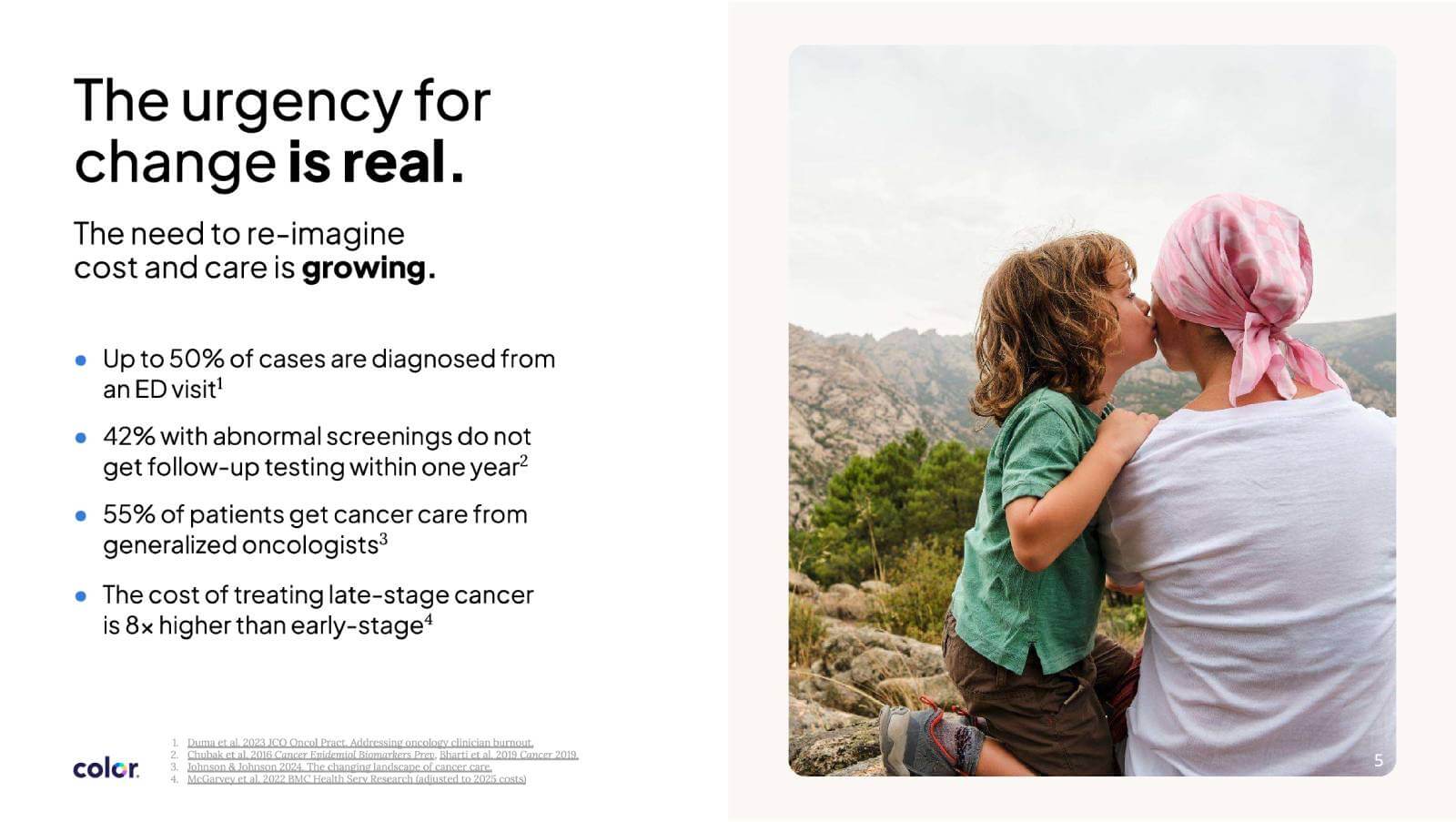
When it comes to cancer, employers are deeply concerned about the well-being of their employees and the growing impact on their financial health. Cancer diagnoses continue to rise, and care pathways remain fragmented. Alarmingly, up to 50% of cancer cases are first identified in emergency rooms, meaning patients often enter the healthcare system at its most chaotic and expensive point. Even more concerning, 42% of people with abnormal screenings never receive follow-up testing within a year, allowing treatable cancers to progress unnecessarily. What employees need is direct, fast, and clinically-led care, available no matter where they live. They need a clear way to take action earlier instead of being left to navigate delays, handoffs, and uncertainty.
This moment in cancer care calls for a different approach. Across screening, diagnosis, treatment, and survivorship, support needs to be delivered through a single, clinically integrated program where people can access oncologist-led care and where meaningful improvements in outcomes and costs are possible. This is where Color Health is changing the story.
On our last week’s webinar, we had Mike Quigg, VP of Strategic Partnerships at Color Health, to talk about a topic that is on the minds of most employers, which is the unsustainable trajectory of costs and burden that cancer is having on their populations. Mike has spent the past 21 years in the health and benefits industry. One part of that is on the consulting side, helping employers shape their health and benefits strategy. The other part is on the solution side at different points in the solutions. Additionally, he brings a personal perspective to the conversation, having been a primary caregiver for his mother, when he encountered numerous missed opportunities that could have potentially extended her life and improved her overall outcomes.
About Color Health
Color Health is an oncologist-led Virtual Cancer Clinic built to deliver direct clinical care across the full cancer journey. For more than a decade, Color has focused exclusively on cancer, supporting employers nationwide with a model designed to improve outcomes and structurally lower costs.
Employers partner with Color to take control of cancer through three core strategic priorities:
- Getting ahead of cancer diagnoses and costs by focusing on earlier detection and faster follow-up.
- Addressing cancer as a complex clinical problem that requires oncologist-led care, not just guidance or navigation.
- Shifting cancer spend to a more cost-effective model with a single partner that can meaningfully impact outcomes and costs.
Employers that prioritize this approach recognize missed screenings, delayed diagnoses, and unmanaged treatment decisions drive both human and financial consequences. Without early, clinical intervention, those impacts compound year over year.
The Case for Reinventing Cancer Care
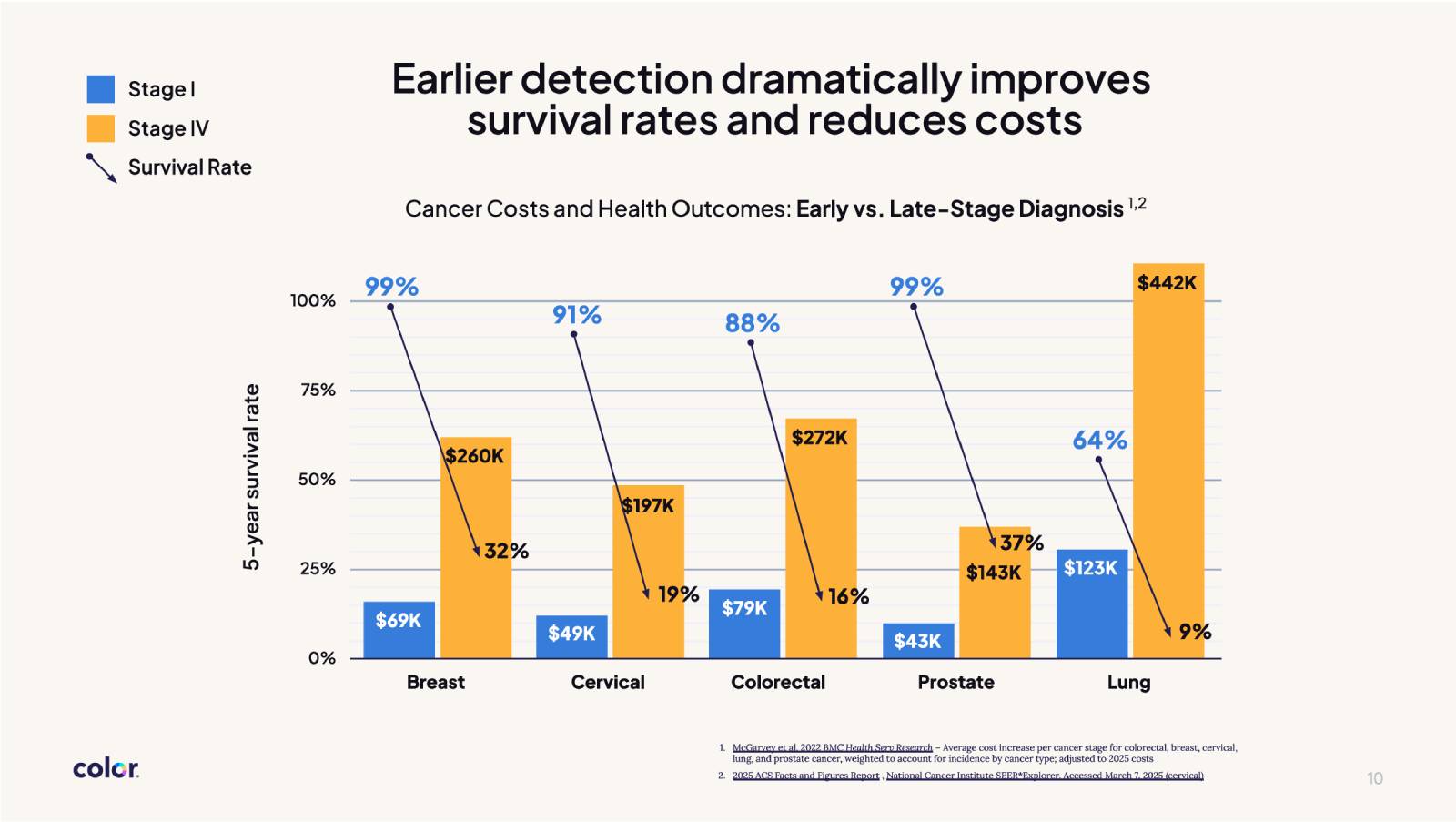
A shift towards proactive clinical intervention at every stage of cancer care is essential for better outcomes. Treating late-stage cancers can cost up to eight times more than early-stage care.
When care is delayed, mismanaged, or routed through generalized clinicians rather than cancer specialists, outcomes worsen, and costs multiply. Even with available screenings, widespread fragmentation prevents people from getting timely help.
Many don’t have a primary care provider, don’t understand their risk, or can’t get into specialist appointments for months. As a result of that, 55% of patients get cancer care from generalized oncologists. Survival rates drop dramatically when cancer reaches stage III or IV.
A new approach prioritizes access, speed, and whole-person clinical care. That’s exactly what employers need: a way to intervene earlier, diagnose people faster, and make cancer care more accessible because it not only can reduce treatment costs by hundreds of thousands of dollars per patient, it can improve survival.
Color’s Reinvented Approach
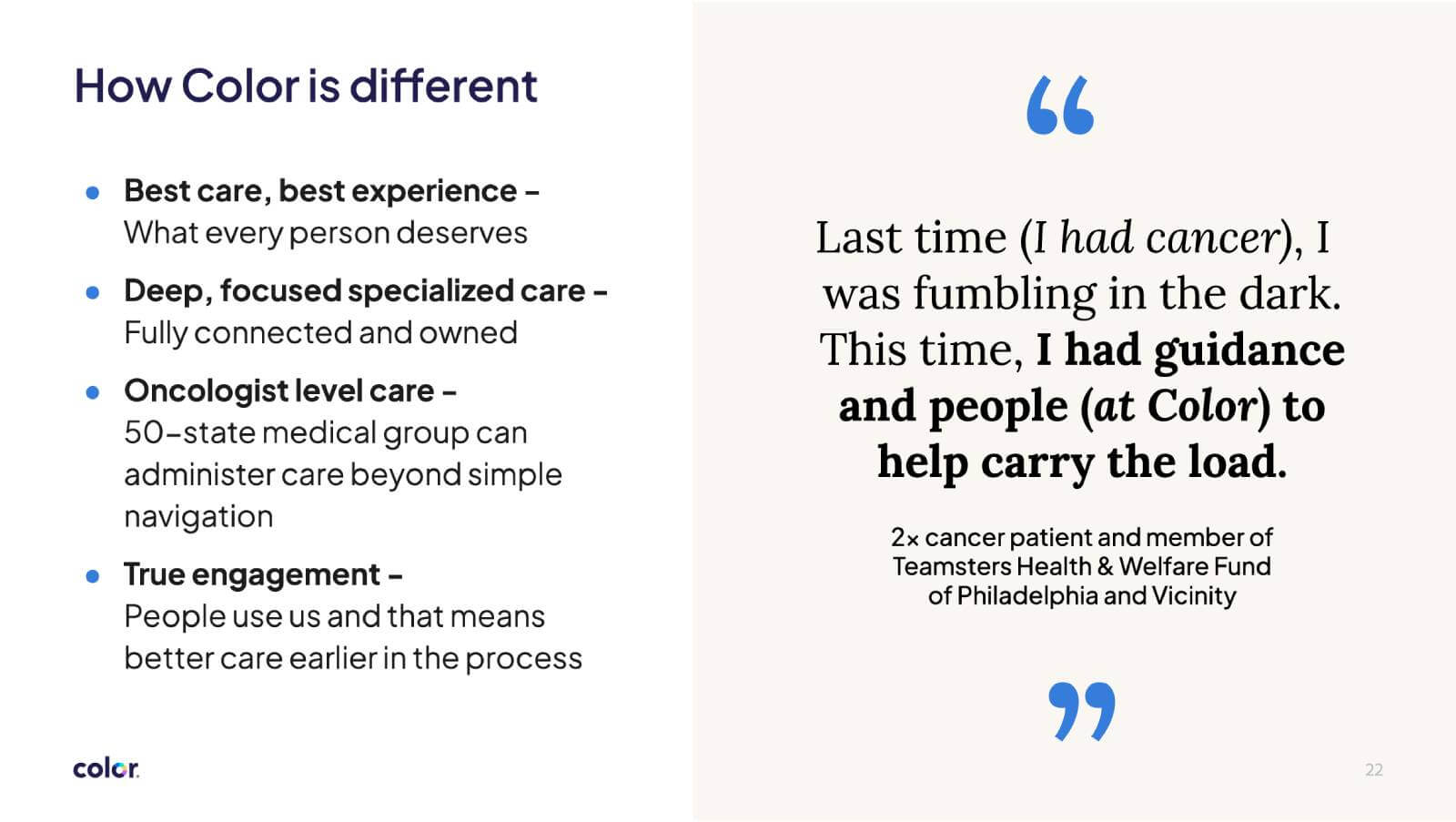
Color delivers a clinically-led, integrated cancer care model focused on access, speed, and whole-person care from prevention through survivorship. Color serves as a patient’s direct clinical team, working alongside local providers to move care forward quickly and effectively.
Employees gain access to:
- Same-day or next-day appointments anywhere in the U.S.
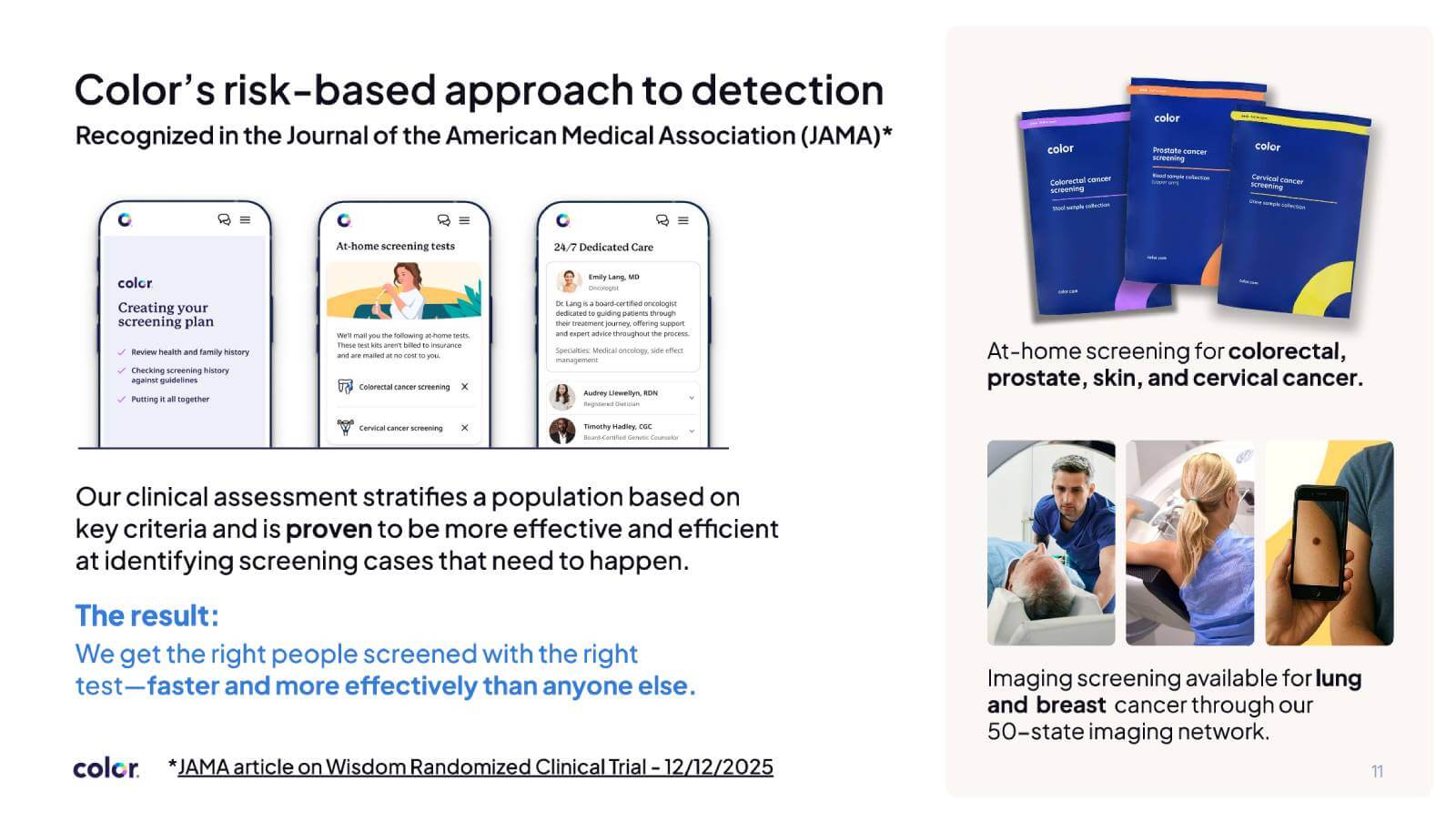
- At-home screening for colorectal, cervical, prostate, and skin cancers.
- A 50-state imaging network for lung and breast cancer.
- 24/7 clinical support from oncologists, nurses, dietitians, mental health specialists, and peer coaches. Cancer requires a multidisciplinary approach, and having access to a network of specialists significantly enhances the quality of care.
- A clinically driven, risk-based approach proven to improve screening adherence.
This level of integration ensures patients receive consistent, high-quality care throughout their cancer journey.
Color delivers what every employer wants for their workforce: earlier detection, faster diagnoses, and better care outcomes, with less time and money lost.
Cancer Early Detection
One of the most significant factors influencing cancer outcomes is early detection. This drastically improves survival rates and reduces treatment costs. Across five major cancer types, this pattern repeats.
Discharge is not the finish line. It’s the beginning of the highest-risk recovery window.
Color’s risk-based screening model, recognized by JAMA, helps ensure the right people receive the right screening at the right time. By combining clinical assessment with active follow-up, Color closes care gaps that too often leave cancers undetected until later stages.
Color’s patient case studies have demonstrated that a clinically led model can lead to life-changing interventions. The stories reflect the same theme: speed, clinical expertise, and direct care matter.
Treatment, Survivorship, and Beyond
Cancer care does not end when treatment ends. Survivors face elevated risks of recurrence, long-term complications, and challenges returning to work. Effective survivorship care plays a crucial role in ensuring a confident return to health and work. Cancer survivors require ongoing monitoring, psychological support, and assistance in transitioning back to daily life. Employers need a partner that understands the whole journey.
Key elements of survivorship care include:
- Personalized survivorship care plans
- Ongoing clinical monitoring and follow-up
- Support for mental health, nutrition, and lifestyle needs
- Guidance for return-to-work planning and accommodations
This approach not only improves long-term health but also reduces downstream costs. Color’s model has demonstrated measurable impact:
- 55% faster diagnoses
- 77% increase in screening rates
- >75% of care gaps closed
- $23,000 saved per cancer patient
- 20% enrollment across eligible populations
- 6:1 ROI in Year 1
This is a cancer care program that actually gets used and delivers results that matter.
Get in touch with Color Health today!
Cancer care is at a tipping point. By shifting focus from reactive treatment to earlier detection, faster diagnosis, and oncologist-led clinical care across the full journey, employers can improve outcomes, reduce costs, and better support their people.
Color delivers a proven model that prioritizes action over delays, direct care over fragmentation, and whole-person health over disconnected episodes of care.
For employers committed to doing what’s right for their workforce and their bottom line, this represents the future of cancer care.
For more information, contact:
Mike Quigg – mike.quigg@color.com
In case you missed it: Log in to access the full Meet A Vendor Presentation!
Not a subscriber? Request access.
Did you find this article interesting?
Don’t keep this knowledge to yourself – share it on your social media channels and spark engaging conversations!