
In This Post:
Presenters:

Ailene Bui
Senior Director
Head of Employer and Labor Partnerships
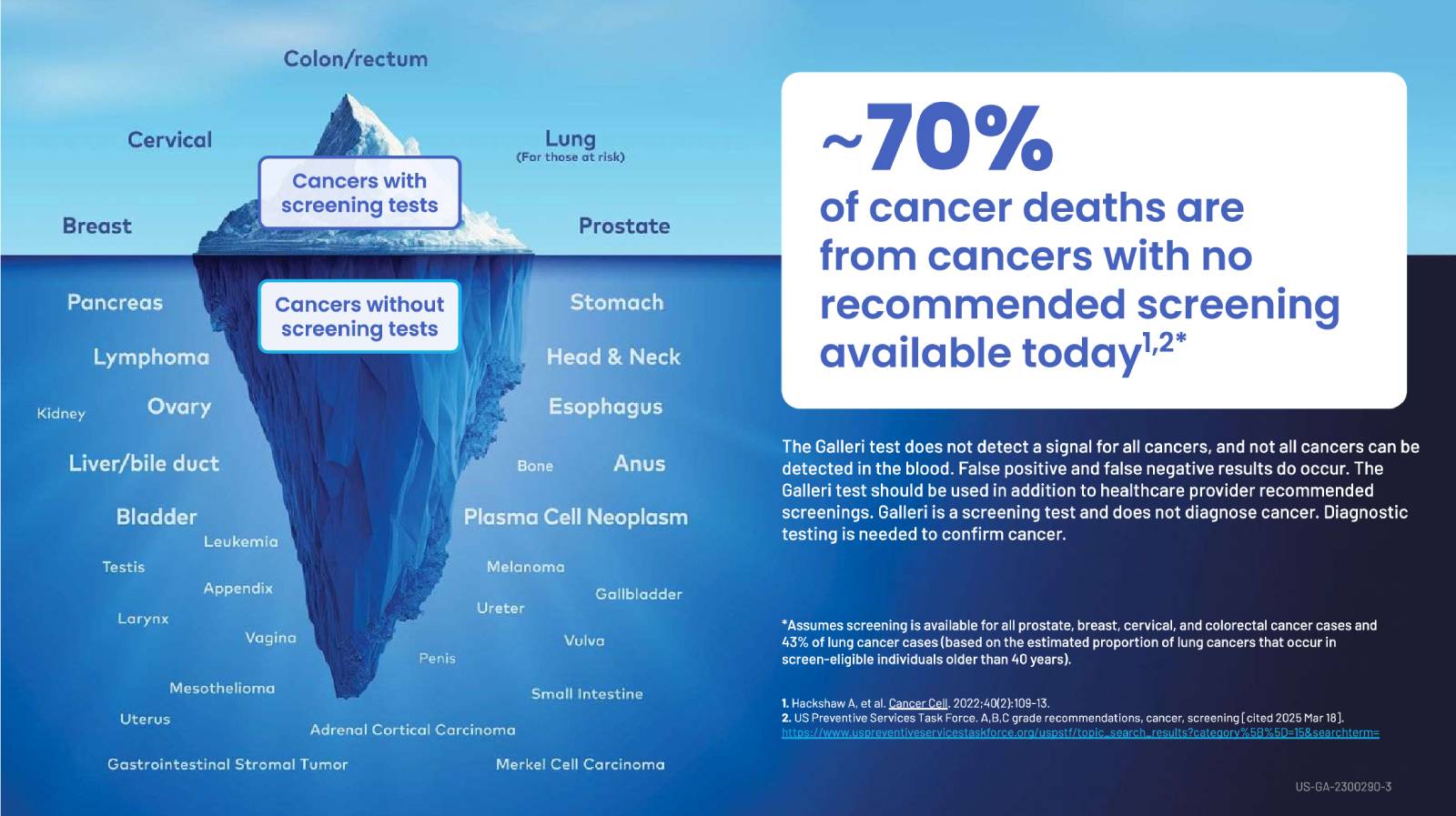
Cancer continues to be one of the most significant health challenges facing individuals, families, and employers alike. When people think about cancer screening, we often think about those that are recommended, leaving ~70% cancers to go undetected. Beyond its physical toll, cancer creates emotional distress, financial strain, and long-term uncertainty. For employers, it also represents one of the most costly categories of healthcare spending. Yet many cancers are still detected too late.
When it’s found early, the treatment options and chances of survival are so much better, and the cost of treatment is typically much lower. The Galleri multi-cancer early detection test (MCED) has the potential to reshape how we approach cancer screening and employee health.
We welcomed Ailene Bui, Senior Director & Head of Employer and Labor Partnerships at GRAIL, to discuss GRAIL’s Galleri multi-cancer early detection (MCED) test, and why it’s a breakthrough for cancer screening and overall employee health.
About GRAIL
GRAIL’s mission is to detect cancer early at stage one, when it can still be cured. Their story began in 2015, when an unexpected discovery unlocked a major breakthrough for changing lives at population scale.
Galleri multi-cancer early detection test is a blood test that can detect cancers with the highest level of accuracy. To find more than 50 cancers before they’re even symptomatic is unheard. It is a lab-developed test and is not governed by the FDA. One of the reasons for the FDA approval is that people do recognize that term when looking for how safe this is.
Galleri is governed by CLIA for lab safety and CAP by the College of American Pathologists. FDA approval, the data provided, and the audits and reviews provide a pathway to Medicare coverage. Galleri should be in the hands of as many Americans as possible, and the way to do that is through Medicare.
Traditional Cancer Screening
Traditional cancer screening methods are saving lives. However, they have a limited scope because they target only a few cancer types. Ailene showed it vividly with the picture of an iceberg. The concerns were a significant proportion of cancer deaths that are linked to cancers that currently have no recommended routine screening.
This creates a major blind spot in preventive healthcare. 70% of cancer deaths are caused by cancers without recommended screenings. Many of the cancers appear in high-cost claims because when there’s no screening, cancers are diagnosed based on signs and symptoms.
Employees may feel healthy and have no symptoms, yet still develop aggressive cancers that go undetected until later stages. The treatment becomes more invasive, survival rates decline, and healthcare costs can increase dramatically.
For employers, it is as challenging as an opportunity to provide meaningful health benefits.
Multi-Cancer Early Detection and Why it Matters
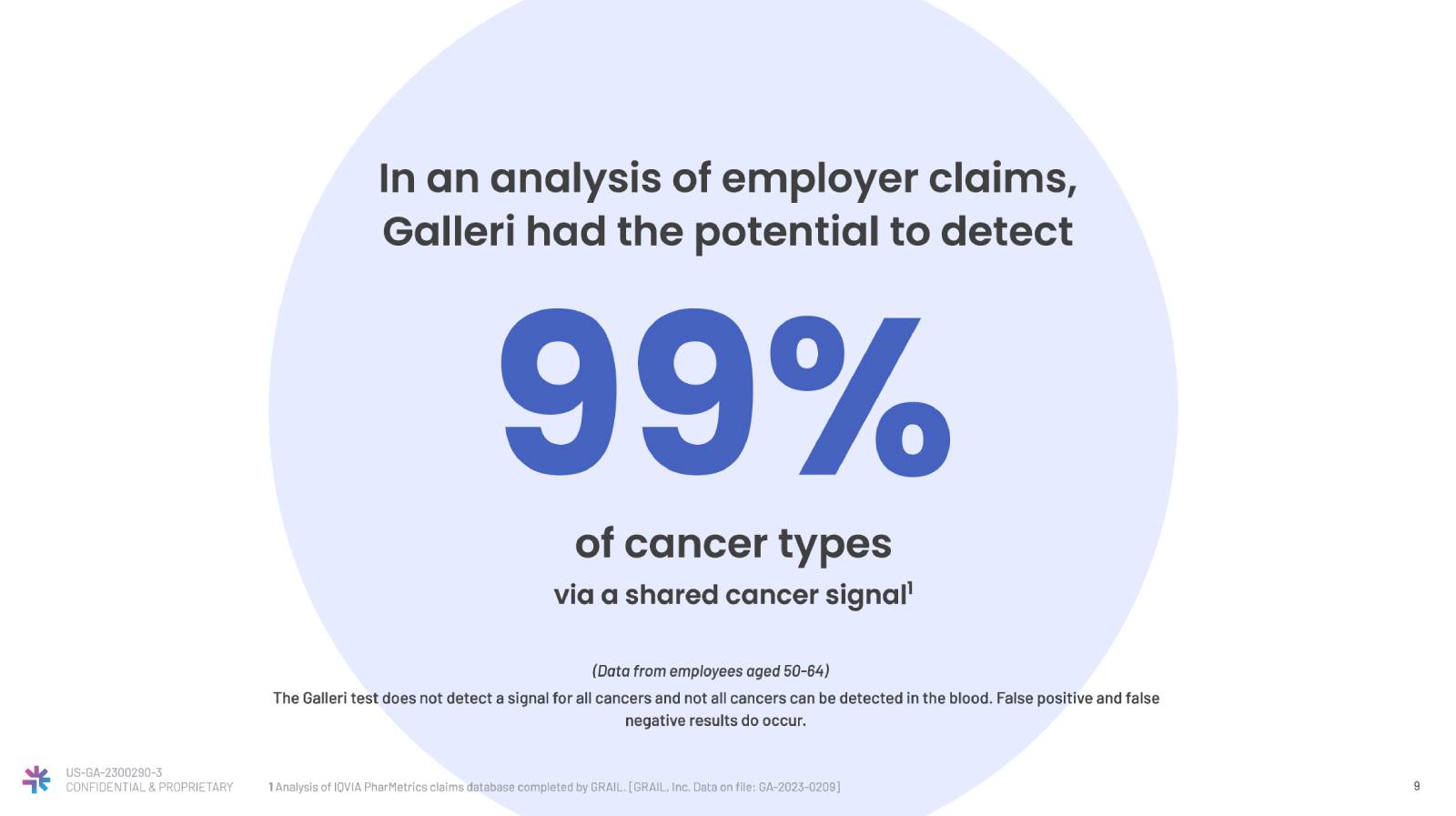
The Galleri test uses a single blood draw to screen for signals associated with more than 50 types of cancer. It includes some of the deadliest and hardest-to-detect forms, such as pancreatic, ovarian, and liver cancers.
It is a totally different approach to cancer screening. Its ability to detect cancer signals before symptoms appear is what makes it especially powerful. Furthermore, the test uses advanced machine learning and genomic analysis to predict where in the body the cancer signal may be originating. This helps guide follow-up diagnostic testing, reducing uncertainty and accelerating the path to care.
From an employer’s perspective, investing in early detection has become a strategic decision.
- Late-stage cancer treatment is significantly more expensive than early-stage intervention. In the earlier stage, treatment options are broader, less invasive, and more likely to be successful.
- Healthier employees are more engaged, productive, and present. Early detection can lead to successful recovery, allowing employees to return to their normal lives sooner.
- Providing access to cutting-edge screening like the Galleri test demonstrates a commitment to employee well-being and proactive care.
- Cancer affects certain populations, and by making screening more accessible, it can help bridge some of these gaps.
Mental and Financial Health
Cancer doesn’t only affect the body. It impacts mental and financial health. Peace of mind can play a powerful role in overall well-being. Employees facing cancer often experience anxiety, stress, and uncertainty about the future. Additionally, out-of-pocket costs and lost income can further compound the burden.
Employees who catch cancer early are more likely to undergo less intensive treatments, experience fewer complications, and maintain greater stability in their personal and professional lives.
Even for those who receive a “no cancer signal detected” result, there is a meaningful psychological benefit. It reduces one of the top health-related anxieties for many individuals.
Integrating Innovation into the Workplace
One of the key advantages of the Galleri test is its flexibility and ease of implementation. Employers can offer the test as part of a broader health strategy, often with options such as:
- On-site blood draw events at the workplace. For many people who may hesitate or don’t know where to get a blood draw, it doesn’t seem that complicated, but it is a great benefit. If people are going to try something new, they have to talk to people about it and learn about it.
- Access through local partner labs
- At-home or community-based services. People can order the test via telemedicine and pay by credit card.
This adaptability helps overcome common barriers to care, such as time constraints and limited access to healthcare facilities.
Important Considerations
While the Galleri test represents a significant advancement, it is important to understand its role within the broader healthcare landscape.
- It is a screening tool. Any positive result requires follow-up testing for confirmation.
- It does not detect all cancers, and false positives or negatives can occur.
- It is typically recommended for individuals at elevated risk, such as those aged 50 and older.
Employers should work closely with healthcare providers and benefits consultants to ensure appropriate education, implementation, and support for employees.
Get in touch with GRAIL today!
The introduction of multi-cancer early detection marks a turning point in how we think about preventive healthcare. Instead of reacting to illness after it appears, organizations can take a proactive stance – identifying risks earlier and intervening sooner.
As innovations like the Galleri test continue to evolve, they have the potential to redefine workplace health strategies, making them more predictive, personalized, and impactful.
Cancer will likely remain a major health concern for years to come, but how we address it is changing.
Employers can now offer solutions that go beyond the status quo, solutions that not only save costs but also save lives.
By embracing innovations like those developed by GRAIL, organizations can take a meaningful step toward a healthier, more resilient workforce. And in doing so, they reinforce a powerful message: employee health is a priority.
The Galleri test does not detect a signal for all cancers and not all cancers can be detected in the blood. False positive and false negative results do occur. The Galleri test identifies DNA in the bloodstream shed by cancer cells and does not predict future genetic risk for cancer. Galleri is a screening test and does not diagnose cancer. Diagnostic testing is needed to confirm cancer.
See Important Safety Information
For more information, contact:
Brad Cillian – BCillian@grailbio.com
In case you missed it: Log in to access the full Meet A Vendor Presentation!
Not a subscriber? Request access.
Did you find this article interesting?
Don’t keep this knowledge to yourself – share it on your social media channels and spark engaging conversations!