Monthly Industry Pulse

U.S. Visa Rule Changes: Key Updates for Employers

U.S. immigration rules have shifted in the last two years, with stricter application requirements and ongoing monitoring of foreign nationals.
In This Post:

U.S. immigration rules have shifted significantly in the last two years, introducing stricter visa application requirements, new H1-B visa rules, and monitoring of foreign nationals. 

For employers, these changes can directly impact hiring, travel plans, and workforce stability.

New & Tightened Visa Rules in 2025

The U.S. Department of State has recently tightened the rules for both non-immigrant and immigrant visa applicants, making the application process more rigid and costlier.

1) New H-1B Petition Fee

On September 19, 2025, a Presidential Proclamation introduced a $100,000 fee tied to new H-1B petitions, with related entry restrictions taking effect September 21, 2025.

White House officials clarified that the fee applies to new H-1B applicants going forward and does not apply to existing H-1B holders or renewals. 

Initially, several outlets described the fee as annual. However, subsequent White House statements characterized it as a one-time payment per new petition, which has reduced some confusion among employers and foreign nationals. 

Previously, joining the visa lottery cost a small fee, but successful applicants then owed cumulative fees reaching several thousand dollars.

The presidential proclamation that established the fee is set to expire in 12 months, unless extended by the administration.

2) Geographic Restrictions

Non-immigrant visa applicants – including foreign tourists, students, and temporary workers – are now required to attend their visa interview in their home country or country of residence in nearly all cases. 

In the past, applicants could “visa shop” by applying in third countries to find shorter wait times, but that flexibility has effectively been eliminated. 

For applicants from countries like India, Brazil, or China (which already face massive interview backlogs), this rule change is expected to create even longer waits and logistical hurdles, since home-country wait times can exceed a year.

The policy affecting non-immigrant visa applicants took effect on September 6, 2025. However, immigrant visa applicants face similar restrictions beginning November 1, 2025.

3) Continuous Vetting

Perhaps even more consequential for employers is the introduction of continuous vetting for those who already hold U.S. visas. 

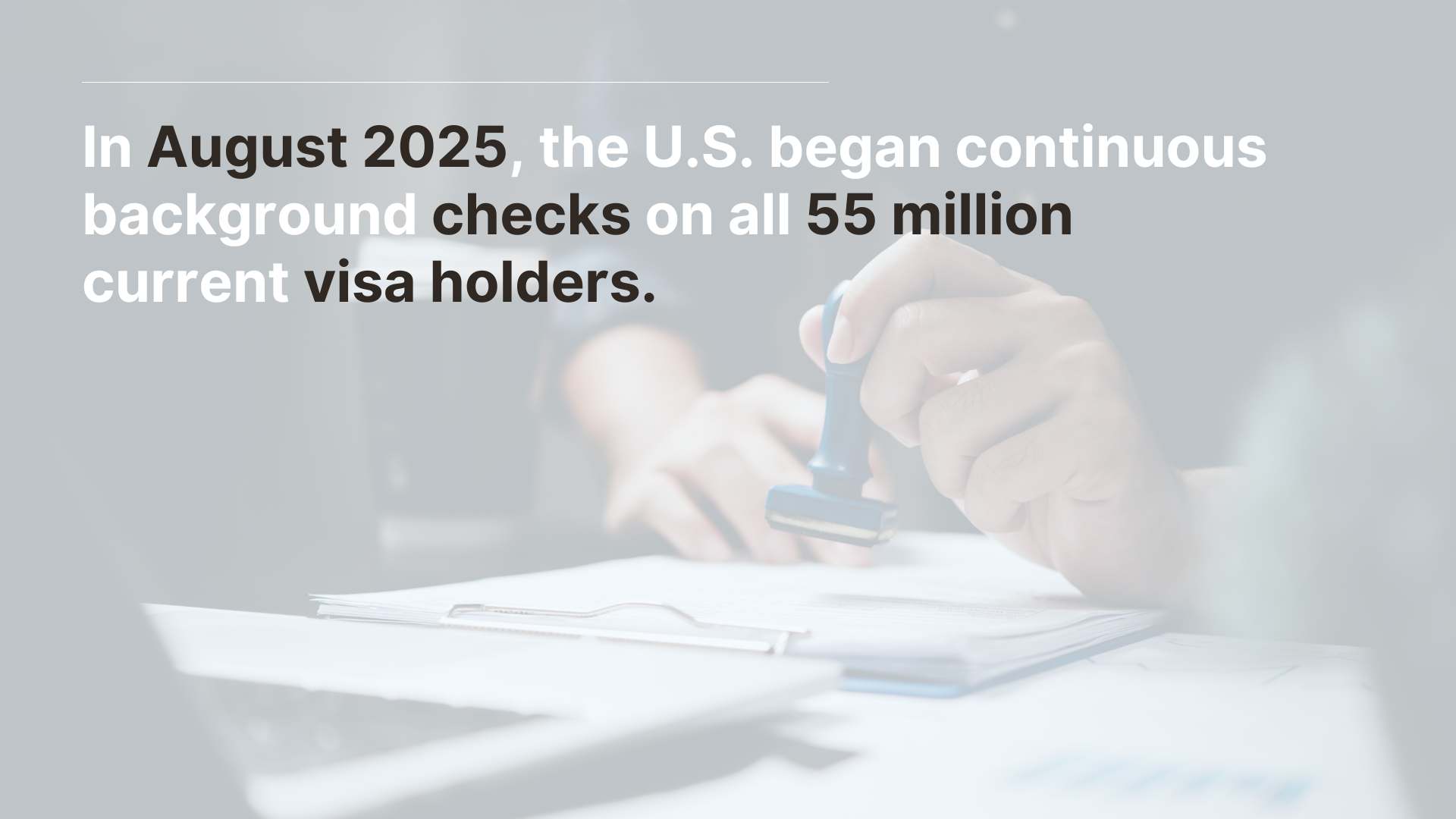
In August 2025, the State Department expanded its oversight to cover all current visa holders – roughly 55 million people – through a system of ongoing background checks. 

Under this continuous vetting program, once a person obtains a U.S. visa, their eligibility is no longer checked only at renewal intervals. Instead, their status is monitored in real time for any potential violations or risks. 

Officials will regularly check various data sources and monitor for things like:

  • Overstaying visa validity periods
  • Criminal arrests or charges
  • Threats to public safety
  • Ties to terrorist activities or organizations

As a result, employers may encounter increased Requests for Evidence, deeper security reviews, and heightened risks for employees traveling internationally.

4) Tighter Definitions, Heavier Documentation, Stronger Compliance

The Department of Homeland Security (DHS) has issued new regulations to “modernize” the H-1B specialty workers and H-2 seasonal worker visa programs.

The new H-1B visa rule tightened the definition of “specialty occupation” and required employers to clearly prove that roles need specific academic qualifications.

Starting January 17, 2025, U.S. Citizenship and Immigration Services (USCIS) is also implementing a comprehensive transformation of Form I-129. The new form has expanded to 38 pages and requires substantially more detailed information across several areas:

  • Employer control and bona fide employment. Clear evidence of supervision and control, especially at third-party worksites.
  • Third-party placements. Itineraries, end-client letters, and how day-to-day oversight occurs.
  • Wage and benefits. Location-specific wages and consistent benefits across similar roles.

In addition, USCIS recently updated organizational accounts for 2026 with broader paralegal access, easier account management, pre-filled I-129 fields, and spreadsheet uploads for H-1B data.

What makes all these updates particularly challenging? 

The new rules include stricter compliance checks and give USCIS explicit authority to conduct inspections and impose penalties. Companies that previously operated in regulatory gray areas now face heightened scrutiny.

Additional Changes on the Horizon

Beyond the new H1-B visa rule updates, the current administration is advancing several immigration reforms that could significantly impact employers:

  • Wage-Based H-1B Selection: USCIS has proposed replacing the current lottery system with merit-based selection – prioritizing higher-wage positions. This could effectively exclude entry-level roles and recent graduates, transforming H-1B visas into what experts call “luxury work permits.”
  • Green Card Rule Updates: USCIS plans to update its rules for employer-sponsored green card filings, with a proposal expected in January 2026. The package would tighten program integrity by defining what counts as a “bona fide job offer,” clarifying the agency’s site-visit authority, and revising criteria for EB-1 extraordinary ability.
  • H-2A/H-2B Wage Rules: Expect wage rules to shift too. DOL aims to propose an H-2A wage-setting regulation in February 2026 and to finalize an H-2B wage methodology rule, following a 2022 court decision that found earlier guidance on employer wage surveys failed to meet federal rulemaking standards.

These changes indicate a shift toward more restrictive immigration policies, which will require employers to transition from reactive compliance to strategic workforce planning.

Visa in Numbers

Nearly 400,000 H-1B applications were approved in fiscal year 2024. 

Amazon is leading as the single largest sponsor with 10,044 approvals in 2025. JPMorgan Chase saw approvals climb from 1,719 to 2,440, while Microsoft rose from 4,725 to 5,189.

But here’s what matters: these figures include extensions, transfers, and cap-exempt petitions, not just new hires.

The statutory cap remains at 85,000 new H-1B visas annually – about 65,000 regular and 20,000 master’s-degree holder exemptions.

For 2025, USCIS received approximately 470,000 H-1B registrations for the 85,000 available slots, representing a selection rate of just 18% – the lowest in the program’s history.

In other words, competition for limited slots intensifies as companies scramble to retain existing talent while navigating new restrictions.

Who Feels the Impact Most?

The recent visa rule changes cast a wide net. Virtually any U.S. employer that relies on foreign talent – whether in tech, healthcare, academia, agriculture, or seasonal industries – will feel some impact. 

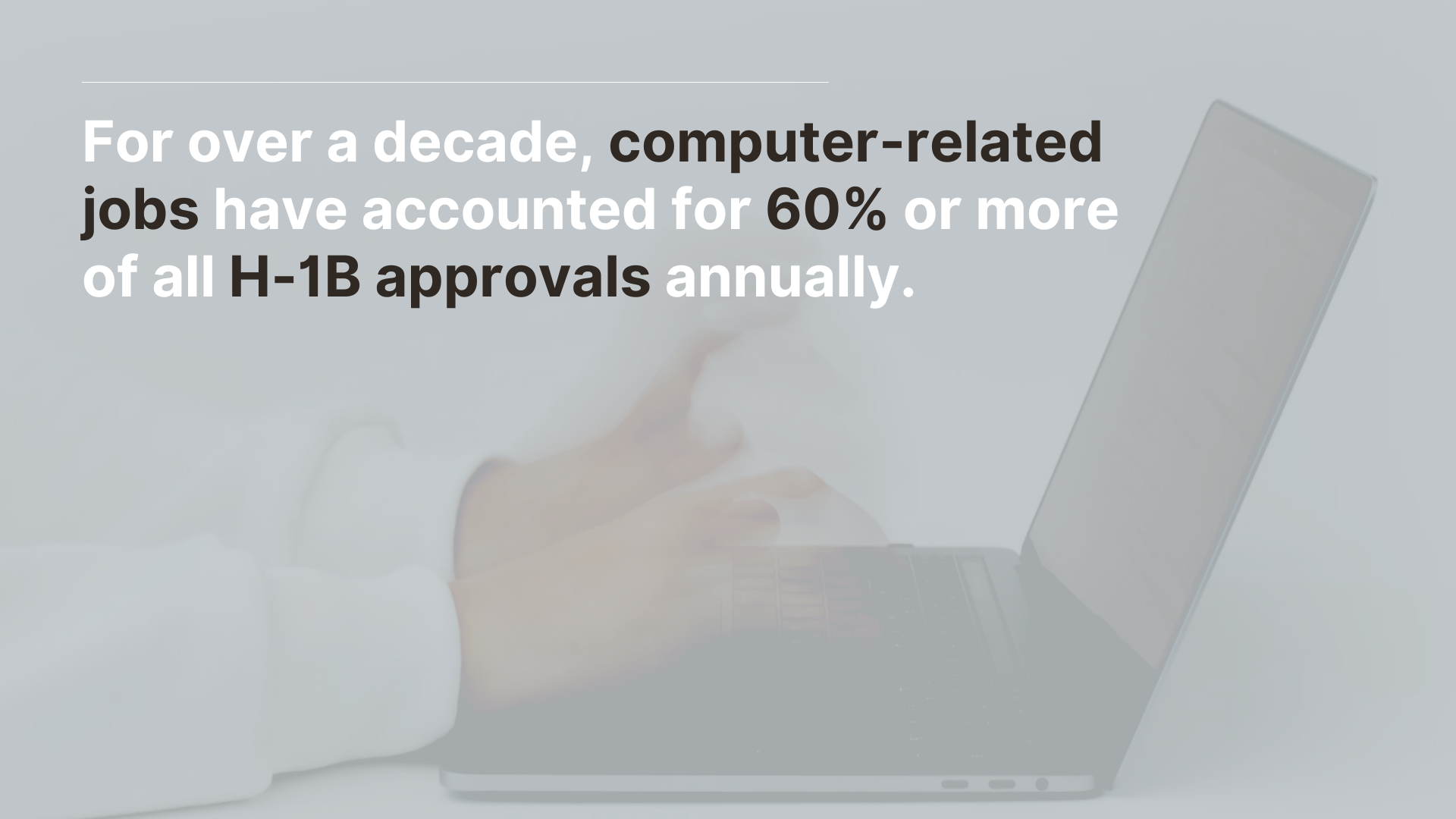
Among the white-collar industries, technology companies face the greatest disruption. For over a decade, computer-related jobs have accounted for 60% or more of all H-1B approvals annually. With continuous vetting and stricter definitions, tech firms must reassess their talent strategies.

Similarly, healthcare organizations confront unique challenges, particularly hospitals in underserved areas that rely on J-1 and H-1B physicians. International graduates make up more than 30% of U.S. medical residents, and H-1B physicians fill roughly 10,000 of the 43,000 residency positions. The new documentation requirements add layers of complexity to already lengthy credentialing processes.

Startups and small businesses may struggle most with the increased administrative burden and costs, as they often lack dedicated immigration teams or resources.

Overall, any company sponsoring high-skilled employees will face more stringent paperwork and compliance checks.  

Preparing Your Organization: Action Steps

If your workforce includes visa holders, take these critical measures:

  • Budget per petition – Model the $100,000 per new petition and re-adjust roles accordingly for the next cap cycle.
  • Plan ahead for visa needs – Build extra time into all your immigration timelines. File work visa extensions, transfers, or green card applications earlier than you normally would.
  • Review job descriptions – Ensure all sponsored positions clearly demonstrate specialty occupation requirements. 
  • Create contingency plans – Identify critical roles dependent on visa holders and develop backup strategies. 
  • Update travel policies – Account for potential delays or visa complications during international trips. 
  • Strengthen documentation – Maintain comprehensive records proving bona fide job positions and proper wages. 
  • Leverage expert guidance – Consider engaging immigration counsel or an HR compliance service to help develop best practices for your organization.

Conclusion

The landscape of U.S. immigration continues to evolve rapidly, with many new H1-B visa rule changes in the last few years. Success in this new environment requires proactive planning, meticulous documentation, and a willingness to invest in compliance infrastructure.

Written by Ivana Radevska

Senior Content Writer at Shortlister

HRIS Systems

Browse our curated list of vendors to find the best solution for your needs.

Stay Informed

Subscribe to our newsletter for the latest trends, expert tips, and workplace insights!

Related Posts

What is a Health Maintenance Organization (HMO)?

Health insurance is not one-size-fits-all. Therefore, understanding what a health maintenance organization is and weighing its benefits and disadvantages can significantly affect your health, finances, and quality of life.