Monthly Industry Pulse

Where AI Hiring Laws Stand in 2026 and What’s Coming Next

An employer posting a single remote-eligible role to candidates in New York, Illinois, and Colorado could trigger three separate AI compliance regimes - each with different definitions, different disclosure rules, and different penalties.
In This Post:

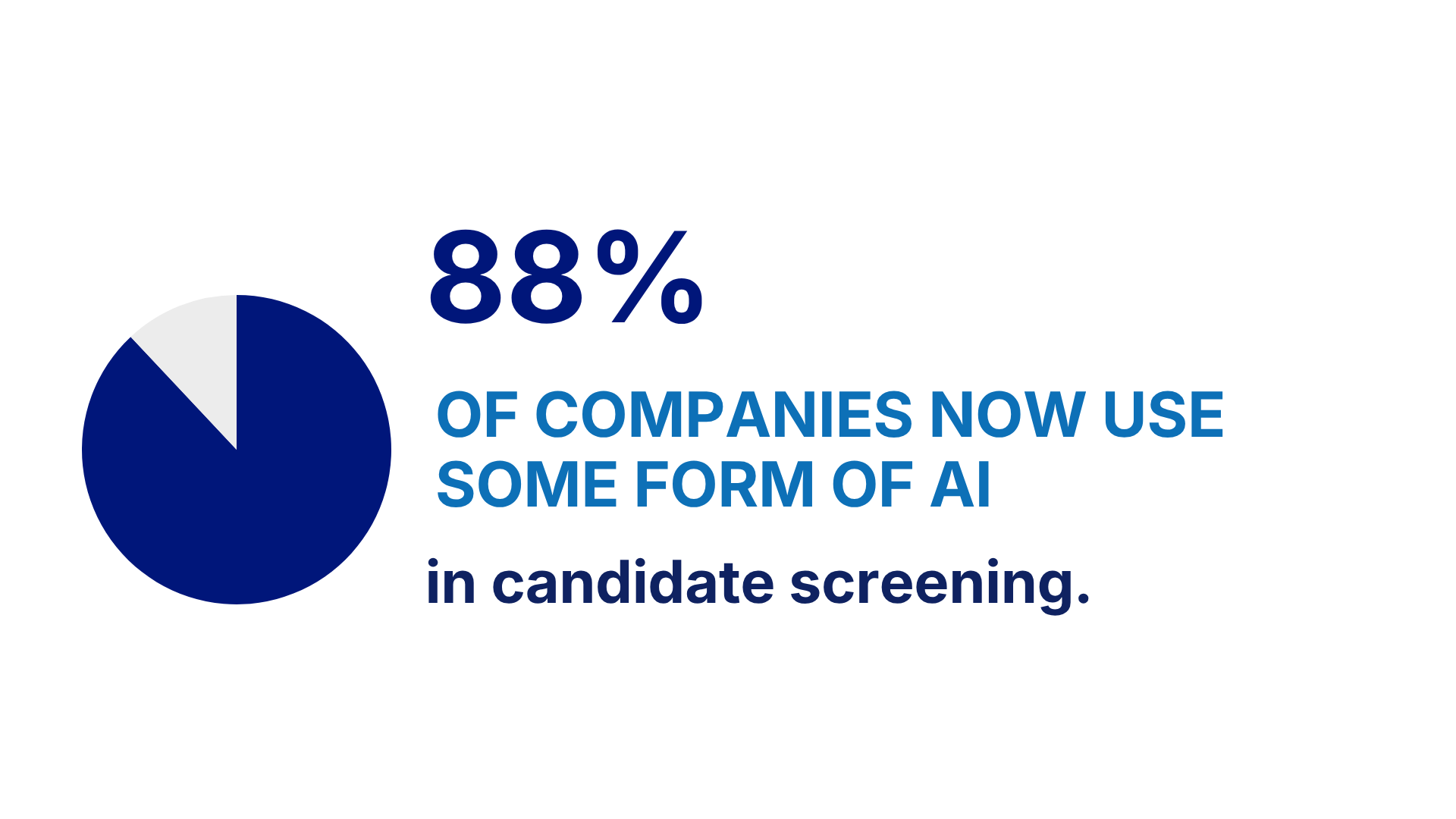
Roughly 88% of companies now use some form of AI in candidate screening, according to the World Economic Forum. Resume filters, ranking algorithms, chatbot pre-screens, and video interview analyzers have become the default recruitment infrastructure.

However, AI innovation has moved faster than the legal framework meant to govern these tools.

When Shortlister covered this topic in early 2025, much of the regulatory landscape was anticipatory. One year later, new laws have taken effect, enforcement has accelerated, and one of the country’s broadest state AI laws has been paused by a federal court during a constitutional challenge.

So, where does that leave employers using AI in the workplace?

The Current Status of Colorado's AI Act

Colorado’s SB 24-205, signed May 2024, was the first state law to regulate AI across employment, lending, housing, and insurance decisions. 

It required employers deploying “high-risk AI systems” to:

  • Adopt risk management programs
  • Complete annual impact assessments
  • Notify workers when AI influenced decisions about them
  • Provide an appeals process for adverse outcomes

Penalties could reach $20,000 per violation.

Before its delayed effective date, however, xAI sued Colorado in April 2026, arguing that the law’s algorithmic-discrimination rules and disclosure obligations violated constitutional protections. 

The U.S. Department of Justice then moved to intervene, claiming the law violated the Equal Protection Clause by requiring AI companies to account for disparate impact based on protected traits while allowing certain diversity-related exceptions. 

In other words, the dispute turned Colorado’s AI law into a test case over how far states can go in regulating algorithmic bias before those rules collide with federal constitutional arguments and national AI policy.

Colorado has since revised course by signing a replacement bill – SB 26-189 in May 2026 to replace the original framework with a narrower law.

Enforcement of New York City’s Local Law 144

New York City’s Local Law 144 has been enforceable since July 5, 2023, and remains one of the most closely watched local rules on AI in hiring.

The law prohibits employers and employment agencies from using automated employment decision tools, or AEDTs, unless they: 

The law applies based on where the candidate lives, not where the employer is headquartered. Penalties range from $500 to $1,500 per violation, with each day counted separately.

For its first two years, enforcement was minimal. In December 2025, the New York State Comptroller audit found DCWP’s oversight “ineffective,” identifying at least 17 instances of potential non-compliance among 32 companies that the agency had missed. DCWP has since committed to proactive investigations.

Therefore, employers that assumed weak enforcement meant low risk may now face more scrutiny around whether their documentation can actually stand up to review.

Illinois HB 3773 Notice and Disclosure Requirements

HB 3773, effective January 1, 2026, amends the Illinois Human Rights Act to prohibit employers from using AI that discriminates based on protected classes.

Employers must notify applicants and employees whenever AI is used in hiring, promotion, discharge, or discipline. The Illinois Department of Human Rights released draft regulations covering resume screeners, video interview analyzers, personality assessments, and AI analysis of third-party candidate data.

Two provisions are worth noting: 

Unlike Colorado, Illinois does not require impact assessments. Violations are enforced through civil rights investigations rather than consumer-protection fines.

California and the Legislative Pipeline

California has not passed a single AI hiring statute, but its regulatory framework has become more concrete. The state’s Automated Decision Systems regulations, effective October 2025, clarify that FEHA applies when employers use AI, algorithms, or other automated tools in employment decisions.

In addition, California’s pay data reporting requirements are expanding. Starting with the 2027 filing cycle, employers with 100+ employees must submit demographic data across 23 new job categories rather than the current 10, creating a demographic paper trail that could intersect with AI screening patterns.

Beyond California, the legislative pipeline remains active but uneven. New Jersey’s Assembly Bill 4909 would require bias audits before AEDTs can be sold in the state. Furthermore, Texas, Pennsylvania, Connecticut, Virginia, and Massachusetts are at various stages of similar legislation.

The Federal Picture on AI Hiring Laws

At the federal level, no comprehensive AI employment legislation has been enacted. The administration’s posture has split into two tracks.

On the deregulation side, President Trump’s January 2025 Executive Order revoked Biden-era AI safety requirements. 

A December 2025 executive order directed the Attorney General to establish a DOJ AI Litigation Task Force to challenge state AI laws, which the DOJ formally created in January 2026. Its involvement in the Colorado case is the first direct action.

On the enforcement side, the EEOC has affirmed that AI tools fall within Title VII enforcement and that the four-fifths rule applies to algorithmic screening. Long-standing civil rights statutes remain fully applicable to AI-driven employment decisions, with or without new legislation. 

In addition, multinational employers face another compliance layer. 

The EU AI Act classifies employment AI as “high-risk,” triggering risk assessments, bias mitigation, human oversight, and post-deployment monitoring. Organizations operating in both the EU and U.S. often end up aligning global practices with the most stringent applicable standard.

What HR Leaders Should Do Now

HR leaders do not need to wait for every AI law to settle before acting. The safer approach is to build a basic governance process now.

Start by inventorying all AI-enabled tools used in hiring, screening, promotions, performance reviews, and terminations. Then assess how each tool is used, since legal risk often depends less on the technology itself and more on whether it meaningfully influences employment decisions.

Vendor responsibility should also be clarified. Even when a vendor provides an audit or compliance documentation, employers may still carry the legal obligation for how the tool is used. Working with compliance services can help close the gap between vendor-provided documentation and an employer’s actual legal exposure.

Finally, document the process. Keep records of tool inventories, vendor materials, notices, audits, human review steps, and adverse-impact checks. 

In a shifting legal environment, good documentation is one of the clearest ways to show that AI use is being managed carefully.

Written by Ivana Radevska

Senior Content Writer at Shortlister

HR Compliance Services

Browse our curated list of vendors to find the best solution for your needs.

Stay Informed

Subscribe to our newsletter for the latest trends, expert tips, and workplace insights!

Related Posts