
How Many Employees Can the Digital Economy Absorb?
Explore the implications of technology on the inevitable shift of the labor market and what this would mean for the future of work.

Artificial intelligence now dominates global startup investment.
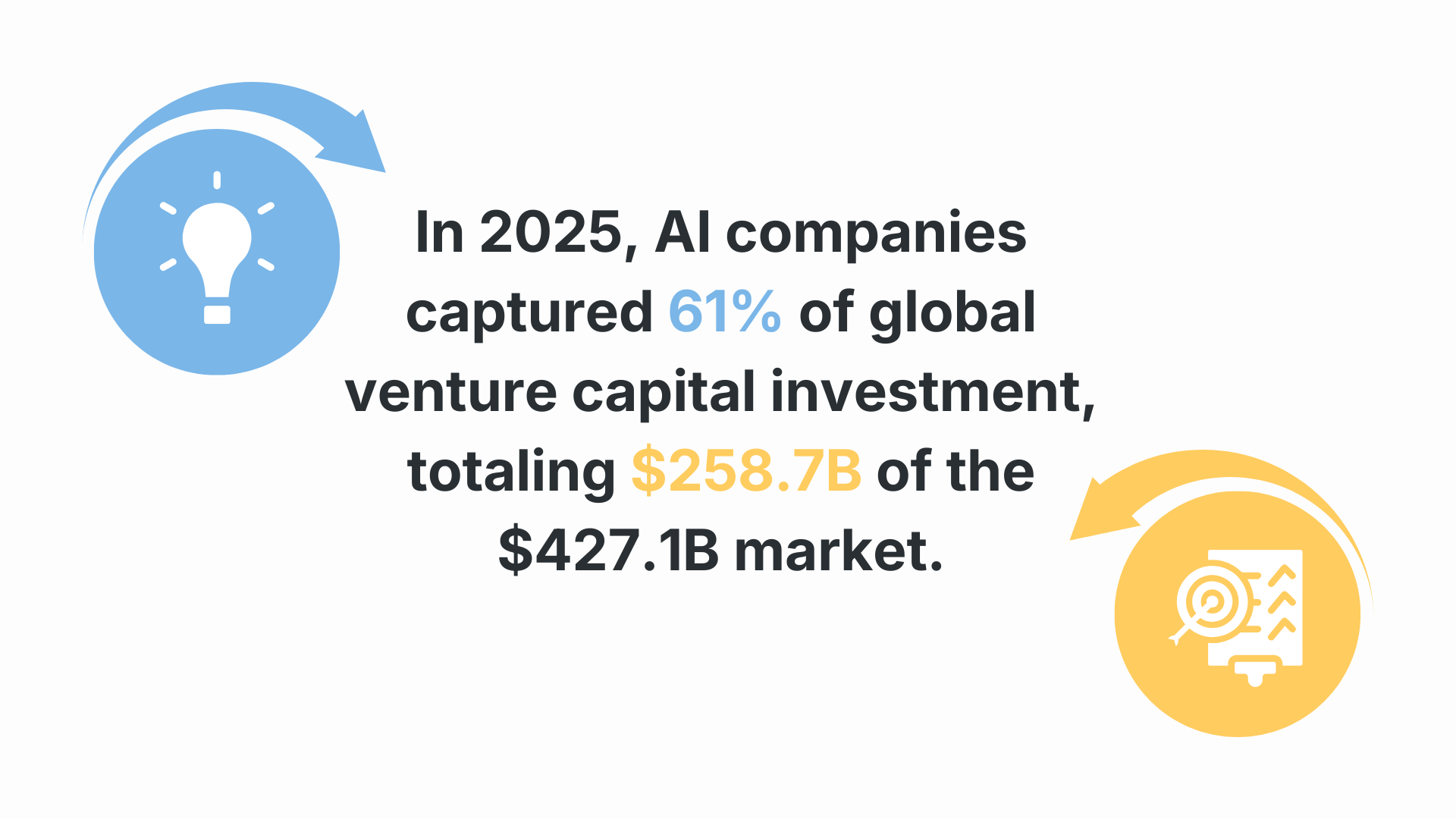
According to an OECD analysis, AI companies accounted for 61% of all venture capital deployed worldwide in 2025, representing $258.7 billion of a $427.1 billion total market. That share was 30% in 2022, meaning it has more than doubled in the past three years.
The volume of capital flowing into this sector is tremendous, and so, too, is the volume of noise.
Nearly every B2B software company entering the market today claims to be AI-powered, AI-driven, or AI-native. The terminology has become so pervasive that it functions more as marketing positioning than product description.
For investment management companies, more specifically their fund managers, the challenge is knowing which companies are worth backing, and solving it requires an updated thinking about B2B SaaS AI startup investment criteria.
For years, B2B SaaS meant building software that helped businesses organize their work.
However, the latest technological advancements, specifically artificial intelligence, have changed what this category can deliver and, more importantly, what buyers now expect from it.
The most consequential shift, which is still underway, is the deep integration of large language models (LLMs) and autonomous AI agents into core product architecture. This technology changes the product itself, creating an advanced SaaS that can read context, make decisions, and take action at a fundamentally different level than before.
For example, HRIS systems that store employee records and send automated reminders are traditional SaaS. When they analyze engagement signals to flag risks or recommend actions with minimal human input, that’s usually an AI advancement.
Fund managers may find this to be both exciting and difficult. They get new opportunities for outsized returns but require a shift in how they evaluate B2B SaaS AI startup investments.
For most of the last decade, B2B SaaS investing was relatively legible.
A fund manager could look at annual and monthly recurring revenue (ARR and MRR), gross margins, and churn, and get a reasonably accurate portrayal of a company’s trajectory. Evaluation criteria that emerged, centered on net revenue retention (NRR), customer acquisition cost (CAC), and the Rule of 40, became the shared language for SaaS due diligence.
Artificial intelligence, however, has changed several of those assumptions.
To begin, the cost structure is different.
Expenses such as cloud-based inference, GPU computing, and model licensing can put pressure on gross margins in ways traditional SaaS did not.
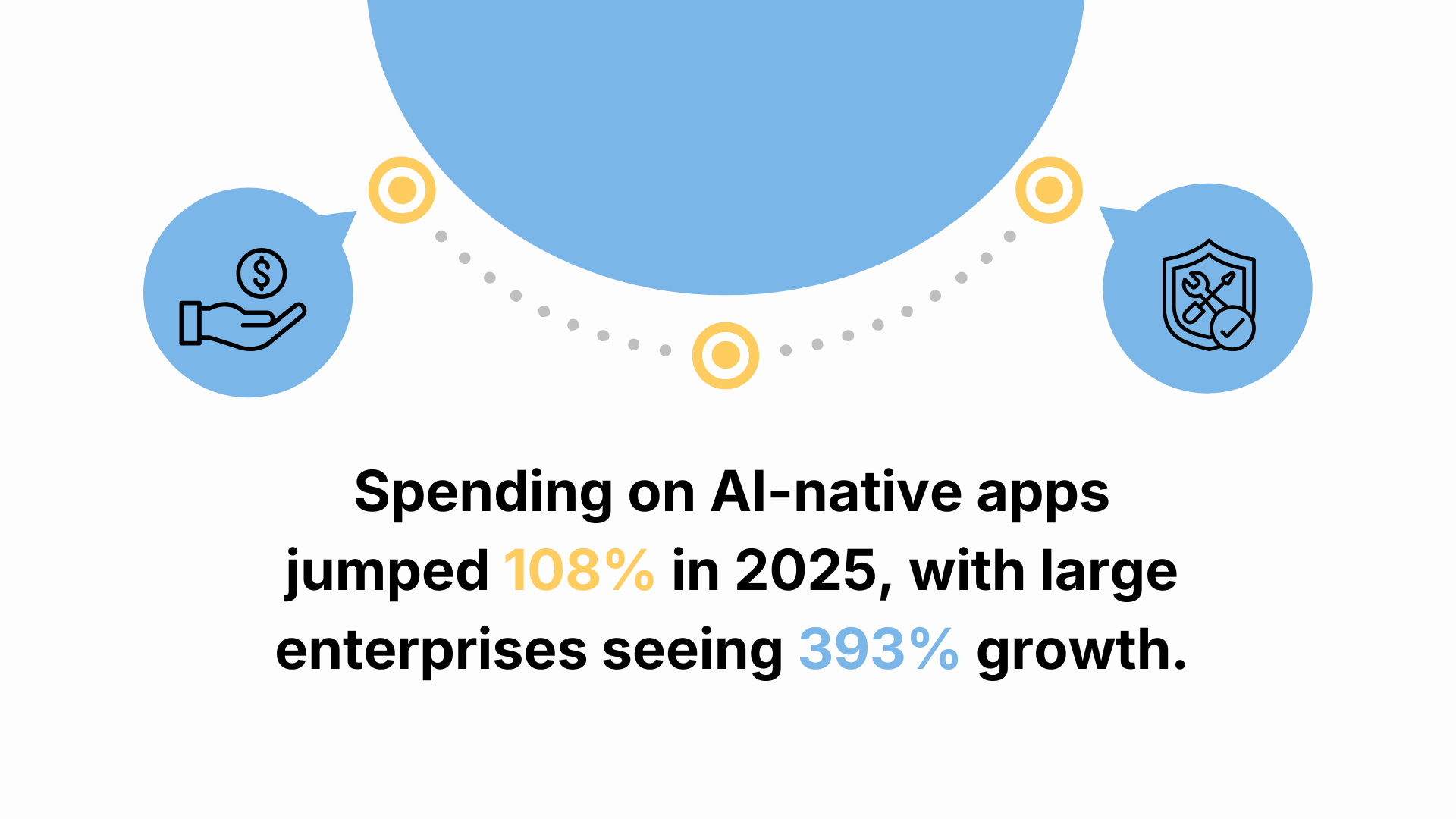
For example, Zylo’s 2026 SaaS Management Index shows that AI has significantly increased software management costs and complexity. Spending on AI-native apps rose 108% in the past year, with large enterprises seeing 393% growth.
The shift from fixed pricing to usage-based and hybrid models is creating additional budget instability. In fact, 78% of IT leaders reported unexpected charges tied to AI features or consumption in the past year, and 61% had to cut projects as a direct result.
Another significant change is that AI advantages tend to be less durable.
In traditional B2B SaaS, products became harder to replace once deeply embedded in a company’s workflow. For a long time, this created a stronger, longer lasting advantage.
Now, the competitive landscape moves faster. With artificial intelligence, many features are easier to copy because they rely on widely available models and tools. Competitors can often recreate similar capabilities quickly, making it harder to rely on a single feature as a long-term advantage. The moat is no longer the product itself, but the data and systems beneath it.
One final distinction is the product architecture itself.
AI-native systems behave differently. While conventional SaaS follows clear rules and produces predictable outcomes, AI introduces more variables. These systems can generate responses and support decisions based on data and models, which makes them more flexible and valuable but also less predictable.
Overall, none of this makes AI SaaS a worse investment category.
However, it can be risky without proper knowledge, which is why fund managers need to understand all ongoing changes, especially in AI SaaS product classification criteria.
Over the past few years, the rapid commercialization of LLMs and related technologies has lowered the barriers to entry for adding AI capabilities to software. As a result, companies with different levels of technical depth and differentiation may fall under the same category.
The term “AI SaaS” is now used broadly, often without precision, and can refer to fundamentally different product architectures, value propositions, and risk profiles.
This lack of distinction creates an evaluation challenge for fund managers.
Therefore, before applying any B2B SaaS AI startup investment criteria, it’s important to determine what type of product they are evaluating.
AI-enhanced products start with a core workflow that functions without artificial intelligence, then layer it on top. An applicant tracking system that adds a screening chatbot or payroll software that can flag anomalies all fall into this category. In these cases, AI improves the product, but the core value can exist without it.
From an investment standpoint, these companies are often more immediately profitable but also face risks. If AI features become commoditized, the product reverts to competing solely on its pre-AI merits.
AI-native products, on the other hand, are conceived around what the models make possible. The core value proposition depends entirely on machine learning or generative AI capabilities, and the product would not exist in any meaningful form without them. For example, a recruiting platform that analyzes candidate language patterns and generates structured interview guidance for each role is a good illustration of what this technology can do at scale.
As mentioned earlier, spending on AI-native apps has increased by 108% over the past year. Although these companies carry higher technical risks and costs at early stages, they also tend to have stronger long-term potential, especially for scalable growth and strong market differentiation.
A second layer of classification is whether a product targets horizontal or vertical use cases.
Horizontal AI SaaS products attempt to solve a problem that exists across many industries.
Examples include general-purpose CRMs, customer support automation, analytics platforms, or workflow automation that any business type could use. These companies benefit from a large market opportunity but also face intense competition and lower switching costs.
Vertical AI SaaS products focus on specific industries or workflows.
For fund managers, these solutions present a more defensible position, faster sales cycles within the target industry, and stronger retention once embedded in industry-specific workflows.
In fact, according to a 2024 SaaS Benchmarks Report by High Alpha, vertical and AI-native models outperform horizontal SaaS. The trade-off is a smaller addressable market, which makes market sizing critical.
With product type established, the focus shifts to investment quality.
At this stage, it’s important to assess not only if the company can build a quality product but also whether it represents a durable, risk-adjusted investment within a portfolio.
The following B2B SaaS AI startup investment criteria operate at two levels: what makes a strong company and what makes a strong investment.
In AI SaaS, product-market fit is often easier to indicate than to substantiate. Many products gain rapid early adoption because they are novel, not because they are essential. The distinction matters because novelty-driven growth typically does not survive the first renewal cycle.
Fund managers can make this distinction by asking: Is AI solving a problem that genuinely requires this technology, or is it being used for positioning? A product that delivers impressive results in a controlled demonstration is not the same as one that is embedded in a customer’s workflow six months later.
Therefore, validating product-market fit in an AI SaaS context requires access to actual customer usage data or use-case documentation. Behavioral signals such as daily active usage, feature depth, and whether customers have integrated the product into core operations are more reliable than initial conversion rates.
Revenue growth indicates whether sales increase or decrease, making it one of the first signals of a successful business. However, in AI SaaS, high revenue figures alone do not equal revenue quality. Innovation budgets and internal experimentation drive much of the current demand, meaning not all gains are long-term or sustainable.
While this makes the application of standard SaaS benchmarks to AI-native companies a specific risk, the three metrics that most clearly reveal revenue quality are:
Above 110% signals increasing product value over time. McKinsey’s analysis puts top-quartile B2B SaaS companies at 113%. For AI SaaS, any NRR above 100% is a meaningful positive signal, indicating customers are expanding rather than experimenting and leaving.
For traditional B2B SaaS, a GRR of 90% or higher is generally considered healthy. However, AI-native companies perform materially differently. A ChartMogul study of 3,500 software companies found that AI-native median GRR is approximately 40%, closer to consumer app behavior than enterprise software.
According to High Alpha’s 2025 SaaS Benchmarks Report, outcome-based pricing produced the strongest year-over-year growth, while hybrid models combining subscription and usage-based billing delivered the strongest NRR.
Revenue growth is one of the key B2B SaaS AI startup investment criteria, but these metrics assess whether it retains quality over time. For fund managers, they signal that the startup’s expansion is not short-term, but a foundation for predictable, long-term success.
Unit economics captures the relationship between revenue, costs, and growth. The core question is whether the economics of acquiring and serving customers improve as the company scales, or whether growth is being purchased at a cost that will become unsustainable.
Key metrics include:
In addition, the trajectory of gross margin is crucial. If the cost of running AI (e.g., computing or infrastructure) decreases, it signals scalable economics. However, if it rises as the company grows, or the business has to subsidize customer usage to keep them, that signals a structural problem.
Data shows that AI-core companies typically run at lower gross margins than traditional SaaS companies due to compute costs, but should show a credible improvement trajectory as the business scales.
The concept of economic moat, a durable advantage that protects a business from competitors, is especially complex in AI-driven markets.
Most AI startups today are built on foundation models from OpenAI, Anthropic, or similar providers, which are accessible to anyone. Meanwhile, a genuine AI moat exists when a company’s capabilities become increasingly valuable over time, in ways competitors can’t easily replicate.
When evaluating this, there are four sources worth considering:
B2B SaaS AI startup investment criteria are incomplete without a clear assessment of the founding team. Evaluating it requires a balance between technical depth and commercial capability – and in AI, the weighting of the former is higher than in traditional SaaS.
Fund managers should look for evidence of this balance in the team’s composition and in how the startup has handled its first commercial relationships.
The underlying quality both dimensions depend on is adaptability. In a market where the technology, the regulatory environment, and enterprise buying patterns are all shifting simultaneously, learning agility is the most reliable predictor of long-term execution.
The quick expansion of artificial intelligence has given rise to many challenges. Employees fear that AI will replace skills, and in turn, their jobs. Employers struggle to decode AI regulations, while 93% of IT leaders, according to Zylo’s report, express concern about the security risks associated with these tools.
From an investment perspective, fund managers grapple with their own set of challenges.
Regulatory exposure has become a material investment risk in AI SaaS, and it remains underweighted in most due diligence frameworks.
One of the most consequential developments is the EU AI Act, which entered into force in 2024 and will reach full applicability on August 2, 2026. It introduces tiered compliance requirements based on the risk level of AI applications and is the most significant AI-specific legislation to date. B2B SaaS companies serving EU customers must comply regardless of location, and the regulatory burden is increasing, with fines for non-compliance reaching millions of euros.
Meanwhile, in the U.S., regulation remains fragmented but is tightening following the latest federal labor changes in 2026. The White House released a national AI policy framework calling on Congress to establish a unified federal approach to artificial intelligence regulation.
Regulatory readiness affects everything from sales cycles to product architecture. For fund managers evaluating B2B SaaS AI companies, compliance should be a product criterion, not a post-investment concern.
A structured approach helps connect product, performance, and risk into a single evaluation framework. Fund managers and investment advisors can use the following checklist to assess whether a company meets the core B2B SaaS AI startup investment criteria and warrants a justified capital allocation.
Product and market fit:
Portfolio fit and exposure:
Competitive position:
Revenue quality:
Traction and unit economics:
Timing and market cycle:
Team and execution:
Regulation:
Capital intensity and follow-on risk:
The B2B SaaS market is not slowing down. Valued at $497.41 billion in 2025 and projected to reach over $4.4 trillion by 2034, it remains one of the most structurally attractive categories in enterprise technology. Growth at this level is increasingly shaped by artificial intelligence.
McKinsey’s 2025 State of AI survey found that 88% of organizations now use AI in at least one business function. This number has gone up since 2024, when it was 78%, with many moving toward broader, more integrated deployment.
For fund managers, this challenges the lens through which they evaluate SaaS.
The B2B SaaS AI startup investment criteria that matter today are already more nuanced than they were two years ago, and they will continue to evolve. Fund managers who build a rigorous, adaptable evaluation process, rather than relying on pattern-matching from prior SaaS cycles, are better positioned to distinguish short-term traction from long-term value.
Content Writer at Shortlister
Browse our curated list of vendors to find the best solution for your needs.
Subscribe to our newsletter for the latest trends, expert tips, and workplace insights!
Explore the implications of technology on the inevitable shift of the labor market and what this would mean for the future of work.
Which skills are futureproofed with an irreplaceable “human touch,” and how are emerging technologies driving the evolution of workforce skills?

Explore the evolving landscape of HR, offering a glimpse into how AI is poised to shape the future of human resources management.

With the rise of AI in the workplace, its impact has become multi-dimensional. While there is no doubt about its ability to reduce manual labor, this technology also reshapes job expectations, creating new opportunities and challenges.
We're working hard to make it easy for you. Sign up for news, trends and insights.