Fair Workplace Practices

How to Evaluate the Staffing Needs of Your Growing Business

Growth rarely follows a straight path, and workforce needs evolve with each turn. Understanding when, why, and how to evaluate the staffing needs of a growing company becomes crucial in securing its continued expansion.
In This Post:

Rapid expansion can create the illusion of stability while quietly exposing weaknesses in team structure. As revenue increases and client demands shift, the workforce that once felt perfectly calibrated can suddenly seem misaligned.

Sometimes critical roles remain vacant, causing delays and overextending current staff.

Other times, premature hiring drains resources without delivering proportional value.

To navigate this tension, leaders must evaluate the staffing needs of their business that align with both immediate priorities and long-term growth objectives.

Doing so transforms workforce planning from a reactive necessity into a strategic advantage, allowing growing companies to preserve their productivity and scale with confidence.

What is a Staffing Assessment?

Evaluating the company’s staffing needs involves a systematic review of its current workforce, including whether the number of employees, roles, and skills align with its business needs.

The assessment identifies immediate inefficiencies and areas for improvement, while also considering future demands to some degree. Leaders and HR then use these insights in their workforce planning strategies to make informed decisions about hiring or restructuring.

Why Staffing Evaluation Matters for a Growing Business

Growth is rarely linear, and the same can be said regarding the workforce that supports it.

Companies that expand rapidly often face a delicate balance: having too few employees can cause projects to stall, while having too many can result in wasted resources.

Each hire carries the operational weight of scaling ambitions, and misalignment between roles, skills, and strategy can undermine performance and morale.

Evaluating staffing systematically provides insight into both extremes, enabling leaders to align talent with strategy while maintaining agility.

Otherwise, the consequences can be significant and measurable.

Hidden Expenses of Understaffing

Research exploring staffing challenges highlights two dimensions of understaffing: “manpower”, which refers to the lack of sufficient personnel, and “expertise”, which refers to the shortage of qualified employees.

Both attempts to reduce staffing expenses can create far greater hidden costs.

When there are too few people, workloads increase and productivity declines. Meanwhile, gaps in expertise can slow projects, introduce errors, and limit innovation.

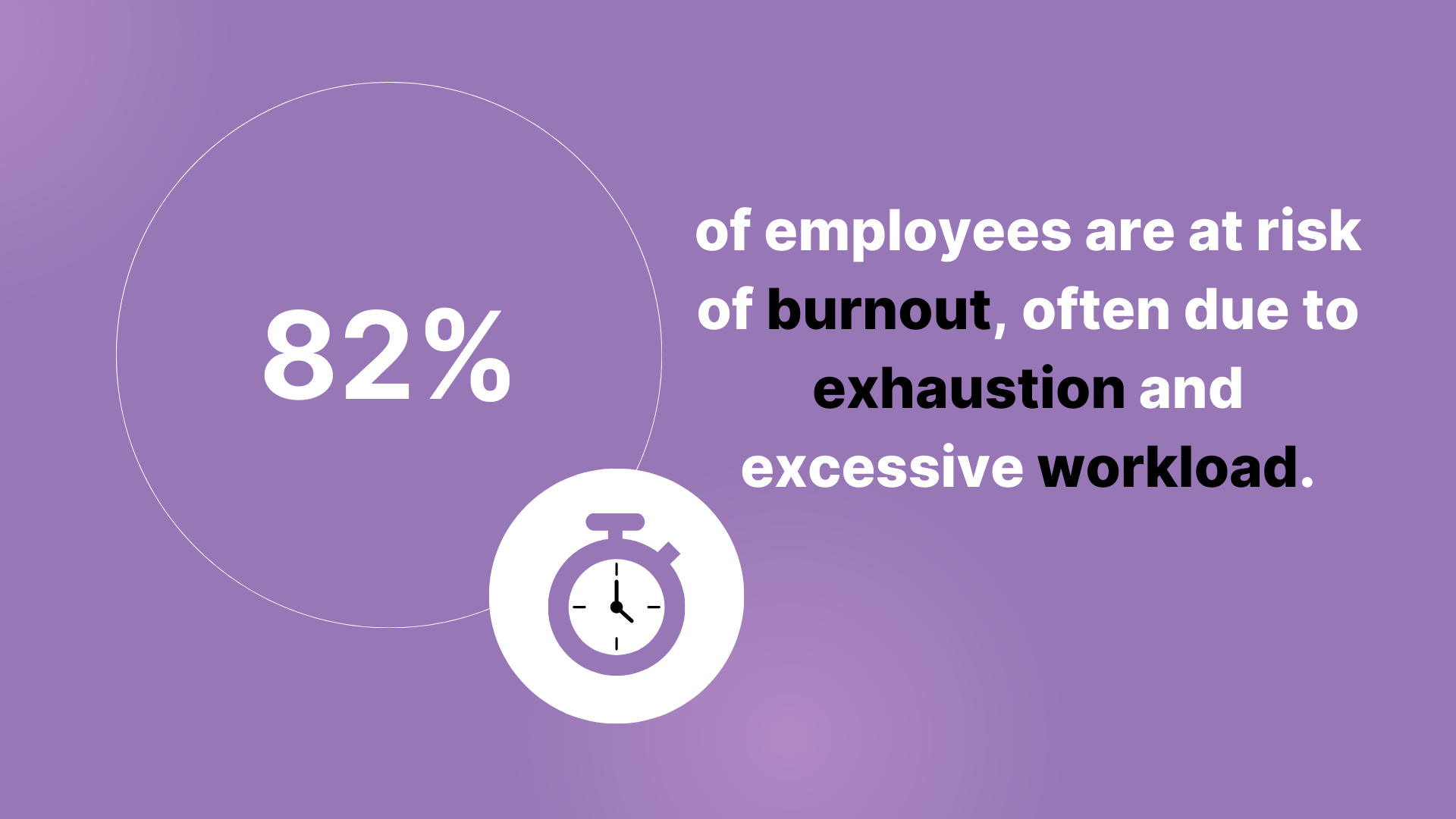
Stress and burnout from both are becoming a pressing concern in today’s workplace, with 82% of employees at risk, often due to exhaustion (40%) and excessive workload (37%).

According to a study in the American Journal of Preventive Medicine, the costs can range from $4,000 to $21,000 per employee per year, with higher losses for managers and executives.

Beyond these hidden expenses, understaffing can also impact customer satisfaction, delay strategic initiatives, and increase reliance on temporary or external support, resulting in visible financial pressures.

Financial Impact of Over-Hiring

While understaffing creates an obvious strain, over-hiring presents equally damaging financial consequences that are often less visible until they start impacting the bottom line.

Rapid team expansion can inflate costs, strain resources, and mask inefficiencies, creating financial pressure that may only become visible later. For growing businesses operating on tight margins, these expenses can quickly mount, limiting the capital available for growth initiatives.

In addition, when market conditions shift and layoffs become necessary, companies also face severance costs, damaged employer brand, and the cultural toll of workforce reductions that could have been avoided through disciplined staffing evaluation.

How to Evaluate the Staffing Needs of Your Company

Evaluating the staffing needs of a growing company is crucial for sustaining progress while avoiding the costs of under- or overstaffing.

The core question is whether you have the right people in the right roles with the right skills to achieve your business goals.

To answer this, leaders need two main inputs: what the business requires to meet its objectives and what the current workforce can deliver.

A structured approach that compares these factors, using concrete metrics, ensures informed decisions. It’s also the foundation for workforce planning, which determines the following steps and identifies any necessary changes or additions.

Step 1: Analyze Your Workforce Capacity

How well can your current employees handle existing workloads?

Understanding workforce capacity is the foundation of any staffing evaluation.

For growing companies, which often experience a fluctuation in work demand, this step is even more critical. It identifies productivity issues and determines whether they stem from insufficient or inefficient processes.

Making this distinction ensures that hiring decisions address the real problem rather than simply adding more people, allowing the company to manage growth without overloading employees or wasting resources.

Key Metrics to Evaluate:

Measure workload and productivity indicators such as output per employee, overtime frequency, backlog size, and utilization rates (productive hours divided by available hours). These directly assess capacity and signal whether there is under- or overstaffing.

Step 2: Map Business Goals to Staffing Requirements

Once you understand current capacity, the next step is to align it with the business’s strategic trajectory. This transition from staffing evaluation to workforce planning ensures hiring decisions reflect future priorities.

Even if your team is managing current tasks effectively, growth plans may create new demands that require additional employees.

Start by reviewing your short and long-term objectives.

Consider upcoming projects, sales targets, product launches, market expansions, or changes in customer demand. The goal is to understand how each of these business goals will translate into new workload patterns and skill demands.

Without this step, companies risk hiring reactively or underestimating the workload, which can lead to overloading the team.

Key Metrics to Evaluate:

Key metrics to evaluate include the revenue-to-headcount ratio, which shows whether staff levels can keep up with revenue growth, and forecasted project or sales volume, which compares expected business demand with team capacity to identify potential staffing gaps.

Step 3: Identify Skills Gaps and Future Needs

Step three identifies the types of roles and skills the company requires, both now and in the future. It turns how you evaluate the professional staffing needs of your company from a quantitative to a qualitative analysis.

According to McKinsey, 87% of employers currently have or anticipate having a skill gap.

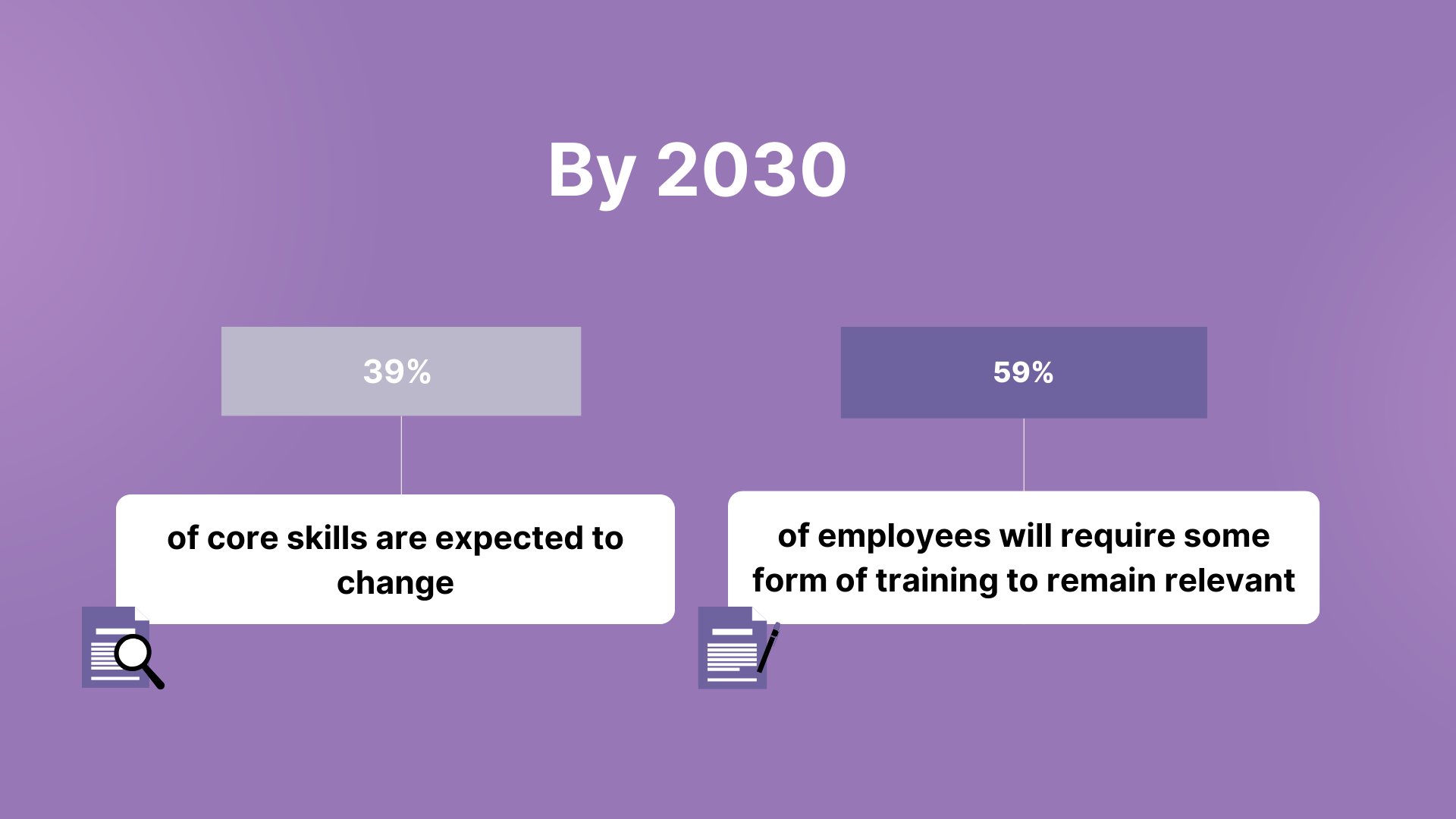
The World Economic Forum’s Future of Jobs Report 2025 reinforces this, projecting that 39% of core skills will change by 2030, and that 59% of workers will require some form of training to stay relevant.

These findings demonstrate why assessing the skills of your workforce is just as important as planning the number of employees to hire.

For growing companies, the challenge involves striking a balance between investing in upskilling existing employees and bringing in external expertise.

Upskilling preserves institutional knowledge and culture, while targeted hiring can accelerate transformation and fill emerging talent gaps.

When immediate skill needs exceed internal capacity, alternative staffing models such as contract, project-based, or outsourced work offer flexibility. These approaches enable businesses to respond quickly while gradually building a stronger, more prepared workforce.

Key Metrics to Evaluate:

Calculate the skills gap ratio by identifying all skills required to meet business goals and then measuring the percentage currently missing within the workforce. Another metric to consider is the critical role vacancy rate, which measures the percentage of unfilled positions in key roles within an organization at a specific point in time.

Step 4: Review Hiring Efficiency

Even with clear requirements, growth can stall if the staffing process is inefficient.

Therefore, evaluating how effectively the company attracts and fills roles reveals whether talent acquisition challenges stem from a lack of qualified candidates or internal process gaps.

Growing companies competing for talent must consider both speed and quality in their hiring processes.

Analysing how well (or poorly) they perform across these two criteria can reveal underlying issues with employer branding, compensation competitiveness, or candidate experience.

Key Metrics to Evaluate:

Measure time-to-hire, or the time it takes to fill a role, pipeline conversion rate, which shows the share of candidates progressing through each hiring stage, and offer acceptance rate (ideally above 90%). Together, these metrics indicate whether recruitment is efficient and supports business growth or limits workforce readiness.

Step 5: Turn Insights into an Actionable Staffing Plan

This final step brings this assessment closer to workforce planning.

By using what they’ve learned about capacity, goals, and skills, leaders can decide when and how to hire or restructure teams.

Creating a staffing plan ensures that the effort to evaluate the company’s needs leads to fundamental changes. It also means deciding which gaps to address immediately and which can wait, based on what’s most urgent and what resources are available. However, growing businesses need to allow flexibility in plans to accommodate unexpected changes.

Finally, it’s essential to track whether the changes made actually work as intended, creating a cycle of continuous improvement in how the company evaluates the professional staffing process.

Key Metrics to Evaluate:

The last metrics to track are staffing cost-to-revenue, which assesses the financial efficiency of your staffing plan, and the retention rate post-adjustment, or the percentage of employees who stay with the employer after changes are made.

Signs Your Business Needs a Staffing Review

Growing businesses face unique talent challenges as they transition from startup agility to scalable operations. Recognizing when to conduct a staffing review prevents small inefficiencies from becoming systemic problems.

Watch for these critical signals that indicate it’s time to evaluate the staffing structure of your company:

  • Persistent project delays despite team efforts
  • An increase in customer complaints
  • Employees consistently working overtime
  • Increasing signs of burnout
  • An increase in resignation letters
  • Revenue growth exceeding delivery capacity
  • Managers spending more time covering tasks than leading teams
  • New hires consistently underperform
  • Innovation slowing as teams lack bandwidth
  • High turnover or unfilled roles disrupt productivity

Building a rhythm of ongoing evaluation keeps these warning signs from compounding into significant setbacks.

Regular and timely staffing reviews that are aligned with business planning cycles can help growing companies stay ahead of workforce needs. This enables them to make strategic hires before small gaps become major problems and optimize team structure as the business evolves.

How Technology Can Help Evaluate Staffing More Effectively

As companies grow and evolve, the complexity of evaluating and managing staffing needs intensifies.

Traditional methods, which rely on manual processes and intuition, may not be sufficient when a company transitions from a small team of generalists to a specialized workforce with distinct roles and responsibilities.

Technology bridges this gap.

For example, HRIS systems centralize employee data, making it easy to track skills, roles, and performance. They provide the company with a clear view of its current resources and identify areas where gaps exist.

Similarly, workforce planning and data analytics software help analyze current workloads and forecast future staffing needs. Meanwhile, ATS and recruiting platforms support hiring efficiency, ensuring that the right candidates are efficiently sourced and matched to critical roles.

The growing use of AI in the workplace is now enhancing every stage of this process, accelerating hiring for up to 86.1% of recruiters who use it.

Together, these technologies can turn assessments and the entire HR staffing process from a reactive task into a strategic advantage, allowing growing companies to meet current demands while preparing for their long-term growth.

Best HRIS Systems

Oyster

Oyster

Reviews pending
Creating a more equal world by making it possible for companies everywhere to hire people anywh...
TOP VENDOR
Deel

Deel

Reviews pending
Deel is the all-in-one platform for managing your global workforce.
TOP VENDOR
Paycor

Paycor

4.2
Paycor, a Paychex company, modernizes every aspect of people management, from recruiting to ret...

Balancing Short-Term Demands with Long-Term Workforce Planning

Growing companies often feel the pressure to hire quickly when demand rises. In time-sensitive situations, this can be a logical decision that protects delivery timelines or customer satisfaction.

Global Growth Insights indicate that 42% of companies worldwide rely on staffing firms for temporary workforce management as a cost-effective method.

However, this shouldn’t become the default response, as short-term fixes rarely support long-term success.

Sustainable growth comes from developing a workforce strategy that looks beyond immediate pressures. 

It depends on understanding the skills and roles the business will need in the future. 

Without that foresight, companies risk creating a cycle of reactive hiring, which inevitably leads to higher labor costs and inconsistent performance.

Finding the right balance begins with understanding that hiring for short-term demands and long-term workforce planning aren’t opposing, but interdependent.

Each approach reveals something the other can’t.

So, when a growing company evaluates its staffing needs through both lenses, it can get a complete view of the current and future challenges.

This balanced approach creates a healthier rhythm for a growing business: responsive enough to handle hiring spikes, but strategic enough to reduce reactionary staffing and support budget discipline.

Conclusion

Understanding why, when, and how to evaluate the staffing needs of a growing business is crucial in ensuring its continued expansion.

However, this should not be a one-time task.

Instead, it’s an ongoing process that must evolve alongside the company.

As businesses expand, their workforce needs change, requiring regular reassessment to stay aligned with strategic goals. By doing so, companies ensure they are building a future-ready workforce and are prepared for sustainable development. 

This proactive approach lays the foundation for their long-term success.

Written by tamara jovanovska

Content Writer at Shortlister

HRIS Systems

Browse our curated list of vendors to find the best solution for your needs.

Stay Informed

Subscribe to our newsletter for the latest trends, expert tips, and workplace insights!

Related Posts

What are Incentives

What are Incentives?

Behavioral psychology argues that people are driven by motivation, giving rise to incentives as tools to influence people’s choices. But what are incentives, and what is the extent of their transformative potential in the workplace?