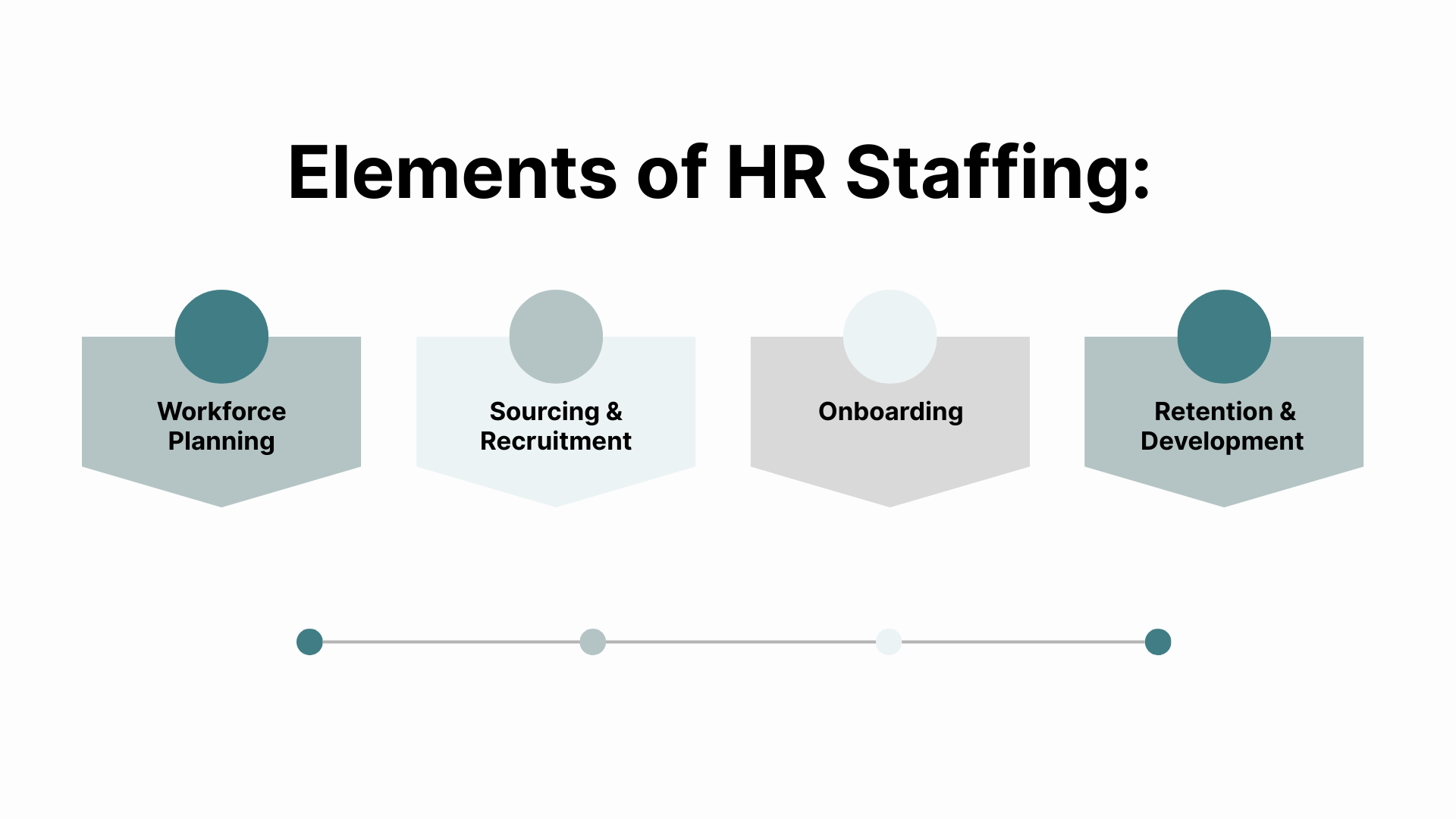
Building a workforce for sustainable growth means looking beyond headcount to focus on the roles, skills, and experience that drive progress, reinforced by processes that support performance.
McKinsey’s research on How HR Can Help Build the Organization of the Future shows that future-ready companies share three characteristics: they have a clear purpose, act with speed and simplicity, and grow by scaling both learning and innovation.
HR is central to this transformation, with three levers: identity, agility, and scalability.
Staffing as a core human resource function naturally connects to all three. When companies hire, place, and grow talent with these principles in mind, the process becomes a direct driver of growth.
1) Identity
According to McKinsey, future-ready companies are anchored in purpose, values, and culture. HR plays a role by embedding these into recruitment and defining what a “purpose-driven” employee looks like.
From a staffing perspective, such hiring decisions bring talent that strengthens the company’s identity and aligns with cultural priorities.
2) Agility
Agility requires shifting from rigid hierarchies to skills-focused, empowered teams.
Human resources supports this through reskilling, flexible talent models (including temporary or contract workers), and performance management, ensuring the right people are in the right roles as priorities change.
3) Scalability
The research also highlights the need for companies to scale learning and innovation to meet recurring skills gaps. In staffing terms, this translates into building pipelines that fill current roles and anticipate future talent demands, supported by continuous upskilling and reskilling.
Beyond McKinsey’s focus on these three principles, hiring for growth involves practical elements like leveraging HR technology, ensuring compliance, or strengthening employer branding.