

6 HR Strategies For Improving Employee Engagement
Transform your workplace with HR strategies designed to boost employee engagement, drive productivity and job satisfaction, and foster a culture of growth and success.


Founder & CEO of Project Management Training Institute (PMTI)

CEO, TurboTenant
The workplace loyalty that once defined the American employee has grown increasingly rare.
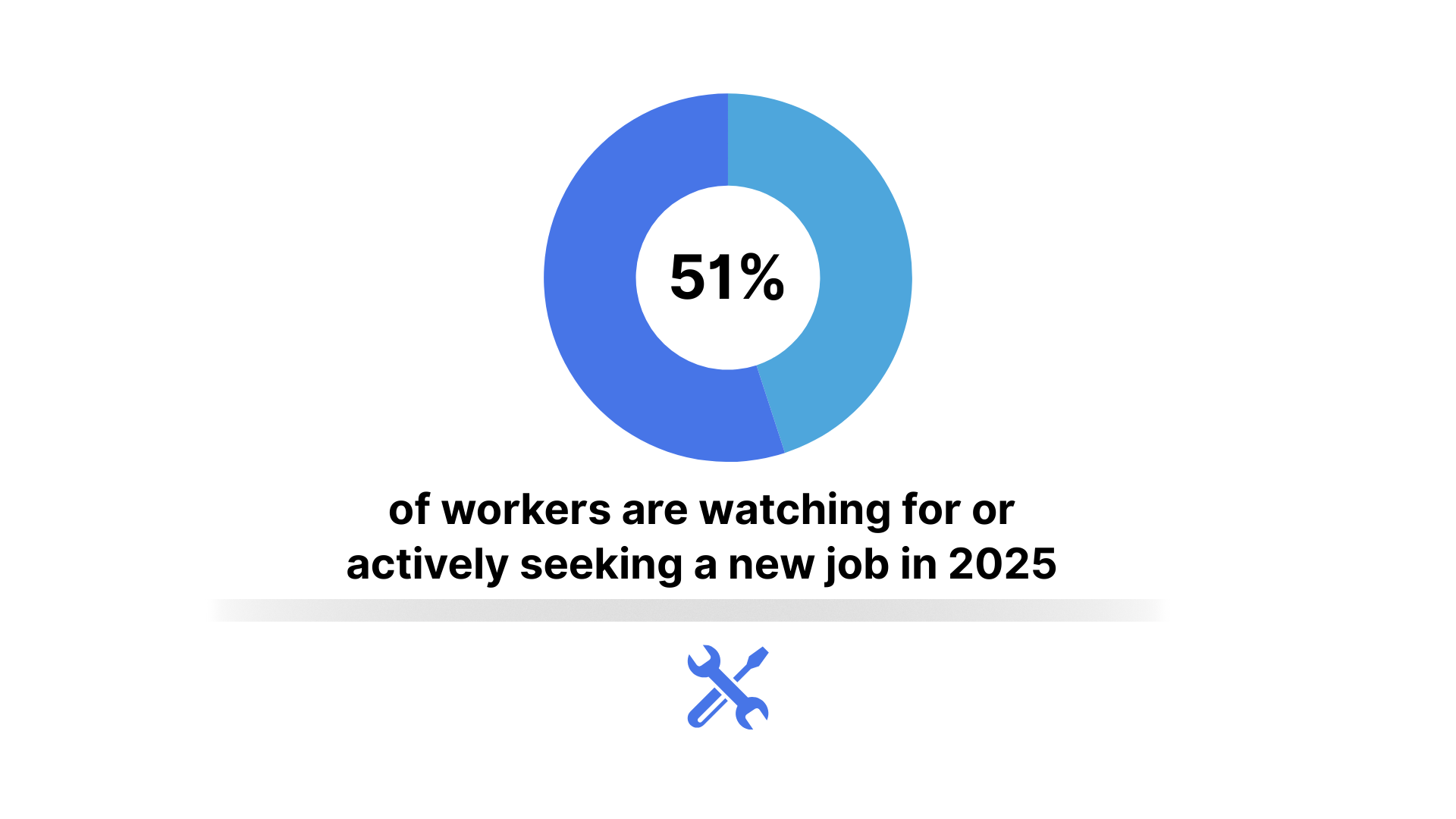
While many employers still assume it will come naturally from fair pay and job security, Gallup reveals that 51% of workers are watching for or actively seeking a new job in 2025, a figure identical to 2024 and a notable increase from previous years.
The extent and consistency suggest that traditional approaches to retention may be more focused on treating symptoms rather than addressing root causes – a potential explanation for why companies can’t retain employees, even as the current economic uncertainty and a slowing labor market would seem to make job-hopping less attractive.
This persistent turnover calls for a closer examination of the underlying factors and why the most obvious solutions aren’t working.
Turnover doesn’t exist in isolation and reflects broader workplace trends.
Behind the high intent to leave are complex, interconnected drivers.
Engagement is at the lowest it’s been in a decade. Gallup reveals that 31% of U.S. employees are engaged at work, the lowest rate in ten years, while the proportion of actively disengaged employees has returned to 2014 levels.
Motivation is slipping. According to Culture Amp, employee motivation has declined for three consecutive years, eroding one of the most fundamental drivers of performance and retention.
Workplace loyalty is in decline. WorkProud research shows that only 23% of workers ages 42 or younger plan to stay with their current employer long term, and among those under 30, that number drops to just 18%. These numbers suggest commitment is becoming the exception rather than the rule, particularly among younger generations.
Overall, the patterns reflect a workforce in flux, leaving companies with the difficult task of understanding why voluntary turnover happens and how to adapt quickly.
Voluntary turnover happens when employees make the conscious decision to leave. These departures often signal unmet expectations and can reveal the gaps in how a company supports, motivates, and engages its people.
Involuntary turnover occurs when the company initiates the separation. Layoffs, performance-based terminations, and role eliminations fall into this category.
Although necessary in certain situations, involuntary turnover affects how remaining employees perceive stability and fairness. The fear of firing can drive them into constant stress, reducing engagement and ultimately driving remaining workers to look elsewhere for stability.
In other words, while voluntary turnover explains much of why companies can’t retain employees, the combined effect of both creates a cycle of disruption that makes retention far more complex than simply offering competitive pay or perks.
According to Work Institute’s 2025 retention report, voluntary turnover remains a significant factor in workforce mobility. In 2024, it averaged 3.3 million employees per month, totaling around 40 million for the year.
Projections for 2025 suggest a similar quit rate, with the cost of turnover going even higher.
Weighing direct costs like wage inflation and talent shortages, the conservative estimate is that 33% of the employee’s base pay is lost when they leave.
For example, for a $50,000 role, companies can lose up to $16,500, and that doesn’t account for indirect costs, such as knowledge gaps, disruption, and the morale hit that turnover leaves behind.
Their research also shows that roughly 40% of turnover happens in the first year, when the cost is highest, since companies see little to no return on their hiring investment.
As the financial stakes rise and turnover shows no signs of slowing, employers must fully understand why they cannot retain employees or risk mounting expenses and weakening organizational stability.
The findings from Work Institute’s retention report indicate that preventable factors were the main drivers of turnover.
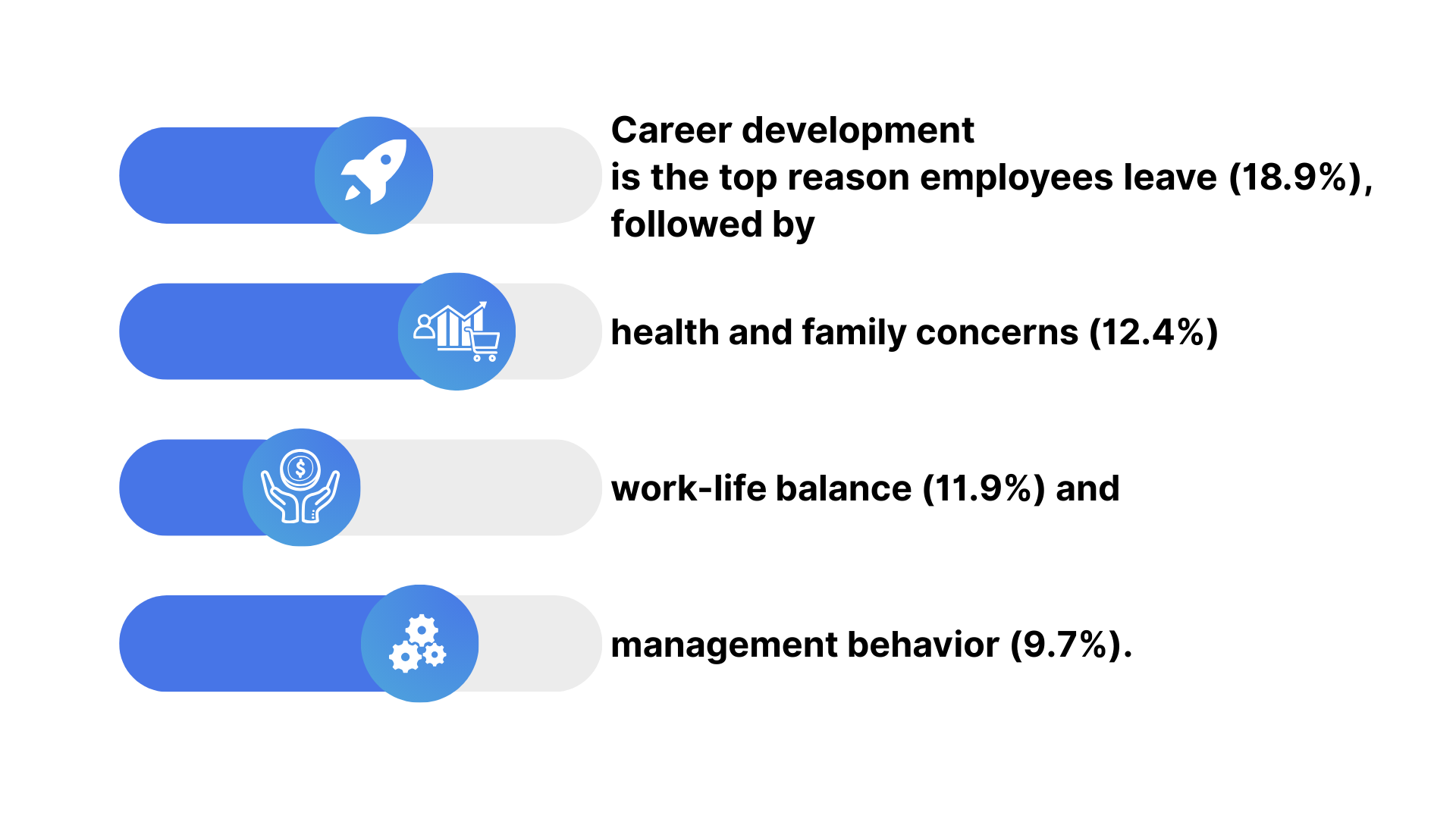
Career development remained the top reason employees leave (18.9%), followed by health and family concerns (12.4%), work-life balance (11.9%), and management behavior (9.7%).
Other factors such as total rewards, job characteristics, and workplace environment also contributed, while less preventable reasons like relocation, retirement, and involuntary departures played a minor role in turnover.
These trends show that low retention isn’t accidental.
Instead, there is a gap between what companies offer and what employees expect.
Employees leave when growth feels stagnant.
LinkedIn’s Workplace Learning report findings support this, indicating a 75% higher chance of retention for employees who take on new roles within their first two years.
When everything else evolves, from technology to roles and skill requirements, workers should be able to keep pace with these changes. Otherwise, companies risk losing talent and the potential return on investing in employees ready to learn, adapt, and grow alongside them.
“I am witnessing a lot of professionals opting out due to pay gaps and stagnation in their careers. In more technical areas such as IT and project management, the rate of innovation requires individuals to expand constantly,” explains Yad Senapathy, Founder and CEO of Project Management Training Institute (PMTI).
“When companies fail to offer certification or leadership opportunities, then attrition levels skyrocket,” concludes Senapathy.
Competitive compensation and benefits packages remain a baseline expectation, even as other factors influence engagement and retention.
For Seamus Nally, CEO of TurboTenant, not being paid fairly or getting the necessary benefits are the most influential drivers of turnover.
“I find that younger employees are often even more inclined to do this because they are the ones most heavily impacted by high housing and living costs (and student loan debt), so they often have no other choice but to look for employment that will give them better compensation,” says Nally.
A research article on the effectiveness of compensation in maintaining employee retention confirms that workers are more likely to leave when salaries, bonuses, and benefits do not match their responsibilities or market standards. Misaligned compensation can drive turnover even when organizations provide training and development opportunities.
However, the article also suggests that companies should focus on factors beyond salary and benefits, including work-life balance, recognition, and communication.
Misjudging the balance, either underinvesting in pay or assuming it alone will keep top performers, is a common misstep and a key reason why companies can’t retain employees.
Recognition deficiency operates on multiple levels, from the lack of daily acknowledgment to a consistent failure to celebrate career achievements, leaving high-performing employees uncertain about their impact and value to the company.
At the same time, recognition, or the lack of it, can strongly affect their sense of purpose and belonging.
While the solution may sound simple, it’s important to note that despite frequent employee appreciation, quality matters, as superficial acknowledgment may have the opposite effect.
Gallup’s findings support this, revealing that well-recognized workers are 45% less likely to leave within two years, and that percentage grows as recognition quality increases.
Retention is often a reflection of leadership.
Employees take cues from their leaders and managers, so turnover inevitably rises when they’re met with poor communication, lack of transparency, micromanagement, or inconsistency.
These poor leadership qualities create uncertainty and drive high performers to work environments where management focuses on accountability and respect.
Employee engagement surveys, anonymous feedback channels, and exit interviews can reveal whether leaders are a reason why companies can’t retain employees.
At the same time, investing in leadership development, including communication and team management skills, is essential. While this may require ongoing training, equipping leaders at all levels with these capabilities strengthens companies’ abilities to retain talent.
According to the Work Institute report on employee retention, which we referenced earlier, flexibility and well-being became non-negotiable as work-life balance concerns grew by 12% in 2024.
Hybrid and remote work models have reshaped workforce expectations, offering tangible retention benefits and resetting the baseline for what “good work” looks like. Pairing that with authentic wellness programs demonstrates a company’s ability to evolve alongside its people.
So, as some employers are still forcing rigid work hours and tight schedules, others are creating balance, fighting burnout, and proving they can evolve with the workforce.
This makes the choice easy for employees, and costly for companies unwilling to adapt.
One often overlooked answer to why companies can’t retain employees revolves around culture.
Cultural problems sometimes prove to be more damaging than structural issues because they affect every interaction and decision. They shape day-to-day experiences and the lens through which employees evaluate their workplace.
Therefore, toxic elements like office politics, misaligned values, subtle or overt inequities, or a lack of psychological safety can make most employees feel out of place.
Conversely, a strong, authentic culture, where diversity is embraced, behaviors are consistent with values, and people feel understood, anchors engagement and encourages long-term retention.
While the reasons why companies can’t retain employees are somewhat universal, the way they play out often depends on the industry.
Workforce dynamics, labor market pressures, and regulatory environments create distinct challenges for sectors such as healthcare, technology, and retail.
Understanding these nuances helps leaders design retention strategies that are both relevant and realistic within their specific context.
Retention in the technology sector is uniquely complex, as companies compete within their industry and across all other sectors.
Mercer’s analysis on retaining tech talent shows that U.S. turnover in high-tech reached 8.2% in 2023, higher than the global average of 6.4%, with some technology companies reporting rates near 12%.
It also revealed that turnover varies by industry segments, location, and employee demographics, with patterns that don’t always align with common assumptions.
Career stages made a significant difference, too, as those under 30 or employees with two to five years of tenure were most likely to leave.
So, what can companies do to retain tech employees?
According to the analysis, salaries and professional growth can make a difference.
Higher base pay reduced the probability of quitting, and every 1% increase in salary was linked to a 3% lower likelihood of leaving.
At the same time, recently promoted employees were 6% less likely to leave, and top performers 4%.
Mercer advises that retention strategies for tech talent should be more targeted.
The focus should be on employees in their second to fifth year, who are at a critical point in deciding whether to grow with the company or look elsewhere.
High performers need to be recognized and advanced through promotions, while leaders should also anticipate higher attrition among employees under 30, particularly in networking, telecommunications, and major tech hubs.
Addressing these dynamics head-on can help companies build stability in an increasingly competitive tech labor market.
Healthcare staffing shortages are severe and growing.
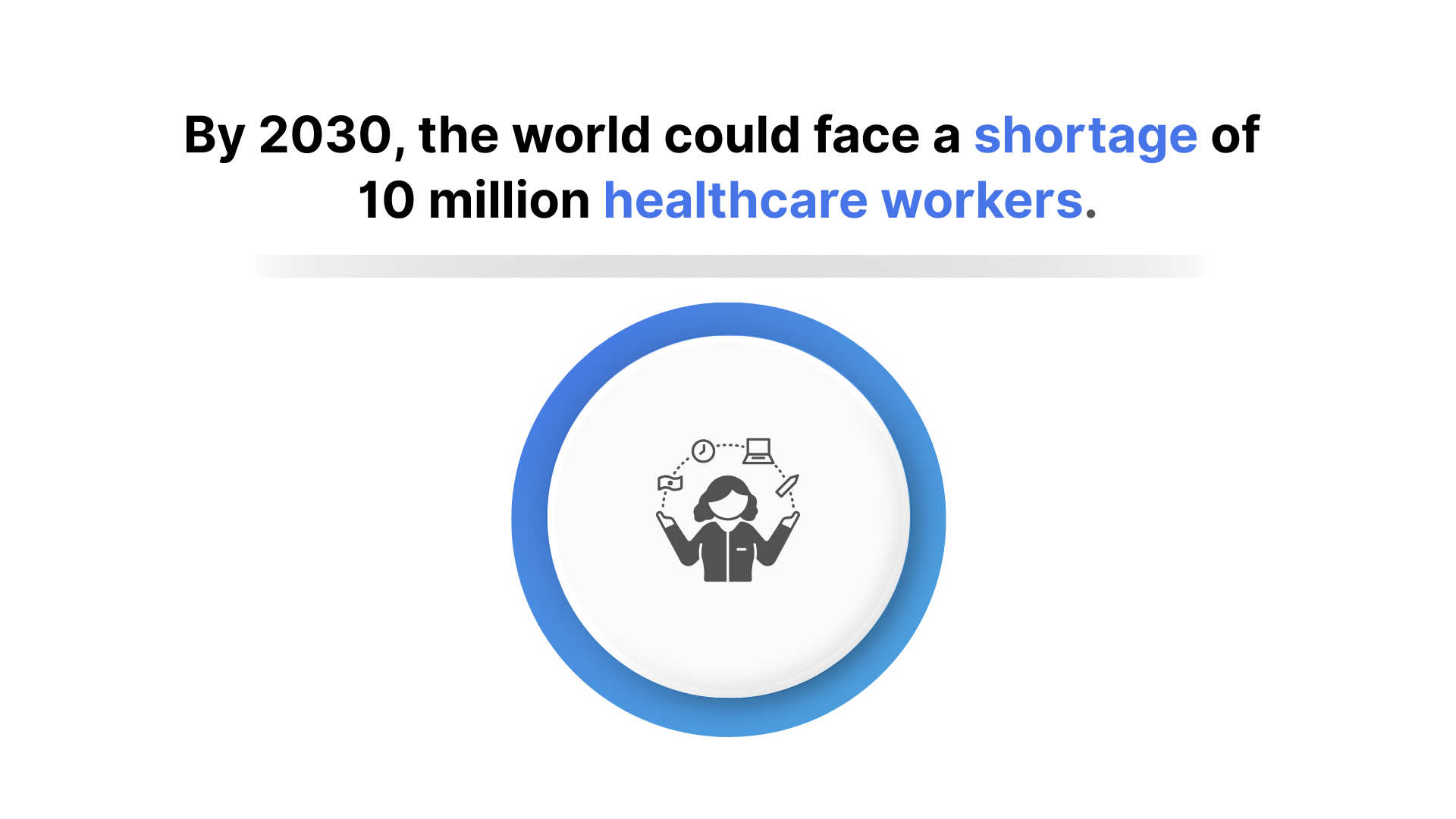
McKinsey’s Health Institute predicts a global healthcare worker shortage of ten million by 2030, a gap that, if addressed, could avert 189 million years of life lost to early death and disability and boost the global economy by $1.1 trillion.
Unfortunately, the healthcare retention crisis has many layers, from high burnout and job dissatisfaction to limited career development opportunities, heavy administrative burdens, and uneven distribution of workers across regions and specialties.
In response, McKinsey proposes a framework to strengthen the workforce, which includes three strategies: grow, thrive, and stay.
These approaches focus on expanding the talent pipeline through innovative training programs (grow), reducing administrative burdens (thrive), and improving retention by addressing burnout (stay).
Implementing these strategies could result in hiring over 5.6 million additional healthcare workers worldwide, narrowing the growing shortage and improving patient outcomes.
The retail and hospitality sector employs around 20% of all U.S. employees.
That’s approximately 31 million workers, or 9 million more than the two consecutive largest industries (the public sector and professional and business services).
However, according to McKinsey, it’s also one of the industries with the highest attrition and an average annual employee turnover of 60%.
Key drivers of such high employee exit rates include a lack of workplace flexibility, limited career development, concerns over health and well-being, and inadequate compensation.
These are also heavily influenced by roles, age groups, and gender.
For example, younger employees strive for career development, while those over 45 prioritize supportive colleagues. Women value inspiring leadership more than men, who prefer career development. However, flexibility plays a significant role for both genders.
A group this large inevitably brings diverse priorities, which hints at the need for tailored retention strategies. Therefore, addressing them with targeted, role- and demographic-specific strategies will be paramount for reducing the high turnover rate in retail and hospitality.
Generational diversity in the workplace heavily influences retention.
The concept of loyalty towards an employer has changed as much as the workforce over the past few decades, as have career priorities and values.
Yet, traditional retention models often treat all workers as a single group, ignoring the varying motivations and risks associated with different career stages.
Yad Senapathy remarks, “The younger professionals seek to see their careers accelerated and work with purpose, and the experienced employees seek stability, retirement preparedness, and expertise recognition.
Blanket retention plan does not work.”
Research reinforces this observation, showing that while certain factors influence turnover across the board, many are strongly age-specific.
For example, younger employees are responsive to compensation and career growth opportunities, reflecting a desire for rapid advancement and mobility.
In contrast, older employees prioritize job stability and long-term security, shaped by accumulated responsibilities and a focus on risk management.
Translating these findings into action, the research suggests tailored initiatives that meet the needs of each group.
| Employees aged 18 to 28 | Employees aged 29 to 45 | Employees aged 46 to 60 |
|---|---|---|
| - Structured career development | - Recognition and rewards programs | - Job security |
| - Mentorship | - Support for work-life balance | - Health and wellness programs |
| - Flexible work |
The study also suggests cross-generational strategies that benefit all age groups, such as customized communication and an inclusive company culture.
HR leaders know that retention remains a defining challenge in 2025.
According to the HR Executive’s What’s Keeping HR Up at Night? research, concerns about hiring and retention have topped the list of HR priorities since 2019.
In the most recent survey, 32.5% of HR professionals cited it as their top concern, still well above any other challenge, even as numbers have eased since the height of the Great Resignation and the wave of quiet quitting.
The message is clear: companies that fail to invest in long-term retention strategies risk losing critical talent and a competitive edge. Below are three areas where proactive action can make a measurable difference.
No matter what employees value most in their work experience, compensation will always be one of their biggest priorities.
Beyond the much-needed financial security it provides, pay also reflects how much the company values its people.
That’s why effective compensation strategies must go beyond salary alone.
Benefits like health insurance, retirement plans, paid leave, and even lifestyle perks are increasingly decisive in how employees evaluate an offer or whether they stay.
Companies that design packages blending fair pay with meaningful benefits strongly signal commitment to employee well-being and long-term success.
As a lack of growth opportunities remains one of the most cited reasons for voluntary turnover, creating clear career pathways provides structure and direction, showing workers how their current role connects to long-term goals.
Promotions are just one aspect of a person’s career that can be significantly supported with opportunities for skill-building and cross-functional experience.
“I have witnessed success when organizations couple structured mentorship with quantifiable development programs”, says Yad Senapathy.
“A professional certification, say, with a yearly budget of $2,000, indicates long-term investment and minimizes turnover,” he adds.
Therefore, employers who provide transparent roadmaps and back them up with mentorship, coaching, and continuous learning give employees clarity and greater job security.
“A powerful plan needs visible metrics, planned career dialogue, and a training budget. In their absence, retention strategies amount to nothing more than bluster,” concludes Senapathy.
Recognition speaks to a fundamental human need – our desire to feel valued and seen.
So, when acknowledgment is meaningful and tied to genuine contributions, it can profoundly influence motivation, engagement, and retention.
However, recognition is most potent when it is cultural, not occasional.
Building systems and habits where appreciation flows consistently, across peers, leaders, and teams, creates a workplace where employees feel their impact truly matters.
Tools like employee recognition software can help companies embed recognition into daily routines, but the intent must be authentic, as a culture rooted in appreciation is what sustains workplace loyalty.


A retention strategy is only as effective as its implementation, which requires alignment across leadership, HR, and managers to ensure consistency in applying programs and policies.
Technology is a key enabler in this case.
For example, modern employee engagement software captures real-time feedback and tracks sentiment, while tools like HRIS centralize data on compensation, performance, and career progression.
At the same time, learning management systems and internal communication tools can further support development and connection, ensuring employees stay engaged at every stage of their journey.
These technologies give HR leaders the insights to spot the early signs an employee is about to quit, adapt strategies to reduce the risks, and monitor progress.
Just as important, companies must commit to ongoing communication, ensuring the workforce understands the initiatives in place and feels included in shaping their evolution.
The bottom line is that retention succeeds only when employees see that change isn’t static, but a cycle of listening, responding, and growing together.
The good news is that progress is underway across companies.
LinkedIn reports that 36% of employers now offer strong career development programs, while another 31% have initiatives still gaining traction.
According to Mercer, compensation budgets could rise by about 3.3% for merit increases and 3.7% for total salary increases in 2025.
Meanwhile, companies with the best benefits, like Adobe, Salesforce, and HubSpot, continue to raise the bar, proving there’s more to compensation than salary alone.
Still, despite employee retention being a long-standing priority for HR leaders, the results have been mixed. This inconsistency raises the question of what today’s strategies may be overlooking and why many companies still find it challenging to retain talent.
Quick fixes may slow attrition for a quarter, but they won’t solve it.
Although one-time bonuses or temporary perks provide short-term relief, their impact quickly fades. Employees see through these gestures when a consistent investment does not match their growth and well-being.
In contrast, structured career development programs, continuous learning opportunities, and robust wellness benefits help employees build a future with their employer.
The solution is to balance both.
Responding to immediate needs while laying the foundation for long-term engagement is far more likely to succeed in retention.
Every level of leadership influences how policies and programs are experienced.
Executives set strategies and allocate resources, and managers implement those strategies in daily interactions. Together, they define the culture and development opportunities employees experience.
Compensation, benefits, recognition, and growth opportunities only matter if leadership ensures they are meaningful and accessible.
When those elements fall short, it’s not because HR didn’t design the right policy but because leadership failed to make it tangible for employees.
It’s why accountability matters.
The solution is not overly complex either. It comes down to acknowledging leaders’ roles in retention and improving their ability to create an environment where people feel valued and see a future for themselves.
In 2025, loyalty is earned, not expected.
Employees, especially younger generations, evaluate their entire experience, from the support they receive from leaders and potential growth opportunities, to whether their work feels meaningful.
Employers who ignore these non-negotiable expectations risk losing talent to those who embrace them.
Understanding why companies can’t retain employees means acknowledging that a one-size-fits-all approach doesn’t work and hasn’t been working for a long time.
Instead, employers must listen, adapt, and create personalized experiences that meet employees where they are, turning insight into action and engagement into lasting loyalty.
Content Writer at Shortlister
Browse our curated list of vendors to find the best solution for your needs.
Subscribe to our newsletter for the latest trends, expert tips, and workplace insights!
Transform your workplace with HR strategies designed to boost employee engagement, drive productivity and job satisfaction, and foster a culture of growth and success.

More than half of U.S. employees are secretly job hunting right now. The warning signs appear weeks before they quit – but most managers miss them entirely.

Find a suitable platform to connect and engage with your global audience at no cost.
With the Fourth Industrial Revolution, the Great Resignation, and the Great Rehiring, there is now an urgency for upskilling and reskilling America. Is providing learning opportunities to enhance, advance, and teach workers new competencies the best strategy for it?
We're working hard to make it easy for you. Sign up for news, trends and insights.