Wellness and Mental Health

Fear of Firing During Organizational Change

Fear of firing can quietly take hold during organizational change, even in the absence of actual risk. This article unpacks its drivers and offers strategies for addressing this anxiety, individually and collectively.
In This Post:
Expert Contributors:
Picture of Kevin Baragona

Kevin Baragona

Founder, Deep AI

Picture of Zac Peeler

Zac Peeler

President & CEO of Zaxis Inc.

Picture of Sinoun Chea

Sinoun Chea

CEO and Founder of ShiftWeb

Picture of Linda Kocieniewski

Linda Kocieniewski

Psychotherapist at Linda Kocieniewski Therapy

Picture of Christy Robinson

Christy Robinson

Director of Marketing at Comfort Temp

Picture of Margaret Phares

Margaret Phares

Executive Director of PARWCC

As layoffs surge to their highest level since the pandemic, the fear of firing and its toll on employees has become harder to ignore. 

Massive cuts at profitable companies like Microsoft, which is eliminating over 15,000 positions in 2025, show that job security is shaped as much by internal strategy shifts as by individual performance.

Although not all termination concerns are rooted in objective risk, when transformation stops feeling like an opportunity, employees are often left wondering if the next meeting will lead to a new initiative or a severance package.

Whether grounded in reality or perception, this anxiety reflects the human need for safety and clarity amid uncertainty.

What follows is a closer look at the drivers behind the fear of firing during organizational change, its impact, and actionable strategies companies and employees can use to respond effectively.

Understanding the Fear of Firing in Times of Organizational Transformation

The fear of firing during periods of transformation has become one of the greatest workplace anxieties.

Whether it’s a merger, restructuring, leadership shift, or strategic pivot, any significant change can spark a deeply rooted employee concern: “Will I still have a job when this is over?”

This feeling doesn’t discriminate, either.

It affects everyone, from entry-level workers to executives, creating ripple effects that can undermine the changes companies are trying to implement.

Its dual nature makes it particularly challenging: simultaneously, it’s rational and irrational, grounded in legitimate business realities while often exaggerated by our psychological responses to uncertainty.

Understanding this phenomenon and what causes it is necessary for employees who want to navigate periods of instability and for leaders trying to guide their organizations through successful transitions.

Why Organizational Change Amplifies Fear of Firing

According to Oak Engage’s Change Report, negative emotions tend to outweigh positive ones during organizational shifts.

Their findings reveal that anxiety tops the list, affecting 40% of respondents, closely followed by feelings of uncertainty (39%), worry (29%), and a sense of lost control (20%).

In contrast, only 16% of employees reported feeling happy about the change, while 24% expressed general excitement.

“The main reason is uncertainty,” explains Kevin Baragona, founder of Deep AI.

“Employees who have invested their time and effort into a company may feel anxious about their job security when major changes are happening. These types of transitions can also lead to changes in company culture and work dynamics, which can add to the discomfort and stress felt by employees”, Baragona adds.

The sense of instability only worsens in the absence of transparent communication.

Sinoun Chea, CEO and Founder of ShiftWeb, echoes this concern, pointing out, “When communication from leadership is vague, employees tend to fill the gaps with worst-case scenarios. This anxiety can derail productivity and morale.”

In addition, the compressed timeframe in which many corporate changes occur can also become a fear factor.

Unlike gradual shifts that allow for adaptation over time, modern transformations often happen rapidly, leaving employees little time to adjust their expectations or develop new competencies.

This time pressure intensifies the fear response and makes it harder for individuals to think strategically about their situation.

“When communication from leadership is vague, employees tend to fill the gaps with worst-case scenarios. This anxiety can derail productivity and morale.”

The Psychology Behind Job Security Anxiety During Transitions

Anticipation around job stability challenges one of our most basic psychological drivers: the need for security.

From a neuroscientific perspective, uncertainty naturally activates our brain’s survival responses, primarily through the amygdala (the emotional processing center), which perceives ambiguity as a threat. 

This reaction leads to heightened stress and can lower executive functions like planning, decision-making, and emotional regulation.

According to EMDR psychotherapist Linda Kocieniewski, who’s worked with executives and employees during major corporate upheavals, “organizational trauma creates surprisingly similar symptoms to developmental trauma.”

Kocieniewski explains that the body doesn’t distinguish between childhood abandonment and corporate restructuring, as both trigger the same nervous system responses.

In both cases, the fear taps into deep-seated survival instincts that can override rational thinking. It also explains why even high-performing employees with strong track records may experience intense anxiety during transitions.

Another contributor is the social identity aspect of work.

Many people derive significant portions of their self-worth and individuality from their professional roles. 

Thus, when change challenges this, it can feel like a threat to personal identity rather than just employment status.

Common Organizational Changes That Trigger Firing Fears

Anything that triggers uncertainty can trigger fear.

Examples include mergers and acquisitions, leadership changes, company restructuring, cost-cutting initiatives, and strategic shifts.

Another distinctive factor in the past couple of years has been unprecedented technological growth, especially in automation and artificial intelligence. Navigating these tech “upgrades” in the workplace has created anxiety about human roles becoming obsolete.

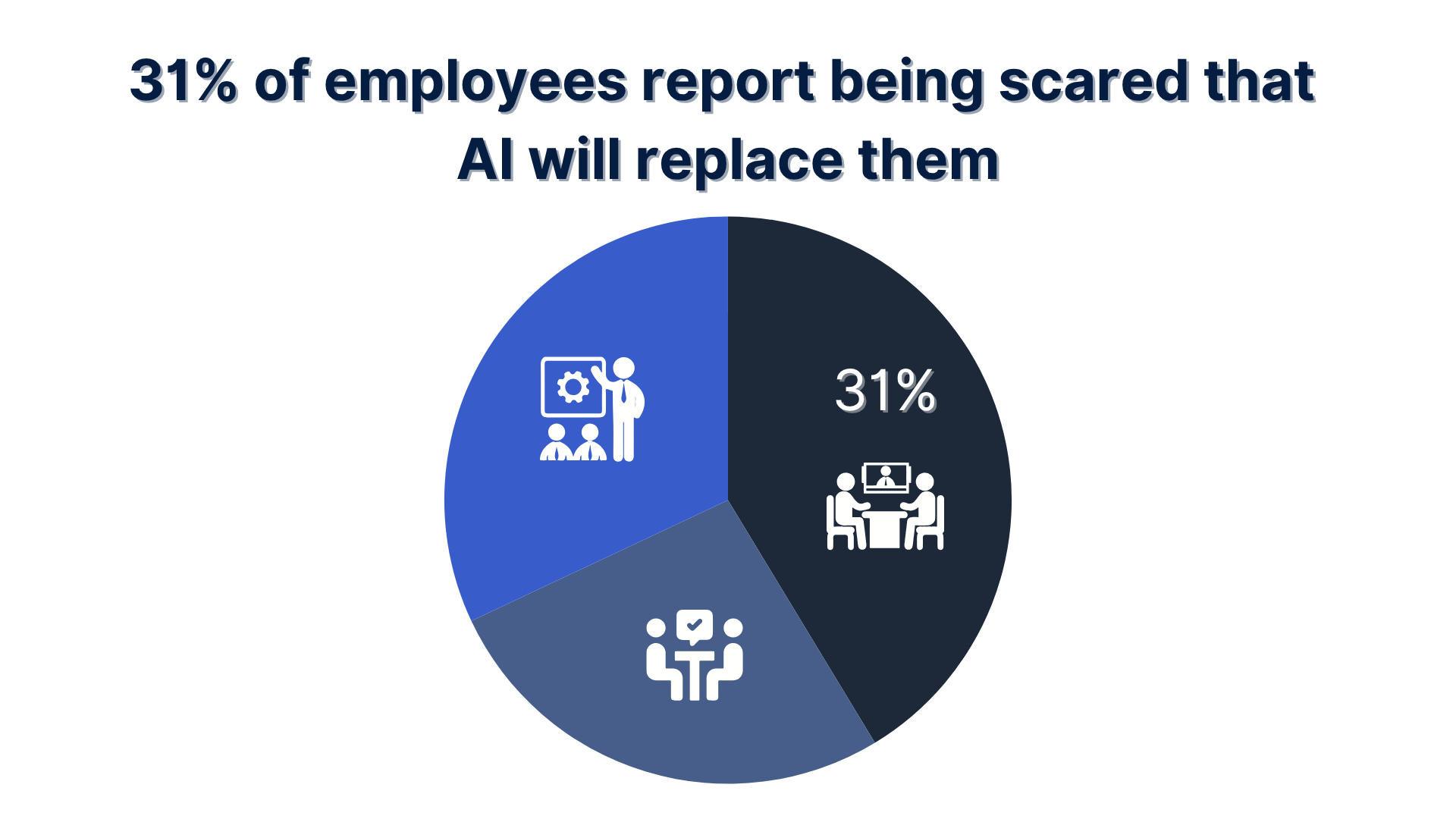
ADP’s People at Work 2025 research reveals that 31% of employees report being scared that AI will replace them, making their positions redundant regardless of their performance or loyalty.

Zac Peeler, president and CEO of Zaxis Inc., witnessed this firsthand during his company’s transition to a cloud-based ERP system.

The biggest fear amplifier wasn’t the technology change itself, but employees seeing their daily processes completely digitized. 

People genuinely worried that automation meant elimination,” explains Peeler, pointing out that fear spiked the most when workers couldn’t see their value in the new structure.

What worked for him was treating every role change as a promotion opportunity rather than a threat.

We ended up giving everyone raises within six months because the new structure actually revealed how undervalued certain positions had been,” concludes Peeler.

However, even traditionally positive transformations, like rapid scaling, can raise fears if communication gaps leave employees worrying that they’ll be left behind or outgrown by the new direction.

At Comfort Temp, we experienced this during a major operational restructuring when we expanded from 100 to 200+ employees,” says Christy Robinson, the company’s Director of Marketing. 

She explains that the fear was centered around the rapid disappearance of role clarity.

Our technicians didn’t know if their routes would change, office staff wondered if departments would merge, and everyone started hoarding information instead of collaborating.”

Robinson said their solution was implementing weekly “transition updates” to reduce anxiety and cross-training opportunities to increase employee confidence, which showed immediate and measurable performance impact.

“The biggest fear amplifier wasn’t the technology change itself, but employees seeing their daily processes completely digitized. People genuinely worried that automation meant elimination.”

Recognizing Fear of Firing Symptoms During Company Restructuring

Although fear of firing may not be immediately visible, it typically grows in intensity and impact when ignored. 

Identifying the early signs allows companies to address concerns before they escalate and threaten organizational stability.

Physical Emotional Social Behavioral
Disrupted sleep patterns Stress, anxiety, or depression Decline in performance
Changes in appetite Irritability Disengagement
Headaches or muscle tension Hopelessness or demotivation Heightened defensiveness
Fatigue Mood swings Overcompliance or overperformance

Recognizing and responding to these symptoms is as much the responsibility of leadership as it is of individual employees.

While workers must be self-aware and proactive in managing their reactions, employers are responsible for creating a supportive environment, addressing concerns early, and maintaining open communication throughout change.

Employee Strategies to Overcome Fear of Firing During Transitions

Overcoming the fear of firing during organizational change requires a multifaceted approach that addresses the situation’s emotional and practical aspects. 

The first step is acknowledging that fear is normal rather than trying to suppress or ignore it.

This acceptance creates space for more constructive responses to anxiety, including careful reflection, building resilience, effective communication, and pursuing professional growth.

Assessing Your Real Job Security During Organizational Change

It is natural for workers to experience uncertainty about their job security during a corporate transformation. However, rather than allowing anxiety to escalate unchecked, it’s essential to take a deliberate and informed approach.

Begin by objectively evaluating how your current role and skills fit within the company’s evolving strategy. This assessment should include technical and soft skills, cultural fit, and adaptability.

Another reliable indicator is the performance track record, specifically past achievements and how they align with the company’s restructuring and future direction.

Moreover, reflect on your ability to adapt to shifting expectations, whether learning new skills or taking on different responsibilities, and identify any gaps you may need to address.

Finally, assess your network diversity

Employees with professional networks beyond their immediate team or department often have more options and better information during transitions. 

This broader perspective can provide early warnings about potential organizational changes and alternative opportunities.

Building Resilience Against Fear of Firing

Resilience is a skill that can be developed through intentional mindset shifts and practical actions. Central to this is focusing energy on aspects within one’s control.

Stress management, cognitive reframing, meditation, and mindfulness practices can strengthen emotional resilience by helping individuals regulate their reactions to uncertainty.

On the other hand, practical preparedness builds resilience by equipping employees with the skills, knowledge, and actionable plans needed to navigate change effectively. 

These complementary approaches create a well-rounded foundation for resilience during organizational transitions.

Communication Tactics to Address Termination Concerns

Whenever possible, seek direct communication with a manager, supervisor, or HR representative to reduce speculation and the risk of misunderstandings.

Approach these conversations with professionalism and a genuine desire for understanding rather than as an expression of fear.

For example, asking specific questions about job expectations and how the company will measure success after the change demonstrates active involvement rather than passive worry. 

Additionally, questions about skill development opportunities, changing role requirements, or ways to contribute to transition success show initiative and commitment.

This approach positions the employee as a partner in managing organizational change rather than a “victim” of it.

Professional Development as Protection Against Firing Fears

One of the most effective strategies for alleviating fears about job security is to invest in professional development.

During periods of change, focusing on upskilling or reskilling to align with emerging business needs can grow the professional value within the company. It also builds personal confidence and a greater sense of control amid uncertainty.

Executive Director of PARWCC, Margaret Phares, advises making an “accomplishment portfolio” in response to termination fear, especially when employees realize their current skill set might not translate to the new organizational structure.

The biggest mistake is waiting until the restructuring announcement to start proving your value.

I tell my clients to track measurable wins monthly because when layoffs hit, you have 72 hours max to make your case,” explains Phares, adding that employees who thrive during organizational change position themselves as “revenue generators or cost savers with hard numbers.

“They don’t just survive the restructuring – they often get promoted into the new hierarchy because they’ve already proven their ROI,” concludes Phares.

Overall, workers who actively pursue growth opportunities are better equipped to navigate transitions and may also increase their attractiveness to other potential employers, broadening their career options should changes lead to unexpected outcomes.

“The biggest mistake is waiting until the restructuring announcement to start proving your value. I tell my clients to track measurable wins monthly because when layoffs hit, you have 72 hours max to make your case.”

Manager's Guide to Addressing Fear of Firing in Their Teams

How managers and leaders approach a corporate change can escalate or reduce the fear of being fired among employees. 

Their communication style, transparency level, and support approach significantly impact how team members respond to transition anxiety. Effective managers recognize that addressing these fears involves compassion, open dialogue, and creating a safe space for employees to express their worries.

  • The first step is acknowledging that fear of firing is a legitimate concern that requires attention rather than dismissal. 

Managers who minimize these concerns or offer generic reassurances often inadvertently increase anxiety by appearing disconnected from their team.

Instead, validating the difficulty of the situation while focusing on actionable steps creates a more supportive environment.

  • The next step is maintaining transparency within appropriate boundaries.

According to Sinoun Chea, “Managers should avoid the urge to sugarcoat or withhold information, even if it seems protective. It’s more beneficial to communicate clear, consistent updates. 

A transparent approach reassures employees that they’re not being blindsided with secretive decisions.”

Chea’s approach to transparency was to set up weekly Q&A sessions with leadership to address employee questions and reduce their fear of unexpected terminations.

  • Finally, proactive communication about individual performance and value to the organization can help team members assess their situation more accurately.

“Performance can falter when fear takes over, so establishing a feedback loop where teams can freely discuss adjusted expectations and workloads helps maintain equilibrium,” explains Sinoun Chea, reflecting on a specific case during a company merger where she focused on acknowledging employee input and involving them in problem-solving.

“This approach not only improved performance but also strengthened the organizational culture by showing that leadership values everyone’s contribution,” concludes Chea.

Practical Action Plans for Managing Fear of Firing

Developing a practical action plan requires breaking down the overwhelming anxiety into manageable components. 

Whether you’re an employee navigating shifting expectations or a leader managing anxious teams during a transition, practical planning should address immediate coping strategies and longer-term positioning for success.

For employees, it’s about regaining a sense of control.

When job security feels threatened, a plan can help restore clarity and reduce reactive decision-making. It starts with understanding how one’s role fits into the company’s new direction and leaning into open communication rather than retreating into silence.

Documenting achievements, setting work boundaries, and reaching for support can help workers stay focused and emotionally collected.

Finally, an actionable plan should include quietly preparing for “what if” scenarios, such as updating resumes, reviewing contracts, and networking. Resorting to this is not a sign of pessimism, but rather, a way to reduce anxiety and regain control.

On the leadership side, managing fear starts with acknowledgment.

Employees want to understand why change is happening and what it means for their roles. Therefore, sharing this information, if and when possible, builds credibility while encouraging open dialogue, which can surface concerns early.

Alongside transparent communication, providing EAPs, mental health workplace programs, and financial or career counseling enables employees to manage anxiety and uncertainty. 

The ROI of mental health benefits for employers consistently shows that such investments improve well-being while driving growth, two crucial pain points during organizational change.

It’s important to note that managers need support, too.

They’re often expected to communicate change, maintain team morale, and meet performance targets while managing their anxieties.

Thus, offering manager-specific resources, such as leadership development training or structured check-ins, can help them process change, lead their teams, and avoid burnout as they carry the weight of strategy and interpersonal challenges.


When Fear of Firing Becomes Reality: Navigating Actual Terminations

Although the fear of being fired is often groundless, in some cases, it can turn into an unavoidable reality. It’s important to understand that a job loss can happen to anyone, regardless of experience or performance.

Careers rarely follow a straight line, and getting fired is a detour that, while difficult, is often part of a long and successful professional journey.

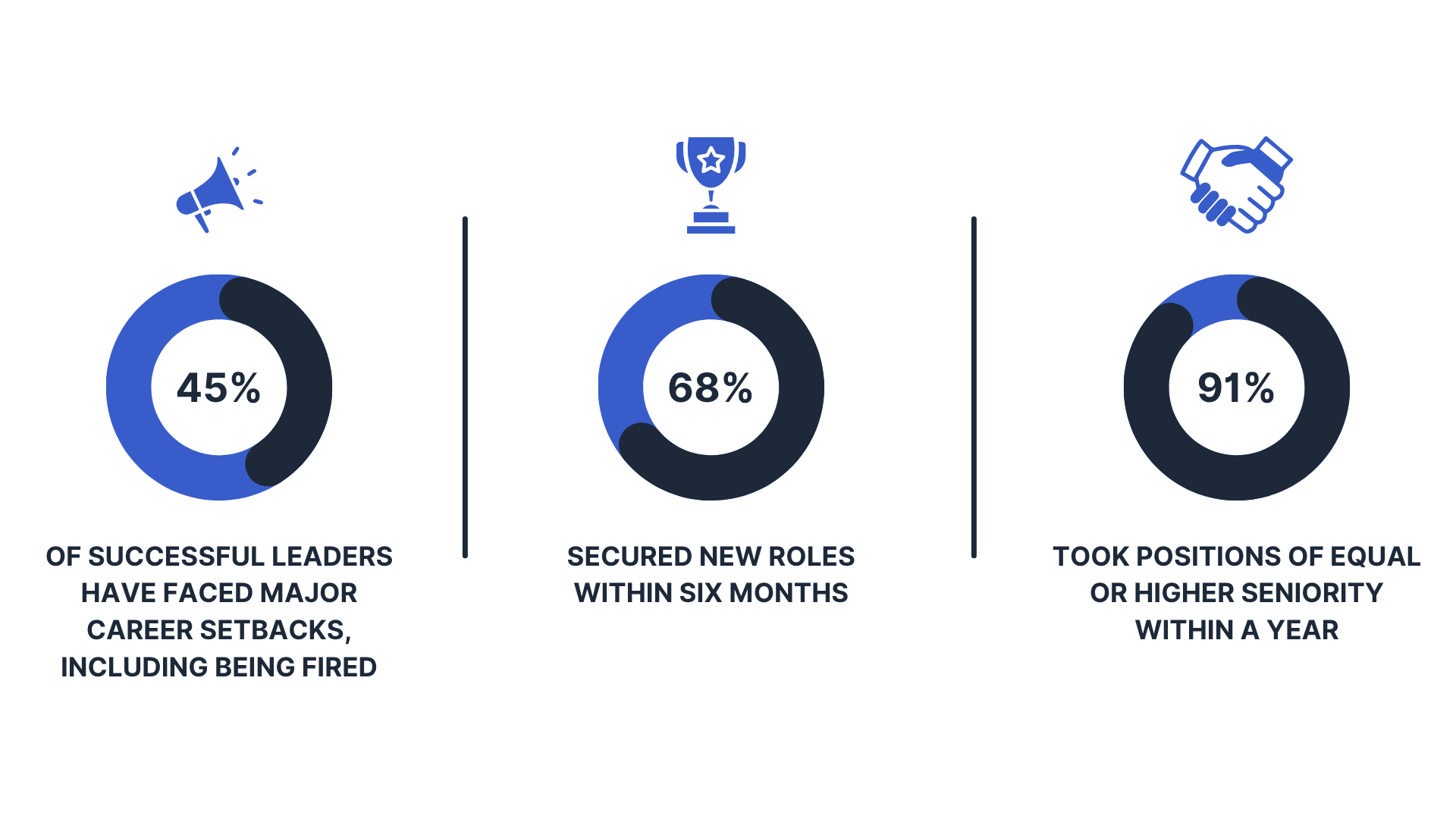
Harvard Business Review research shows that nearly half (45%) of successful leaders have faced major career setbacks, including being fired.

Yet, 68% secured new roles within six months, and 91% took positions of equal or higher seniority within a year.

According to their analysis, the key to recovery lies in owning mistakes without shame, learning from failure, and leveraging professional networks – methods proven to increase hiring success.

However, the reality is that this is a stressful process, and the immediate reaction can be confusion, emotional overwhelm, or uncertainty about what comes next.

Therefore, when termination occurs, one of the most essential things is navigating the process with a clear understanding of the causes and employee rights. This approach can distinguish between a discouraging setback and a productive transition.

Understanding Your Rights During Organizational Layoffs

After the termination news, the best way forward is to focus on gathering information on the specifics of the situation, including the reasons, the timeline for departure, available severance and benefits, and any restrictions or requirements. 

For example, severance packages can vary widely by employer and role. 

In many cases, they are negotiable, particularly regarding the payout amount, the continuation of benefits, and the conditions attached.

Moreover, COBRA benefits and other insurance continuations are critical considerations for employees with families or ongoing health needs. Understanding the timing, costs, and duration of these benefits can help prevent costly gaps in care during a vulnerable time.

Beyond company policies, it’s also necessary to assess legal rights.

In the U.S., four key federal laws play a role in protecting workers from unfair firing practices:

  1. Title VII of the Civil Rights Act prohibits discrimination based on race, sex, religion, national origin, or color
  2. The Americans with Disabilities Act (ADA) protects employees with disabilities and requires reasonable accommodations
  3. The Age Discrimination in Employment Act (ADEA) prohibits disproportionately laying off workers over 40
  4. The Worker Adjustment and Retraining Notification (WARN) Act mandates that large employers give at least 60 days’ notice before mass layoffs

These laws ensure that layoff decisions are based on legitimate business needs, not bias, retaliation, or oversight.

If any part of the termination or severance process seems unclear, overly broad, or raises red flags, especially regarding potential discrimination, it may be wise to consult an attorney

Legal experts can help interpret the language in a severance agreement, ensure compliance with state and federal laws, and, if necessary, assist in negotiating better terms.

Differentiating Between Performance-Based and Change-Related Terminations

Understanding the distinction between change-related and performance-based terminations can help with emotional processing and practical planning.

Change-related terminations typically affect entire departments, specific skill sets, or organizational levels, often accompanied by more substantial severance packages. These decisions tend to be driven by business needs rather than individual performance, and employers should openly communicate them as structural change.

In contrast, performance-based firing demands thorough self-assessment and addresses specific competency or behavioral deficiencies. 

Indicators include documented performance reviews highlighting consistent gaps, failure to meet key objectives, behavioral issues, or an inability to improve despite feedback and support. 

While more personally challenging, these terminations often provide clearer direction for targeted improvement and career development.

Long-Term Recovery from Fear of Firing Trauma

The psychological impact of intense fear of firing or actual termination can persist long after the immediate crisis has passed. Like any other traumatic event, it may take weeks, months, or more to recover.

Long-term recovery usually involves rebuilding confidence, restoring professional identity, and developing healthier relationships with work and career security

Building professional confidence is gradual and often starts with small successes, such as receiving positive feedback or achieving work goals.

Redefining professional identity may be necessary if the fear of termination involves significant career changes. This may include exploring new industries, developing different skill sets, or changing career priorities.

Healthier work relationships require balancing career focus and other life priorities, such as setting boundaries around work hours or changing expectations about career progression.

Despite these practices, recovery won’t be a linear process, as it’s a highly individual experience and, in some cases, may require professional support.

When to Seek Professional Help for Termination Anxiety

If the fear of firing remains long after the change, or if you’ve experienced a layoff that’s left lasting emotional effects, it might be time to seek outside support.

Access to therapists specializing in workplace trauma can provide practical support and strategies for managing anxiety and building resilience.

According to psychotherapist Linda Kocieniewski, “Companies that acknowledge the trauma aspect of restructuring and provide mental health resources see dramatically better outcomes.”

She further explains that, “when organizations treat these transitions as psychological events requiring healing support, not just business changes, employee performance improves during the uncertainty rather than deteriorating.

In addition, resources like career coaching and financial wellness programs can provide a different type of support. They focus on practical strategies for career development or creating financial plans that alleviate some of the anxiety in case of potential income loss.

This combination provides complete assistance for individuals who struggle to navigate the fear of firing

The key is finding qualified professionals who understand the workplace context and can offer emotional support and practical guidance for moving forward.

Written by tamara jovanovska

Content Writer at Shortlister

EAP Providers

Browse our curated list of vendors to find the best solution for your needs.

Stay Informed

Subscribe to our newsletter for the latest trends, expert tips, and workplace insights!

Related Posts

Skills-First Hiring Guide

A degree is no longer the only path to landing a great job. As companies relax their degree requirements, our skills-first hiring guide explores how to redefine employment criteria to build a more diverse and capable team.