

Employee Benefits

What are the Signs an Employee is about to Quit?

More than half of U.S. employees are secretly job hunting right now. The warning signs appear weeks before they quit - but most managers miss them entirely.
In This Post:

Gallup’s latest findings show that 51% of U.S. employees are either watching for job openings or actively applying elsewhere

That figure hasn’t been this high since 2015, and it carries a clear message: employees are rethinking what they want from work, and many are preparing to leave their current jobs.

In an office full of workers, would you be able to recognize which employee is about to quit?

HR professionals and managers face this exact challenge: trying to detect the signs that an employee is about to quit before it’s too late to intervene.

The truth is resignations rarely come out of nowhere. Long before giving notice, employees often display telling changes in behavior.

In this article, we’ll explore the most reliable indicators of an employee planning their exit, from obvious red flags to subtle shifts that are easy to miss. 

Why Recognizing the Signs an Employee is About to Quit Matters

The price of not knowing your employees’ mindset is high, both in time and money. 

Creating a job listing, advertising the role, and going through the process of interviewing, vetting, and onboarding a new hire typically takes 14 to 63 days on average.

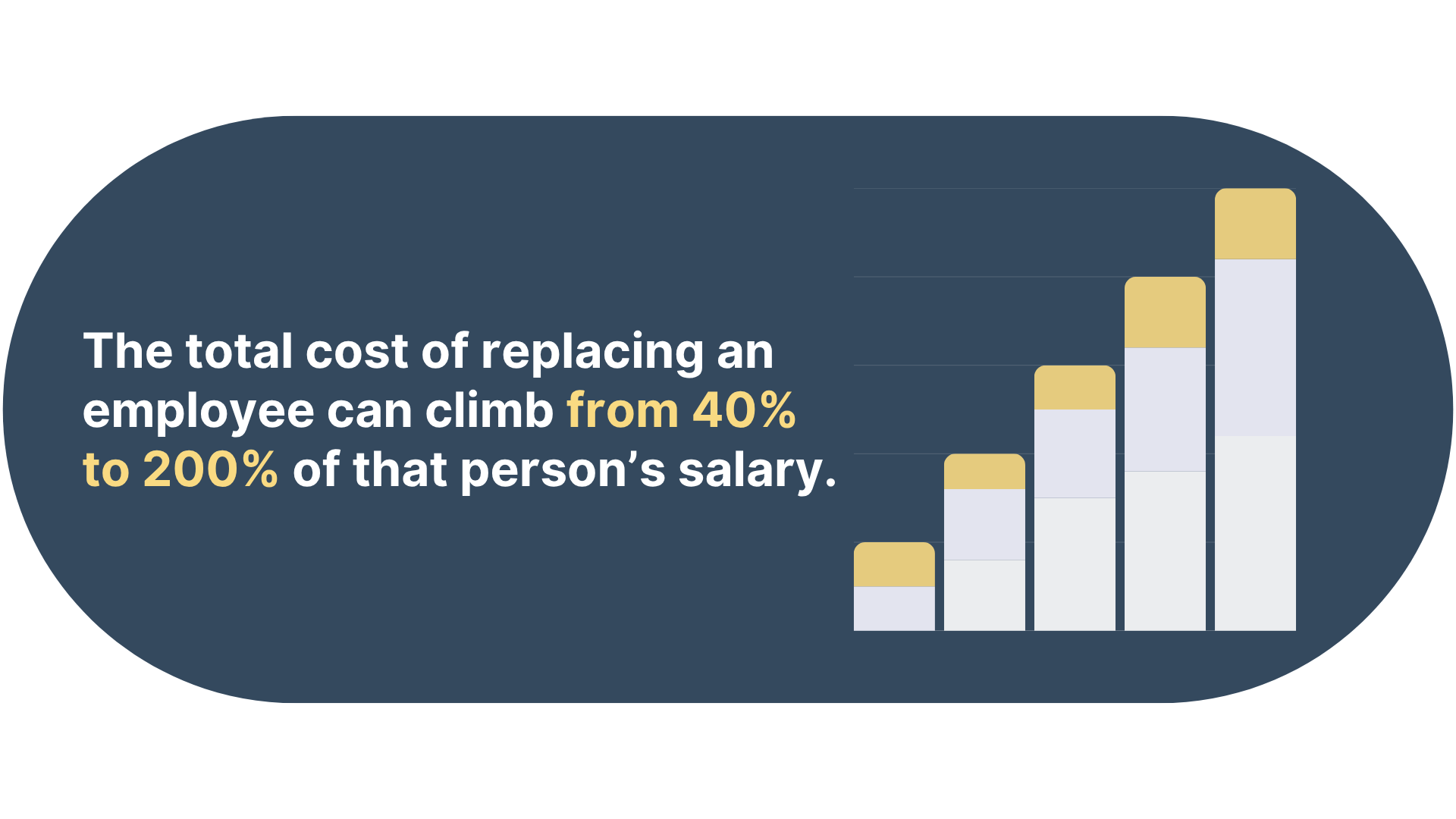
When we factor in training time, loss of institutional knowledge, and the productivity gap, the total cost of replacing an employee can climb from 40% to 200% of that person’s salary.

Then there are also intangible effects: one person’s resignation might encourage others to follow. Research shows that after one team member quits, the probability of additional coworkers leaving jumps by 7% to 25%, depending on team size. 

In short, turnover can become contagious and costly if warning signs go unnoticed.

Early Warning Signs an Employee is Looking for Another Job

Conventional wisdom teaches us that body language and actions often reveal more than words. 

For decades, psychologists have studied and deciphered the quiet signals between couples that predict divorce. 

Similar to how poker players have “tells” or how detectives sense when something’s off, the workplace has its own set of clues, and employees rarely quit “out of the blue.” 

Instead, there are early warning signs an employee is looking for another job and has mentally checked out. 

In fact, the most reliable indicators often appear weeks or months before an employee submits their resignation. While there’s no single action that gives it all away, consistent patterns can stand out to leadership that someone’s already halfway out the door.

Behavioral Red Flags That Signal Employee Departure

Not every mood swing or “off” day means someone is jumping ship.

Life happens, and family stress, health issues, or burnout can all impact how someone shows up at work. Still, when certain behaviors noticeably change over time, they can indicate that an employee is seriously considering a move.

Here are some out-of-the-ordinary red flags to keep an eye on:

  • A drop in employee’s usual enthusiasm
  • More last-minute sick days or unexpected PTO
  • A general sense of emotional distance from coworkers and company culture
  • Suddenly using their benefit plan to do dental work, eye checks, and others 
  • Becoming more negative about leadership, team projects, or the company culture

Although these small actions can be easy to overlook separately, together, they might reveal a more profound disengagement problem.

Communication Changes That Indicate Job Search Activity

Some signs are harder to spot, but a flip in how employees communicate, whether internally or externally, can be strong pre-quitting behavior.

Internally, it may start small. 

A once-enthusiastic team member may begin to check out of conversations, become more irritable, or avoid offering input. That kind of emotional distancing is often a clue that they’re mentally detached.

In some cases, the opposite happens

Someone who is usually tense or frequently disagrees with leadership may suddenly become agreeable, cheerful even. That unexpected switch can be a sign they’ve already decided to leave and are no longer invested in day-to-day issues. 

Then there’s what happens outside the office

For example, employees might suddenly be networking or refreshing their LinkedIn profiles with new skills and updates.

According to one survey, 92% of recruiters now use social media to identify candidates. So, when an employee’s online presence suddenly becomes more polished and active, it’s often not just a coincidence.

Performance-Related Signs an Employee is About to Quit

A decline in performance is a classic sign an employee is about to quit.

When a dependable employee begins missing deadlines, producing mediocre work, or paying less attention to details, it’s usually the pre-quitting sign managers need to act on.  

There’s a reason quiet quitting, revenge quitting, and similar trends all revolve around doing less – it’s a withdrawal of effort before a formal goodbye.

Simply put, they’re no longer invested, and whether they’re distracted by job hunting or burned out, the outcome is equally damaging to the company.

Another revealing sign is their long-term project engagement. Employees planning to leave may be reluctant to commit to projects beyond their intended departure timeline. 

Perhaps the most telling sign is that even when these performance issues are addressed, little effort is made to improve or change things.

They might decline leadership opportunities or express disinterest in professional development initiatives. If they no longer seem interested in their progress, it very likely is because they’re already planning their next move elsewhere.

Remote Work-Specific Indicators

Spotting the signs of a potential resignation gets trickier with remote employees, as you can’t observe minor physical behaviors like slowly clearing out personal belongings or taking mysterious phone calls that hint at job interviews.

Instead of physical withdrawal, remote workers tend to disengage digitally. Someone who once participated actively might start turning off their camera, staying silent in meetings, or keeping themselves on mute. 

Logging in late, delayed replies, or obviously multitasking during meetings can reflect the kind of disengagement you’d notice in person.

Another red flag is how they respond to changes in remote work policies

Today, workplace flexibility has become increasingly important for employee satisfaction. In fact, nearly half of remote workers (47%) say they’d rather switch jobs than give up their flexibility.

When companies announce return-to-office plans, watch for signs that employees are becoming increasingly withdrawn or frustrated. Leaders should adapt quickly if they spot these signs and use special engagement techniques for remote teams to maintain connection and motivation.

How to Keep Employees from Leaving?

The good news is that most employee departures are preventable with timely intervention. 

Research analyzing tens of thousands of exit interviews shows that their employers could have addressed 75% of the reasons people leave.

So, employers must focus on how to keep employees from leaving.

Start by conducting stay interviews or one-on-one conversations with employees to understand what’s keeping them engaged and what might cause them to leave. Unlike exit interviews, stay interviews give you a chance to act before someone walks out the door.

Use these conversations to address compensation or role-related issues that may be driving turnover. While pay isn’t the only factor in retention, it is undeniably significant. 

If an employee is underpaid relative to market rates, adjust where possible, or if not, emphasize other valuable benefits and growth opportunities.

When career stagnation and/or limited growth come up as concerns, work collaboratively with employees to create personalized development plans. Could you offer them new responsibilities, training, or a path to advance internally? 

Employees are far more likely to stay if they see a future at your company. 

The data supports this: companies that excel at internal mobility by moving people into new roles or promotions retain employees nearly twice as long as those that don’t.

Cost-Effective Solutions for Employee Retention

Not every retention strategy requires a big budget. 

The most effective tactics for keeping employees are relatively inexpensive, especially compared to the cost of replacing an employee.

There are plenty of creative, low-cost employee recognition ideas leaders can implement.

These might include casual employee appreciation gifts, such as a handwritten note from the CEO and a coffee gift card for a job well done, or symbolic awards like peer-nominated employee of the month.

Non-monetary rewards are also powerful: extra flexibility by letting someone leave early on a Friday after a tough week, development opportunities like conferences or courses, or simply public praise on company channels. 

Recent Gallup studies have shown that the most memorable forms of recognition often aren’t monetary at all but include public praise, private appreciation, or a high-performance rating. 

Learning how to reward employees without money can give managers ideas to celebrate their team in heartfelt ways that don’t break the bank.

Strategic employee incentive programs can also be designed to fit various budgets while still delivering meaningful impact. The key lies in understanding what motivates your specific workforce and adapting programs accordingly.

The Best Employee Recognition Companies

TOP VENDOR
Nectar

Nectar

4.6
Nectar is an employee recognition and rewards program that helps companies build strong culture...
TOP VENDOR
Motivosity

Motivosity

Reviews pending
TOP VENDOR
WorkProud®

WorkProud®

5.0
WorkProud® has 20+ years of storytelling, boosting connections, productivity, and fostering pr...

Building a Comprehensive Employee Recognition Plan

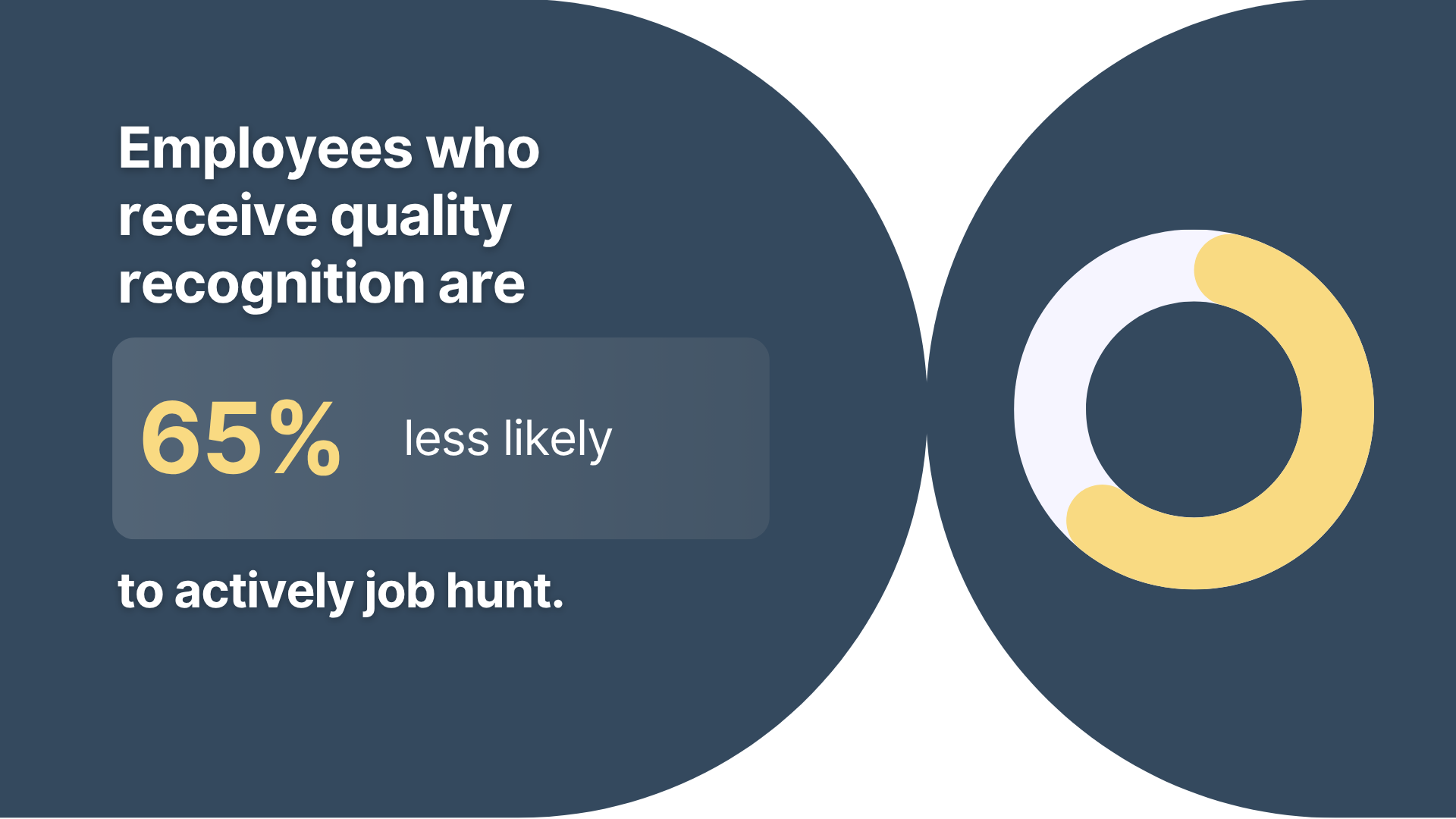
Employees who receive quality recognition are 65% less likely to actively job hunt. On the other hand, lack of recognition ranks among the top three reasons people leave their jobs.

Given these statistics, recognition must become an intentional part of your company culture and not just an occasional gesture.

So, how do you build an employee recognition plan

Start by following the next six steps. 

Step 1: Define Clear Goals and Criteria 

Identify which behaviors you want to encourage, such as excellent customer service, meeting deadlines, and teamwork. Then, align your recognition with these goals.

Step 2: Establish Methods and Frequency 

Mix informal recognition with formal recognition. Typically, managers should aim to give some form of recognition weekly, while formal awards might be quarterly.

Step 3: Practice Multi-Directional Recognition 

Include peer-to-peer recognition and upward recognition where employees can acknowledge supportive managers.

Step 4: Choose Supporting Tools 

Use employee recognition software and employee reward platforms to give kudos, distribute rewards, and integrate with everyday apps like Slack.

Step 5: Set Budget and Rewards 

Budget for tangible rewards for major achievements while keeping most recognition as verbal appreciation. Even low-cost gestures have a high impact.

Step 6: Document and Train 

Write down your strategy and train managers on recognition best practices. Many want to recognize staff but need clear guidelines.

What to Do When You Spot the Signs?

Quick action is of the essence when you identify potential pre-quitting behaviors.

Before scheduling conversations or making assumptions, ask yourself these questions:

  • Is this an isolated incident or a pattern?
  • Are there external factors (personal issues) at play?
  • Have recent organizational changes affected their role or motivation?
  • If this employee leaves, what would you regret not doing? Is there a raise, appreciation, or promotion that’s overdue?

Once you’ve assessed the situation, schedule a private conversation with the employee to discuss their current satisfaction, career goals, and any concerns affecting their work experience.

The bottom line is that many of the signs an employee is about to quit are often visible if you know where to look. 

Proactive engagement, genuine recognition, and responsive leadership are your most powerful retention tools. However, if retention isn’t possible, focus on providing a positive departure experience that maintains your company’s reputation and relationships.

Ultimately, the goal isn’t to trap employees but to create an environment where they genuinely choose to stay and thrive.

Written by Ivana Radevska

Senior Content Writer at Shortlister

Employee Recognition Companies

Browse our curated list of vendors to find the best solution for your needs.

Stay Informed

Subscribe to our newsletter for the latest trends, expert tips, and workplace insights!

Related Posts

The Mentorship vs. Sponsorship Debate

Join the mentorship vs. sponsorship discussion – unveil their benefits and importance in the workplace and discover how they influence employees and organizations.