
Decoding AI Regulation: What Employers Need to Know in 2025
Are you ready to navigate the uncharted waters of AI regulation in 2025, where innovation races ahead, but the rules are still being written?

The promise of accessing global expertise comes with a tradeoff: while companies gain unparalleled exposure to top talent, they also inherit a complex framework of compliance challenges.
From worker misclassification to overlapping labor laws and tax requirements, employers hiring internationally face the difficult task of remaining compliant across multiple jurisdictions.
Otherwise, global growth can quickly become a global liability.
Freelance management systems (FMS) help navigate most aspects, but some risks remain. This article examines the main freelance compliance challenges, including those associated with FMS, and breaks down what it takes to find, hire, and manage global talent effectively.
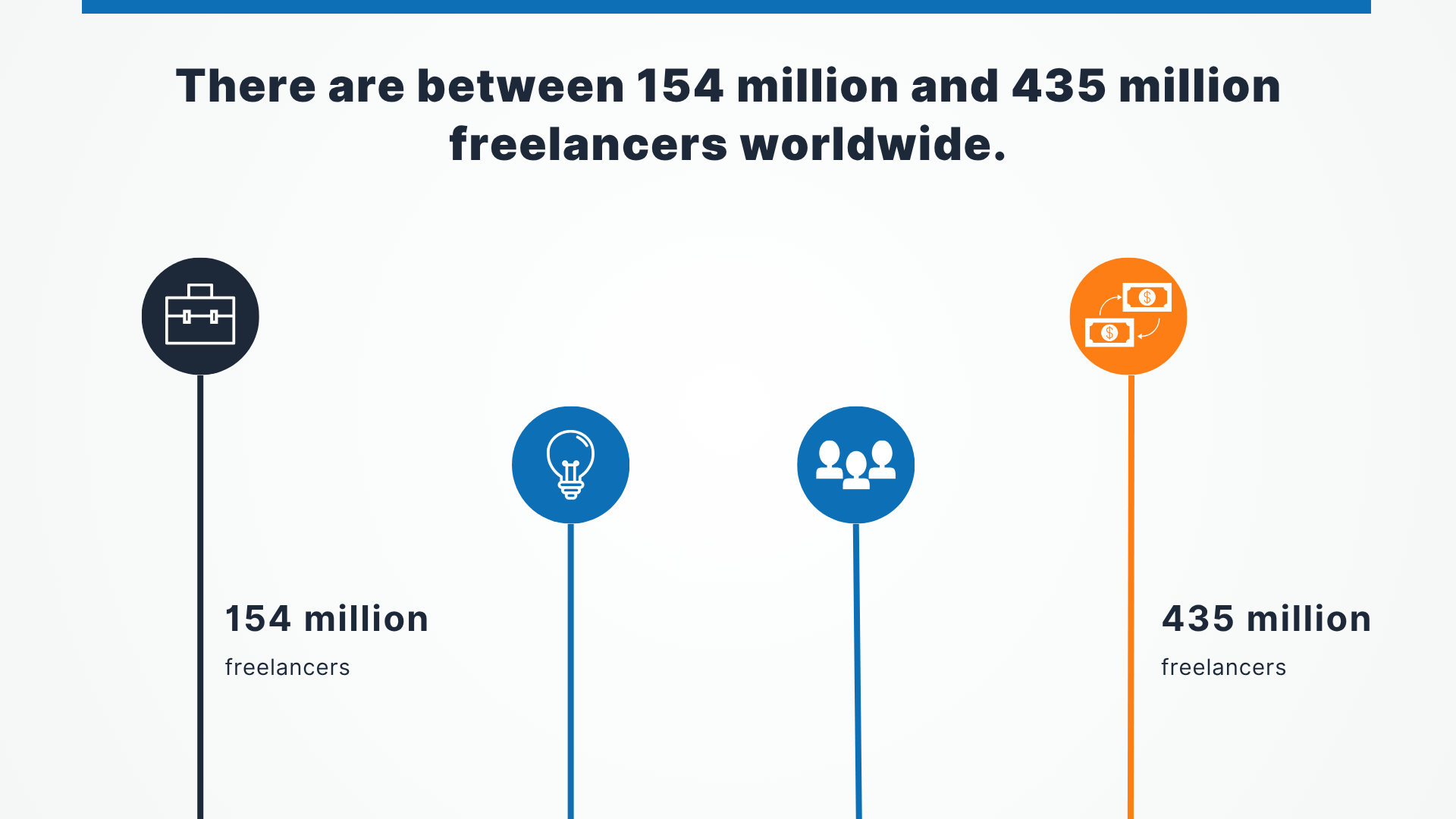
There are between 154 million and 435 million freelancers worldwide.
The World Bank Group’s report, “Working Without Borders: The Promise and Peril of Online Gig Work,” shows that these workers account for up to 12% of the global labor force, much more than previously thought, and are a growing source of income for millions of people around the world.
As this (once niche) group expands and diversifies, employers have had to adapt rapidly, driving the evolution of freelance management in ways that mirror the demands of a world without borders.
Technology was the catalyst for change.
What started as informal agreements between companies and freelancers has transformed into a sophisticated system that makes collaboration easier and more secure for everyone involved.
Nowadays, freelance management software is the organizational anchor for distributed teams, overseeing everything from hiring and project coordination to payments and compliance tracking.
The recent integration of machine learning and AI in the workplace has further accelerated this evolution, bringing more precise talent matching, automated compliance monitoring, and predictive risk assessment.
However, it’s not just technology driving the freelance boom. It’s people, too.
Workforce values are changing, especially among younger generations.
The Millennial and Gen Z work ethic, marked by a strong preference for autonomy, digital-native fluency, and a desire for meaningful, flexible work, accelerates the move away from traditional employment models.
This shift reflects a more profound understanding that behind every work contract is a person, and managing that relationship well is key to long-term success.
The bottom line is that technology and evolving values are two sides of the same coin, driving the evolution of freelance management. Together, they push FMS to adapt continuously, becoming advanced, more user-focused, and better equipped to meet the needs of today’s dynamic workforce.
With billions in revenue, a rapidly expanding talent base, and increasing corporate reliance on independent workers, the freelance market has evolved from a niche labor segment into a core pillar of the modern workforce.
The following statistics and trends show the scale and momentum behind this shift.
Global Freelance Economy
Freelancing in the U.S.
Growth and Use of Freelance Platforms
A major driver of market growth is the increasing demand for flexible work, accelerated by remote work technologies and a cultural shift away from traditional employment models (Research and Markets, 2025)
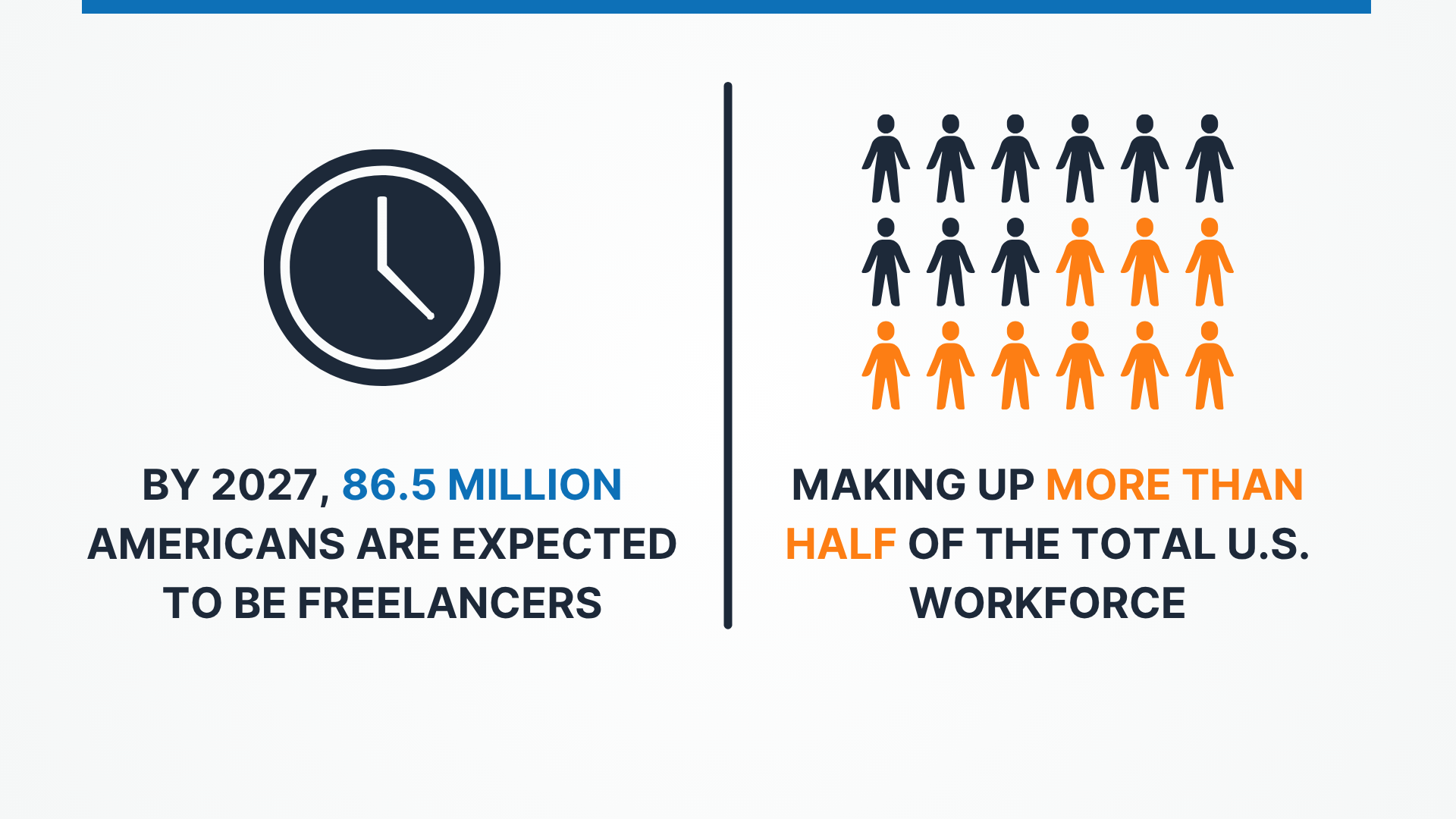
With rapid growth comes rapid change.
What once felt like a flexible workaround to traditional hiring now demands the same level of diligence and oversight.
Perhaps no aspect of freelance management creates more compliance anxiety than worker classification. After all, the stakes are high, as misclassification can result in hefty fines and legal action.
Yet, many organizations continue to struggle with it.
An estimated 10-30% of U.S. employers misclassify employees as independent contractors, potentially affecting millions of workers and costing state and federal governments billions in lost tax revenue.
In response to these risks and growing concerns, regulatory agencies like the IRS and the Department of Labor are ramping up classification enforcement efforts, while governments worldwide are reevaluating labor laws to reflect the evolving nature of freelance work.
Many freelance management platforms provide tools or questionnaires to help guide worker classification based on local legal criteria.
While these features can assist decision-making, they do not replace legal counsel or shift the legal responsibility for proper classification away from the employer.
At its core, worker classification defines whether an individual is a full-time employee or an independent contractor.
Employees work under the direct control and supervision of the employer.
They may receive benefits like health insurance, paid leave, and retirement contributions. Employers are responsible for withholding income taxes (Form W-2), paying payroll taxes, and providing protections under labor laws such as minimum wage and anti-discrimination regulations.
Independent contractors, including freelancers, operate as self-employed individuals.
They generally set their hours, use their equipment, and control how the work is completed. Freelancers are responsible for paying their taxes (Form 1099) and typically are not entitled to benefits or legal protections afforded to employees.
While this distinction may seem straightforward, applying it correctly is far more challenging.


The fundamental contrast between employees and contractors centers around control, but the practical application of this principle varies significantly across jurisdictions.
Most countries, as well as individual U.S. states, have specific rules and legal tests to determine a worker’s correct status.
In the United States, different federal agencies apply different rules (tests), creating layers of complexity.
For example, the Department of Labor uses the economic reality test, which examines several factors to determine whether a worker is truly independent or economically dependent on the employer.
The IRS, on the other hand, applies a “right-to-control” test, while individual states may have their own unique standards. California, for instance, applies the ABC test, which is much stricter: it automatically presumes a worker is an employee unless the employer can prove three precise criteria are met.
In the European Union, worker classification is undergoing significant reform with the adoption of the Platform Work Directive (EU) 2024/2831, which member states must implement by the end of 2026.
The PWD introduces a presumption of employment for platform workers, meaning businesses must prove a worker is truly self-employed if they wish to classify them as such. It also mandates greater transparency in algorithmic management, stricter data protections, and stronger oversight of health and safety risks.
Contractor classification in Asia Pacific markets is complex and high-risk.
For example, failing to issue formal employment contracts in China can trigger legal penalties. India applies two-factor control and integration tests to determine worker status, while in Australia, courts examine factors like autonomy, work schedules, risk ownership, and alignment with the business.
The rapid economic development in many APAC markets means that regulatory frameworks are still evolving.
U.S. companies hiring contractors from Latin America require careful navigation of country-specific labor laws to avoid costly misclassification.
For example, countries like Argentina rely on control, economic dependence, and subordination to determine worker status, with Chile automatically converts misclassified contractors into permanent employees.
To reduce compliance challenges and protect themselves against financial and reputational damage, companies should avoid exclusivity, issue clear independent contractor agreements, and use termination contracts that waive future claims.
Correctly classifying a worker is only step one.
Afterward, businesses face the equally intricate task of navigating financial and tax responsibilities in each country.
In a freelance or independent contractor agreement, the contractor is typically responsible for their tax compliance, including paying income taxes, social security contributions, and any other mandatory levies in their country of residence.
However, there are some compliance challenges companies should be aware of:
Some countries may require the foreign company to register for tax purposes or withhold taxes at the source, even if it has no local presence.
PE risk occurs when a contractor’s work resembles a local business presence. The employer may face unexpected tax and regulatory obligations if authorities see signs of control, such as exclusivity or deal-making on the company’s behalf.
Currency regulations and foreign exchange controls add another layer of complexity, particularly in emerging markets. Some countries restrict cross-border payments for services, require pre-approval for certain transactions, or mandate specific reporting for foreign currency transactions.
A well-drafted agreement should state that the contractor is fully responsible for their taxes and reimburse the company against any tax-related claims.
In short, although freelancers hold more responsibility in this area, employers should still carefully structure these relationships to avoid indirect liabilities.
To support them in this, freelance management systems must provide strong legal, tax, and payment compliance features that address local regulations and cross-border payment challenges while offering a seamless experience for contractors.
Unlike taxes, data protection and privacy regulations compliance falls mainly on the employer.
In other words, the company is responsible for protecting any personal or sensitive employee data according to relevant laws.
For instance, the EU General Data Protection Regulation (GDPR) sets a standard for handling data that affects any company working with EU citizens, regardless of where the organization is based.
Most countries have their own data protection laws, but the EU, North America, Australia, and China are among the regions with the heaviest regulations.
While freelancers are expected to follow the terms in their contracts, particularly those related to handling, storing, and securing sensitive business information, the employer must ultimately uphold their end of the agreement and ensure compliance with relevant data and privacy protection policies.
In this case, an FMS can serve as an intermediary, establishing clear roles and responsibilities for both parties. However, although the platform may offer region-specific contract templates, legal review is paramount to avoid compliance challenges with local privacy laws.
In a standard work contract, labor law compliance rests entirely with the employer, but the lines are blurry with freelancers, who are typically considered self-employed.
Many traditional obligations, such as minimum wage, overtime pay, and employee benefits, do not automatically apply to independent contractors.
However, several jurisdictions (state and local) have started extending labor protections to independent contractors, such as OSHA standards for on-site safety in the U.S. or mandatory written contracts under New York City’s Freelance Isn’t Free Act.
This patchwork of overlapping and sometimes conflicting regulations complicates management for companies hiring freelancers across borders.
Therefore, they must treat labor law compliance as a local issue, aligning with region-specific rules on worker classification, safety standards, contract requirements, and payment deadlines.
Managing freelancers globally presents one of the most overlooked and costly risks: Who owns the work?
Unlike employees, freelancers’ intellectual property (IP) rights (which vary significantly by jurisdiction) don’t automatically transfer to the hiring company in most countries without explicit contractual terms.
Particularly in high-risk sectors such as startups, tech, finance, and manufacturing, employers must diligently patent inventions, register trademarks, and protect copyrighted materials created by freelancers.
Confidentiality obligations also require careful attention.
Freelancers often work remotely, sometimes handling sensitive information on personal devices or across different legal frameworks.
This complexity requires employers to have clear, enforceable contracts that define ownership, licensing, and usage rights while incorporating strong confidentiality and non-disclosure agreements (NDAs) tailored to multiple legal environments.
An effective FMS can centralize contract creation and documentation, store signed agreements, and track contractor status, providing the paper trail needed for audits or investigations.
However, since most sensitive data lives outside the system, the platform cannot control how that information is accessed or used.
In this case, along with using this technology, partnering with legal experts will ensure that IP remains protected across borders and that confidentiality is maintained throughout the freelance relationship.
One final aspect of tapping into the global talent pool is contract management and proper documentation, which frame every freelance partnership from inception to completion.
Well-structured contracts must address classification requirements, regulatory obligations, intellectual property rights, and performance expectations while remaining practical and enforceable across multiple jurisdictions.
They serve as legal protection, anticipate problems before they happen, and provide reasonable solutions.
Many employers underestimate the importance of tailored contract frameworks, relying on generic templates that fail to address the unique challenges of international freelance arrangements. This approach often creates compliance challenges and operational gaps that can be costly to resolve later.
Therefore, managing these contracts and other documents becomes another key consideration as a company scales across multiple jurisdictions and time zones.
A centralized system for storing contracts combined with standardized record-keeping reduces risks and simplifies the administration of independent contractors. While tools such as freelance management platforms can assist, the most significant impact comes from consistent procedures followed by all stakeholders involved in the freelance hiring process.
Technology and freelancing are inherently co-dependent, shaping and enabling each other’s rapid growth.
The rise of digital platforms and remote work tools has allowed companies to tap into a global pool of freelance talent with unprecedented ease and speed. At the same time, the expanding freelance economy drives ongoing technological innovation to support flexible, remote, and decentralized workforces.
Freelancer management systems lie at the heart of this relationship by specifically targeting processes like hiring, contract management, payments, and compliance monitoring.
However, the complexities of managing independent contractors across borders (different classifications, tax rules, labor laws, data privacy, and intellectual property protections) mean that FMS alone often can’t meet all administrative needs.
This co-dependence pushes companies to build integrated technology ecosystems where FMS platforms work seamlessly with payroll software, legal compliance tools, verification services, and cybersecurity solutions.
Together, these systems ensure operational efficiency and robust compliance management, minimizing risks and administrative overhead.
So, what does it take to oversee a global workforce while avoiding costly compliance challenges?
The first step is acknowledging that there won’t be a one-size-fits-all approach. Laws and regulations are ever-evolving, so any strategy must be flexible and combine legal expertise, current technology, and operational efficiency.
Companies that excel in this area typically implement several methods that create sustainable compliance frameworks.
Maintaining meticulous documentation and records to support compliance audits and informed decision-making.
As freelance work becomes a permanent fixture of the global workforce and the gig economy, policymakers worldwide are grappling with how to regulate this fast-growing, decentralized labor model.
The core challenge lies in balancing the flexibility that makes gig and freelance work attractive while ensuring adequate worker protections and rights.
An analysis by Whiteshield reveals that successfully navigating these challenges requires clear worker classifications, tailored social protections, and robust platform oversight, all supported by reliable data and ongoing policy evaluation.
Right now, countries are experimenting with different regulatory approaches.
For example, France and Singapore have created self-employment statuses that blend flexibility with social security, while Spain’s experience with strict labor protections illustrates the risk of losing market flexibility.
The pressure is on companies to get ahead of these changes, not just keep up.
Freelance management systems can be invaluable in addressing compliance challenges by offering centralized control over contracts, payments, and worker status. Still, as regulatory landscapes evolve, employers must remain proactive and agile, recognizing that technology alone cannot eliminate the need for continuous compliance management and risk mitigation.
Disclosure: Some of the products featured in this blog post may come from our partners who compensate us. This might influence the selection of products we feature and their placement and presentation on the page. However, it does not impact our evaluations; our opinions are our own. The information provided in this post is for general informational purposes only.
Content Writer at Shortlister
Browse our curated list of vendors to find the best solution for your needs.
Subscribe to our newsletter for the latest trends, expert tips, and workplace insights!
Are you ready to navigate the uncharted waters of AI regulation in 2025, where innovation races ahead, but the rules are still being written?

Which skills are futureproofed with an irreplaceable “human touch,” and how are emerging technologies driving the evolution of workforce skills?

Uncover the latest strategies and tools to elevate your organization’s performance management practices for a more efficient and high-achieving workforce based on a good company culture that attracts and retains A players in the industry.

Despite their popularity, are employee incentive programs truly effective, or do they secretly undermine the very productivity and morale they aim to boost?
We're working hard to make it easy for you. Sign up for news, trends and insights.