HR Glossary

What are Examples of Effective Team Dynamics?

Why do some teams with identical resources dramatically outperform others? The answer lies in the often-overlooked interpersonal dynamics that can make or break workplace collaboration.

In This Post:

The value of effective teamwork is widely acknowledged, yet the subtle dynamics that drive it get easily overlooked.

Two teams can produce remarkably different results even with identical talent, tools, and budgets. The difference rarely lies in the resources themselves, but in how those resources interact.

Drawing on extensive research in organizational behavior, this Shortlister article addresses the question, “What are examples of effective team dynamics?”, and explores the subtle patterns that transform talented individuals into a collaborative, high-achieving team.

Understanding Team Dynamics

Many companies operate under the belief that a team’s strength comes primarily from the skills of its individual members.

However, Google’s Project Aristotle challenged this perception.

Inspired by Aristotle’s “the whole is greater than the sum of its parts” phrase, it reveals that team effectiveness isn’t driven by “star performers,” seniority, or physical proximity.

Instead, it relies on group interaction patterns, or team dynamics, that shape how individuals work together toward shared goals.

Researchers found that the highest-performing groups shared certain qualities that determine success, including structure and clarity, dependability, meaning, impact, and, most importantly, psychological safety.

Teams that felt safe taking risks, admitting mistakes, and voicing ideas without fear consistently outperform those that did not. Success was also more likely when the culture was focused on value and respect.

In addition to their core finding, the project found two additional and equally crucial norms: equality in conversational turn-taking and heightened social sensitivity.

High-performing teams ensured that every member had space to contribute and showed an ability to read and respond to one another’s emotions.

Together, these components created the conditions for trust, innovation, and sustained performance, proving that how a team works together matters far more than who is on it.

The Importance of Teamwork in the Workplace

Companies are directly affected by how well their teams work together.

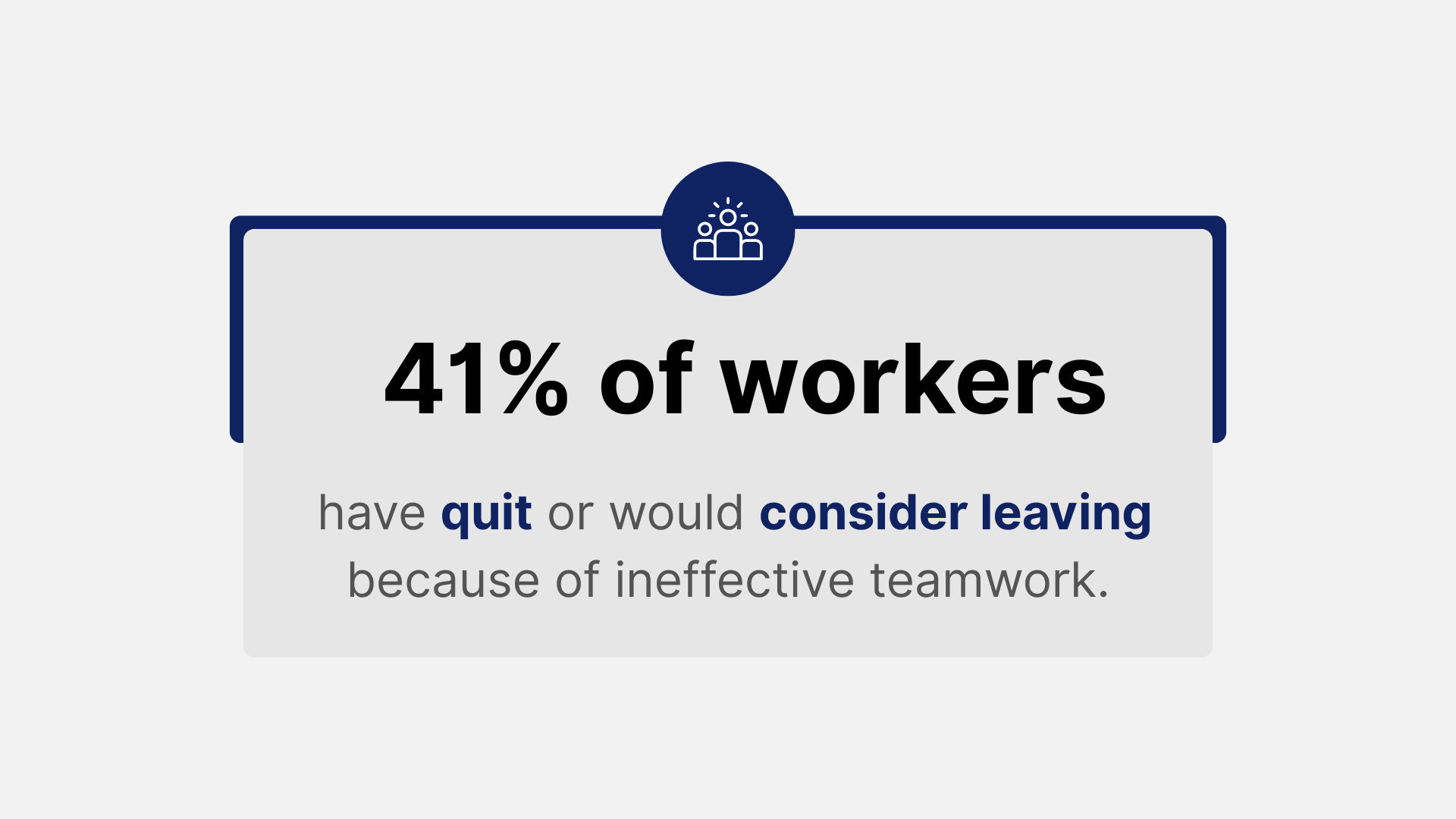
Poor collaboration creates frustration, wastes time, and even drives employees to leave. In fact, according to Corel’s State of Collaboration survey, 41% of workers have quit or would consider leaving because of ineffective teamwork.

Teams that struggle also lose hours of productivity each week, with 64% of employees saying they waste at least three hours due to collaboration issues, while 20% waste as many as six hours weekly.

On the other hand, groups that work well together are more engaged and deliver measurable results. 

Gallup’s global meta-analysis of over 183,000 businesses found that highly engaged, effective teams are 23% more profitable than the least engaged.

In other words, efficient collaboration sets the tone for employee experience and business results, proving that teamwork drives success on every level.

What Are Key Examples of Effective Team Dynamics?

In high-performing teams, collaboration feels effortless, roles are clear without feeling rigid, and employees anticipate each other’s needs.

So, what are examples of effective team dynamics that set these groups apart?

The following patterns reveal the subtle yet influential ways successful teams function daily. They can help companies replicate success and prevent common mistakes that slow progress.

1) Trust and Psychological Safety

Google’s Project Aristotle identified psychological safety as the most integral factor in team efficacy. It creates an environment of trust where every member feels secure asking for help or sharing ideas without worrying about embarrassment.

This example of effective team dynamics can encourage creativity and innovation because no one hesitates to speak up. It also has the potential to transform how teams approach challenges, turning potential failures into valuable data points for future success.

2) Shared Goals

Without shared goals, a group remains just a collection of individuals.

While employees may have their own priorities, alignment around a common purpose ensures that team efforts move in the same direction. When everyone understands and commits to the collective objective, collaboration becomes more focused, creating effective team dynamics that bring results beyond individual contributions.

According to the research paper “Explaining the Benefits of Team Goals to Support Collaboration, shared vision and jointly defined goals are necessary foundations for true collaboration, not just cooperation.

The research also demonstrates that an explicit goal-setting and progress tracking process helps teams establish priorities, encourages open conversations and collective problem-solving, and improves interpersonal relationships.

3) Structure and Clarity

Effective teams rely on a clear structure to function at their best. When roles and responsibilities are well-defined, individuals understand how they contribute to shared goals.

However, within this structure, the quality of employee interactions becomes equally important.

Collaborative communication goes beyond talking and listening. It involves transparency, openly sharing ideas and feedback, and understanding others with empathy and respect.

The most effective communication occurs when team members are fully informed and confident in sharing their perspectives. Psychological safety plays a significant role, allowing employees to feel safe speaking up, asking questions, or admitting to mistakes.

4) Constructive Conflict Resolution

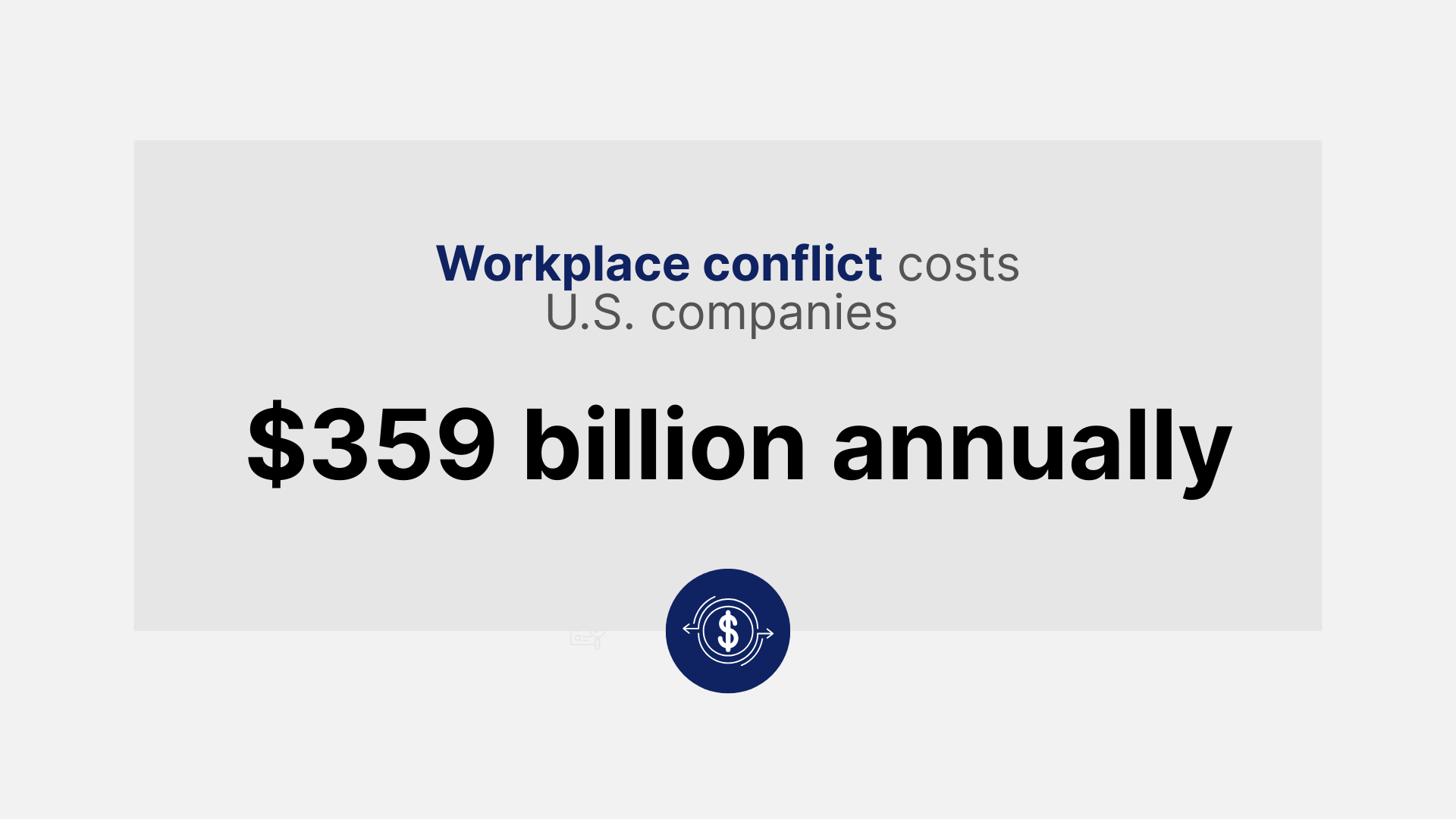
Conflict often carries a negative connotation, and in the U.S., workplace disputes cost companies an estimated $359 billion annually.

However, conflict is a natural part of team dynamics, and how it’s handled determines its impact.

High-performing teams treat it as an opportunity, instead of suppressing disagreements that lead to frustration and poor collaboration.

Whether it arises from a difference of opinion, misunderstandings, unmet expectations, or interpersonal conflicts, the key is creating a safe space where conflict can be expressed constructively and resolved collaboratively.

5) Collaborative Problem-Solving

Problem-solving is another element of team dynamics.

Strong teams approach challenges collaboratively, instead of relying on a single “fixer” within the group. They brainstorm openly, weigh different perspectives, and aren’t afraid to experiment, iterate, and refine ideas together.

This approach draws on cognitive diversity, where varied thinking styles and areas of expertise intersect to create solutions that no individual could achieve alone.

For example, some team members bring a strategic, big-picture perspective, while others focus on execution and detail. Together, these viewpoints form a more complete problem-solving process.

6) Flexibility and Adaptability

Work today is rarely static. Markets shift, customer needs evolve, and technology changes how teams operate.

Therefore, although effective teams need structure in their work, they also recognize this reality and remain flexible. Instead of resisting change, they treat it as part of the process and respond in a way that strengthens performance, whether adjusting priorities without losing focus or rethinking roles when needed.

Research on team flexibility in an organizational change context shows that it leads to improved adaptive and proactive behaviours among employees and a stronger perception of fairness in the change process.

The study also found that flexibility is strengthened by:

  • Balancing the exploration of new opportunities with the exploitation of existing capabilities (at an organizational level)
  • Change leadership or leaders who effectively manage change processes (at a team level)

This resilience is a defining element of effective team dynamics because it enables groups to continue delivering results, even in environments or industries where uncertainty is often the norm.

7) Continuous Learning

While improving performance is often viewed as an individual effort, effective teams recognize that personal growth and team learning differ.

Team learning is a collective process in which members reflect together, share insights, and adapt as a group, equipping the whole team to navigate uncertainty and respond strategically to evolving challenges.

According to McKinsey, groups can support this kind of learning by:

  • Setting team learning goals aligned with the team’s desired outcomes
  • Identifying triggers, such as new projects or organizational changes, that create opportunities to learn
  • Creating an environment of psychological safety where curiosity and experimentation are encouraged

8) Mutual Recognition

One final example of what effective team dynamics looks like is mutual recognition.

Research has consistently shown that it’s a simple, affordable, and highly effective strategy for improving many aspects of work, from well-being to social connections.

For example, employees who feel recognized are seven times more likely to report meaningful workplace relationships and ten times more likely to feel a sense of belonging.

This individual recognition also leads to positive spillover effects in teams. 

One study shows that publicly acknowledging a team member’s outstanding performance can motivate others to improve their own, enhancing overall team effectiveness

The effect is particularly impactful when the recognized individual is central to the team and when the recognition program is applied consistently and fairly across the company. 

These findings suggest that well-structured employee recognition programs can significantly improve team dynamics.

Top 3 Employee Recognition Companies

TOP VENDOR
Nectar

Nectar

4.6
Nectar is an employee recognition and rewards program that helps companies build strong culture...
TOP VENDOR
Motivosity

Motivosity

Reviews pending
TOP VENDOR
WorkProud®

WorkProud®

5.0
WorkProud® has 20+ years of storytelling, boosting connections, productivity, and fostering pr...

Collaboration and Team Dynamics in Remote Teams

Remote work has a dual nature regarding team effectiveness, making it difficult to categorize as purely beneficial or detrimental.

On the positive note, the U.S. Bureau of Labor Statistics reported that remote work during the pandemic was associated with productivity growth, mainly through reduced nonlabor input costs and operational flexibility.

Its value goes even further if we consider the ability to reduce office distractions, support work-life balance, and expand access to a global talent pool, bringing in diverse perspectives that can drive creativity and innovation.

However, remote work also presents many challenges for teams.

Research shows that communication is the main drawback, particularly regarding time zones, flexible schedules, and a lack of face-to-face interactions, which disrupt team cohesion.

Remote employees also experienced challenges such as blurred boundaries, isolation, reduced career advancement opportunities, and technology-related security risks.

The nuanced nature of this dynamic arrangement requires careful balancing and the right structures in place.

So, what are examples of effective team dynamics in remote workplaces?

Clear communication protocols, trust built on accountability rather than presence, intentional efforts to sustain culture and connection, and regular recognition contribute to teams that thrive despite distance.

Just as important is using the right technology, such as employee collaboration tools, team communication apps, or video conferencing software, which can bridge physical distance and help with team-building.

With these practices in place, the challenges of remote work have the potential of becoming opportunities, allowing teams to strengthen collaboration across different locations and time zones.

The Barriers to Effective Teamwork

Beyond the widely recognized challenges of remote work, deeper barriers can quietly undermine teamwork and collaboration. 

For example, misaligned goals often lead to conflict when individuals or departments pursue competing priorities. 

Communication breakdowns create even more misunderstandings and erode trust, while personality clashes and conflicting work styles add further complexity, especially when teams lack structures to turn those differences into strengths.

At the center of these dynamics lies leadership.

Unclear direction, inconsistent communication, or disengaged managers can create confusion that trickles down to every team interaction. 

Over time, these poor leadership qualities form invisible barriers that slow progress, create mistrust, and prevent even the most capable teams from working together effectively.

Recognizing the signs of struggling dynamics is crucial. 

They often show up in recurring miscommunication, missed deadlines, duplicated work, or team members withdrawing from participation. A lack of enthusiasm during meetings, conflict and blame culture, rising frustration, and high turnover within a group may all point to underlying cracks in collaboration.

Spotting these early allows leaders to intervene before barriers become ingrained behaviors.

How to Build Efficient Teams

Creating effective team dynamics requires intentionality.

While skills and resources matter, the foundation of high-performing groups lies in how individuals are engaged, supported, and aligned toward shared goals.

Exceptional teams are not the product of chance. They are intentionally developed through strategies integrating individual strengths, collective culture, and effective leadership.

Leveraging Individual Strengths

The ability to translate individual expertise into collective success is a defining feature of effective teams. Acknowledging the individual means understanding each employee’s skills, communication style, and career aspirations and providing meaningful opportunities for them to contribute.

When team members feel seen and valued as individuals, not just as parts of a group, they are more engaged and willing to collaborate. 

Building a Collaborative Culture

Collaboration should be a habitual part of team dynamics, instead of an occasional activity.

Sustainable success comes from a company culture that builds teamwork into routines and day-to-day decisions. This environment encourages employees to support each other, share knowledge, and adapt together.

The Importance of Engaged Leadership

Gallup’s decades-long research shows that effective team dynamics are grounded in engaged and capable leadership.

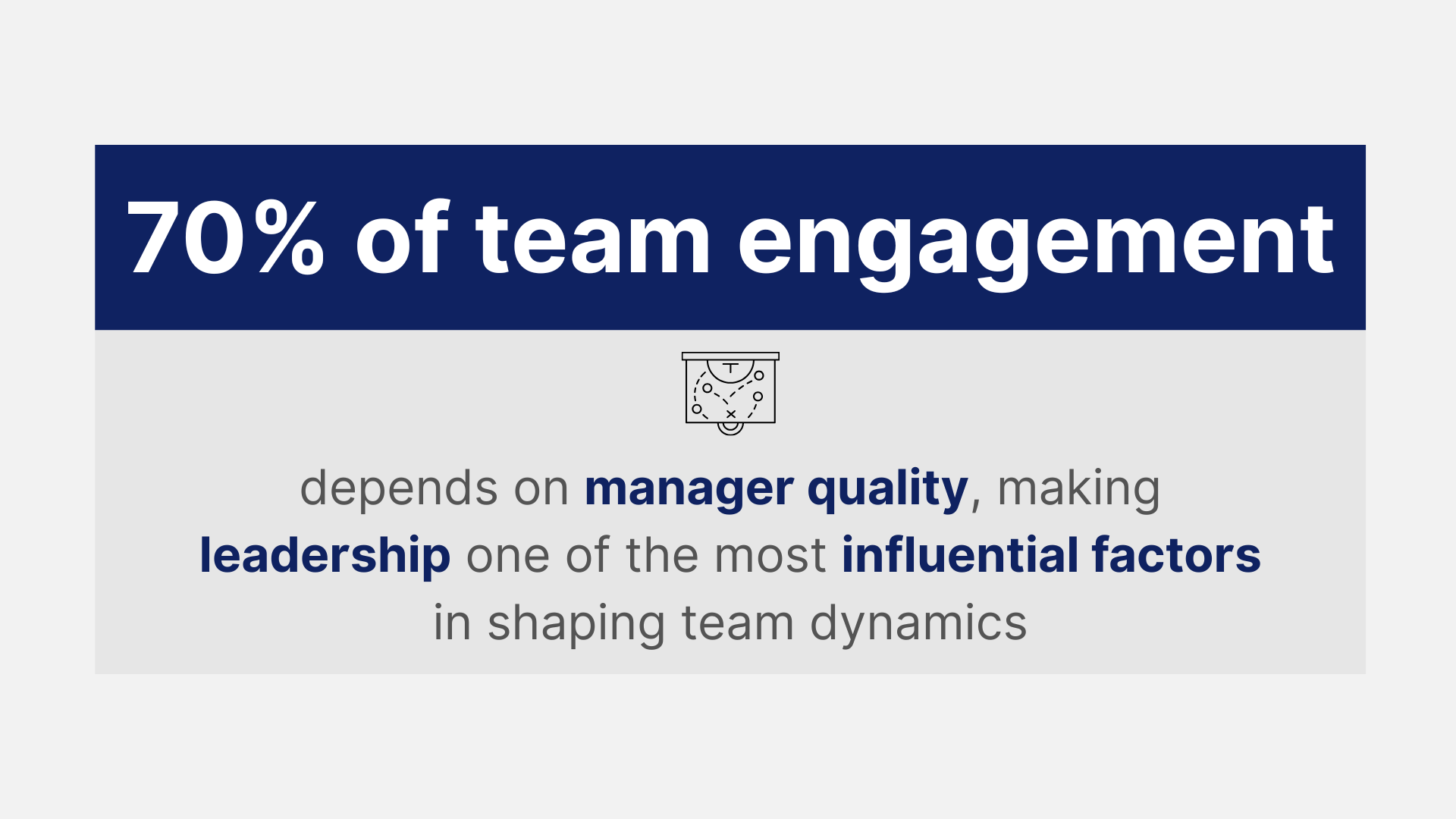
Their results reveal that the quality of managers drives 70% of the variance in team engagement, making leadership the single most influential factor in shaping team dynamics.

These high-engagement teams consistently achieved greater outcomes, including increased productivity, higher retention, enhanced safety, and stronger customer loyalty. 

The Growing Role of Technology in Team Performance

According to Corel’s State of Collaboration survey, which we referenced earlier, more than a quarter of the workforce (27%) struggles because their company hasn’t invested in the right collaboration solutions. 

Another 25% report that existing tools lack necessary functionality, while 22% have no access.

This gap highlights how urgently companies must align their resources with their objectives.

Technology is already inseparable from modern team dynamics, and its influence extends beyond convenience and collaboration.

For example, employee engagement software provides real-time insight into the factors that influence how individuals connect with their work, their team, and the company.

Project management tools ensure better coordination, while learning management systems (LMS) support continuous skill development, helping teams stay agile and adaptive.

These platforms are just a few of the many examples of the growing role of technology in creating a foundation for better team dynamics.

The next step in this evolution is the increasing use of AI in the workplace.

If used correctly, artificial intelligence can automate repetitive tasks and generate insights from complex data, giving teams more time and clarity to focus on strategic, high-impact work.

Best Employee Engagement Software

Deel

Deel

Reviews pending
Deel is the all-in-one platform for managing your global workforce.
Selerix

Selerix

4.2
Selerix blends technology and personalized education to help 14 million employees choose benefi...
TOP VENDOR
Motivosity

Motivosity

Reviews pending

Navigating the Future of Teamwork

The future of teamwork will be defined by balance: between individual autonomy and collective responsibility, technological innovation and human connection, leadership guidance and collaborative decision-making.

This alignment becomes especially relevant as evolving work models and substantial technological growth reshape team collaboration. 

Modern teams are increasingly global, virtual, and fluid, often requiring individuals to work across locations with partial information and rapidly shifting priorities.

In this context, the question of “what are examples of effective team dynamics” takes on new significance, as understanding the interplay between people, processes, and technology will increasingly distinguish companies that excel in evolving work environments from those that fall behind.

Written by tamara jovanovska

Content Writer at Shortlister

Employee Collaboration Tools

Browse our curated list of vendors to find the best solution for your needs.

Stay Informed

Subscribe to our newsletter for the latest trends, expert tips, and workplace insights!

Related Posts

Why is Mentorship Important?

In times of increased globalization and rapid technological advancement, mentoring tightens the gap caused by skill shifts and empowers employees, making it an irreplaceable asset in career growth.

Low-Cost Employee Recognition Ideas with High Impact

Recognition doesn’t need a big budget to make a big impact. These affordable ideas for employee recognition move past transactional incentives and build emotional connections for genuine appreciation and lasting results.