

Fair Workplace Practices

How to Fire Someone Nicely?

Is there really a nice way to fire someone? While termination will never be easy, it can be done with professionalism and compassion.
In This Post:

Is it truly possible to fire someone with compassion and dignity? 

No manager looks forward to letting an employee go. Yet, part of leadership is learning how to fire someone nicely and treating people with dignity even in difficult moments.

In today’s climate of frequent layoffs, corporate restructurings, and economic uncertainty, knowing how to fire someone nicely and navigate these conversations with professionalism and compassion has become an essential leadership skill.

Is It Possible to Fire Someone Nicely?

It may sound like an oxymoron: is there really a nice way to fire someone? 

The truth is, “nicely” doesn’t mean the news won’t hurt. Instead, it means conducting the process with compassion, fairness, and respect. 

Firing someone nicely also means avoiding surprises. If the termination is for performance or behavioral issues, ideally the employee will see it coming. 

In other words, progressive disciplinary actions and open communication should precede a firing whenever possible. Employers must keep a clear record in their HRIS systems of performance reviews, warnings, and incidents that led to the decision, so it’s defensible and explainable.

Even in the U.S., where at-will employment allows letting someone go without cause, terminations shouldn’t be impulsive. 

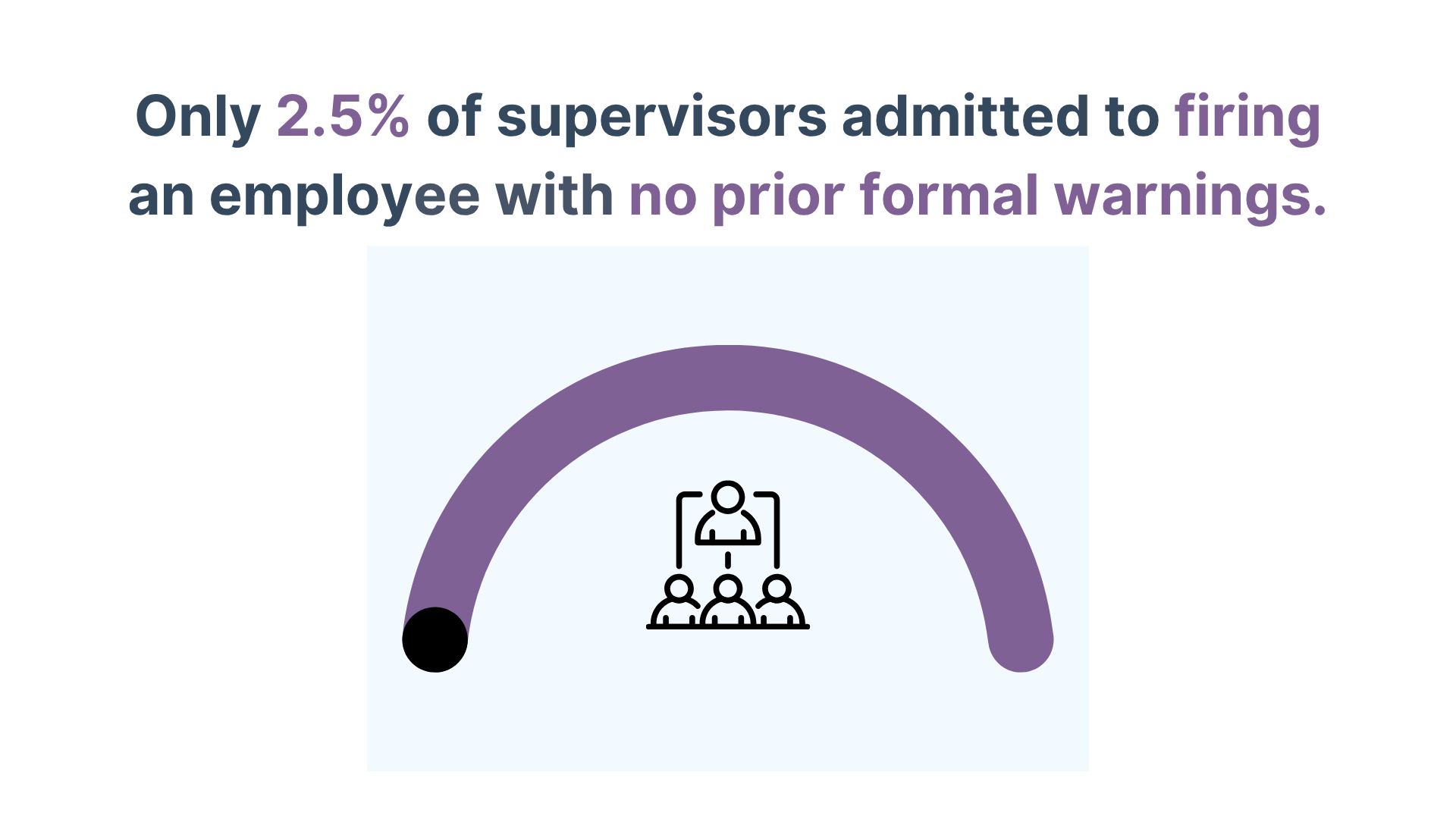
Most managers already operate this way. In fact, a survey by Paychex found that only 2.5% of supervisors admitted to firing an employee with no prior formal warnings.

In short, the best way to fire someone is to prepare extensively and follow a fair procedure well in advance.

What to Say When Terminating an Employee

No matter how much you plan, the termination conversation will be difficult. Even good leaders can struggle with what to say when terminating an employee, but a few principles can guide you. 

First, be direct and honest about the reason for dismissal, using factual, brief explanations of the decision. Reference documented performance issues or organizational changes without going too in-depth about past events. 

“We’ve made the difficult decision to end your employment, effective today,” provides clarity while acknowledging the gravity of the moment.

Another example is, “As you know, the company is restructuring due to budget pressures. I appreciate your contributions over the years, but your employment here has been terminated.” 

It’s equally important to know what not to do when delivering a termination as it is to prepare what you will say: 

  • Don’t justify or blame with lines like “You should have known”
  • Avoid saying “I understand how you feel”, as you can’t fully know their experience
  • Don’t debate the decision
  • Don’t blame HR, legal, or “the higher-ups”; own the decision
  • Skip the “silver lining” narrative, because for them, it’s bad news right now
  • Don’t make empty promises you can’t control, like future rehire
  • Don’t forget a witness or HR partner when required by policy
  • Don’t make it about you with lines like “This is hard for me too”

How you say it matters just as much as what you are saying. Your tone should be firm but compassionate. It’s okay to acknowledge that this news is tough – empathy goes a long way, as long as it’s genuine. 

Throughout the meeting, focus on facts and next steps rather than blame. Keep the discussion private and brief and avoid involving anyone unnecessarily.

Why Firing with Compassion Matters

Why go through all this effort to fire someone nicely? It’s simple: firing with compassion matters far beyond the moment of termination.

Psychologically, a job loss is often ranked among the most stressful life events – some studies compare it to the grief of a personal loss. A humane approach acknowledges that reality. 

When people are let go with empathy and dignity, they are less likely to retaliate or harbor bitter feelings. 

Moreover, the colleagues who remain will take note of how the departure was handled. 

Surviving employees experience their own kind of trauma when a teammate is abruptly let go, especially if it’s handled insensitively. They may wonder if they’re next or feel guilty that they stayed while their friend was cut – a well-documented phenomenon known as workplace survivor syndrome

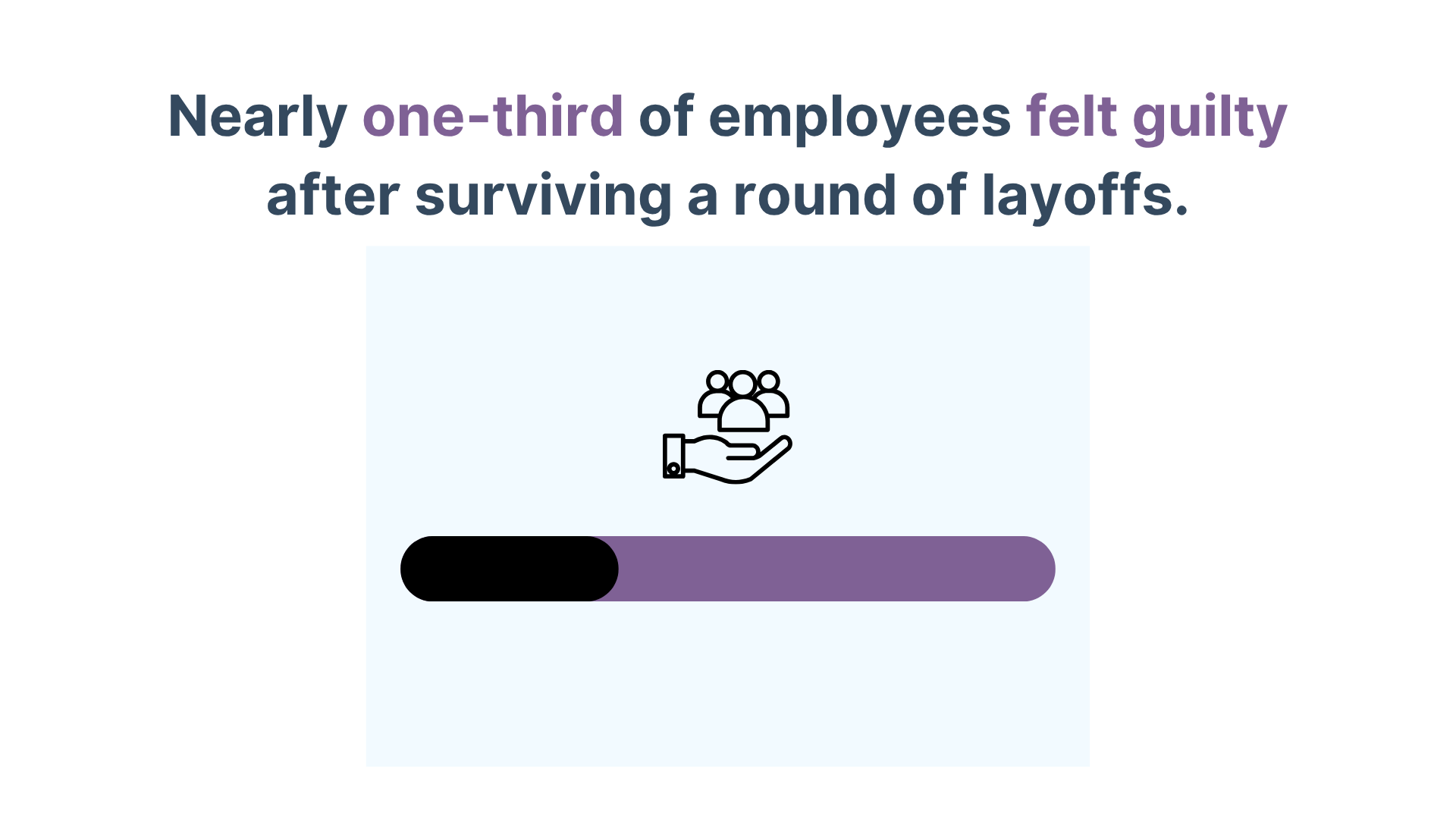
One survey found that nearly one-third of employees felt guilty after surviving a round of layoffs. Those emotions can translate into lower morale and productivity across the team.

In one analysis, researchers at MIT found that when layoffs or firings are seen as unfair, employees left behind can experience anxiety, reduced innovation, and a loss of trust in management.

The way you end someone’s employment ultimately defines your leadership and sets the tone for your entire company culture.

Offer Support and Protect Dignity After Termination

Your responsibility doesn’t end once you say, “you’re fired.”

How you handle the immediate aftermath shapes how the person copes and how your entire team perceives the process.  

Provide Practical Help

To start, consider offering practical support for the departing employee. Many forward-thinking organizations provide outplacement services that include coaching, resume help, and job search support. 

Even if formal outplacement isn’t available, smaller gestures matter, like a sincere reference when appropriate or flexibility in timing, allowing an employee to stay on payroll for a few weeks to help their transition. 

Use Benefits and Pay to Ease the Dismissal

At a minimum, companies should offer a fair severance package or pay in lieu of notice (PILON) where appropriate. Many companies also extend health coverage for a period, such as via COBRA or similar, so the person isn’t left without care. 

These steps not only help the employee, but they also signal to your other employees that people are treated well when they leave.

Protect Dignity During the Exit

From the employees’ perspective, nothing feels worse than being marched out by security in front of their colleagues. Therefore, employers should handle logistics discreetly to avoid humiliation. 

Collect badges or cut system access privately, arrange a quiet time to gather belongings, and allow for a brief goodbye if appropriate.

Communicate Thoughtfully with the Team

You’ll also need to communicate with the remaining team members in a thoughtful way. Your employees will inevitably know that a colleague was let go. If you go about business as if nothing happened, gossip, anxiety, and fear of firing can quickly spread in the workplace. 

Therefore, gather your team as soon as possible after the event.

Share a brief, respectful update without revealing any sensitive details, emphasize that this was a considered decision and, if applicable, tie it back to performance expectations or business conditions in a general way. 

Support Managers

Finally, dismissing an employee can be emotionally taxing for leaders, too. Encourage managers to debrief with HR, a mentor, or their own leader to process anxiety or guilt and to reset. Capture lessons for improving the recruitment process, training, and communication so future issues are addressed earlier and handled with even greater care.

Top 3 HRIS on the Market

Oyster

Oyster

Reviews pending
Creating a more equal world by making it possible for companies everywhere to hire people anywh...
Paycor

Paycor

4.2
Paycor, a Paychex company, modernizes every aspect of people management, from recruiting to ret...
Rippling

Rippling

3.1
One platform to manage HR, IT, and Finance

The Hidden Costs of Termination Mismanagement

Learning how to fire someone nicely isn’t just about being kind – it’s also about protecting your company from legal and financial risks while preserving your reputation.

The latest figures show that the EEOC recovered nearly $700 million for discrimination victims in 2024, with retaliation claims representing 46.8% of all cases filed. 

The financial consequences for employers can be severe.

Recent research shows wrongful termination settlements average $48,800 with legal representation, while defense costs alone can exceed $250,000 per case.  

However, even beyond financial implications, poorly handled dismissals can damage your employer branding and cause long-term damage.  

For example, Airbnb’s CEO earned praise in 2020 by delivering layoff news with transparency and care, whereas tech giant Google drew backlash for impersonal mass email firings that left people feeling blindsided. 

Even if it’s not a layoff of a newsworthy scale, employees talk, and in the age of online reviews, ex-employees may share their experiences publicly. Future candidates might shy away from a company with a history of harsh terminations. 

Therefore, treat every termination as if it will be audited and retold, because it might be.

Building Manager Confidence Through Proper Training

One often overlooked aspect of firing employees is the toll it takes on managers themselves. Many leaders admit that terminating someone is one of the hardest parts of their job

One survey found 78% of supervisors felt guilty after firing someone, and 71% felt uncomfortable with the process. Without guidance, it’s easy to procrastinate or handle it poorly simply because you’re uncomfortable. 

In fact, psychologists have documented a “MUM effect – managers sometimes Keep Mum about bad news, delaying or downplaying it due to guilt or fear of confrontation. 

For these reasons, it is important to properly train managers and leaders. The training can cover communication frameworks, legal dos and don’ts, and emotional intelligence skills for reading and responding to employees’ reactions.

By training managers in empathetic termination practices, companies can improve the outcome for everyone involved. 

For managers, training provides a playbook and practice for tough conversations, easing anxiety and building confidence.

However, training doesn’t just help the manager – it also benefits the employee being let go and the team around them. 

Research published in the Journal of Applied Psychology found that managers who underwent formal “bad news delivery” training performed better in termination meetings and were seen as more fair by the employees on the receiving end. 

In other words, training can directly translate into a more dignified experience for the employee and manager and benefit the organization as a whole.

Tips on Firing Someone with Empathy and Dignity

Consider these essential tips on firing someone in a humane and professional way:

  • Handle it face-to-face (or live video for remote) to show respect, convey tone, and avoid cold, impersonal messages
  • Schedule the meeting early in the week, allowing job search activities to begin immediately
  • Prepare a written summary of benefits, severance, and important dates
  • Arrange for personal belongings to be packed discreetly or after hours
  • Disable system access simultaneously, not before the conversation
  • Provide a positive reference letter focusing on strengths when possible
  • Communicate quickly with the remaining team using a short, professional update that prevents rumors and maintains trust

Small gestures carry disproportionate weight during vulnerable moments. Offering tissues, water, or a few minutes to compose themselves costs nothing but demonstrates humanity.

Conclusion

Terminating someone’s employment will never be easy, but it can be done with professionalism and compassion. In the end, how to fire someone nicely comes down to treating the person the way you would want to be treated. 

This means being prepared, having honest communication, and thoughtful follow-through. It means balancing empathy with firmness – being kind without being misleading.

Leaders and HR professionals who master this process not only reduce the risk of lawsuits or angry outbursts, they also build a culture of trust.

Written by Ivana Radevska

Senior Content Writer at Shortlister

HRIS Systems

Browse our curated list of vendors to find the best solution for your needs.

Stay Informed

Subscribe to our newsletter for the latest trends, expert tips, and workplace insights!

Related Posts

blockchain recruitment

The Logic behind Blockchain Recruitment

From fast, reliable, and inexpensive background checks to more efficient onboarding of new employees – learn how blockchain recruitment is set to transform and automate many HR processes and make them efficient and unbiased.

What is Employee Onboarding in HR?

As the search for quality candidates in today’s highly competitive market is relentless, optimizing the onboarding process and improving the employee experience should not be overlooked.