Streamlining Feedback with Standardized Performance Review Templates
Performance reviews work best when structure meets purpose. Standardized templates provide that framework, helping managers deliver clear, consistent, and actionable feedback.

Too often, performance reviews collapse under the weight of vague feedback and uneven expectations. What should be an opportunity for growth becomes a formality, as managers and employees walk away without clarity or direction.
Standardized performance review templates offer a practical solution to these challenges.
They provide consistency to a process that can be fragmented or reactive, guiding managers toward objective, well-rounded evaluations. With defined categories, prompts, and rating systems, templates help keep feedback grounded in performance rather than perception, allowing progress and development needs to surface more clearly.
Still, a template alone doesn’t create better feedback – it only makes space for it.
What matters most is the intention behind it.
Therefore, this Shortlister article explores how to make performance review templates work in practice and offers a collection of ready-to-use examples. It also explains when and how to apply them to turn performance management into a process that connects structure with intent and drives meaningful improvement.
Performance reviews are formal, structured evaluations designed to assess progress and provide feedback.
In practice, however, they can do much more.
They shape how employees experience their work, influencing everything from motivation to loyalty.
One study exploring employee performance and evaluations found a strong, positive link between them. Fairness further strengthened this link, explaining 43% of the variation in performance. When combined with accuracy, staff appraisals could also motivate employees, increase satisfaction, and improve productivity.
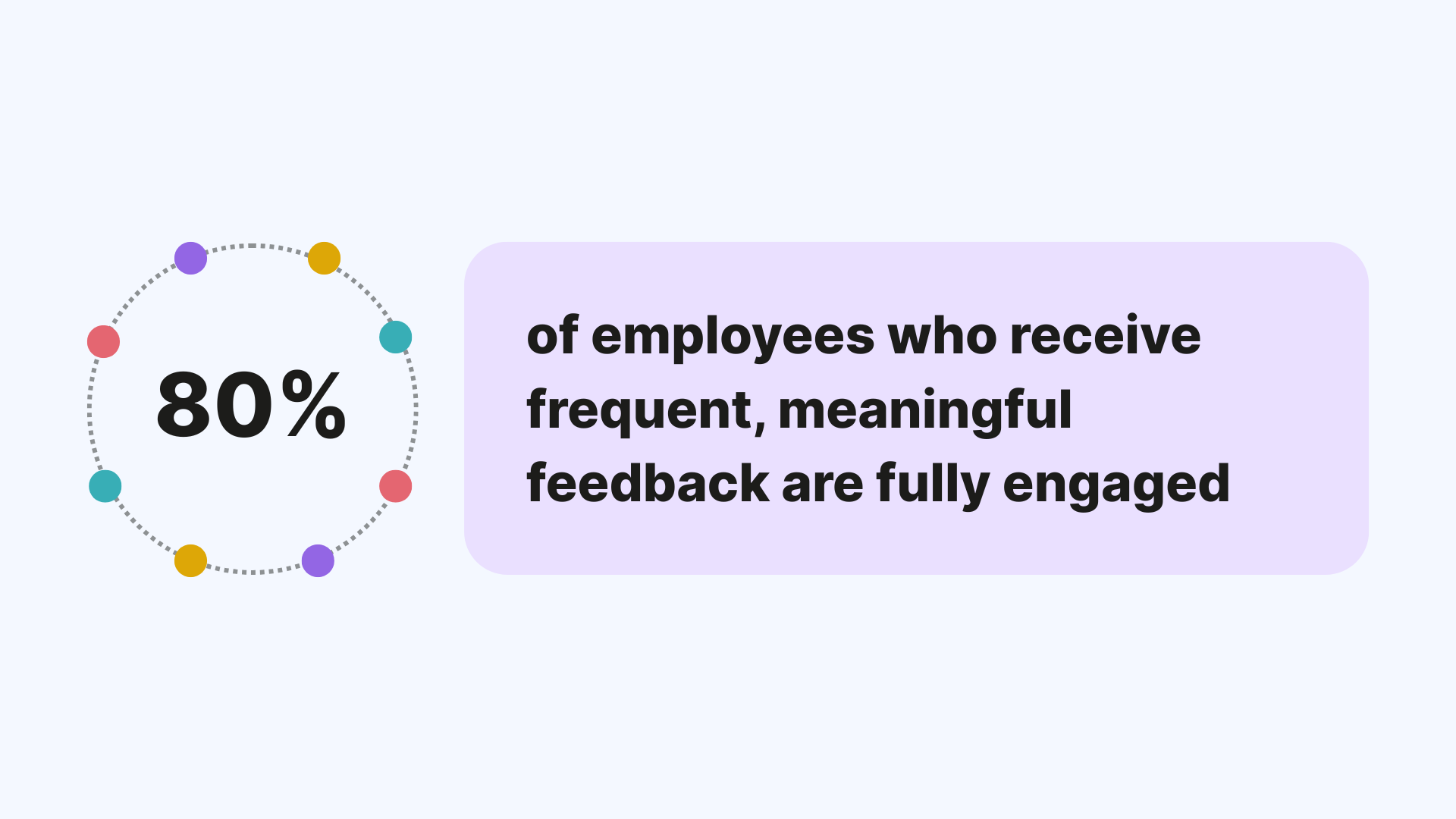
Gallup’s research reinforces these benefits, showing that 80% of workers who receive meaningful feedback regularly are far more engaged.
Their analysis makes a strong case in favor of quick and frequent assessments, showing the advantages that extend to:
This kind of feedback signals their contributions are noticed and valued, creating an environment where development feels continuous rather than sporadic.
Recognizing this impact, it’s necessary to approach evaluations thoughtfully. One way to do so is by ingraining structure and purpose into everyday management practices, transforming them from routine obligations into pivotal moments supporting growth.
Without a clear framework, assessments can become inconsistent, shaped more by individual leadership styles than performance standards.
What one manager prioritizes in a review, another may overlook entirely. These variations, although often well-intentioned, create unequal experiences that undermine the credibility of the entire process.
The lack of structure also creates problems that extend beyond employee confusion.
Companies struggle to defend their decisions when the criteria shift from one review to the next. They also miss opportunities to spot patterns or address systemic issues because the data cannot be meaningfully compared.
Standardization brings order to this fragmentation.
When everyone uses the same criteria and format, performance becomes comparable across teams and departments, and bias is easier to identify and mitigate. Patterns emerge that would otherwise remain invisible, from the highest performers to struggling teams that need support.
The practical benefits are equally compelling.
Performance management statistics show managers can spend up to 10% of their work year on these activities, making efficiency gains from standardized templates significant. They eliminate the time spent reinventing the process each cycle and allow managers to focus on the quality of their observations.
Combining templates with a performance management software further strengthens these advantages by automating administrative tasks and aggregating data to reveal important insights.
The goal is clarity rather than rigidity.
Standardized templates create a foundation that ensures every worker receives thoughtful, comparable feedback while allowing leadership to focus on substance rather than documentation.



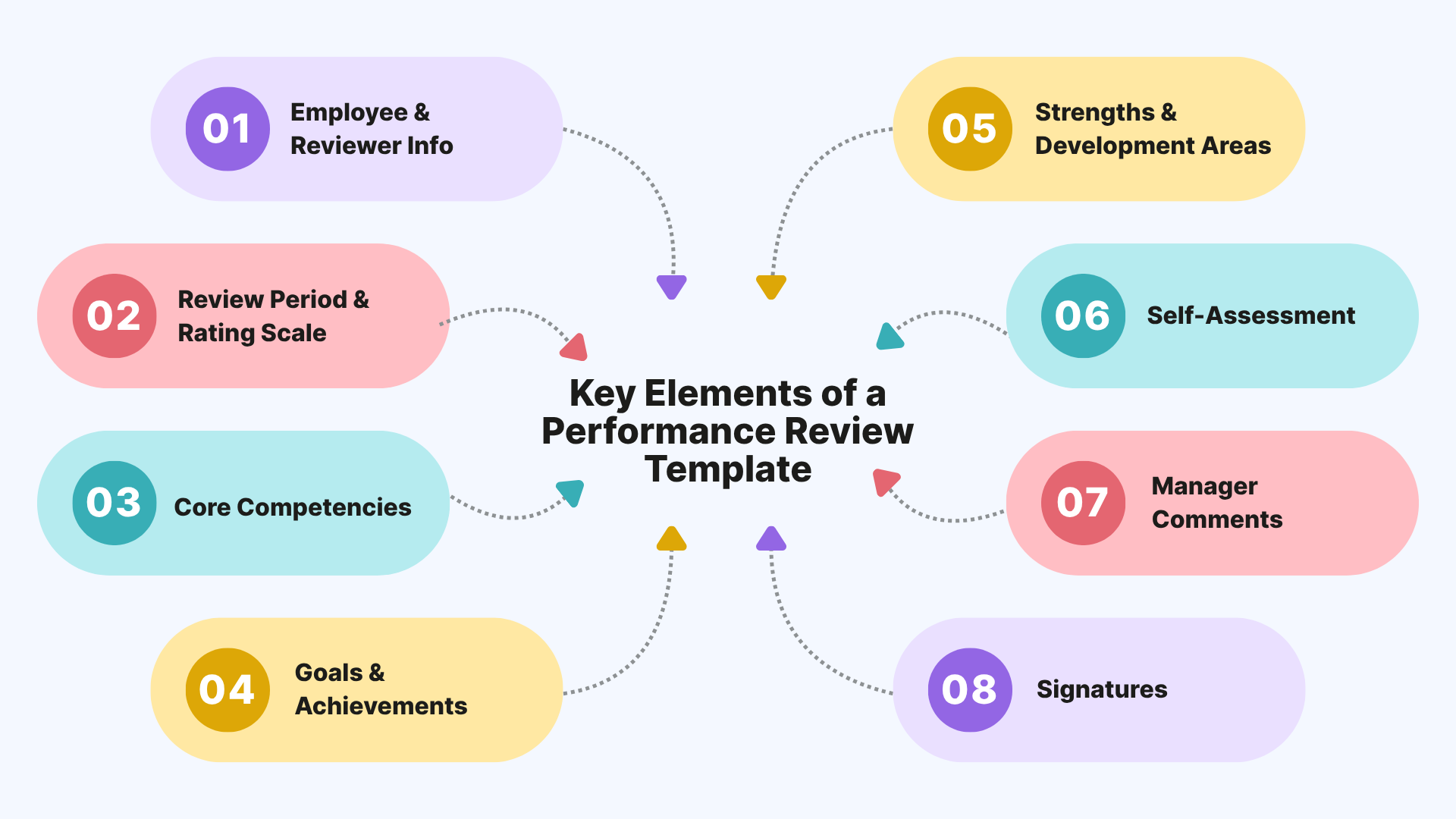
A well-designed employee performance review template includes several elements, each serving a specific purpose in creating comprehensive, actionable feedback. Although not every section applies equally to all review types, understanding them helps ensure a complete and flexible framework.
Every template should clearly identify the employee, team, or manager being reviewed, along with their position, department, and the evaluator doing the review.
Occasionally, these will overlap, as is the case with self-assessment.
Although this basic information might seem obvious, it’s crucial for record-keeping and ensuring reviews are filed correctly.
Privacy considerations matter here, too.
All templates should be structured to protect sensitive information, ensuring only authorized individuals can access completed reviews, supported by clear company policies.
Clearly defining the evaluation timeframe prevents potential confusion about the accomplishments and challenges being reviewed.
A transparent rating scale is equally important because it ensures fairness and consistency.
However, it should be explained upfront with clear definitions for each level.
For example, a five-point scale ranging from “does not meet expectations” to “exceeds expectations” gives an evaluation structure and helps differentiate between satisfactory and exceptional performance.
According to CultureAmp, most companies use a four-point (52%) or five-point (31%) rating scale. Their findings indicate that reviews should avoid vague or generic labels like “average”, which can skew ratings.
Instead, they should use a clear, well-designed scale with specific descriptions and transparent communication, which helps differentiate performance, reduce bias, and build trust in the review process.
This section serves as the core of the evaluation, breaking down job performance into specific, measurable components.
Depending on the role, main competencies might include technical skills, communication, collaboration, problem-solving, and leadership. Each should be considered separately, with space for rating and supporting comments.
An efficient employee review template connects individual contributions to corporate goals.
This section documents the goals established during the previous review period and assesses the degree to which an employee achieved them.
It should be specific about outcomes, including quantifiable results whenever possible.
The template can also provide space for achievements beyond formal goals, such as stepping in to mentor new team members or leading an unplanned project during a transition period.
Balanced feedback recognizes what employees do well while identifying growth opportunities.
For example, a strengths section might read, “demonstrates strong analytical skills and delivers high-quality client presentations.”
In contrast, the development section could address gaps such as, “needs to improve time management when handling multiple projects.”
Inviting employees to evaluate their performance creates a more collaborative conversation.
Self-assessment prompts might ask employees to reflect on their accomplishments, challenges they faced, skills they’ve developed, and goals for the future.
Comparing self-assessments with manager evaluations often reveals important gaps in perception that can be addressed through dialogue, leading to greater understanding and alignment.
Manager comments synthesize the review into a straightforward narrative and identify next steps.
An example of a strong manager comment could be as follows: “They consistently exceeded engagement goals and showed initiative in campaign planning. Over the next quarter, we’ll focus on developing strategic leadership skills through a mentoring program.”
Documenting next steps directly in the template improves accountability and makes follow-up easier.
The final section should include space for signatures (employee, reviewer, and sometimes an HR representative) and the review date. This step creates an official record that the assessment was completed and discussed.
It is worth noting that templates should clarify that a signature acknowledges receipt and discussion of the review, not necessarily agreement with its contents. For example, a simple note might read, “Employee signature confirms discussion of this review.”
Many templates also include a checkbox or statement and information about how employees can submit responses or appeals if they disagree with their evaluation.
Employee review templates exist in various forms and types, reflecting how extensively companies can evaluate performance and provide feedback. Their design changes depending on the purpose of the review, the stage of the employee life cycle, and the organization’s specific goals.
Because the possibilities are endless, capturing every format or style is difficult.
However, to offer practical guidance, we’ve curated a selection of templates that demonstrate different approaches to performance reviews. Each illustrates how assessment can be structured while remaining flexible enough to address the needs of individual roles and teams.
They can be applied manually or through performance management software, simplifying the distribution, tracking, and analysis. All templates provide consistency while allowing managers to adapt evaluations to each employee’s context.
General templates are a practical foundation for companies seeking a consistent, structured approach to performance management. They assess employees across common areas, such as productivity, communication, teamwork, problem-solving, and reliability.
Designed for versatility, these templates are intentionally broad, offering a structure that can apply across departments and roles, hence the name “general.”
Depending on the frequency and depth of evaluation, they may include annual, mid-year, or quarterly reviews, along with one-page templates for simplified assessments.
The specific timeframe offers a snapshot of performance over time, helping managers track progress and plan development initiatives.
Similarly, a one-page performance review gives managers a concise, actionable overview of an employee’s core performance areas, making it easy to track and reference throughout the year.
Employee Name: [Insert Name]
Job Title: [Insert Title]
Department: [Insert Department]
Manager Name: [Insert Name]
Review Period: [Start Date – End Date]
Performance Overview
Summarize the employee’s key results and contributions from the year. Emphasize noteworthy accomplishments, successful projects, and impact on team or company performance.
Core Competencies
Use a rating scale to evaluate the employee across multiple categories:
Goal Achievement
List annual goals and indicate whether they were met, exceeded, or are still in progress.
Development Focus
Identify specific areas for improvement or new skills to develop. Suggest courses, mentoring, or project opportunities to support growth.
Objectives for the Next Year
Define three to five measurable goals for the coming year and connect them to department or organizational priorities.
Manager Summary
Provide a brief performance statement and key takeaways from the review conversation. Complete the review with signatures and dates.
Employee Name: [Insert Name]
Job Title: [Insert Title]
Manager Name: [Insert Name]
Department: [Insert Department]
Review Period: [Start Date – End Date]
Performance Overview
Summarize the employee’s performance to date, including contributions to ongoing projects and progress towards annual goals. Highlight any early achievements that set the stage for year-end performance.
Core Competencies
Assess skills relevant to current work, with examples of demonstrated strengths and areas needing attention, such as:
Goal Progress
Review all goals set at the beginning of the year, noting progress, obstacles, or adjustments needed for the remainder of the year.
Development Focus
Identify skills or behaviors that need reinforcement or further development before year-end.
Summary And Next Steps
Summarize the performance assessment and propose next steps to achieve the objectives. Complete the review with signatures and dates.
Employee Name: [Insert Name]
Job Title: [Insert Title]
Manager Name: [Insert Name]
Department: [Insert Department]
Review Period: [Start Date – End Date]
[Quarter] Overview
Present a brief performance summary for the quarter, centered on outcomes that supported broader team or department targets.
Core Competencies
Evaluate efficiency in areas such as productivity, teamwork, communication, and problem-solving with examples of contributions or behaviors.
Achievements
Identify up to three notable achievements or completed objectives.
Areas for Improvement
Emphasize areas where the employee can strengthen their performance in the next quarter.
[Next Quarter] Goals
Summarize the performance trends and establish actionable, measurable objectives aligned with team or department priorities. Complete the review with signatures and date.
Employee Name: [Insert Name]
Job Title: [Insert Title]
Manager Name: [Insert Name]
Department: [Insert Department]
Review Period: [Start Date – End Date]
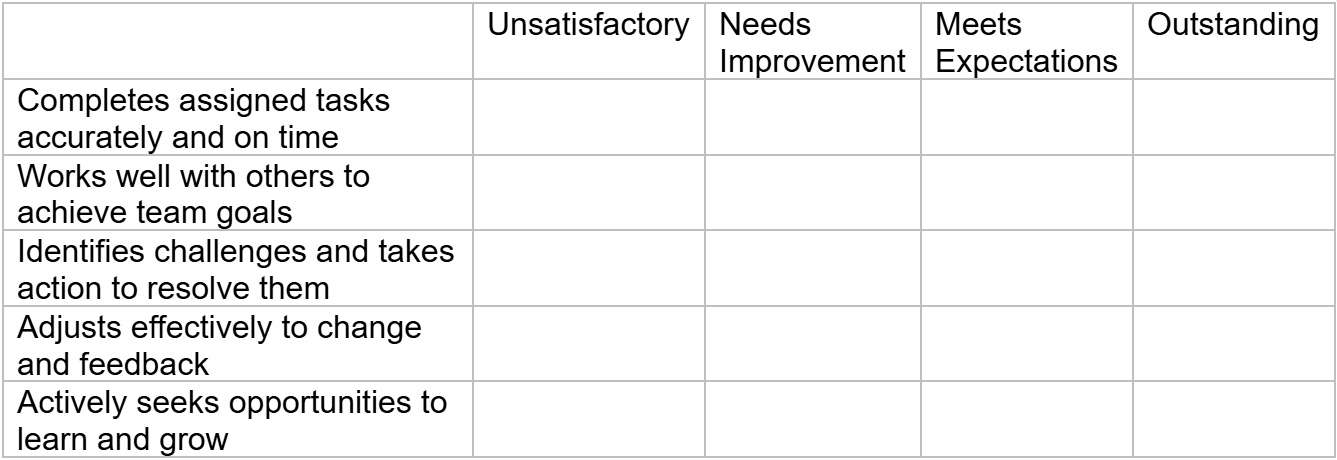
Employee Assessment
Place a check mark on the attribute that best describes the employee.
Other Notes
Identify any additional strengths or areas for improvement that are not listed in the assessment.
Summary and Next Steps
Provide a concise, actionable conclusion for the review conversation, followed by an outline of short-term actions or goals. End the appraisal with signatures and dates.
When reviews need to address specific situations or short-term objectives, specialized templates provide the right level of focus.
For example, new hires can be evaluated with a 90-day review to track early results and integration, while a performance improvement plan (PIP) offers targeted support for workers who need it. Another model is the compensation check-in template, which links performance with incentives and employee reward programs.
Each of the following templates provides a structured approach for managers and HR to assess specific objectives while maintaining an overall performance perspective.
Employee Name: [Insert Name]
Job Title: [Insert Title]
Manager Name: [Insert Name]
Department: [Insert Department]
Review Period: [Start Date – End Date]
Performance Overview
Use a simple rating scale (1-5), where one represents “needs improvement” and five indicates “excellent performance”, and add comments on each employee trait for better insight into the new hire’s performance.
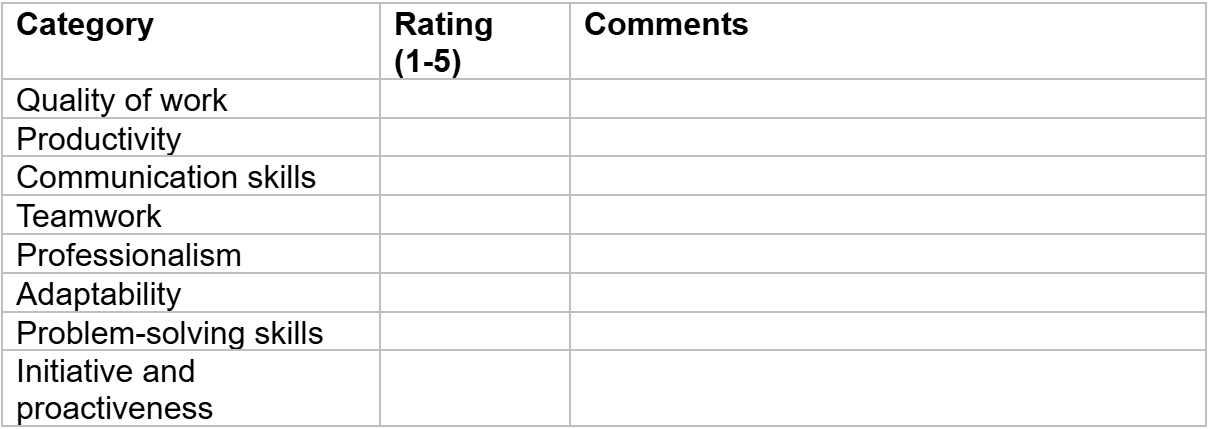
Development Focus
Identify gaps or skills that need strengthening for continued success in the role. Include actionable goals, resources, or support needed, such as:
Manager’s Comment
Provide overall feedback and summarize expectations moving forward.
Employee’s Comment
Add a section where the worker can reflect on the feedback and express their perspective on goals and the support they require.
Signatures
Complete the template with signatures and dates from both the manager and the employee to confirm that the review has been discussed and understood.
Employee Name: [Insert Name]
Job Title: [Insert Title]
Manager Name: [Insert Name]
Department: [Insert Department]
Review Period: [Start Date – End Date]
Role Expectations
Clearly define the role expectations and context for the PIP review.
Performance Gaps
Identify specific behaviors or outcomes that need improvement, including measurable examples.
Performance Improvement Goals
Define clear, measurable objectives to demonstrate improvement.
Performance Improvement Steps
List actionable steps with milestones the employee must complete to meet expectations.
Support
Specify the resources, mentoring, or training available to assist in the improvement.
Follow-Up
Finish the template by setting review dates and checkpoints to monitor employee progress. Add the signature and dates for the initial review and the follow-up to confirm that the manager and employee have discussed and understood both.
Employee Name: [Insert Name]
Job Title: [Insert Title]
Manager Name: [Insert Name]
Department: [Insert Department]
Review Period: [Start Date – End Date]
Overview
Summarize all contributions impacting the compensation decisions, including key achievements or behaviors that justify the review.
Market/Salary Context
(Optional) Include relevant context, such as industry benchmarks or internal pay equity, that may influence compensation recommendations.
Proposed Adjustments
Document recommended changes to compensation or benefits. Be clear and justified based on performance and market considerations.
Next Steps
Outline the implementation plan, including timelines and any follow-up actions. Conclude with signatures and date to confirm the agreement.
In workplaces that value collaboration and transparency, feedback-focused templates usually expand the review process beyond a single perspective. They bring collective insight that supports stronger communication and trust across teams.
For example, a 360-review collects feedback from multiple sources for a comprehensive perspective on individual performance. These are particularly valuable for leadership roles.
Other models include an upward feedback review, where employees assess their managers or leadership, and a team evaluation, which focuses on group performance rather than an individual.
Employee Name: [Insert Name]
Reviewer (optional): [Insert Name]
Review Period: [Start Date – End Date]
Interaction Frequency and Relation
Provide a section where reviewers can select how often they work with the employee and in what capacity, allowing for anonymous yet relevant feedback.
Performance Indicators
Use a simple 1-5 scale, where one represents “needs improvement” and five indicates “excellent performance” on multiple indicators, including:
Open-Ended Questions
Provide space for a specific qualitative input to add depth and context beyond numerical ratings.
Acknowledgement
Include a confidentiality statement and space for HR, manager, and employee signatures.
Manager Name: [Insert Name]
Department: [Insert Department]
Review Period: [Start Date – End Date]
Reviewer (optional): [Insert Name]
Performance Indicators
Employees can rate each statement using a 1–5 scale, where one means “needs improvement” and five means “excellent.”
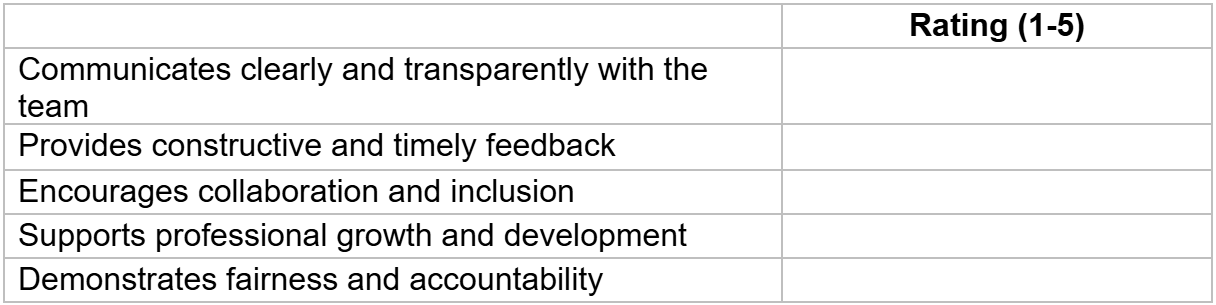
Open-Ended Questions
Use open-ended questions where employees can provide in-depth feedback, such as:
Additional Comments
Add a section for further observations or examples that are not already listed, but the employee would like to point out.
Acknowledgement
Unless the review is anonymous, include a brief confidentiality statement and provide space for the signatures of HR, the manager, and the employee.
Team/Department: [Insert Team or Department Name]
Review Period: [Start Date – End Date]
Evaluator (optional): [Insert Name or Role]
Team Objectives or Goals
List the team’s primary goals or projects during the review period. This section provides context for evaluating performance and ensures feedback aligns with measurable outcomes.
Team Performance Indicators
Use a simple numerical scale for employees to assess key areas of team performance, such as collaboration, accountability, and problem-solving.
Open-Ended Questions
Allow reviewers to provide qualitative feedback on the team’s successes and opportunities for improvement. Examples of open-ended questions for team evaluations can be:
Self-Evaluation
Employees can use this section to reflect on their contributions, strengths, and areas for improvement.
Comments
Finally, add a section that allows the reviewers to share additional feedback or observations on team performance.
Acknowledgement
Include a brief confidentiality statement and space for dates and signatures.
Performance evaluations can take multiple forms, but combining various perspectives usually provides the most meaningful insights.
A review that begins with a self-assessment invites employees to take an active role in evaluating their own work. Afterward, the manager reviews this self-evaluation, compares it with their observations, and adds feedback on strengths.
This two-step process creates a more complete and balanced picture of performance, combining self-awareness with a managerial perspective.
Traditional reviews typically flow from leadership down to employees. However, self-assessments flip this dynamic, creating opportunities for reflection and mutual feedback.
These self-evaluation examples work best when honest, specific, and forward-looking.
Employees can prepare by objectively comparing their goals and accomplishments to ensure this. It’s also helpful to identify concrete steps for development, showing initiative and self-awareness.
Manager-to-employee evaluations are typically completed after the employee has submitted their self-evaluation, allowing them to compare their observations with the individual’s own reflections. This comparison helps validate achievements and clarify misunderstandings.
The following manager performance evaluation examples acknowledge the self-assessment and identify areas for development:
Managers should review the employee’s self-assessment alongside performance data and project outcomes. Framing the evaluation with detailed observations and constructive suggestions creates a productive discussion that is focused on development.
A standardized performance review template provides the groundwork.
When transparent and objective, its design helps managers and leaders provide actionable feedback by combining quantitative ratings with qualitative observations. It can also support compliance, maintain confidentiality, and make it easier to track performance over time.
However, review templates are only effective if the feedback itself is meaningful.
Gallup research shows that 48% of employees are engaged by the frequency of feedback they receive from their manager, yet only 27% want weekly input.
The difference is not a reluctance to hear guidance but the fact that employees don’t perceive much of the feedback they receive as valuable. Therefore, assessments must provide direction that helps them learn, improve, and succeed in their roles.
The research also shows that clear, purposeful feedback can be motivating rather than simply corrective, and recognition significantly amplifies its impact.
Those who receive both at least weekly report engagement rates of 61%, compared with 38% for those receiving feedback without recognition.
In short, templates help managers organize and deliver performance reviews efficiently, but engagement and growth come from timely, relevant feedback paired with employee recognition programs.
When delivered thoughtfully, constructive criticism can be framed to encourage growth, turning even negative feedback templates into a positive, motivating experience.
Although templates for feedback can improve consistency and clarity, a poor approach undermines their effectiveness.
For example, overcomplicating forms, excessively focusing on scores, or ignoring individual circumstances makes evaluations feel impersonal and ineffective.
Meanwhile, using templates solely as a procedural exercise, without documenting discussions or agreed-upon goals, undermines accountability and reduces opportunities for follow-up.
The solution requires a performance management strategy that strikes a balance between structure and flexibility.
One of the best practices is customizing templates to fit the context of the role and the individual, which helps ensure relevant feedback. While clear, objective language prevents misunderstandings.
Moreover, combining quantitative ratings with narrative observations allows managers to capture measurable outcomes and performance nuances, turning the review into a meaningful conversation.
These practices apply whether templates are used manually or through a performance management system. The software helps standardize reviews, track completion, and analyze trends across teams, supporting consistent feedback while preserving the flexibility to tailor evaluations to each individual.
Gartner reveals that 83% of organizations already have formal policies for giving performance feedback and conducting formal reviews. While this provides a clear structure for streamlining feedback, the value lies in its execution.
Standardized performance review templates don’t eliminate the need for difficult conversations or the nuanced judgment required to assess employees fairly. Instead, they create a foundation of consistency and clarity that makes those conversations more equitable and more likely to result in meaningful improvement.
Content Writer at Shortlister
Browse our curated list of vendors to find the best solution for your needs.
Subscribe to our newsletter for the latest trends, expert tips, and workplace insights!
Performance reviews work best when structure meets purpose. Standardized templates provide that framework, helping managers deliver clear, consistent, and actionable feedback.

What if performance improves faster by tracking what employees do well instead of cataloging their failures?

Discover the value of performance management tools in the modern business environment and explore top-performing software programs and their features.

In many companies, great ideas get lost between layers of management. Skip-level meetings bridge that gap by breaking down hierarchical barriers and creating a direct line between employees and their leadership.
We're working hard to make it easy for you. Sign up for news, trends and insights.