





Employee Benefits

What Does Employee Benefits Liability Coverage Actually Protect?

When managing benefits goes wrong, even minor administrative oversight can lead to major consequences, making employee benefits liability coverage essential to risk management strategies.
In This Post:
Expert Contributors:
Picture of Seann Malloy

Seann Malloy

Founder & Managing Partner at Malloy Law Offices

Picture of Andrew Harris

Andrew Harris

President of Liberty Insurance

Picture of Russell Nicolet

Russell Nicolet

President & Trial Attorney at Nicolet Law

What happens when an employee seeks medical care during an emergency, only to discover their health coverage was never activated? 

Or when access to their retirement plan is denied due to an administrative oversight?

For the employee, it’s a risk to their personal and financial well-being.

For the employer, it’s a potential lawsuit with costly legal fees and reputational damage.

Employee benefits liability (EBL) coverage was developed for these exact situations: to protect companies from the financial and legal fallout of administrative errors in managing benefits while reinforcing the importance of accuracy and compliance for a more reliable employee experience.

Below is a breakdown of its exact purpose, coverage, and importance for employers and employees.

Understanding Employee Benefits Liability Coverage: The Basics

Benefits often determine how employees perceive their role and employer.

For example, Forbes found that 26% of workers quit their jobs for better offerings, ranking as the second most common reason for leaving.

While having them is necessary, companies with the best benefits also pay attention to personalization, consistency, and variety.

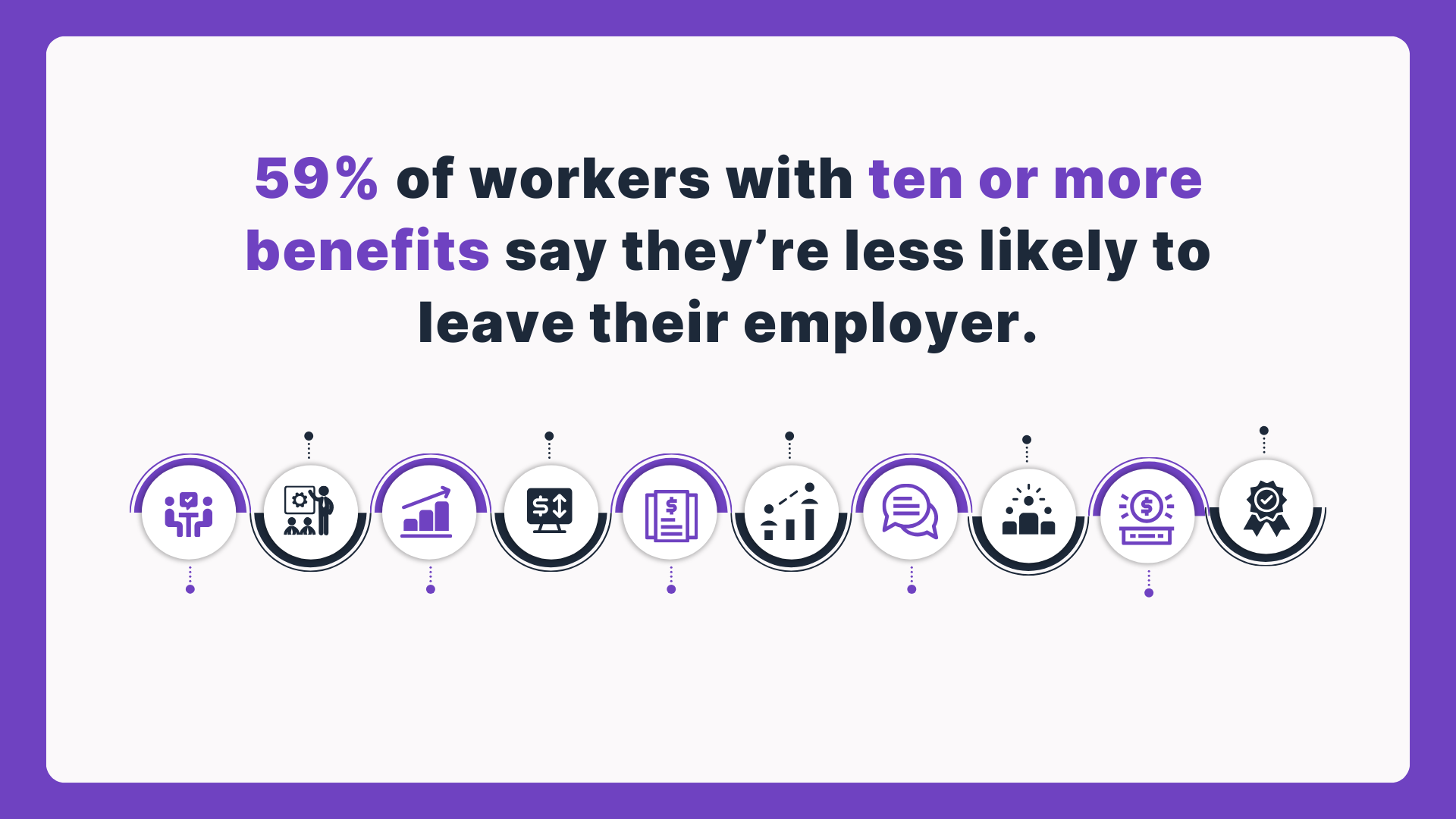
In fact, according to Mercer, those who receive a broader range of perks feel more cared for, as 59% of workers with ten or more benefits say they’re less likely to leave their employer.

However, as benefit offerings grow, so does the risk of administrative oversights.

Their management includes countless moving parts, regulatory requirements, and exposure to costly oversights.

Understanding the fundamentals of EBL coverage is the first step in protecting your company from these avoidable risks.

What is Employee Benefits Liability Coverage?

Employee benefits liability coverage is a type of insurance that protects employers from claims related to errors or omissions in administering employee benefit plans.

Unlike traditional liability insurance, which typically covers physical injury or property damage, EBL coverage addresses the complex nature of benefits management.

For example, it protects against claims arising from mistakes in enrollment processes, miscommunication about coverage details, failure to administer benefits properly, or errors in plan documentation.

How Does EBL Differ from Standard Business Insurance?

EBL policies close the gaps left by traditional insurance.

Standard business liability coverage protects a company from financial losses if held responsible for claims related to its operations, for example:

  • General liability insurance covers property damage and bodily injuries
  • Professional liability insurance protects against errors or negligence in the delivery of services

However, these policies often contain specific exclusions for benefits-related claims, recognizing that benefits administration requires specialized coverage.

Why Does Every Employer Offering Benefits Need this Protection?

Simply put, the stakes are too high to operate without protection.

Managing benefits is a complex administrative system that affects every worker and involves millions of dollars in annual coverage decisions.

At the same time, laws like COBRA or the Affordable Care Act create even more compliance requirements whose failure can result in regulatory penalties and employee lawsuits.

Minor errors can have significant consequences when employees rely on these benefits for vital healthcare decisions, retirement planning, or financial security.

Without EBL protection, employers face the full financial impact of defense costs, settlements, and judgments from benefits-related claims, making this a necessity for every business, regardless of size or industry.

What Employee Benefits Liability Coverage Protects Against

Mistakes happen in benefits administration, whether it’s a misplaced form, misread eligibility, or a missed deadline.

Sometimes, these errors can be corrected quickly without impacting the employee.

However, when they result in financial loss, EBL insurance activates to cover the administrative mistake (not the benefit itself).

Generally, EBL coverage protects against:

  • Enrollment and Eligibility Errors

Enrollment and eligibility errors occur when employees or their dependents are incorrectly added to or removed from benefit plans, including missing deadlines or assigning inaccurate classifications.

  • Miscommunication and Misinformation

EBL insurance also applies when workers claim they received incorrect or misleading information about their coverage, eligibility, plan terms, or deadlines, resulting in uninformed decisions.

  • Plan Administration Failures

Examples include clerical errors, miscalculations, lost documentation, and other processing mistakes that impact contributions, payouts, or participation in benefit programs.

  • Failure to Follow Plan Rules or Legal Requirements

Another key area where employee benefits liability insurance protects employers is in cases of non-compliance with plan documents or legal requirements, including COBRA regulations and nondiscrimination rules.

Types of Employee Benefits Protected Under EBL Coverage

EBL coverage extends to essentially all types of mandatory and voluntary benefits that an employer might offer, including:

This protection applies only to errors in administering these benefits, not the benefits themselves

For example, it may apply if a life insurance policy denies a claim due to a missed enrollment. Still, it wouldn’t cover disputes over plan payouts, investment losses, or provider performance.

Employee Benefits Liability Coverage vs. Other Insurance Types

Despite employee benefits liability coverage being very specific, it’s often confused with broader or overlapping insurance policies.

The key is understanding that EBL insurance complements these other policies by addressing the risks associated with managing benefits in the workplace.

  • EBL vs. General Liability Insurance

General liability insurance protects employers from bodily injury and property damage claims, typically involving third parties like customers or vendors. It doesn’t extend to internal administrative errors, meaning mistakes in handling employee benefits fall outside its scope.

  • EBL vs. Professional Liability 

Professional liability, or Errors & Omissions (E&O) insurance, covers professionals when clients claim their advice or services caused financial harm. 

Although both EBL and E&O insurance relate to errors, the latter refers to delivering professional services, not the internal handling of employee benefit plans.

  • EBL vs. EPLI

Employment practices liability insurance, or EPLI, covers claims arising from a company’s management of its employees, including allegations of discrimination, harassment, or wrongful termination.

These are employment-related disputes, not administrative errors.

  • EBL vs. Fiduciary Liability Insurance

Fiduciary liability insurance goes a step further than EBL policies by covering breaches of fiduciary duty under laws like ERISA. It’s designed for plan sponsors and fiduciaries responsible for investment decisions and overall plan governance.

While there is some overlap, instead of administrative errors, fiduciary liability insurance covers mismanagement of benefit plans, such as making bad investment decisions or failing to act in the best interest of plan participants.

Most Common Employee Benefits Liability Claims

“The most frequent EBL triggers involve enrolment processing failures, particularly during employee status transitions, including leaves of absence, part-time conversions, and return-to-work scenarios,” shares Seann Malloy, founder and managing partner at Malloy Law Offices.

From his experience, these administrative gaps typically occur during understaffing or administrator transitions, creating coverage lapses despite premium payments and proper employee election documentation.

For Russell Nicolet, President and trial attorney at Nicolet Law, the most common ones are not the most obvious examples. 

Instead, he references communication failures, specifically, “inadequately explaining coverage limitations or failing to notify employees about policy changes.”

“In one recent case, an employer changed providers but didn’t clearly communicate network restrictions, resulting in a $200,000 claim when an employee’s child received out-of-network emergency care,” illustrates Nicolet.

Other common examples include COBRA administration errors, such as failure to provide proper notifications, incorrectly calculating premiums, or improperly terminating coverage. 

Additionally, mismanagement of plan renewals and failure to adhere to regulatory deadlines can lead to costly exposures.

“In one recent case, an employer changed providers but didn’t clearly communicate network restrictions, resulting in a $200,000 claim when an employee’s child received out-of-network emergency care.”

Real-World Scenarios Where Employee Benefits Liability Coverage Applies

  1. A small HR error leaves a new hire uninsured, and after a medical emergency, the employee sues for uncovered costs.
  2. An employee declines optional coverage based on incorrect advice, then suffers a loss and holds the employer liable.
  3. HR communicates the wrong retirement age for full pension eligibility, leading to financial confusion and a formal claim.

These are all examples of employee benefits liabilities. 

Minor administrative oversights or communication errors create significant financial exposure for employers and employees in these scenarios.

Andrew Harris, President of Liberty Insurance, recalls a case where an HR misstep triggered a major COBRA-related claim, illustrating how easily these errors can escalate.

I recently worked with a manufacturing client who faced a $150,000 claim because an HR team member incorrectly explained COBRA continuation rights during an exit interview, leading to coverage gaps and significant medical expenses.” 

He also points out that digital change has created new EBL exposure points. 

Several of my clients experienced claims when transitioning to new benefits administration platforms, where data migration errors caused dependents to be dropped from coverage. 

I recommend implementing a verification process during any systems transition and documenting all employee communications about benefits,” concludes Harris.

“I recently worked with a manufacturing client who faced a $150,000 claim because an HR team member incorrectly explained COBRA continuation rights during an exit interview, leading to coverage gaps and significant medical expenses.”

Coverage Limits and Policy Structure

Although employee benefits liability coverage delivers extensive protection, insurers determine policy terms and exclusions based on underwriting criteria such as company size, industry, and specific risk considerations. 

The two most common limitations are:

  1. Employee (or per-claim) limit, or the maximum payout per individual employee claim
  2. Aggregate limit, or the maximum payout for all claims throughout the policy year

Coverage is typically provided on a claims-made basis, meaning the policy must be in effect when the claim is made rather than when the underlying error occurred.

As for the structure, EBL may operate as a standalone coverage or an endorsement of an existing liability policy. 

While endorsements are often more budget-friendly, they may share limits with other policies, unlike standalone EBL coverage, which provides dedicated protection.

How Companies with Comprehensive Benefits Packages Manage EBL Risk

The more benefits you offer, the more complex your risk profile becomes.

Companies with extensive benefits packages handle more paperwork, deadlines, and legal requirements, all of which are highly susceptible to administrative oversights.

No matter how small, each mistake can potentially lead to EBL claims.

Therefore, investing in this liability insurance is a smart way to manage the exposure, providing financial protection against mistakes in employee benefits administration.

However, EBL insurance alone isn’t enough.

A reliable strategy combines this coverage with a proactive approach: specific internal processes, regular training, accurate recordkeeping, and transparent employee communication. 

At the same time, many companies implement advanced and reliable technology solutions that help reduce human errors while creating audit trails for benefits-related activities. 

For example, HR software or benefit administration platforms can include automated enrollment, compliance alerts, real-time data tracking, and employee self-service portals that reduce the potential for manual errors.

It’s important to note that although technology reduces some mistakes, it doesn’t eliminate the need for active oversight. Managing benefits remains a process that demands careful attention and direct supervision.

Cost Factors for Employee Benefits Liability Coverage

Several factors influence the cost of EBL coverage.

The size of the company is an immediate consideration. For example, larger businesses with more employees face greater exposure and pay higher premiums.

The complexity of the benefits program is another factor. Companies that offer multiple benefit options or self-insured plans generally face higher costs.

An organization’s claims history plays a significant factor. Those with previous benefits-related claims or litigation usually face higher premiums or more restrictive coverage terms. 

Finally, the chosen coverage limits and deductible levels directly impact premium costs. Higher limits provide more protection but cost more, while higher deductibles can reduce premiums but increase the organization’s financial exposure to smaller claims.

Best Practices to Reduce Employee Benefits Liability Exposure

Preventing EBL exposure requires more than insurance alone.

Seann Malloy at Malloy Law Offices recommends a three-part protection strategy to minimize EBL risk:

  • “Appropriate EBL coverage limits (typically 50% of annual benefits expenditure)
  • Documented benefits processing procedures with redundant verification steps
  • And scheduled compliance audits comparing enrollment systems against payroll deductions.”

This layered approach creates a solid foundation for managing exposure.

Beyond this, companies should also focus on clear communications, ongoing HR training, and partnering with experienced professionals, including consultants, attorneys, and insurance brokers specializing in employee benefits. 

Above all, employers must recognize that behind every claim is an employee who relied on that benefit for financial support and well-being.

Therefore, they should prioritize accuracy, transparency, and accountability in their benefits administration to reduce legal exposure and uphold employee trust. 

This commitment becomes the strongest foundation for complete EBL risk management.

Choosing the Right Employee Benefits Liability Coverage

The effectiveness of EBL insurance depends on how well it addresses the unique risks tied to the company’s benefits program. 

Customized coverage that reflects your industry, workforce, and benefits structure provides stronger protection than a one-size-fits-all policy.

With that in mind, consider these questions to ensure your policy fits your specific risk profile:

  • What benefits does your company offer, and how complex is the administration?

Understanding benefit offerings helps identify where errors are most likely to occur. Complex plans or multiple vendors increase the risk of administrative mistakes, making standalone EBL coverage more suitable.

  • Does the policy cover all relevant risks?

Some EBL policies may have exclusions or limited coverage for specific claims. Therefore, it’s essential to carefully review policy language with a broker or legal advisor to confirm these common risks are covered.

  • Are the coverage limits sufficient to handle potential claims?

Defense costs and settlements can reach hundreds of thousands of dollars. Matching coverage limits to your company’s size and risk profile becomes essential to choosing the proper coverage.

  • What is the cost of coverage?

The cost should balance against the potential financial exposure. While price is important, the cheapest coverage may not provide adequate protection. 

  • How experienced is the insurance carrier? 

Working with a carrier that understands EBL claims and offers responsive service can make a significant difference in managing risks and handling claims efficiently. 

They may also offer risk management resources and training that can help prevent claims.

Frequently Asked Questions About Employee Benefits Liability Coverage

Before we wrap up this article, let’s address some of the most frequently asked questions about employee benefits liability coverage to help clarify common concerns and specific employer considerations.

Do Small Businesses Need EBL Coverage?

Small businesses can be particularly vulnerable to benefits-related claims because they typically have fewer resources and may lack the advanced systems that larger employers use to manage benefits administration.

Even a single EBL claim can be financially devastating for a small company. Hence, investing in EBL coverage protects against these risks at a relatively lower cost.

How does EBL work with Self-Insured Plans?

In self-insured plans, the employer directly funds and manages the benefits. Therefore, the financial stakes are higher because the company assumes full responsibility for claims and plan operations.

EBL insurance is necessary for self-insured plans since it helps protect the employer from losses caused by errors in managing these benefits.

What Happens if an Employee Sues over Benefits?

EBL insurance covers defense costs and potential financial liabilities in a benefits-related lawsuit. This includes hiring legal counsel, covering court and attorney fees, and managing settlements up to the coverage limit.

Notifying the insurance carrier immediately is crucial, as most policies require it for full support. Their early involvement may help resolve matters before they escalate to formal litigation.

Can EBL Coverage be Added to Existing Policies?

Yes, EBL insurance can typically be added as an endorsement to an existing liability policy.

However, although this approach can be a cost-effective solution for small to mid-sized companies with limited risk exposure, a standalone employee benefits liability coverage offers more comprehensive and reliable protection for employers with complex or self-insured plans.

Written by tamara jovanovska

Content Writer at Shortlister

Benefits Administration Companies

Browse our curated list of vendors to find the best solution for your needs.

Stay Informed

Subscribe to our newsletter for the latest trends, expert tips, and workplace insights!

Related Posts