
Why is Attendance Tracking Crucial?
From improved scheduling to increased productivity – explore why implementing an effective time-tracking and attendance system can be vital in the workplace.


CEO & Co-founder, BeamJobs

COO, Docsity

Founder, eLearning Industry Inc

Founder, Deep AI
“Experiences over things” is a phrase that resonates for many, and for good reason.
We remember experiences more deeply because they involve time, emotion, and personal investment. The same principle applies to the workplace.
Employees today aren’t only looking for a paycheck. Instead, they want meaning, connection, and to feel genuinely supported, too.
Companies need to curate work environments where people genuinely want to be, not just places employers expect them to show up.
To meet these expectations, companies are turning to a new kind of specialty role: the Employee Experience Manager.
In this article, we’ll answer what an EX manager does, where they add value, and how organizations can benefit from one.
To begin, what is an employee experience manager?
An employee experience manager is a professional dedicated to optimizing every aspect of the employee journey, from the moment someone applies for a job to their last day with the company.
Employee experience managers focus on three important areas:
They collaborate across departments to design initiatives that improve employee morale, engagement, and productivity.
In practice, this means gathering employee feedback through surveys and interviews, analyzing pain points, and then working towards solutions.
You may wonder what the difference is between an employee experience manager and a traditional HR manager.
While there is overlap, there are key differences in focus and scope.
An HR manager typically handles the administrative and compliance side of employment. Under this role falls tasks such as recruiting and hiring, benefits and payroll, performance reviews, and employee relations issues.
On the other hand, an EX manager is more strategic and proactive about improving the quality of daily work life. They focus on shaping the employee experience through touchpoints that influence how employees feel, connect, and engage.
Some might argue that “employee experience” sounds like a repackaged HR function; after all, shouldn’t every HR department care about employees’ experience?
While this is a valid question, the distinction lies in intent, ownership, and execution.
An HR manager often responds to issues as they arise, while an EX manager designs systems to prevent them.
Not sure if your organization is ready for an employee experience manager?
Consider the following warning signs.
If several of these sound familiar, it may be time to prioritize employee experience more formally.
Are too many employees departing from your company?
High turnover can be an obvious sign of underlying issues in the employee experience.
Exits happen for many reasons, but a pattern of resignations often indicates that people feel undervalued, disengaged, or frustrated at work.
If your retention rates are poor, it’s not enough to attribute it solely to a competitive job market. You need to ask why employees don’t want to stay.
An employee experience manager can help uncover the causes of turnover by conducting stay interviews or exit surveys and then make changes to address those issues.
As Paolo Muoio, COO of Docsity, warns, “Watch for spikes in turnover rates. A sudden rise, especially among top performers, is often a symptom of underlying dissatisfaction that needs immediate attention.”
Bringing in a specialist to manage the employee experience can make a measurable difference in retention.
Is there a change in how employees talk about their roles or the company?
Stephen Greet, CEO of BeamJobs, points to passive disengagement as a key signal.
“When new initiatives – hybrid work policies, productivity tools, etc.- are rolled out and met with eye-rolls instead of enthusiasm, it’s a sign employees no longer feel heard, or worse, they’ve stopped caring.”
Christopher Pappas, Founder of eLearning Industry, notes how quickly disengagement can spread, saying, “We experienced this when we noticed a few employees began voicing dissatisfaction not just with their tasks but with leadership’s decisions,” Pappas shares.
“It spread like wildfire and by the time we addressed it, the damage to team morale was done.”
When negativity spreads and enthusiasm drops, it’s a sign that employees’ emotional needs at work aren’t being met. An employee experience manager can spot these patterns early and address these issues before they spiral.
Pappas believes that having someone in this role is crucial because they “monitor employee sentiment, initiate feedback loops, and address concerns before they grow into bigger issues.”
Managing the employee experience has become more complicated in the era of remote and hybrid work.
If your team has flexible work arrangements, you may notice new challenges in maintaining a cohesive culture.
Do remote employees feel isolated or left out? Is communication between in-office and remote staff breaking down? Perhaps your hybrid workers are struggling with inconsistent processes or feeling “invisible.”
These are signs that your company’s employee experience strategies must adapt to new working methods.
Sometimes, the clearest sign you need an EX manager is simply that you don’t have any structured EX strategies at all. In fact, many organizations address employee issues only reactively and still treat employee experience and customer experience (CX) as competing priorities.
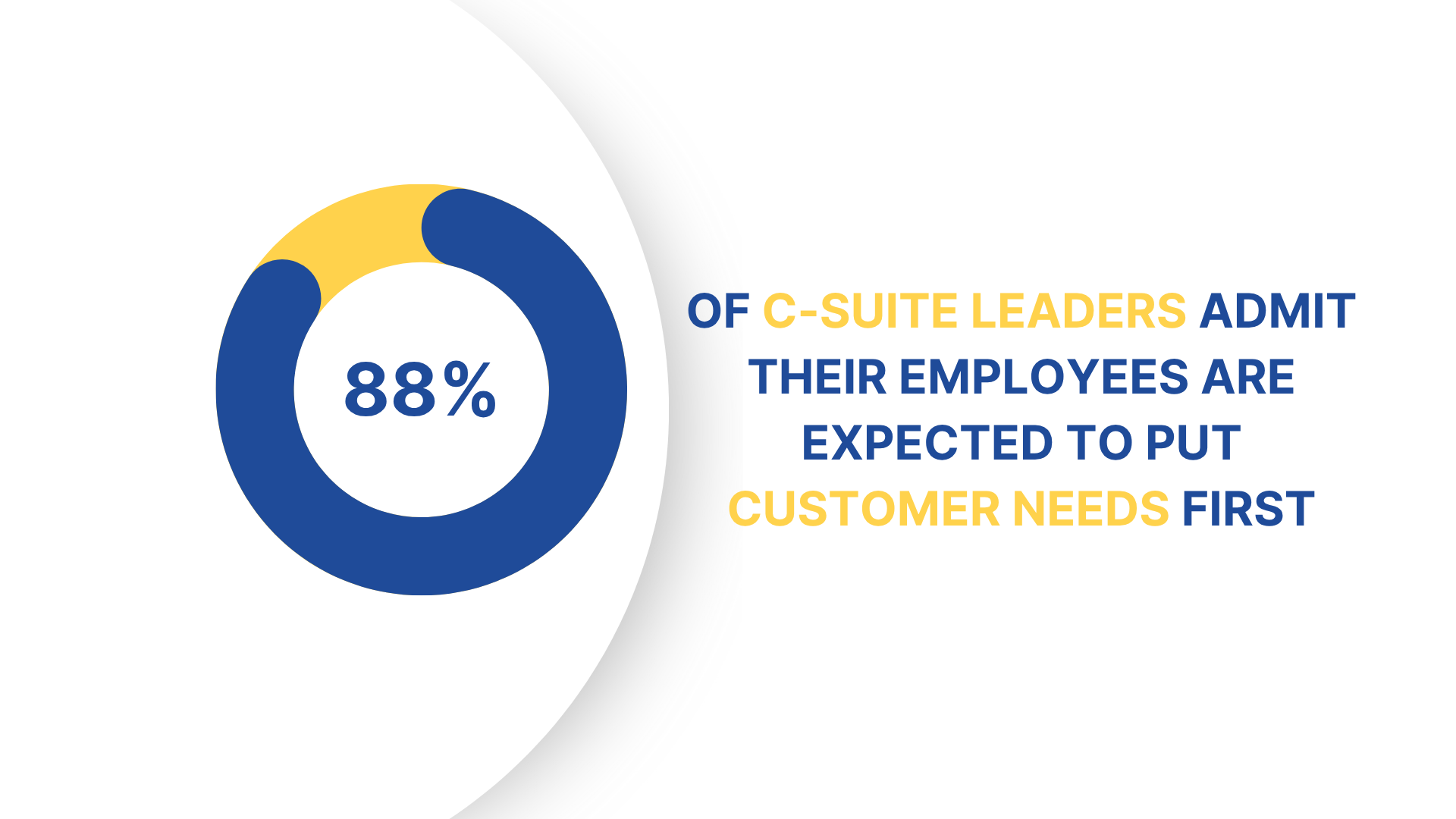
According to a recent survey, 88% of C-suite leaders admit their employees are expected to put customer needs first, even though they recognize that great CX starts with engaged, supported staff.
Consider whether your company has a formal employee experience management program in place.
Is someone responsible for regularly surveying employees, analyzing the results, and leading initiatives for improvements?
Do you have a consistent process for onboarding that leaves new hires feeling welcomed and prepared?
If these elements are missing or inconsistent, your employees might have vastly different experiences depending on their department or manager.
Finally, healthy organizations thrive on open communication.
If your employees often say they don’t know what’s happening in the company or they rarely receive feedback, it points to a communication breakdown.
One of the most apparent warning signs is what Kevin Baragona, Founder of Deep AI, calls “surface-level or silent feedback.”
If your pulse surveys suddenly show a spike in “neutral” answers or a drop in the number of written comments, it’s a clue that employees have become hesitant to speak up.
Baragona notes that he noticed this in his own company – people became disengaged and even unresponsive during team meetings, giving little input.
Or you might have the opposite issue; plenty of complaints are floating around, but there is no resolution.
If leadership says “We value your input” but employees feel their input goes unnoticed, cynicism will grow.
While it may be difficult to assign an exact dollar value to morale, the business case for employee experience is clear.
Research consistently links a strong EX strategy to better performance, higher productivity, and stronger financial results.
However, the connection between EX and business results is especially clear in companies that fully commit.
Research in the book The Employee Experience Advantage, which analyzed over 250 global organizations, found that top-performing experiential companies had:
In addition, the highest-ranked companies on the Employee Experience Index are also listed among the most attractive brands, scored highest on customer satisfaction, and topped most “Best Places to Work” lists.
Although cost is often a top concern for budget-conscious organizations, not every part of a great employee experience requires a major investment.
Some of the most potent drivers, like feeling valued, being treated fairly, having purpose, and belonging to a strong team, are built and reinforced through culture, not cost.
What exactly does an employee experience manager do day-to-day?
While the specifics can vary by company, there are core functions that are standard to most EX-roles.
Some responsibilities of an employee experience manager include the following daily activities:
What does it take to excel as an employee experience manager?
Since the role blends strategy, analytics, and people-centric work, it requires a diverse skill set.
An effective EX manager needs a good grasp of data and technology.
Since measuring employee sentiment and program outcomes is a big part of the job, data analysis skills are a must.
Experience with survey design and analytics tools is often expected. For example, knowing how to use employee survey software or platforms like Excel, Tableau, or SPSS to interpret feedback data is imperative.
In addition to data analytics, familiarity with HR technology and systems is important, too.
EX managers frequently work with HRIS data and help integrate new solutions into existing workflows.
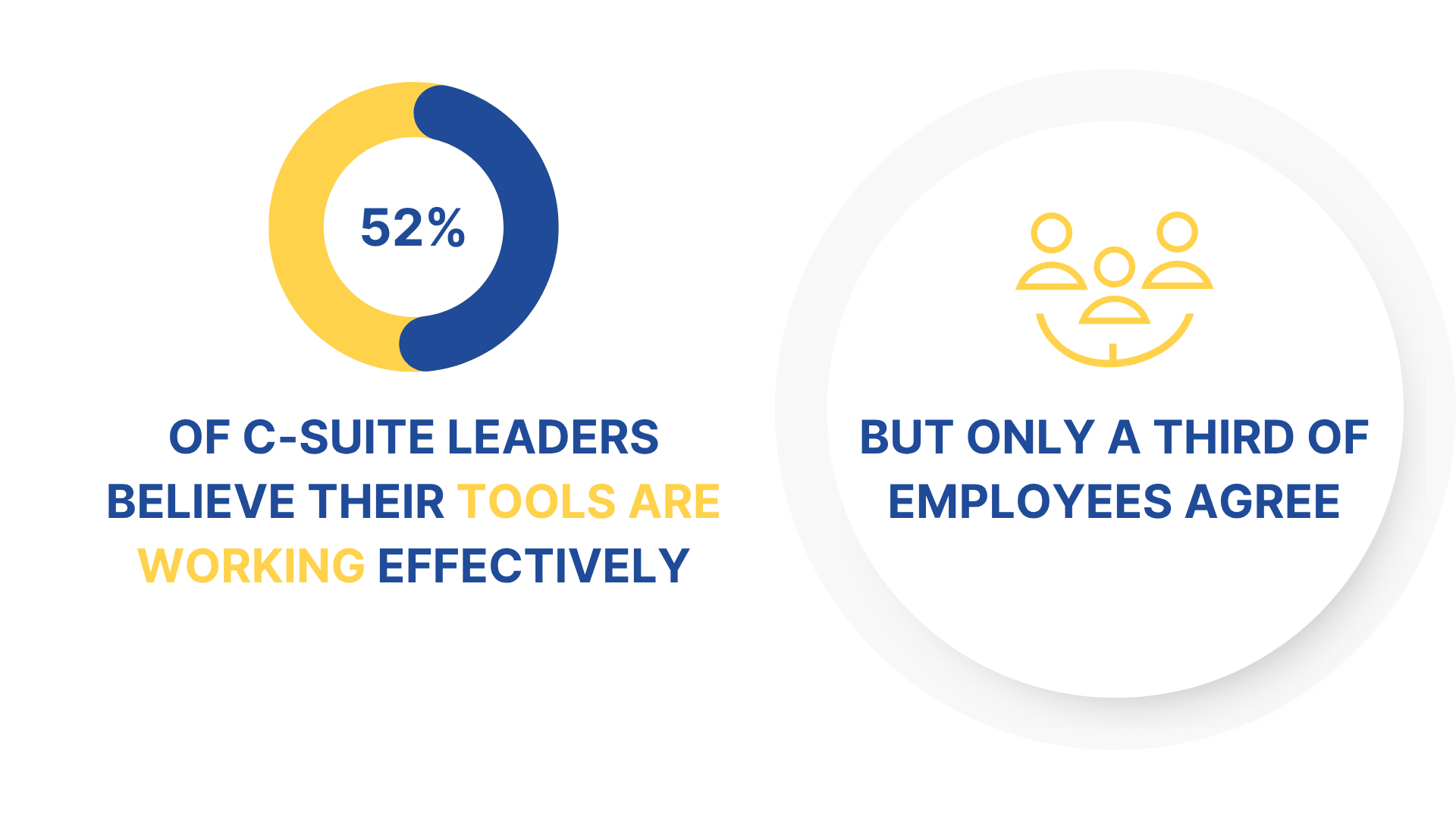
A high level of technical fluency becomes especially valuable when identifying gaps in employee-facing technology. As much as 52% of C-suite leaders believe their tools are working effectively, but only a third of employees agree.
A skilled EX manager can bridge that gap by spotting friction points others might miss.
Therefore, knowing how to use tools such as engagement platforms, pulse survey apps, or recognition software is a big plus.
As explained before, this role is inherently people-oriented, so interpersonal abilities are a top requirement.
An EX manager must be an excellent communicator, both in listening and conveying messages.
Whether it’s writing an internal newsletter or presenting survey findings to leadership, the ability to communicate clearly, empathetically, and persuasively is key.
But communicating alone isn’t enough. Creating a positive employee experience also means understanding what people feel, need, and care about.
In other words, EX managers need to be highly emotionally intelligent. At the core, it takes having an employee-first mindset, someone who genuinely cares about their colleagues’ well-being and success.
Employee experience management is a relatively new specialty, so there’s no single “right” path into the role.
Many EX managers come from the broader HR field or related domains and typically hold degrees in human resource management, business administration, or communications.
Considering this role overlaps with HR, having professional HR certifications can be beneficial and sometimes preferred by employers. Certifications like SHRM-CP, SHRM-SCP, or HRCI’s PHR/SPHR demonstrate a strong understanding of HR competencies and ethical practices.
It’s also common to see backgrounds in related roles that feed into EX.
According to data, the most common previous roles for those transitioning into employee experience management positions include Office Manager, HR Business Partner, and Program Manager.
In summary, while no single qualification is required, a combination of relevant education, credibility, and experience is key.
The role of Employee Experience Manager has quickly become one of the fastest-growing job titles in the market.
LinkedIn’s recent Jobs on the Rise report listed employee experience roles among the top emerging jobs. In 2023, Employee Experience Manager ranked 5th among the 25 fastest-growing job titles in the U.S.
As the focus on employee experience grows, so does the demand for professionals who can lead these efforts.
A JLL survey found that a year ago, only about one in four companies had a dedicated “workplace experience” manager. Now, roughly one-third of companies employ an experience manager, and another 9% plan to hire one in the near future.
With rising demand comes the question of compensation. How much does an employee experience manager earn?
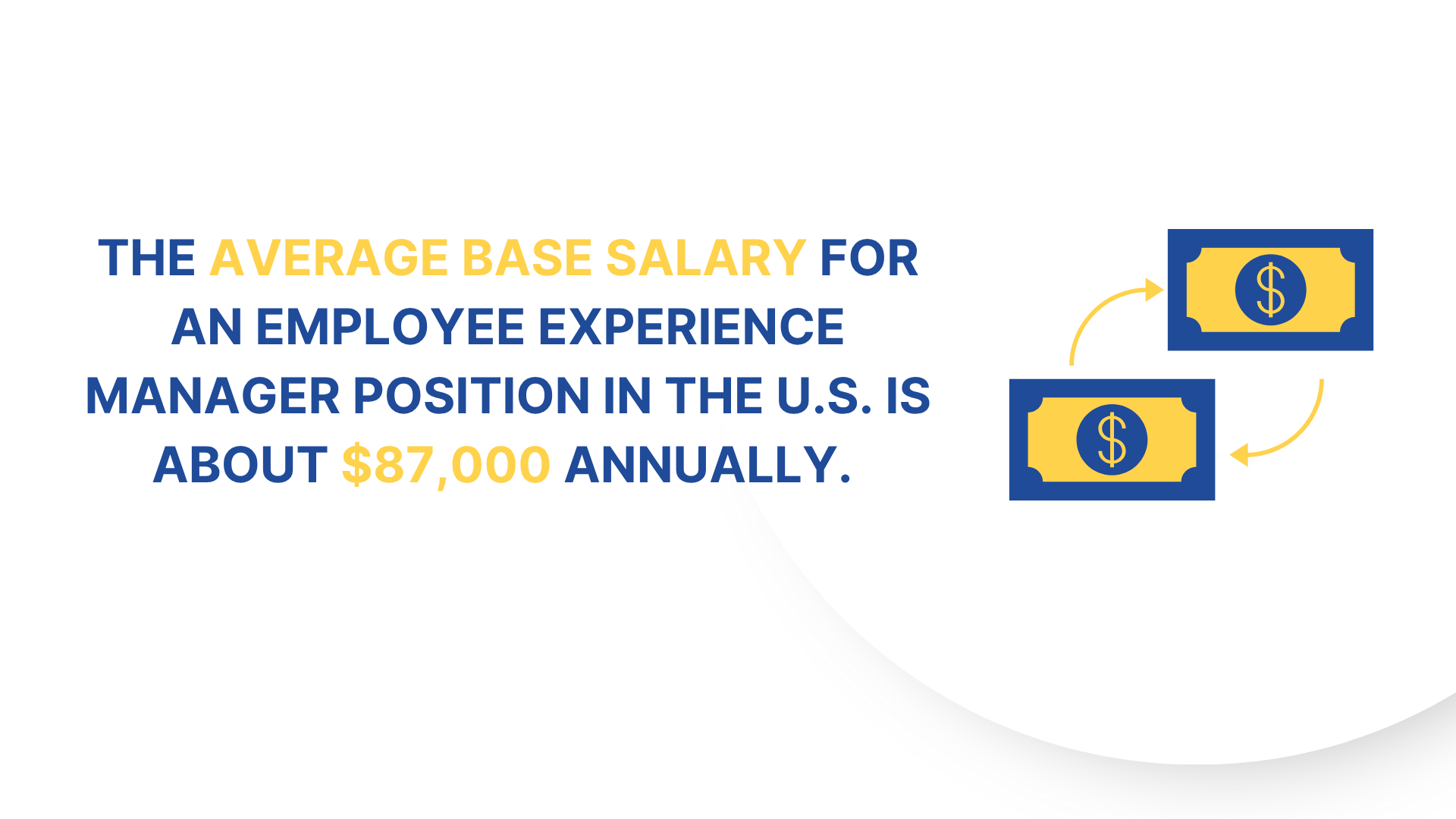
According to recent data from Indeed, the average base salary for an Employee Experience Manager position in the U.S. is about $87,000 annually.
However, salaries can vary widely based on factors like location, company size, and level of responsibility.
Entry-level or roles in smaller markets may earn less – around $50–60 thousand on the low end, whereas experienced EX managers in large, high-cost cities or at major firms can earn well into six figures.
If you’ve identified the need for better employee experience management by now, how do you get started?
Whether you plan to hire a dedicated EX manager, invest in an employee experience management platform, or simply want to start an EX-initiative with your existing team, a thoughtful implementation plan is key.
Here are some practical steps to consider:
Expand with a dedicated EX hire or employee experience management program
If you’re considering updating your employee experience efforts, it’s worth exploring the tools and platforms that can make an EX manager’s job more effective.
These tools range from specialized employee engagement software to everyday communication apps.
All-in-one EXM platforms combine engagement surveys, real-time feedback, recognition, and performance tools in one place. They help build a stronger culture, save time, and provide EX managers with the data they need to act quickly. Most come with dashboards, peer shout-outs, pulse surveys, and built-in reports.
If you’re not ready for a full platform, survey tools are a great entry step. They make it easy to send out quick polls, track trends, and spot issues early. Many include anonymous feedback options and AI features that highlight patterns in open-ended responses.
People want to feel seen and heard. Recognition tools let coworkers give instant praise or rewards, making appreciation part of the day-to-day. In addition, communication apps like Slack or Teams help keep everyone in the loop. EX managers can use these to build community, like setting up shout-out channels or sharing updates from leadership.
Finally, data helps you see what’s working. Some tools go deep with sentiment analysis or even predict who might leave. Still, even simple dashboards or Excel reports can show how engagement links to performance or retention.
Many companies run into familiar challenges when rolling out employee experience initiatives, like skeptical executives, survey fatigue, and the challenge of showing clear ROI.
Even leaders who believe in the value of engaged employees may hesitate to fund new programs without concrete proof.
At the same time, middle managers can see EX efforts as extra work or a threat to their authority, especially if they don’t understand how these changes help their teams.
Best Practice: Involve managers early and focus on the ROI from the start. Explain how stronger engagement leads to fewer people problems, better performance, and less turnover. Make participation easy: give them simple toolkits or training sessions on strategies such as giving meaningful feedback, running better 1:1s, or recognizing team wins. The more they feel ownership, the more likely they are to champion the effort.
Senior leadership will also want to know: Is this working? However, quantifying and measuring the impact of experience efforts can be tricky, especially when change takes time.
Best Practice: Define KPIs like engagement scores, turnover, or absenteeism before launching new programs. Where possible, use pilot groups or location comparisons to track results. Pair the data with employee testimonials or stories that make the results real and help leadership connect emotionally and logically.
Too many surveys, repeated questions, or confusing platforms can frustrate employees and lead to poor participation or disengaged responses.
Best Practice: Limit the frequency of surveys to once every two months, keep them short (6–10 questions), and respect employees’ time by keeping completion under 15 minutes.
Use a single, consistent platform to avoid login fatigue and duplicative questions. Giving employees enough time to respond, typically a few weeks, also increases quality and participation.
Your workforce isn’t a monolith. Different roles, generations, and departments care about different things. What motivates one group might not matter at all to another. A one-size-fits-all approach has a high likelihood of failing.
Best Practice: Segment your EX-strategy. Use engagement data and team insights to understand what different groups care about – maybe younger employees want career growth, while tenured staff prioritize work-life balance. Build flexible programs that offer choices so people can engage in relevant and personal ways.
Who’s shaping your employees’ day-to-day experience? If the answer is “no one”, you’re not alone, as 74% of executives say employee experience has no clear ownership at their company.
But when no one owns it, no one is improving it.
Great experiences don’t happen by default. They are designed, maintained, and improved over time. HR alone can’t carry the full weight of culture, engagement, and workplace satisfaction, especially in today’s fast-changing work environments.
That’s why more companies are adding dedicated employee experience managers. These roles provide structure, accountability, and focus to what’s often left to chance.
Ultimately, the question isn’t if you need someone to lead employee experience, but whether you can afford not to.
Senior Content Writer at Shortlister
Browse our curated list of vendors to find the best solution for your needs.
Subscribe to our newsletter for the latest trends, expert tips, and workplace insights!
From improved scheduling to increased productivity – explore why implementing an effective time-tracking and attendance system can be vital in the workplace.
Struggling to navigate the maze of HR tools available in 2025? Our review highlights leading solutions for transforming employee management.
Growth rarely follows a straight path, and workforce needs evolve with each turn. Understanding when, why, and how to evaluate the staffing needs of a growing company becomes crucial in securing its continued expansion.
As one of the leading employee incentive providers, Nectar HR stands out with its simple yet effective recognition and rewards mechanism and features built around elevating company culture.
We're working hard to make it easy for you. Sign up for news, trends and insights.