
Best Practices for Managing the Employee Exit Process
If endings shape the whole memory, why treat the exit process like admin work instead of strategy?


Partner at Ricotta & Marks, P.C.

COO and Co-Founder, LINQ Kitchen, formerly BestOnlineCabinets

Attorney at Law, Hones Law Employment Lawyers PLLC
When does unfair become unlawful?
Unfair treatment in the workplace often feels deeply personal and undeniably unjust to employees. However, its legality cannot be measured solely by emotions or subjective experience.
Courts require substantial evidence that differential treatment is not just “office politics” and instead violates a specific legal right protected by statute, contract, or constitutional law.
Drawing on research, expert analysis, and real-world case studies, we explore this distinction in depth, along with the implications of unfair labor practices and actionable guidance for employees and employers.
Workplace fairness represents the principle that all employees are treated equally and consistently in every aspect of their employment.
It’s a comprehensive, flexible concept that encompasses everything from management decisions and behavior to company policies.
However, absolute fairness is rare, and it’s not uncommon for employees to experience unfair work practices. This treatment is not always intentional, nor does all of it stem from unlawful motives. In many cases, it’s the result of poor leadership or workplace culture that tolerates inequity without recognizing its impact.
This broad spectrum is what makes unfair employee treatment so challenging to navigate.
Some experiences, while frustrating or demoralizing, fall within an employer’s discretion, while others cross legal boundaries and trigger statutory protections.
Illegal treatment is by default unfair, but unfair doesn’t always mean illegal.
Therefore, the law won’t remedy every instance of workplace unfairness. Instead, it establishes a framework for when the conduct becomes legally actionable.
“Courts are not arbiters of workplace fairness in the abstract; they are tasked with enforcing specific statutes and protections”, explains Thomas Ricotta, Partner at Ricotta & Marks, P.C., and an expert in employment law.
“A complaint tends to move into legally serious territory when it involves a violation of a protected right such as discrimination based on a protected characteristic for engaging in legally protected activity, wage-and-hour violations, or interference with statutory leave or accommodations.”
In other words, the law examines whether an employer’s conduct violates a specific legal duty, contractual obligation, or statutory protection.
Unfair treatment becomes illegal only when it interferes with a right recognized and protected by the law.
“Patterns of behavior and documented incidents are a clear link between the employer’s action and a protected status or activity that often tips the scale from unfairness to illegality,” adds Ricotta.
For employees, understanding this distinction helps them assess whether their experience may support a viable claim.
For employers and HR professionals, it means assessing legal risks and preventing unfairness from escalating.
When both sides understand what courts validate as legally actionable, it creates a foundation for more productive conversations, more appropriate resolutions, and ultimately better workplaces.
Unfairness often shows up in ways workers experience daily, through decisions and behaviors that consistently put individuals or a group at a disadvantage. It manifests as anything from subtle exclusions and illogical or inconsistent decisions to unreasonable expectations or a growing sense that the rules apply differently across the workforce.
These patterns can affect assignments, evaluations, promotions, and even job security, and usually go beyond isolated disagreements or mistakes.
But when do they cross the line into criminal conduct?
The following examples of being treated unfairly at work illustrate the types of conduct that may trigger a legal claim.
Employment discrimination based on race, color, religion, sex, age, disability, genetic information, or national origin remains one of the most litigated forms of unfair treatment.
The scope and persistence of this problem are significant.
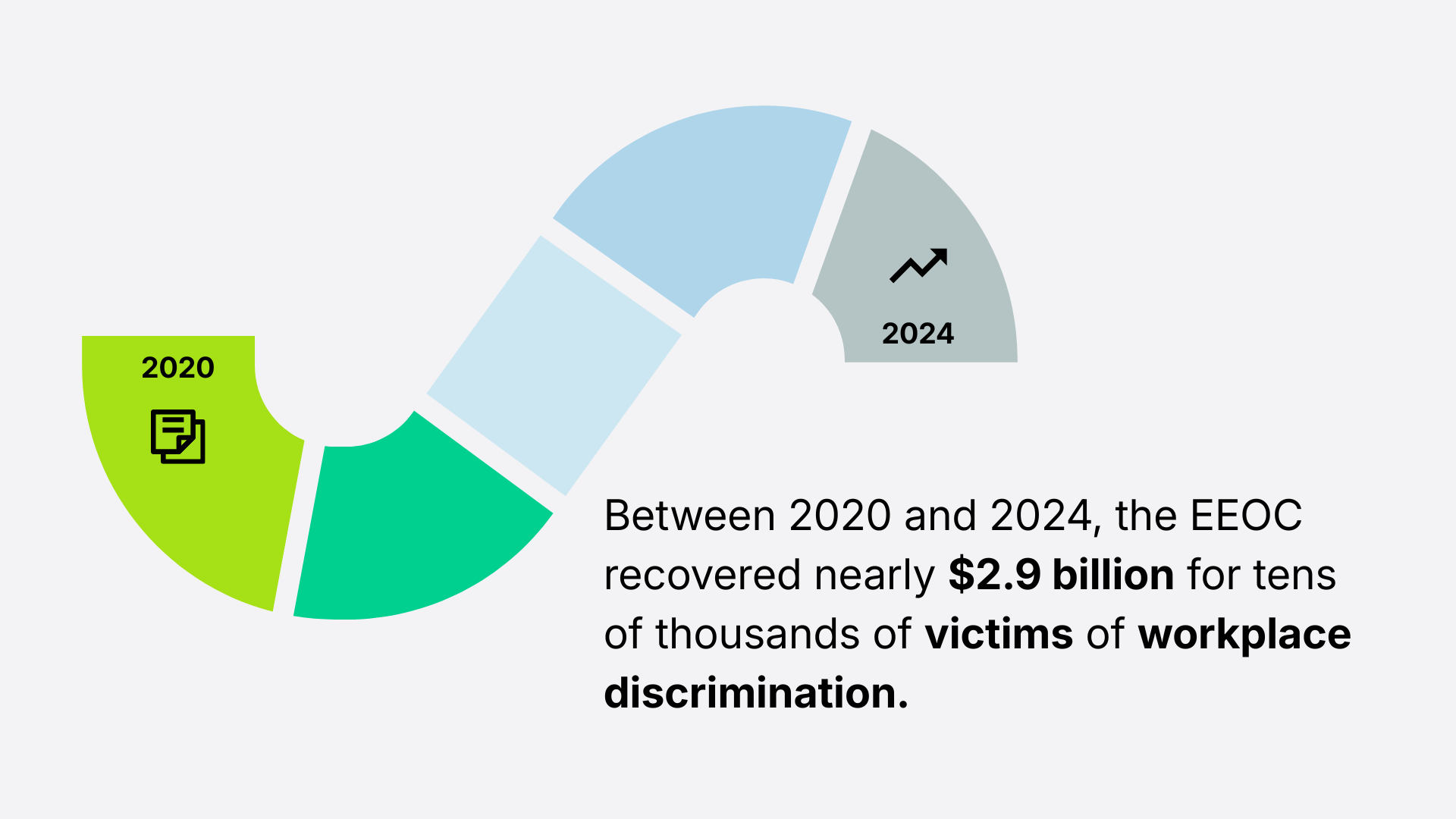
The Equal Employment Opportunity Commission’s (EEOC) enforcement record shows that between 2020 and 2024, the agency recovered nearly $2.9 billion for tens of thousands of discrimination victims across private, public, and federal workplaces. These cases range from wrongful termination and sexual harassment to pay inequity and represent only a fraction of actual workplace discrimination.
What distinguishes them from general workplace conflict is both the basis (targeting someone because of their membership in a protected class) and the impact (altering the terms, conditions, or privileges of employment).
Despite comprehensive legal protections enforced by the EEOC, workplace discrimination remains pervasive, costly to both victims and organizations, and severely underreported.
Retaliation is another example that tips the scale from unfairness to illegality.
It occurs when an employer takes adverse action against an employee for engaging in a protected activity, such as reporting discrimination or participating in an external or internal investigation.
These actions may include:
Importantly, courts may find retaliation even if the original complaint was unsubstantiated. Employees who are treated unfairly at work after speaking up often succeed in retaliation claims because the law vigorously protects whistleblowing.
The EEOC defines harassment as unwelcome conduct based on a protected characteristic and a form of employment discrimination. It becomes unlawful when enduring it is required to keep a job, or when the behavior is severe or frequent enough to create an abusive or hostile work environment.
Examples include offensive jokes, repeated derogatory remarks, quid pro quo harassment, unwanted physical contact, etc.
Employers often become liable if they knew, or reasonably should have known, about the misconduct but didn’t address it.
Employers create binding obligations through contracts and internal workplace policies, which set expectations for rights and responsibilities. When they fail to follow their own procedures or selectively enforce them, it can constitute unlawful labor practices or breach of contract.
These violations can occur in many forms, from denying contract-enforced benefits to bypassing established complaint procedures.
Beyond the potential legal implications, failing to uphold these policies can also lead to other consequences, such as mistrust and low morale among employees.
Interference with leave rights is another typical example of how workplace treatment can move from unfair to unlawful.
For example, a manager might express disapproval toward workers who take leave or openly question their commitment. Although unprofessional and demoralizing, this is not illegal.
However, the conduct turns illegal when it blocks or penalizes employees for taking their legally protected leave. This includes absence permitted under federal and state laws, such as the Family and Medical Leave Act (FMLA), pregnancy disability leave, military service, jury duty, or other protected reasons.
Some of the most common examples include:
Even when framed as an operational necessity, these actions punish workers for exercising rights protected by the law, creating an inequitable work environment.
Workers rely on fair and accurate compensation to maintain financial wellness. So, when the employer fails to deliver this, it creates unfair working conditions that directly impact the workforce and undermine their trust in the company.
Refusal to compensate for overtime or pay the minimum wage are common examples, along with intentional misclassification to avoid paying for benefits or overtime, requiring “off the clock” work, or unlawfully deducting wages.
Since the impact is measurable (through payroll and time-tracking data), disputes over wage and hour compliance carry significant legal weight and can result in substantial liability for the business.
Firing an employee is not inherently unfair or unlawful.
However, it crosses the line into wrongful termination when the employer bases the decision on unlawful reasons or disregards legal and contractual employee protections.
Wrongful termination claims often arise from discrimination, retaliation, or the inconsistent application of workplace policies. Their actual number could be five to 10 times higher than the formal claims filed, often due to fear of retaliation, limited resources, or unawareness that it’s illegal.
“Many workplace behaviors feel deeply unfair but are not unlawful,” explains employment attorney Thomas Ricotta, mentioning common cases such as favouritism, personality conflicts, or inconsistent management styles.
“Unless those actions are tied to discrimination, retaliation, or another legal violation, courts generally will not intervene,” says Ricotta.
There is a line between unpleasant or unreasonable behavior and illegal workplace conduct. Recognizing the difference helps employees and employers navigate workplace conflict with realistic expectations and better outcomes.
Examples of being treated unfairly at work that are not legally actionable include:

Most employees in the U.S. work under at-will employment, meaning the employer can terminate jobs at any time, for any reason, or even for no reason at all. It also allows them to change the terms of the employment relationship, such as wages, benefits, or schedules, without notice.
Solid performance or long tenure makes no impact on the decision, which, to the employee, often feels sudden and incredibly unfair. Regardless, this action is legal as long as it doesn’t violate anti-discrimination laws or other contractual obligations.
Currently, Montana is the only state that requires “good cause” for termination after a probationary period. Additionally, there are some exceptions, such as public policy, implied contract, and good-faith protections, but these apply in limited circumstances and vary by state.
Bad management is another pervasive example of unfair treatment that feels illegal but often isn’t.
A supervisor can be ineffective or unpleasant without crossing into unfair labor practices. They can favor an employee, micromanage, communicate poorly, or be inconsistent in their decisions, and the law still won’t intervene.
However, even if these actions do not violate the law, they undoubtedly cause damage to the company.
Poor leadership qualities directly influence employee engagement, retention, and performance, and the cost of these adds up. Gallup estimates that bad management and lost productivity cost companies up to $8.8 trillion, or 9% of the global GDP.
“For a workplace complaint to escalate from being perceived as ‘unfair’ to something actionable in court, the complaint must typically involve a violation of federal or state labor laws,” explains Josh Qian, COO and Co-Founder of LINQ Kitchen.
At the federal level, the most commonly invoked laws include:
State civil rights laws, wage statutes, paid leave laws, or wrongful termination principles may provide broader coverage than federal law, depending on jurisdiction.
When evaluating claims, courts generally follow a structured analysis.
They start by determining whether the law covers the employee and if the alleged conduct falls within its scope. Then, they assess whether this action occurred and if it has a legally sufficient connection indicating a violation of the law.
Josh Qian explains, “There must be a clear demonstration of adverse employment actions, such as termination, demotion, or harassment that creates a hostile work environment.
The complaint must have documented evidence, such as email correspondence or witness statements, indicating that the unfair treatment correlates with a protected characteristic or activity.”
Across all claims, evidence drives the outcome.
Statutory coverage defines the boundaries, but documentation, timing, and consistency determine credibility. From there, the focus shifts from legal to practical: how can employers and employees respond to potential violations?
Most workers experience unfairness at some point in their career, whether it’s a decision that feels targeted or an opportunity that quietly disappears. The challenging part isn’t recognizing that something feels wrong but knowing when and if it crosses a legal line, and how to respond.
The most telling signs of unfair treatment at work tend to emerge over time. They are often subtle and appear as patterns in inconsistencies or selective enforcement.
Although not every uncomfortable interaction leads to a violation, action is warranted when at least one of the following is true:
Employees are frequently advised to “document everything”.
However, precision matters more than volume.
Adequate documentation captures decisions and shifts as they occur: what changes, when it changes, who communicated it, and how it was justified. These records show continuity, ensuring context isn’t lost as circumstances evolve.
“When employees face unfair treatment, my first advice is to start building a clear, dated record,” says Ed Hones, attorney at Hones Law Employment Lawyers PLLC.
“Leave a timeline noting each incident with dates, times, names, and direct quotes when possible, and save key documents such as performance reviews, emails, texts, and policy documents.
Preserve information on personal storage rather than company devices, avoid deleting communications, and collect comparative examples that show unequal treatment.”
Josh Qian adds to this that employees must also be vigilant and aware of their rights.
“Understanding their rights under labor laws, including anti-discrimination and whistleblower protections, can empower employees to identify violations.”
Once they do, the next step is to report them.
Reporting usually follows two paths: internal and external.
Internal reporting means raising concerns within the organization, such as notifying the HR department or using the company’s formal complaint process. This option allows the employer to investigate and address the issue directly, regardless of its legality.
External reporting occurs when the individual files a claim outside the organization to an independent authority. It’s more common when internal reporting fails, and the behavior continues, or when the conduct is more severe and leads to retaliation.
Depending on the nature of the conduct, workers may file complaints with federal or state agencies responsible for enforcing labor and employment laws, such as the EEO, seek assistance from an employment attorney, or pursue legal action through the court system.
Attorney Ed Hones adds, “Consider consulting a lawyer early because filing deadlines are short and a brief consultation can help you avoid common mistakes.”
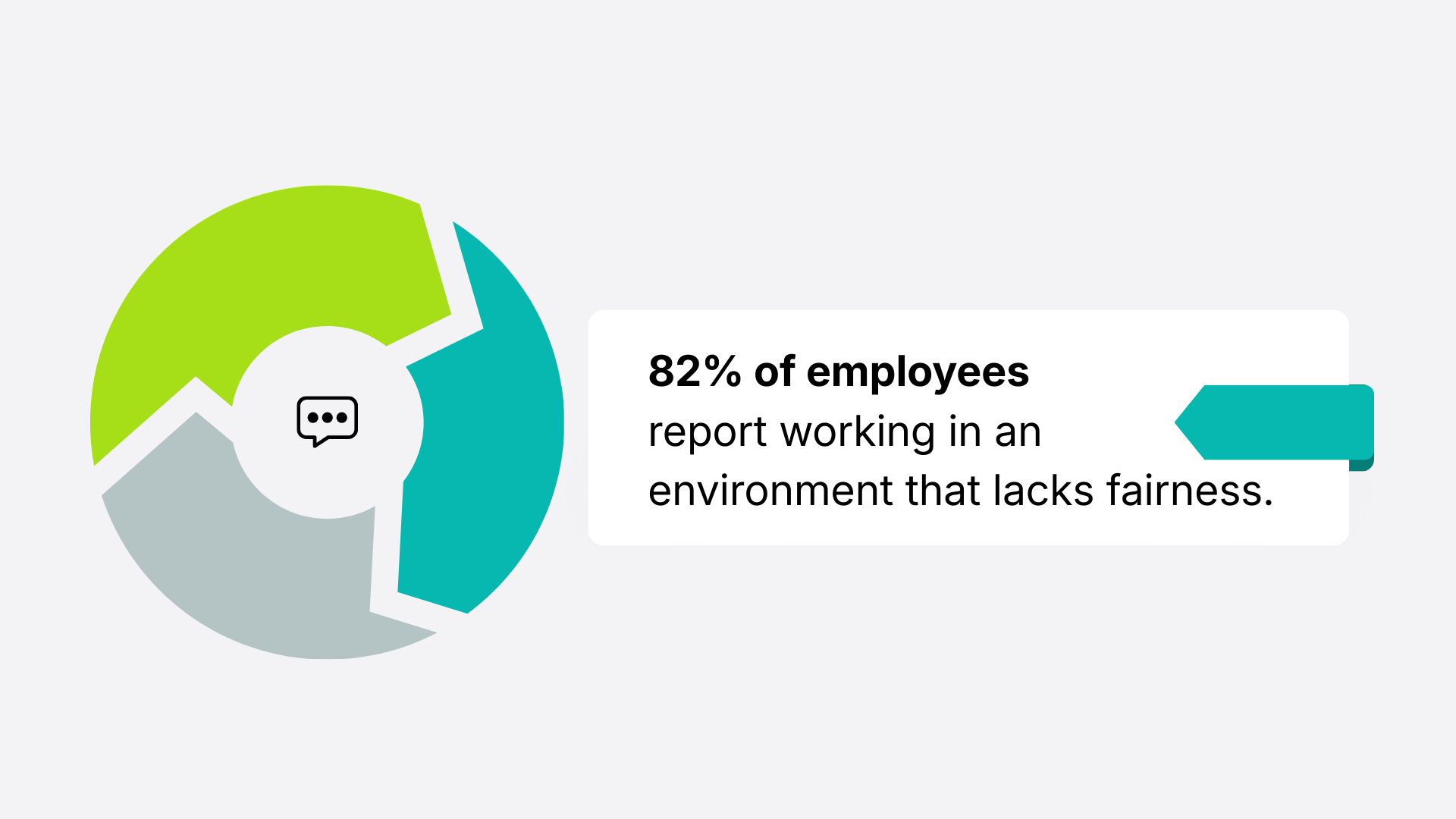
Despite its strong link to employee engagement and loyalty, workplace fairness remains a significant challenge. A Gartner survey found that employees working in a perceived high-fairness environment have 26% higher performance and are 27% less likely to quit.
Still, only 18% said they work in such an environment or have an employee experience that is characterized as “fair”.
This gap is often rooted in design, not intent.
It begins with inconsistency in rule application or a lack of awareness. When similar situations lead to different outcomes, employees question the process, even if the decision is lawful.
Therefore, addressing unfair treatment in the workplace requires a clear, enforceable system. Policies, transparency, good leadership, and strong reporting mechanisms provide this structure.
Clarity is the first safeguard against claims of unfair workplace treatment.
Policies should define standards for discipline, advancement, leave, accommodations, and complaint procedures with enough precision to limit arbitrary interpretations. They also require regular review for legal compliance and consistency across departments.
These policies must be clear on conduct and consequences, and any deviations should be documented and justified.
Managers and leadership are another line of defense against an unfair labor practice charge.
However, their role is more than following compliance checklists. A good leader should be able to detect and respond to early signs of unfair treatment at work. This included identifying behaviors that may constitute discrimination, retaliation, harassment, or interference with employee rights, and understanding their impact.
Training can help them become more aware and learn how to respond proactively before a potential issue escalates into a formal complaint.
Both policies and good leadership play a significant role in creating a transparent workplace where the workforce understands how decisions are made, therefore minimizing unfairness.
Behind the scenes, workforce technology supports this transparency.
For example, HRIS tracks data across multiple HR functions, helping managers identify patterns that might disadvantage certain employees.
At the same time, time-tracking and scheduling systems ensure a fair distribution of work, while payroll software and employee engagement platforms provide clear records that can reduce misunderstandings or bias.
By giving both the manager and employees access to accurate information, fairness becomes visible and consistent.
Reporting any workplace concern is inherently sensitive. Employees weigh fear of retaliation, damage to relationships, and career risk before raising an issue. When reporting mechanisms fail to address these concerns, even minor incidents can go unreported, allowing patterns of unfair or unlawful conduct to go unnoticed.
Therefore, effective reporting channels should be accessible, confidential, and trustworthy. They typically include multiple accessible channels, clear reporting instructions, protection against retaliation, and timely feedback.
Finally, if prevention is insufficient, and an employee files a complaint, how companies respond carries a greater risk than the complaint itself.
Thomas Ricotta advises, “When faced with allegations of unfair labor practices, employers are best served by taking them seriously, preserving records, avoiding knee-jerk discipline, and consulting counsel early.”
Josh Qian adds, “If violations are confirmed, companies must act promptly to rectify the situation and provide appropriate remedies. Handling complaints transparently and responsibly builds trust and can mitigate future conflicts and claims.”
Real-world cases show best what courts consider valid unfair treatment in the workplace.
For example, in 2024, the EEOC filed multiple lawsuits in violation of Title VII of the Civil Rights Act of 1964, including for:
All three are examples of workplace discrimination recognized by courts as valid. They involve employers who failed to maintain dignified workplaces and either perpetrated harassment themselves or failed to investigate and stop it.
Long-standing systemic issues can also emerge in more established institutions. In 2025, a jury found that female and minority troopers in the Massachusetts State Police were consistently denied promotions in favor of less qualified colleagues, resulting in a $6.8 million payout.
Meanwhile, high-profile private-sector cases, such as the 2023 racial harassment and retaliation lawsuit against Tesla, illustrate that repeated offenses and unequal discipline can trigger litigation even in companies with a strong reputation.
The bottom line is that unfair treatment can occur across industries and roles.
However, when it crosses into illegal conduct, employees have protections that send a clear message to companies: equality and fairness are not optional.
Workplace fairness is an ongoing practice, shaped by the choices leaders make every day.
Recognizing the signs of unfair treatment in the workplace, understanding legal protections, and building systems that prevent and address misconduct are all part of creating a workplace where people feel seen and respected.
Understanding workplace fairness can be complex, especially when it comes to what courts consider valid unfair treatment. Below, we answer additional questions employees and employers might have on this topic.
Discrimination, retaliation, harassment, wage violations, and wrongful termination are widely recognized examples of unfair treatment at work and are legally actionable.
Meanwhile, examples that courts don’t consider valid include general rudeness, favoritism not based on a protected class, personality conflicts, poor management, etc.
Employees can sue their employers for any type of unfair workplace treatment that violates employment laws, any protected characteristics, their contracts, or company policies. However, not all unfair behavior is legally actionable.
Common signs include sudden or unexplained disciplinary action, being excluded from projects or career opportunities, inconsistent application of rules, retaliation for raising concerns, biased performance evaluations, and unequal access to resources.
When these signs turn into a pattern of behavior and involve a protected characteristic or interfere with legally protected rights, they may constitute a violation of employment law.
When an employee raises a complaint involving unfair treatment in the workplace, the employer should respond promptly. This usually includes investigating the complaint, documenting actions, following policies, and taking corrective steps when needed. Fair, structured handling protects the company and its employees and reduces legal risk.
Content Writer at Shortlister
Browse our curated list of vendors to find the best solution for your needs.
Subscribe to our newsletter for the latest trends, expert tips, and workplace insights!
If endings shape the whole memory, why treat the exit process like admin work instead of strategy?

Is there really a nice way to fire someone? While termination will never be easy, it can be done with professionalism and compassion.
Nearly 73 million Americans now freelance in some form, algorithms dictate who works when and for how much, and the traditional types of employment contracts that businesses have relied on for decades are struggling to keep up.
Beyond holiday festivities and annual performances, here’s why December’s focus should be about celebrating human rights in the workplace.
We're working hard to make it easy for you. Sign up for news, trends and insights.