Monthly Industry Pulse

Employer’s Guide to Minimum Wages for 2026

As minimum wages rise across the map in 2026, employers need to reexamine how intentional their pay strategy really is.
In This Post:

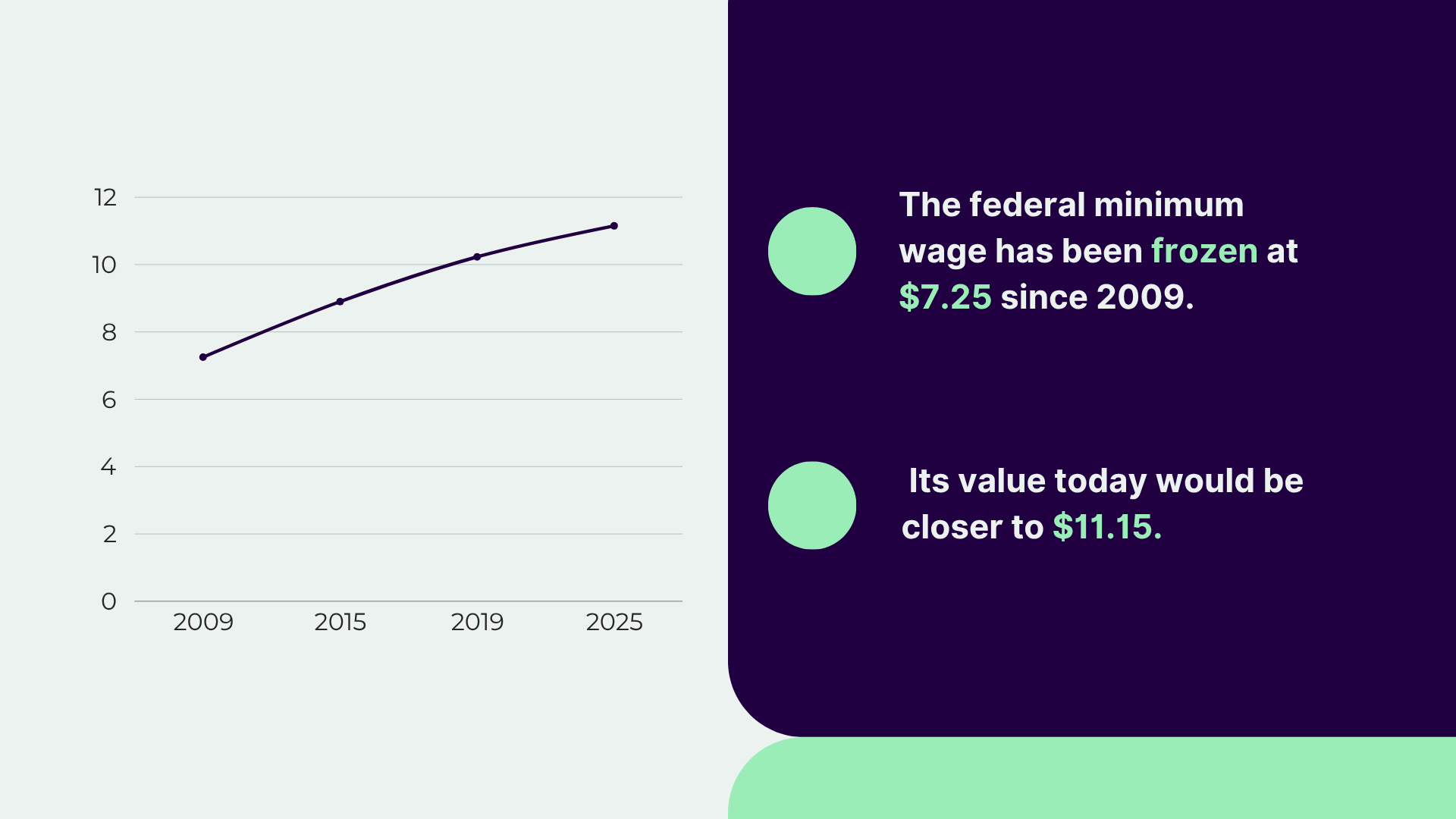
Did you know the federal minimum wage is still $7.25, even though its 2009 value is equivalent to about $11.15 in 2025?

That gap has pushed many states to raise their own minimum pay rates.

In fact, nearly 20 states and over 40 cities or counties will raise their wage floors at the beginning of next year. For employers, these upcoming minimum wage changes in 2026 carry important compliance and budgeting pressures.

State Minimum Wage Raises in 2026

A growing number of states are implementing higher minimum wages in 2026, widening the gap above the federal rate. In virtually every region of the country, new rates will take effect.

For example, California’s minimum wage will rise to $16.90 (up from $16.50), and Washington State’s will hit $17.13, the highest statewide rate in the nation. Many states are crossing the long-sought $15 threshold – Missouri and Nebraska are both moving to $15.00 in 2026. 

Even traditionally lower-wage states are making jumps – Hawaii’s minimum wage is increasing from $14.00 to $16.00, while Minnesota’s increase is a modest 2.5% – from $11.13 to $11.41. 

In addition, about a dozen states – including California, New York, New Jersey, Connecticut, Arizona, and more – will have base pay rates in the mid-teens or higher. In New York, for example, the minimum wage will reach $17.00 per hour in New York City (and $16.00 upstate).

Meanwhile, five states in the South – Alabama, Louisiana, Mississippi, South Carolina, Tennessee – have no state minimum wage at all, meaning the $7.25 federal rate still applies by default.

The result is a patchwork of wage floors: from $7.25 in some states to well above $15 in others.

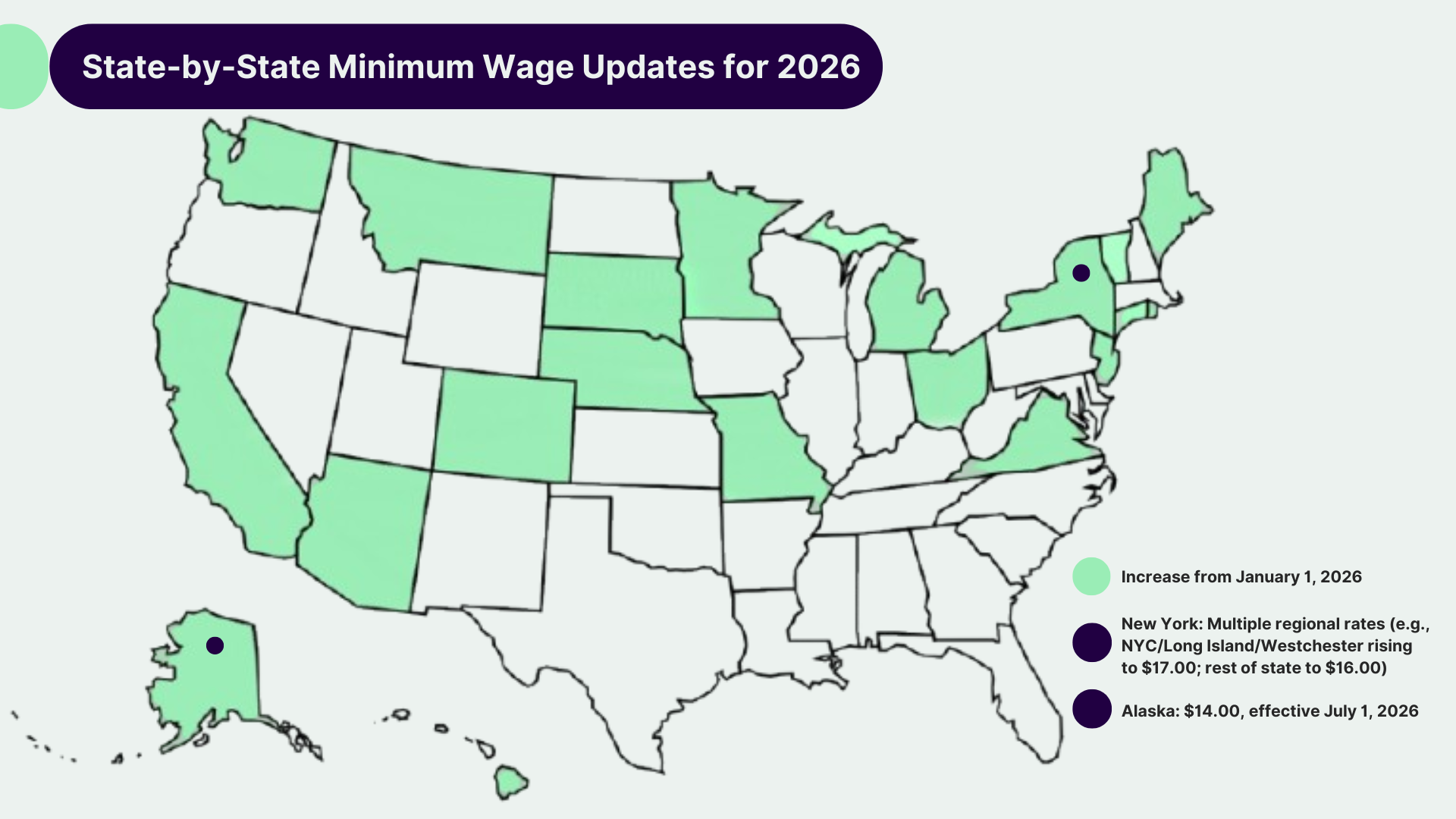
State-by-State Minimum Wage Updates for 2026

  • Alaska: $14.00, effective July 1, 2026 
  • Arizona: $15.15, January 1, 2026
  • California: $16.90, January 1, 2026
  • Colorado: $15.16, January 1, 2026
  • Connecticut: $16.94, January 1, 2026
  • Hawaii: $16.00, January 1, 2026
  • Maine: $15.10, January 1, 2026
  • Michigan: $13.73, January 1, 2026
  • Minnesota: $11.41, January 1, 2026
  • Missouri: $15.00, January 1, 2026
  • Montana: $10.85, January 1, 2026
  • Nebraska: $15.00, January 1, 2026
  • New Jersey: $15.92 (large employers), January 1, 2026
  • New York: Multiple regional rates (e.g., NYC/Long Island/Westchester rising to $17.00; rest of state to $16.00), January 1, 2026
  • Ohio: $11.00, January 1, 2026
  • Rhode Island: $16.00, January 1, 2026
  • South Dakota: $11.85, January 1, 2026
  • Vermont: $14.42, January 1, 2026
  • Virginia: $12.77, January 1, 2026
  • Washington: $17.13, January 1, 2026

City and County Wage Updates

Many cities and counties are also rolling out higher minimum wages on January 1, 2026. A few notable local updates include: 

  • Flagstaff, AZ: $18.35
  • Tucson, AZ: $15.45
  • Menlo Park, CA: $17.55
  • Mountain View, CA: $19.70
  • Minneapolis, MN: $16.37
  • Seattle, WA: $21.30

Employers operating across multiple jurisdictions now have to juggle state, local, and federal rules and apply whichever rate is highest in each location.

Why These Changes Matter for Employers

Beyond making simple wage adjustments, the minimum wage changes in 2026 carry wider implications for employers. 

First and foremost, non-compliance is punishable. If you pay below the mandated minimum, even unintentionally, your company could face fines and claims for back wages. Wage and hour lawsuits have been on the rise in recent years, and no employer wants the reputational damage that comes with being the next headline.

Another consideration is internal pay equity. When the minimum wage increases for entry-level roles, it often narrows the pay gap between junior and slightly more senior staff.  

For example, if a new hire in 2026 must be paid $15/hour but your longer-tenured employees are only earning $15.50, that could cause discontent.

As a result, you may need to review your pay structures and salary bands across your team.  

Finally, higher entry wages might influence you to reexamine your talent strategy. 

During difficult financial times, offering wages even slightly above the bare minimum can help attract and retain reliable and loyal workers. Many HR leaders view higher pay as an investment in productivity and service quality. 

Given these changes, 2026 could be a good time to reassess your broader compensation philosophy.

Preparing for 2026: Action Steps for Employers

With the January 2026 changes approaching quickly, and more to follow throughout the year, now is the time to get prepared

So, what practical steps should HR and business leaders take to stay ahead of these updates? 

Below is a checklist to help you cover your bases:

  1. Review Where Your Employees Work – Create a list of all states and localities where your employees perform work, including remote and gig workers. Verify the minimum wage in each of those locations for 2026.
  2. Audit Current Pay Rates – Identify any employees currently earning below the new minimums for their location. Plan to raise their wages to at least the required rate by the effective date.
  3. Update Payroll Systems – Ensure your payroll and HRIS systems are programmed with the new rates and effective dates. Double-check that no outdated pay rules or caps will override the new minimums.
  4. Update Required Posters & Notices – Obtain updated labor law posters for 2026 and post them in your workplaces, as required by law. Most jurisdictions mandate that the current minimum wage notice be displayed for employees. Failing to update posters can result in fines.
  5. Communicate with Your Team – Inform employees who will be affected by their upcoming pay increase. A brief note or meeting to explain the change (“Effective January 1, your hourly rate will increase to $X as a result of the new minimum wage law”) can go a long way to make employees feel valued and informed.
  6. Budget for the Ripple Effect – Incorporate the wage increases into your 2026 financial planning. This might include adjusting budgets for payroll taxes, overtime (which will now be calculated on higher base pay), and benefits tied to wages.

Turning a Mandate into an Opportunity

Minimum wage changes in 2026 are already set at the state and local levels, and pressure is growing in Washington to follow suit. 

Earlier in 2025, Senators Josh Hawley and Peter Welch introduced a bipartisan plan to raise the federal minimum wage to $15 an hour, more than double the current rate.

Taken together, these changes make 2026 a natural trigger to review your pay ranges, address compression, pressure-test your budgets, and decide where you want to lead rather than simply meet the floor.

Written by Ivana Radevska

Senior Content Writer at Shortlister

Payroll Companies

Browse our curated list of vendors to find the best solution for your needs.

Stay Informed

Subscribe to our newsletter for the latest trends, expert tips, and workplace insights!

Related Posts