When to Conduct Your First Organizational Culture Inventory
Most business leaders agree that culture matters. But when they are asked how they actually measure it, most don’t have an answer.
CEO & Founder of Fig Loans
Director & Clinical Psychologist, MVS Psychology Group
Co-Founder, OysterLink
CEO, Casago
CEO, Edstellar
Most companies understand that recognition matters.
Research has consistently confirmed this, showing that it’s the foundation of high-performing, loyal teams. For example, Gallup found that employees who feel recognized are 45% less likely to leave, 65% less likely to job hunt, and 2.9 times more engaged, but only when employers “get it right.”
The challenge is that formal programs, while valuable, tend to reward the same things in the same ways. Over time, this can feel predictable, becoming something the company does rather than something the team experiences.
Adding humor changes the dynamic.
When implemented thoughtfully into employee recognition programs, it can create a positive environment that goes beyond performance milestones and measurable outputs, capturing what it means to work alongside someone day in and day out.
Drawing on research and expert perspectives, we explore what makes humor effective and how funny employee awards can support a positive, recognition-focused company culture.
Organizations often treat humor as a morale benefit, pleasant but peripheral to business outcomes.
However, evidence suggests it has a far greater impact.
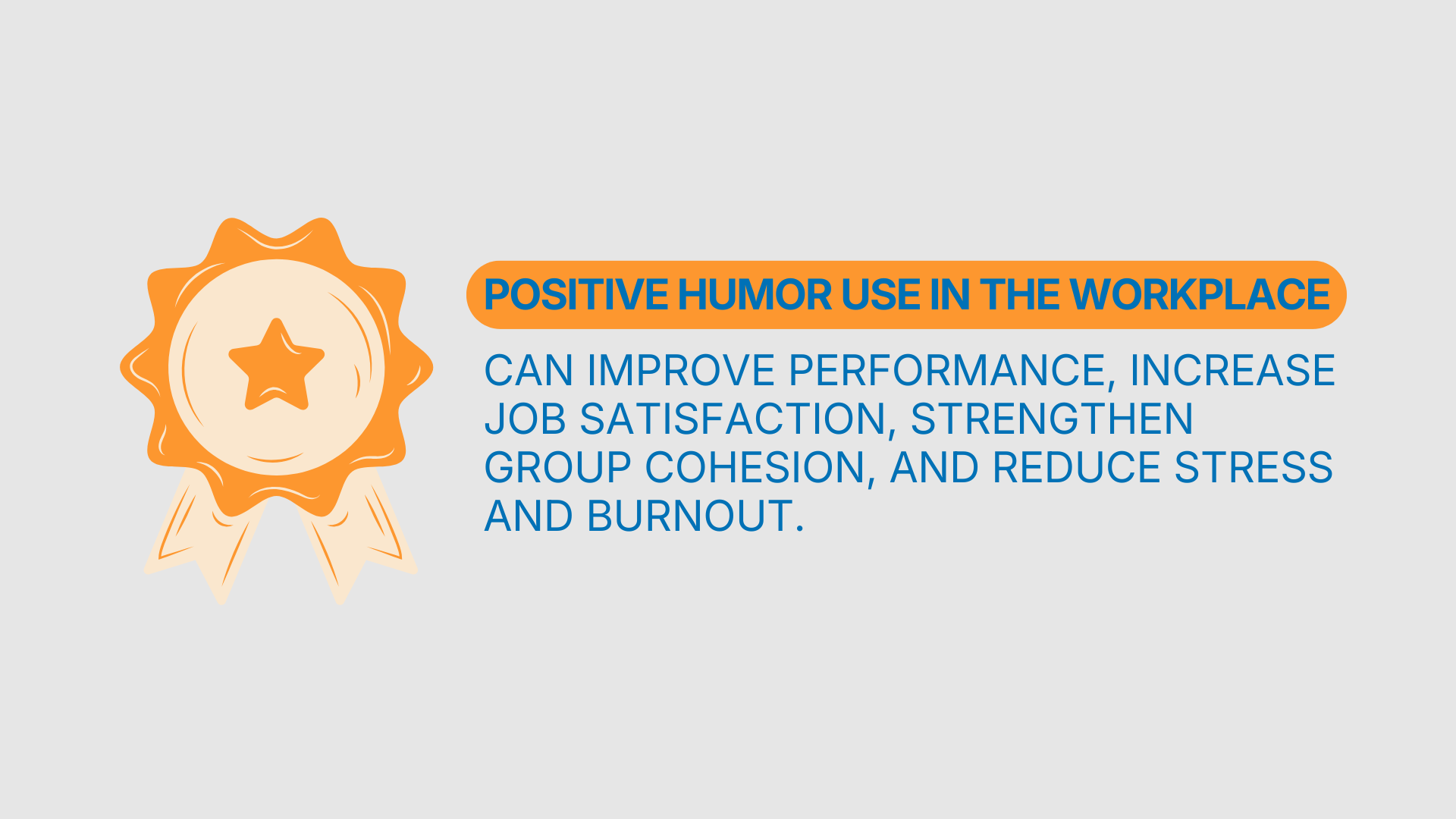
A meta-analysis published in the Journal of Managerial Psychology found that positive humor use in the workplace was associated with better performance, greater job satisfaction, stronger group cohesion, and lower levels of stress and burnout.
There’s a scientific explanation for this.
Research indicates that laughter significantly reduces cortisol levels, the body’s primary stress hormone, with reductions of around 31-37% in some cases. Moreover, according to Psychology Today, it can also increase dopamine (the “feel good” hormone) and induce the release of oxytocin, which is involved in social bonding and trust.
Therefore, at its core, humor can influence business outcomes at a psychological level, but the type matters greatly.
Organizational psychologists draw a consistent distinction between two classifications of work humor:
Funny employee awards, when well designed, belong to the first category as they surface something recognizable and true about an employee’s behavior in a way the group can collectively affirm.
Recognition is one of the most obvious ways culture shows up in everyday work.
It translates abstract values into visible behaviors, while actively and authentically acknowledging employees’ contributions.
However, limitations appear when formal recognition policies focus on what they can measure. While effective at acknowledging results, they may fail to capture the interpersonal behaviors that influence how work gets done. And culture is built just as much through these less visible contributions as it is through measurable milestones.
For example, the employee who keeps a team steady under pressure or consistently supports colleagues without being asked may be highly visible to those around them but absent from a structured recognition system.
Adding an informal angle, such as introducing humor to formal recognition policies, can help close this gap. Since funny work awards are symbolic and often peer-driven, they give visibility to contributions that are difficult to quantify.
In doing so, they make recognition feel less like a program and more like part of a positive work culture centered around employee appreciation.
“The majority of our best cultural memories came from informal awards that referenced something specific and truthful about someone that only an intimate group could reference,” agrees Jeffrey Zhou, CEO and Founder of Fig Loans.
“This level of specificity causes employees to believe they truly saw the individual performing the work.”
Recognition is the foundation of culture, but does it remain true when it takes an informal, humorous form?
Director and clinical psychologist at MVS Psychology Group, Maxim Von Sabler, answers:
This distinction, however, doesn’t weaken the case for funny employee awards and their effect on culture. Instead, it clarifies when they work and when they don’t, and personalization plays a major role.
Research from O.C. Tanner found that employees are 18 times more likely to produce high-quality work when they feel recognized, and that recognition is most meaningful when it’s personalized.
Meanwhile, Maxim Von Sabler explores this through a clinical lens, or, as he explains, what makes people feel seen versus just rewarded.
“Personality-based recognition does something performance awards can’t; it signals that leadership notices who you are, not just what you produced. That distinction matters enormously for psychological safety.”
He also adds that humor creates a genuine connection that a KPI milestone cannot, because it’s “rooted in actual observed behavior, not manufactured cheerfulness.”
In that context, humorous awards aren’t trivial but deeply personal. They express culture, rather than creating it, and reinforce it through belonging, turning recognition into something employees genuinely connect with.
Using humor in the workplace comes with a disclaimer of “doing it right”.
Funny employee awards can’t be forced or manufactured, or they risk becoming awkward and even uncomfortable.
Since humor is subjective and doesn’t fit into a single mold, rather than taking the generic route of listing examples like “the Zoom master” or “the office DJ”, the following are real instances of companies using funny work awards to give recognition that feels earned, specific, and culturally meaningful.
Southwest Airlines shows that recognition can be meaningful and genuinely fun by turning it into a social, game-like experience.
Their SWAG points system provides employees with a flexible reward marketplace. Meanwhile, through the “Kick Tail” program, employees recognize each other for everything from exceptional performance to small acts of kindness.
Public celebration is built into the model. For example, at one company-wide event, the CEO surprised Kick Tail winners with a $10,000 check inside a briefcase, a moment that became part of Southwest’s internal culture story. When COVID-19 suspended formal drawings in 2020, employees kept sending Kick Tails anyway, and a new Heart Strong e-card saw nearly 50,000 sends in its first three months – a signal that when recognition culture is well built, it sustains itself even without a formal incentive.
Zappos runs a layered recognition system in which multiple programs work together, each with a distinct level of reward but a consistent thread of playfulness running through them all. The company explicitly encourages weirdness and humor, and the way this unravels is often tied to shared team moments.
For example, employees can award each other “Zollars”, a branded play-money currency, for standout moments and nominate peers for a monthly co-worker bonus. They also compete for “Hero of the Month” and “Sidekicks” titles that come with additional rewards and an actual cape.
Financial services firm Baird gave its employees plush “Wilson” mascots, a personification of their founder, Robert Wilson Baird. The employees were tasked with writing a note of appreciation for a teammate and then passing the mascot along to the next deserving colleague.
This simple, low-cost recognition idea shows how lighthearted humor can be specific and on-brand.
Hilton sets an excellent example of an award-winning company culture. In fact, they have been voted No. 1 World’s Best Workplace by Fortune and Great Place to Work multiple times.
At the corporate level, Hilton has peer-recognition initiatives such as “Catch Me at My Best”, which is a fast and fun way for employees to recognize a colleague who has made their “stay or day better.”
However, a more distinct example is the “Court of Cleanliness”, introduced by one of Hilton’s properties. It’s a fun, internal tradition in which they select the top three housekeepers based on customer satisfaction, then host playful public ceremonies for them, where they’re serenaded by the entire team and receive flowers.
According to O.C. Tanner, recognition is especially important for remote teams, as it strengthens connections and can lead to stronger collaboration, better communication, and six times lower turnover. However, while funny office awards may be challenging to get right, introducing humor in a remote or hybrid work setting is even more difficult.
Dribbble solves this by making employee recognition fun for its fully remote creative team with unexpected, humorous awards. Their standout practice is using celebrity shout-outs at team meetings, which is a fun, memorable appreciation in line with their unique culture.
When it comes to employee awards, especially funny ones, does it matter if they come from a manager or a colleague?
The short answer is yes, but they both work in different ways.
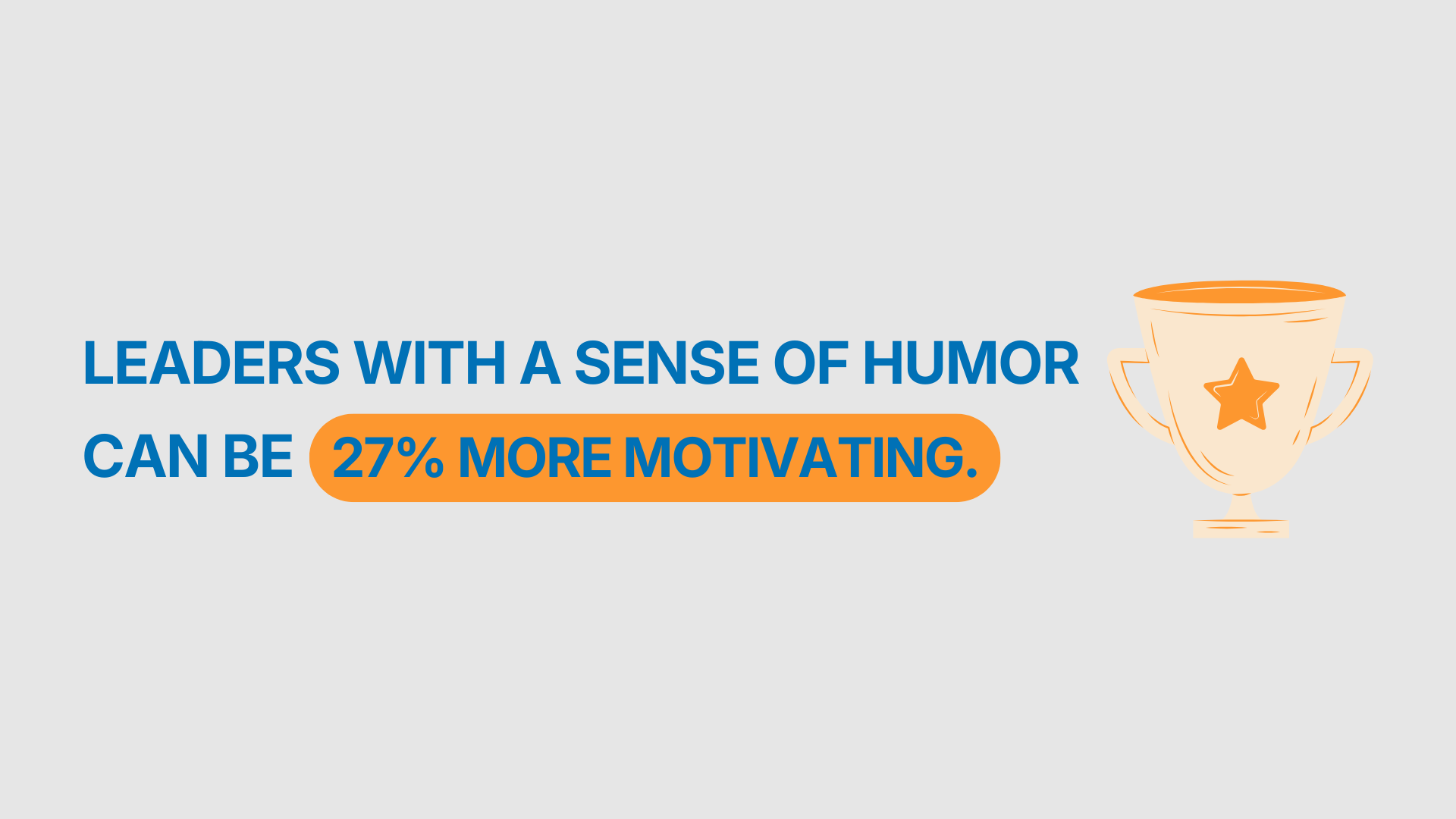
Manager recognition carries authority and signals that leadership is paying attention. Research published by Harvard Business Review found that leaders with a sense of humor can be 27% more motivating. This was also linked to decreased boredom and stress relief, as it improved engagement and well-being.
Peer recognition, on the other hand, carries authenticity, as it comes from the individuals working alongside each other every day and have direct experience of their contributions.
For funny workplace awards specifically, peer nominations tend to produce the most accurate and warmly received results, because colleagues are better positioned than managers to identify the specific habits and qualities that make someone distinctly themselves at work.
Milos Eric, Co-Founder of OysterLink, agrees, saying, “The best way to create an inclusive culture is to allow teams to nominate and create the awards themselves. This will eliminate the potential for there to be misalignment in the tone of the award because of differing personalities or backgrounds.“
Humor changes and evolves across generations, cultural contexts, and even communication styles. What one group may find funny and engaging, another may perceive as unclear, uncomfortable, or offensive.
Intentionality matters.
Not every attempt at a funny staff award will achieve the intended result, but a few criteria help ensure success:
1 – It has to celebrate behaviors
The most effective awards are those that highlight observable, positive behaviors. They have to be traits that the recipient feels comfortable having acknowledged publicly.
But there’s a thin line between humor and discomfort.
For example, recognizing someone for consistently bringing clarity to complex discussions highlights a valued strength. In contrast, labeling them as the employee who “asks too many questions”, even playfully, may feel exposing.
Therefore, humor should remain accurate without drawing attention to traits that may be perceived as shortcomings.
2 – It has to be culturally aware
Cultural sensitivity and inclusion belong in the design process.
In a diverse workplace, humor that relies on specific cultural references or generational experiences can unintentionally exclude others.
“Across our culturally diverse clinical team, we’ve found that the safest humor targets shared situations – the chaos of a double-booked room, the broken coffee machine on a heavy caseload day – rather than personal traits,” explains clinical psychologist Maxim Von Sabler.
“Universal frustrations become a shared identity. That’s where lighthearted recognition stops being a gimmick and starts doing real cultural work.”
3 – It has to align with company values
Finally, the most effective awards for employees celebrate what the company wants to reinforce. For example, a company that appreciates creative problem-solving can acknowledge the individual who proposes unconventional ideas under pressure.
When funny employee awards are anchored to organizational or team values, they achieve two things: laughter and recognition that shows the company cares for its employees.
Funny work awards can easily backfire.
An example of this is recognizing something that embarrasses rather than motivates, like an award tied to a physical trait, a personal sensitivity, or a characteristic the person has not chosen to make public.
“Arguably, the biggest mistake companies make when trying to introduce humor into their recognition programs is going overboard with teasing,” clarifies Steve Schwab, CEO of Casago.
“You have to realize that not everyone responds to even lighthearted teasing well. Plus, it’s very important that everything remains positive and encouraging.”
An associated mistake is failing to consider cultural differences, or, as Arvind Rongala, CEO of Edstellar, puts it, “treating humor as a one-size-fits-all tool.”
“What feels inclusive to one group may feel alienating to another.
The most effective programs are those that co-create recognition with employees, ensuring cultural sensitivity and relevance across diverse teams,” adds Rongala.
Finally, using humor as a substitute for substantive recognition quickly turns a positive idea into an adverse outcome. Funny employee awards should supplement a performance-based recognition program rather than serve as an excuse for companies to reduce investment in structured, formal recognition.
When something does go wrong, and occasionally it will, the right response is direct and private. Acknowledge what happened to the employee affected, take responsibility, and adjust the approach going forward.
Structure is what allows humor-based recognition to remain credible over time. When it’s thoughtful, it ensures that funny work awards land as appreciation without causing discomfort and that participation grows over time, making them a part of the workplace culture.
So how can you create the structure for an employee award program that’s funny and actually works?
Like any other workplace program, start with a clear objective.
Before selecting awards or building a nomination process, establish what the program should accomplish. For example, the most useful metrics are participation rates, recipient sentiment post-awards, and long-term engagement and retention rates.
The next step is to involve employees in the process.
This refers to both using employee input in the design and in its realization. The first is about understanding their needs and expectations before launching the program, while the second is about using peer nomination as a recognition mechanism. Although manager-selected awards carry weight, peer nominations express collective appreciation, making humor-based recognition more effective.
Finally, it’s important to choose the right format and frequency.
Data suggests frequent recognition, revealing that workers who receive it monthly (or more) are three times more likely to be productive, engaged, and loyal.
However, frequency also loses meaning without intention, as employee rewards statistics show that 64% of workers prefer meaning over frequency.
Therefore, aim for a regular, contextual, and personalized recognition plan that publicly acknowledges employees and explains the motive. Humor without specificity can read as arbitrary, while humor anchored in real, observed behavior lands as genuine and meaningful recognition.
Positive culture isn’t built through a single initiative.
Instead, it develops through consistent, repeated behavior – the accumulation of small signals over time that tell employees what the organization values, what it notices, and the kind of workplace it cultivates.
Recognition is one of the most reliable mechanisms for consistently sending those signals. However, it doesn’t always have to be formal to be meaningful, as long as it’s honest, specific, and delivered with care.
“While performance-based recognition reinforces outcomes, personality-based or lighthearted awards tend to strengthen social bonds and psychological safety,” says Edstellar’s CEO, Arvind Rongala.
The most effective recognition programs are often a combination of both: tangible employee incentives to reward measurable achievements and the occasional funny employee award to capture authentic, intangible workplace experiences. When used intentionally, humor both arises from and serves as a culture-building moment.
Funny employee awards are informal recognition awards that celebrate the unique personalities, work styles, and habits of individual team members.
Unlike traditional performance recognition, they focus on the human side of work, such as the traits and behaviors that make someone a distinctive and valued part of the team. When done thoughtfully, they serve as a genuine form of appreciation that strengthens workplace culture and belonging.
Traditional employee awards tend to recognize measurable outcomes, such as performance milestones or sales targets. In contrast, funny employee awards focus on personality traits, behavior, or team dynamics.
Awards should never reference physical traits, personal sensitivities, or anything the recipient has not chosen to make part of their professional identity. The most reliable safeguard is involving the team in nominations, so awards reflect what peers genuinely appreciate about each other rather than what a manager assumes will land well.
There is no single right frequency, but recognition that happens only once a year loses most of its cultural impact. The goal is for funny staff awards to feel like a natural part of how the team operates, not a scheduled event.
Employee recognition in general has a well-documented impact on retention. Research consistently shows that employees who feel recognized are less likely to leave and more likely to report higher engagement and job satisfaction.
Funny employee awards contribute to this by fostering a sense of belonging and personal connection that drive those outcomes. They are not a retention strategy on their own, but, when done right, they can become a meaningful part of a positive work culture.
Content Writer at Shortlister
Browse our curated list of vendors to find the best solution for your needs.
Subscribe to our newsletter for the latest trends, expert tips, and workplace insights!

Most business leaders agree that culture matters. But when they are asked how they actually measure it, most don’t have an answer.

Can your remote team thrive while apart? With $8.9 trillion lost to productivity gaps globally, learn the advanced techniques that keep virtual teams thriving.

Behind every “best workplace” award is a set of invisible rules that shape how decisions are made, how people are treated, and who chooses to stay.

More than half of U.S. employees are secretly job hunting right now. The warning signs appear weeks before they quit – but most managers miss them entirely.
Used by most of the top employee benefits consultants in the US, Shortlister is where you can find, research and select HR and benefits vendors for your clients.
Shortlister helps you reach your ideal prospects. Claim your free account to control your message and receive employer, consultant and health plan leads.