Fair Workplace Practices

When to Conduct Your First Organizational Culture Inventory

Most business leaders agree that culture matters. But when they are asked how they actually measure it, most don't have an answer.
In This Post:
Expert Contributors:
Picture of Gabriel Shaoolian

Gabriel Shaoolian

CEO & Founder, Digital Silk

Picture of Lucas Botzen

Lucas Botzen

CEO, Rivermate

Picture of Milos Eric

Milos Eric

Co-Founder, OysterLink

When is the right time to start measuring the culture within your company, and what happens if you wait too long?

Most business leaders agree that culture matters. They talk about it at leadership offsites, mention it in job postings, and reference it during onboarding. However, when leaders are asked how they actually measure it, most don’t have an answer.

An organizational culture inventory is designed to change that, and for growing companies, the question is rarely whether to conduct one, but when.

In this article, we explore when companies should conduct their first organizational culture inventory, what signs indicate the right timing, and how to approach the process effectively.

What Is an Organizational Culture Inventory?

To start, what is an organizational culture inventory

An organizational culture inventory is an assessment tool that measures the behavioral norms, shared values, and expectations that shape how people work together within an organization.  

The goal is to turn something most leaders describe in vague terms, like “we have a collaborative culture” or “we’re results-driven”, into structured, comparable data.

The most widely known version is the Organizational Culture Inventory (OCI) developed by Robert A. Cooke and J. Clayton Lafferty. The OCI classifies culture into three categories: Constructive, Passive/Defensive, and Aggressive/Defensive, and has more than 35 years of research behind it.

Despite this, an organizational culture assessment doesn’t have to be formal. For earlier-stage companies, even simpler tools like eNPS pulses, anonymous surveys, or employee engagement platforms can serve as an effective starting point.

Why Measuring Culture Early Matters

Culture forms quickly, often in the earliest months of a company’s life, and it sets in faster than most founders expect. Surprisingly, the behavioral patterns that define “how things work around here” often solidify within the first 18 to 24 months of an organization’s founding.

Lucas Botzen, HR Expert and CEO of Rivermate, explains, “Measuring culture early gives you a baseline to understand what’s working, what’s misaligned, and how employees truly experience the environment, rather than relying solely on assumptions. One lesson I’ve learned is that waiting too long can make cultural misalignments harder to correct because behaviors become ingrained and harder to shift.

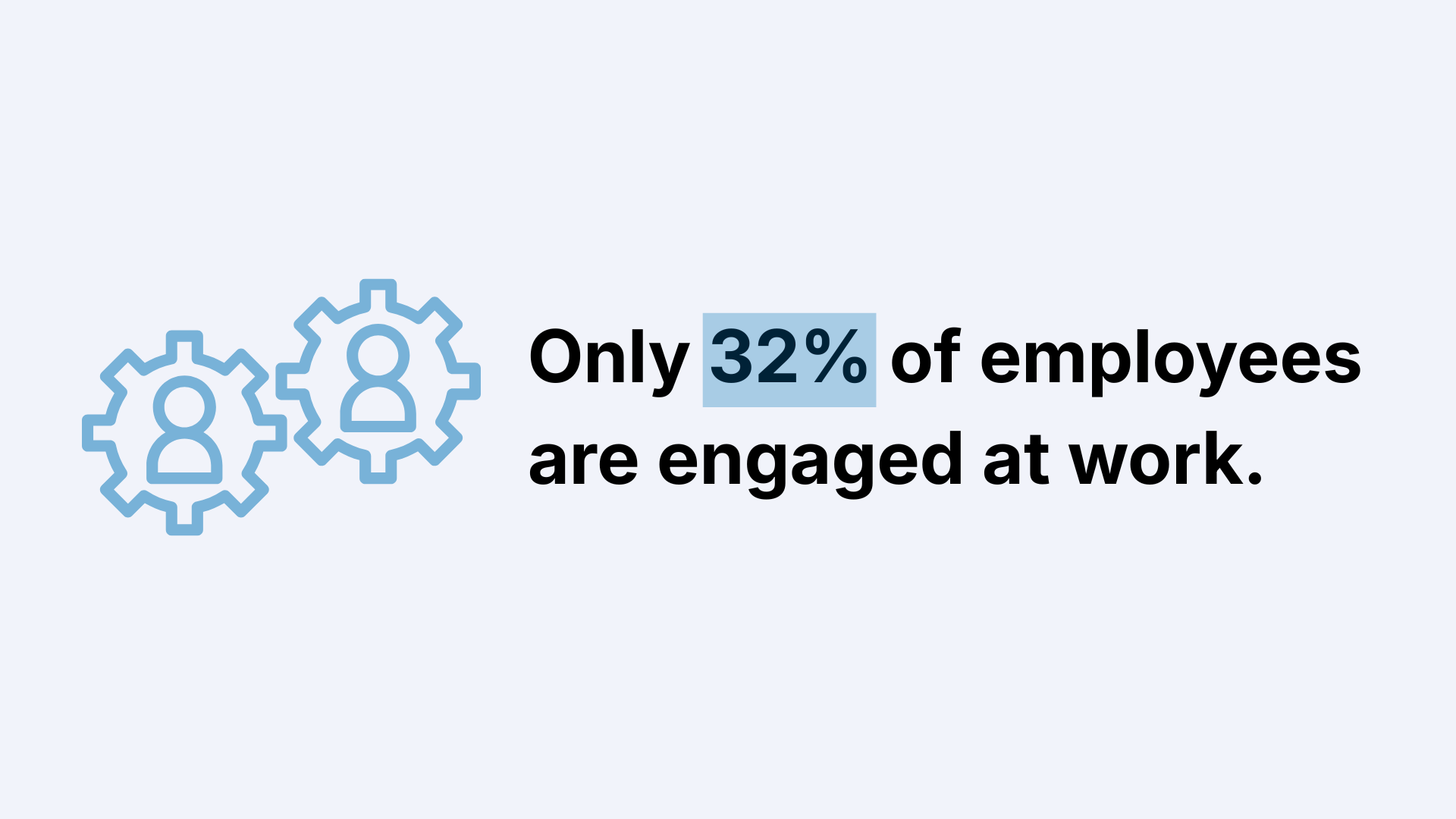
In a landscape where Gallup reports that only 32% of U.S. employees are engaged at work and the cost of global disengagement now sits at roughly $2 trillion in lost productivity, treating culture as an afterthought is becoming financially indefensible. 

The problem is that by the time a culture problem becomes visible through turnover data, it has already been costly for months.

When Is the Right Time to Measure Culture?

So, when exactly should a company measure its culture for the first time?

Gabriel Shaoolian, CEO and Founder of Digital Silk, identifies a specific threshold.

"You should measure culture much earlier than you might expect. The first time you measure your culture is when your company is going from a founding team to a growing organization (around the time you have about 10 to 15 employees) or when you add your first managers. After this point, your employees will no longer be able to learn about the culture through osmosis; therefore, small issues will begin to grow exponentially."
Gabriel Shaoolian
CEO & Founder, Digital Silk

The 10-15-employee mark matters because that is typically when companies introduce their first layer of management. Patterns of communication, accountability, and leadership begin replicating through people who did not absorb them directly from the founders.

Milos Eric, Co-Founder of OysterLink, reinforces the point, stating, “It is important for businesses to measure their culture before they believe they need to. Most founders tend to wait until the organization has experienced some sort of problem where there are issues related to stress, high turnover or trouble scaling. By that time the company has already created an unofficial culture.

Other Critical Timing Triggers

Beyond the employee count threshold, there are several moments that should prompt a first organizational culture survey, regardless of company size:

  • Before or during a merger or acquisition- Culture clash is among the most cited reasons for M&A failure. Running an organizational culture inventory on both sides of a deal transforms culture risk from a vague concern into a quantifiable variable.
  • During a leadership transition- New CEOs and executive teams inherit a culture they did not build. Measuring it within the first 90-120 days offers a data-driven view of what they are actually managing.
  • When engagement scores plateau or decline- When HR engagement strategies stop producing results, it often signals that the problem runs deeper than surface-level fixes can address. Culture measurements can provide deeper insights into those problems.

What Does a First Culture Measurement Look Like?

How do you measure culture in the workplace when you have never done it before?

Shaoolian suggests starting simple, saying, “Start measuring culture by sending your teams an anonymous pulse survey that measures clarity, trust, recognition, and workload. Next, conduct one-on-one interviews across multiple functions. The purpose of these activities is not to generate a numerical score, but rather to create a shared language and set of priorities that your employees can use to understand how they should operate within your organization as leaders.

While the specific questions will vary by industry, the following dimensions consistently surface as the most diagnostic when leaders evaluate organizational culture methods.

Dimension What It Measures Sample Survey Question
Psychological Safety Whether employees feel safe speaking up without fear of retaliation "I feel comfortable raising concerns with my manager without fear of negative consequences."
Role Clarity How well employees understand their responsibilities and success criteria "I have a clear understanding of what is expected of me in my role."
Trust in Leadership Confidence in leadership's transparency, competence, and intent "I believe leadership communicates honestly about the company's direction."
Recognition & Fairness Whether contributions are acknowledged equitably "My work is recognized fairly compared to others on my team."
Workload Sustainability Whether demands on employees are reasonable and sustainable "My workload allows me to maintain a healthy balance between work and personal life."
Alignment to Values The gap between stated values and daily behavior "The company's stated values are reflected in how decisions are actually made."

It’s important to note that the first culture measurement does not need to cover every dimension. Covering three to four areas most relevant to the company’s current challenges is enough to produce actionable insight.

When Should Companies Measure Again?

Once you have a baseline, the natural question becomes how often to revisit it. The answer, in short, is that any significant structural change should trigger a fresh assessment. 

Shaoolian makes the trigger point clear:

“Any significant change to your business, such as rapid hiring, reorganizations, acquisitions, or transitioning to a hybrid work environment, should prompt you to measure your culture again and then publicize the steps you plan to take as leaders going forward.”

Therefore, the clearest triggers for a re-measurement include:

  • Adding your first management layer or restructuring reporting lines
  • Rapid headcount growth (doubling or more within a year)
  • Transitioning to remote, hybrid, or return-to-office models
  • Mergers, acquisitions, or leadership transitions
  • A noticeable increase in voluntary turnover or a second resignation from the same team within 60 days

The Connection Between Culture and Employee Engagement

While company culture and employee engagement are closely related, they are not one in the same. 

Culture encapsulates the behavioral norms and shared expectations within an organization. On the other hand, engagement measures how emotionally invested and motivated employees are in their work. 

In other words, a company can have high engagement scores on paper while harboring a deeply unhealthy culture. The Wells Fargo scandal is perhaps the most famous example of why engagement metrics alone can be misleading. 

In 2016, employees at Wells Fargo opened more than two million bank accounts without customer authorization. Sales teams were highly “engaged” in the sense that they were hitting targets and staying busy. 

The problem was that the culture rewarded fraudulent behavior. An investigation by independent directors concluded that the root cause was indeed culture, and not individual misconduct.

The reverse can also be true. A company with solid cultural values but unclear goals, inconsistent recognition, or weak management, will see engagement erode even if the underlying values are sound.

For these reasons, a healthy workplace needs both: a culture that sets the right standards and an employee experience that gives people real reasons to stay committed.

When Culture Becomes a Legal Liability

There is another element that companies must consider when deciding whether to conduct a culture inventory – the legal one. 

Courts have consistently held that employers have an affirmative duty to address known toxic behaviors, even when those behaviors do not rise to the level of illegal harassment. 

The Supreme Court’s decisions in Burlington Industries v. Ellerth and Faragher v. City of Boca Raton established that organizations can limit liability only when they prove they took reasonable steps to prevent and correct harassing behavior. 

A documented culture measurement, conducted proactively, serves as evidence of that reasonable care.

The consequences of ignoring culture until it surfaces legally can be severe. In 2025, former Moët Hennessy Chief of Staff Maria Gasparovic filed a lawsuit alleging a “boys club” culture characterized by bullying, with reports indicating at least 20 employees took long-term sick leave in 2024 due to stress and harassment. 

That same year, Ohio-based Glunt Industries paid $2 million to settle EEOC claims that it systematically denied production jobs to women and retaliated against an HR director who hired female managers, later firing the women and replacing them with male employees.

In both of these cases, leadership either ignored or actively reinforced harmful hiring practices and management decisions, which led to unchecked toxic cultures. 

Perhaps most companies will never face a scandal of this magnitude, but smaller versions of the same story play out constantly, and the organizations that evaluate their organizational culture before a crisis have both a legal defense and an operational advantage.

Culture Measurement in a Disrupted World

The workplace in 2026 bears little resemblance to the one that existed even five years ago. Hybrid work altered how employees connect, return-to-office mandates reignited tension, and AI is now reshaping roles faster than many leaders can explain.

These conditions have created a serious perception gap of work cultures. SHRM’s research found that 72% of executives believed their organizational culture had improved since the pandemic – while only 14% of employees agreed.

In fact, half of all employees globally say they’re watching for or actively seeking a new job.

Those numbers suggest many organizations are operating on an outdated understanding of how their culture is actually experienced. This is exactly why an organizational culture inventory matters more now than it did in more stable periods.

In 2026 and beyond, culture measurement cannot rely on old assumptions. Ultimately, it needs to reflect a workplace shaped by disruption, uncertainty, and rapid change.

Frequently Asked Questions

Who Should Be Responsible for Leading a Culture Assessment?

Culture measurement works best when it is co-owned by HR leadership and the executive team. HR typically manages the logistics: instrument selection, survey distribution, and data analysis. Executive leadership is responsible for acting on the findings publicly.

How Often Should Organizations Conduct a Culture Assessment?

Most organizations benefit from annual culture assessments during stable periods. During times of significant change, such as mergers, leadership transitions, or rapid growth, measuring every 6 to 9 months is advisable. Any deliberate culture change initiatives should include a re-measurement within 6 months to evaluate whether interventions produced meaningful shifts.

Can Small Businesses Benefit from an Organizational Culture Inventory?

Absolutely. Small businesses often have the most to gain because culture is disproportionately influenced by a small number of workers. A toxic norm introduced by one leader or team can spread rapidly in a 20-person company.

What Are the Signs That an Organization Needs a Culture Assessment Immediately?

Red flags include unexplained spikes in turnover, declining engagement scores that do not respond to surface-level interventions, consistent complaints about favoritism or lack of transparency, difficulty retaining new hires past 90 days, and legal claims related to harassment or discrimination. Any of these signals suggest that cultural norms may be driving the problem.

Can Culture Be Measured in Remote or Hybrid Teams?

Yes, and in many cases, it is more important to do so. Remote and hybrid teams lack the informal interactions that make culture visible in an office setting. Without measurement, cultural drift can go unnoticed for months.

Written by Ivana Radevska

Senior Content Writer at Shortlister

Employee Engagement Software

Browse our curated list of vendors to find the best solution for your needs.

Stay Informed

Subscribe to our newsletter for the latest trends, expert tips, and workplace insights!

Related Posts