How the “One Big Beautiful Bill Act” Reshapes Workplace Benefits in 2025
What does the 870-page OBBBA bill really change about telehealth, paid leave, and childcare for working Americans?
Vendors have spoken about integrating AI into their platforms for years.
Market activity in June suggests this change is already well established.
AI capabilities are becoming increasingly native across HR tech, wellness, and benefits, diverting the conversation from future potential to present-day differentiation.
In addition, the M&A activity that defines this industry continued, with a major PBM merger and benefits brokers combining to build scale.
Below is our roundup of the month’s most significant developments.
Workday remains firmly in the spotlight with another update following a busy period for the vendor.
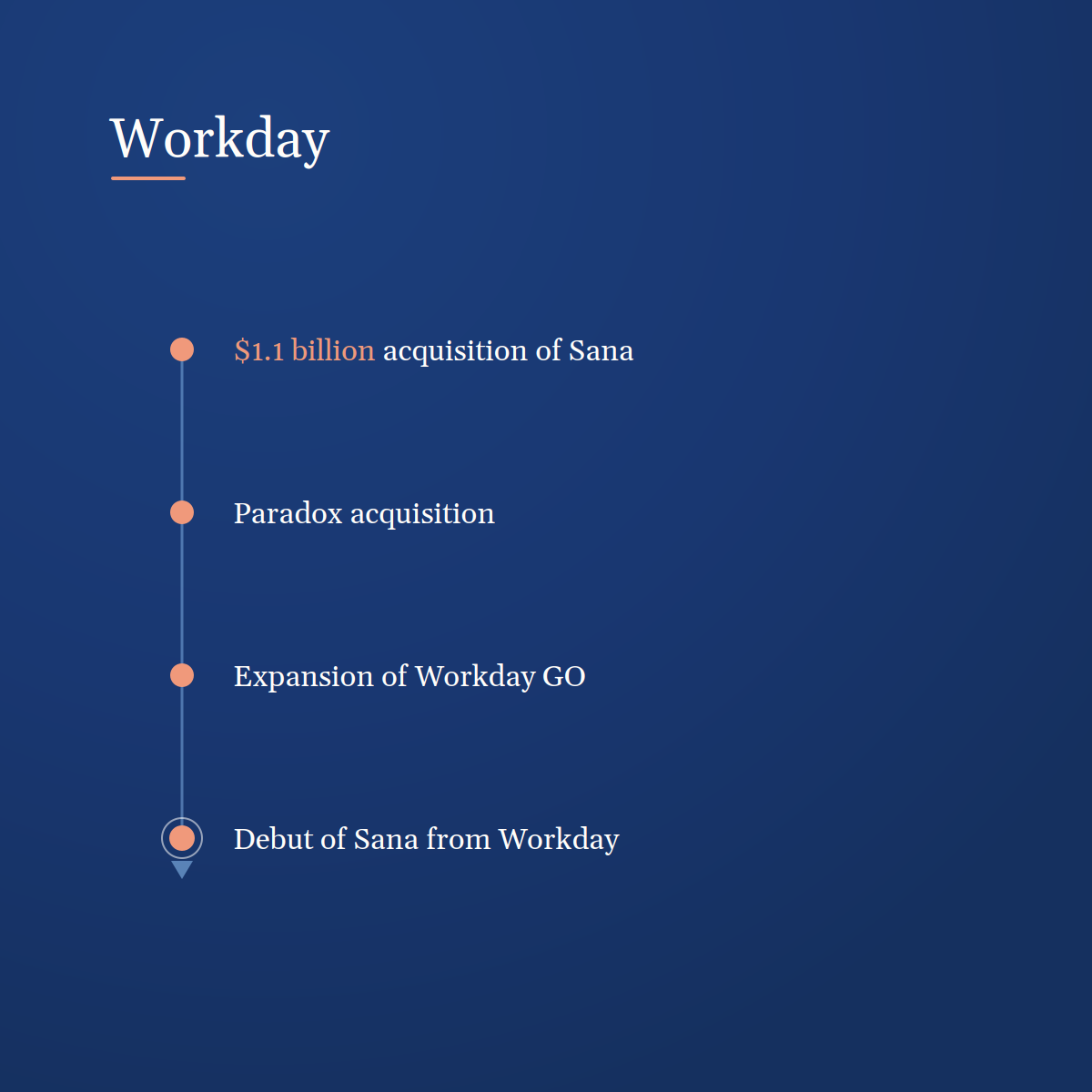
In less than a year, Workday announced its $1.1 billion acquisition of Sana, followed by the Paradox acquisition, an expansion of Workday GO, and the recent debut of Sana from Workday.
Its most recent move was expanding its strategic partnership with Google Cloud to bring HR and finance AI agents into the applications employees already use.
Announced May 28, the collaboration combines the Workday Agent System of Record with Google Cloud’s agent platform and Gemini models. It also reinforces the company’s strategy of building connected, agent-driven ecosystems rather than standalone platforms.
“Our customers want HR and finance at their fingertips, not scattered across a dozen applications,” said Gerrit Kazmaier, President, Product and Technology Workday.
With this collaboration, employees can check time-off balances, view payslips, request leave, or approve timesheets in a single conversational flow. Meanwhile, for managers, this simplifies reviewing team goals, approving timesheets in bulk, starting performance reviews, and submitting payroll input.
Read the full press release: Workday and Google Cloud Expand Strategic Partnership to Bring AI Agents for HR and Finance into Employees’ Daily Workflows
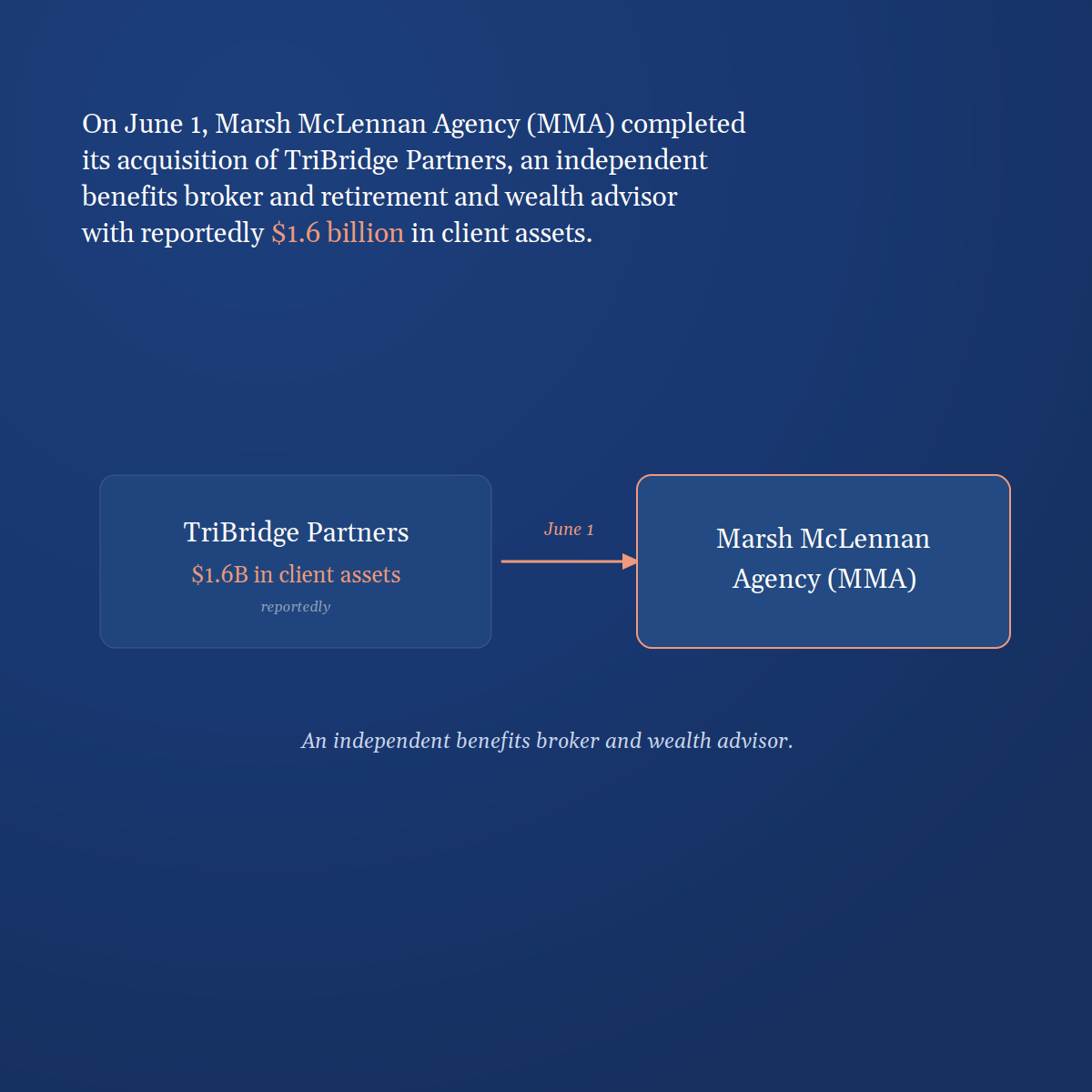
On June 1, Marsh McLennan Agency (MMA) completed its acquisition of TriBridge Partners, an independent benefits broker and retirement and wealth advisor with reportedly $1.6 billion in client assets.
Terms of the acquisition were not disclosed.
The deal strengthens MMA’s Mid-Atlantic team by adding group health, retirement, wealth, and personal lines expertise to its property and casualty practice across the DC and Baltimore areas. TriBridge employees have joined MMA and will continue operating from their existing office.
This latest acquisition reflects the steady consolidation trend among benefits brokers, as larger agencies acquire established regional companies to expand their footprints and service scope.
Read the full press release: Marsh McLennan Agency completes acquisition of TriBridge Partners
Building on its rebrand as a Workforce Operating Platform and its recent launch of Pro Pay, UKG has continued its agentic AI push.
On June 8, the company announced its latest Quarterly Platform Innovations, adding an agentic orchestration layer to help companies move from workforce insight to frontline action.
The release centers on two components:
“Workforce management is evolving from an episodic series of tasks to continuously orchestrating and optimizing real-time decision making, and that’s what we’re delivering with the UKG Workforce Operating Platform,” said Suresh Vittal, Chief Product Officer at UKG.
The launch builds on the company’s strategy of positioning agentic AI as the connective layer across scheduling, payroll, and workforce operations.
Read the full press release: UKG Adds Agentic Orchestration to its Workforce Operating Platform, Connecting Real-time Intelligence to Frontline Execution
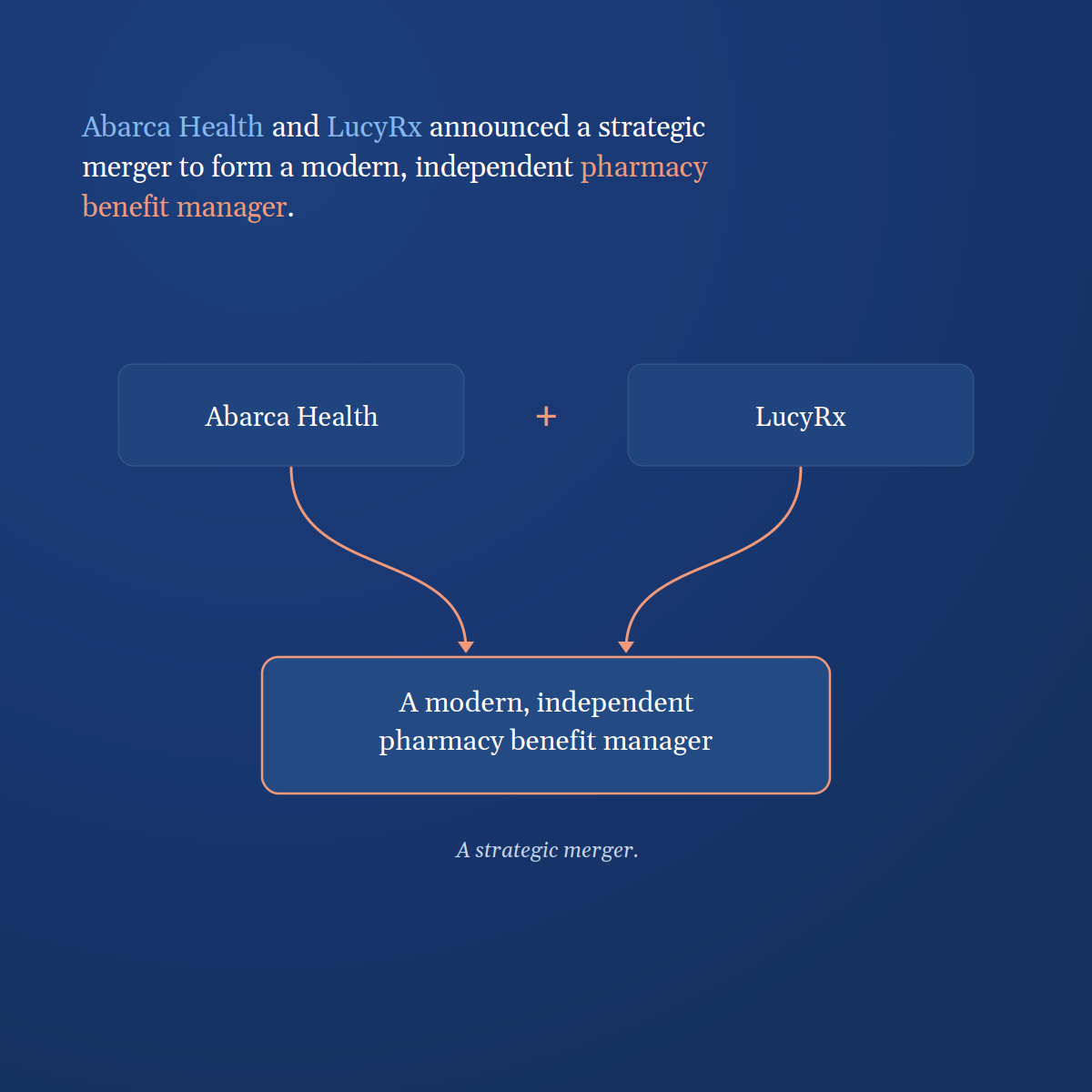
In one of the month’s most significant deals, Abarca Health and LucyRx announced a strategic merger to form a modern, independent pharmacy benefit manager serving both commercial and government clients.
Together, they will provide prescription services to more than 9 million members across the United States, placing the combined company in the top 10 PBMs, according to Forbes.
The timing is deliberate as well.
The PBM market faces a new regulatory paradigm and sustained pressure from high-cost specialty drugs and GLP-1s, as clients seek greater flexibility and accountability.
“Leveraging our combined scale, technology, and track record, we will accelerate the healthcare revolution Abarca started more than 20 years ago,” said David Blair, Chief Executive Officer of LucyRx.
“Together, we will deliver a trusted operating foundation, tailored customer experiences powered by best-in-class technology, and total-cost-of-care savings anchored in putting patients first.”
At closing, expected in Q3 2026, both brands will continue to operate as wholly owned subsidiaries of Healthcare Revolution Partners.
Read the full press release: Abarca Health and LucyRx Announce Strategic Combination to Create the Only Modern PBM Built for Commercial and Government Scale
In other news, Marathon Health and Lantern have partnered to launch an integrated care model that delivers a single, coordinated experience.
The model connects Marathon’s advanced primary care to Lantern’s specialty care network of vetted, high-quality specialists and facilities. Its goal is to guide employees through complex care episodes while controlling cost and quality.
For self-funded employers, fragmented care remains a major driver of poor outcomes and spending. By linking primary and specialty care, the partnership seeks to reduce unnecessary procedures and steer members to the right provider the first time, which, according to Marathon Health’s CEO, Chris Pricco, is the highest leverage point.
“When you integrate [primary care] with specialty care, you don’t just reduce cost. You change the trajectory of someone’s health. That’s what we’ve built for employers, and we’re honored to partner with Lantern to accelerate that impact,” concluded Pricco.
Read the full press release: Marathon Health and Lantern Launch Integrated Primary and Specialty Care Model
On June 23, Gallagher announced the acquisition of Cincinnati Benefit Solutions, LLC, an employee benefits firm serving small businesses in the Cincinnati area. Terms were not disclosed.
This deal expands Gallagher’s small-group benefits consulting and marks yet another regional acquisition aimed at strengthening its market presence.
Alongside MMA’s TriBridge deal this month, it shows the largest brokers continuing to acquire established local firms to widen their geographic reach and the range of services they can sell.
Read the full press release: Arthur J. Gallagher & Co. Acquires Cincinnati Benefit Solutions, LLC
If one theme defined June beyond consolidation, it was the rapid normalization of agentic AI across nearly every category of HR tech and benefits.
On June 2, Gusto introduced a new AI product called Cofounder. It’s positioned as an “AI teammate” that provides greater automation and guidance for the day-to-day management of small businesses.
Later in the month, Papaya Global launched the agentic compliance intelligence platform ONE. The platform is tailored to each organization, extending the agentic theme into global payroll and workforce compliance.
The same shift showed up across talent and people analytics.
Lattice released a set of AI-powered capabilities that turn performance data into better coaching, development, and workforce decisions, and isolved rolled out autonomous AI agents built to own HR outcomes, alongside a new connection to Anthropic’s Claude connectors directory.
Phenom extended its run of AI activity with a ServiceNow partnership to introduce AI hiring agents, continuing a streak of near-monthly product and acquisition news from the company.
Taken together, all of June’s headlines tell a similar story.
Vendors are racing to make AI agents the default way employees and managers interact with HR, payroll, and benefits systems.
As a result, vendor evaluations have shifted from AI availability to impact, as brokers, consultants, and employers assess which platforms can create real value. This shift will define vendor selection well into the second half of 2026.
Content Writer at Shortlister
Browse our curated list of vendors to find the best solution for your needs.
Subscribe to our newsletter for the latest trends, expert tips, and workplace insights!

What does the 870-page OBBBA bill really change about telehealth, paid leave, and childcare for working Americans?

After a slower pace last month, the industry has entered a rapid cycle of moves, from platform launches and high-profile acquisitions to a multi-billion-dollar buyout that could reshape the HR tech market.

AI-powered innovation dominates May: intelligent payroll, real-time learning validation, and strategic acquisitions reshape HR tech, wellness, and benefits for a rapidly evolving workforce.

In This Post: Is your organization ready for the wave of employment law changes coming in 2026? U.S. employers face a busy year as new requirements take effect across
We're working hard to make it easy for you. Sign up for news, trends and insights.