The Shrinking Shortlist
Shortlister data shows that the average RFP now includes fewer than six vendors. The vendor selection process has moved upstream, where research and AI increasingly decide who reaches the formal evaluation.

For most plans that renew on January 1, open enrollment closes between mid-November and early December. HR teams usually treat that date as the finish line for the year.
In practice, it works better as a starting point.
The weeks after enrollment are the only time HR can see employees’ choices alongside the questions behind them.
Those few weeks offer valuable data that can help HR understand where benefits fall short and make better use of next year’s budget. They also reveal which parts of the benefits communication strategy employees actually absorbed.
Employees think about benefits during a narrow window.
In a September 2026 survey, 50% of employees said they think about benefits mainly during open enrollment, and only 15% think about them throughout the year.
In other words, the reasons behind each choice are recallable for a few weeks.
By March, employees remember what they picked but not why, and HR remembers the loudest complaints rather than the most common ones.
The stakes for next year are also higher than usual.
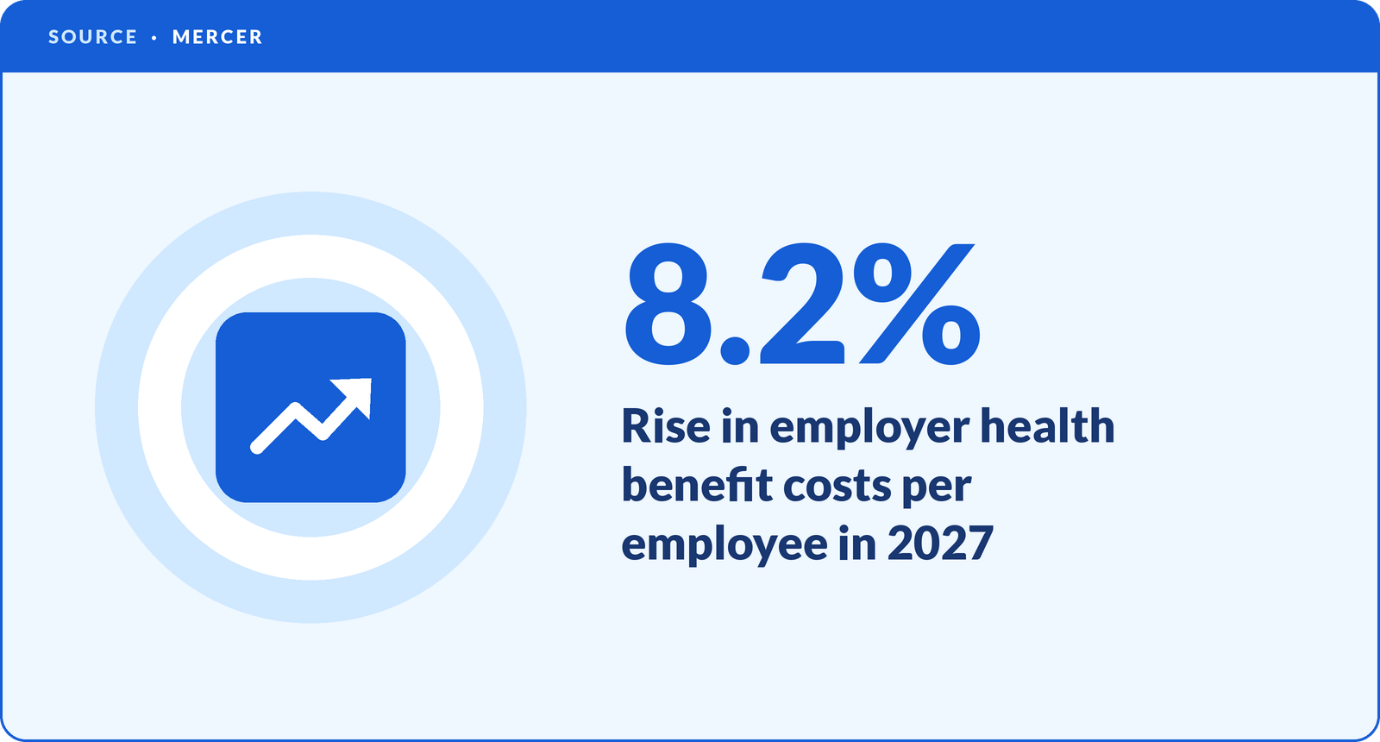
Mercer projects that employer health benefit costs will rise 8.2% per employee in 2027, the steepest increase since 2003, and 59% of employers plan cost-cutting changes.
Those cuts will be decided on renewal, and evidence of what employees actually value is what an employer choose which trade-offs to make.
Gathering it takes a plan for the first four weeks and very little budget.
So, what should the first week capture?
The first week is for the enrollment data.
Start by gathering elections and waivers for each benefit from the benefits administration system, along with any changes employees made from last year.
Since most employees keep the same plan, the changes that do happen are worth noting. For example, more medical waivers or a move toward lower-cost plans may point to cost pressure.
It also helps to break the results down by group, such as hourly and salaried employees. Company-wide averages can hide real differences between them.
Employee benefits benchmarking gives those numbers context.
According to KFF’s 2025 Employer Health Benefits Survey, 76% of eligible workers enroll in their employer’s health coverage, and 33% of covered workers are in a high-deductible plan with a savings option.
A take-up rate well below that level may suggest that employee contributions are too high for part of the workforce.
Those differences give the next stage of the review a purpose: asking employees what influenced their decisions before HR decides what needs to change.
Every question an employee asked during enrollment is a small piece of evidence about how well the benefits communication strategy worked.
The second week is for gathering those questions from every place – the HR inbox, help desk tickets, the broker’s service team, carrier call centers, and any chat tool on the enrollment site.
Carriers and brokers log these calls but rarely share them unless asked. A request in early December, while the logs are current, is far easier than reconstructing them in spring.
Within each benefit, group similar questions together so HR can see what employees struggled with and decide how to address it.
These questions will give hints at where most gaps sit. While nearly 90% of employees know how to enroll, only 36% know the details of their potential out-of-pocket medical costs.
Therefore, multiple people asking the same question usually point to one piece of open enrollment communication that didn’t work.
Interestingly, a benefit nobody asked about is not always a success.
Silence can mean employees understood it perfectly, or that they never noticed it. The Week 3 survey is how to tell the difference.
Week three is the time to hear from employees directly.
A short, anonymous employee benefits survey, sent soon after enrollment, can show how well employees understood their options and which benefits they overlooked.
A few questions are usually enough. For example, the survey could ask:
The survey can also ask how long employees spend choosing a plan. Someone who spent hours comparing options might seem less likely to regret their choice.
However, the 2026 Selerix Employee Benefits Survey found that employees who spent over two hours deciding reported a 62% regret rate, compared with 23% of those who spent under 10 minutes.
In other words, a long enrollment session is more often a sign of confusion than of care. Pairing time spent with the skip reasons shows which benefits wore people down.
By the fourth week, HR has enough evidence to place each benefit into one of three groups.
Benefits with steady enrollment and few repeated questions can be renewed without changes to how they are presented.
Some benefits are valued but misunderstood, or employees simply did not know about them. In those cases, the benefit itself may be fine while communication needs work.
A benefits communication strategy for this group should look at timing as well as content.
A reminder about childcare support, for example, could accompany guidance on returning from parental leave, when employees may be working out new care arrangements.
Some findings may call for more support than revised wording can provide.
If employees struggled to compare plans, benefits decision support tools may help them assess their options.
For recurring problems with how benefits are explained or how messages reach employees, internal communications consulting firms can help review the approach.
The last group covers benefits with low use despite clear communication, or survey answers that point to a gap.
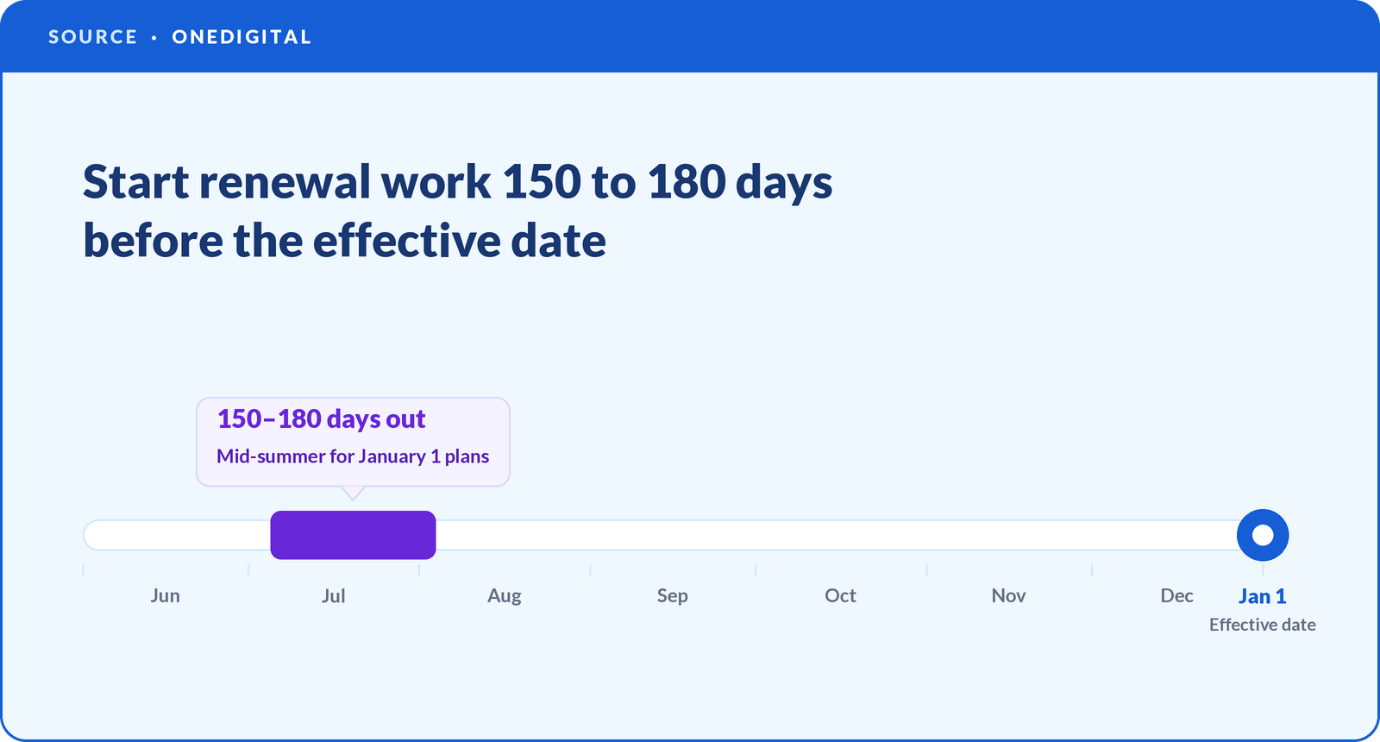
Once sorted, the full list should go to the broker before renewal discussions begin. OneDigital recommends starting renewal work 150 to 180 days before the effective date, which means mid-summer for January 1 plans.
What happens to the benefits that may not be working?
Benefits on the reconsider list need most of the time, since changing or replacing them means looking at alternatives.
Ideally, research on those benefits begins in the first half of the year, so options are ready when renewal discussions start in summer.
The list can also serve as a brief for the broker and any new vendors. Each entry already includes the evidence gathered over the four weeks.
Smaller employers should avoid waiting for the renewal before exploring alternatives.
Federal rules only require insurers to send small group employers a renewal notice 60 days before the renewal date.
That leaves little time to compare options and prepare employees for a change, especially for a small HR team that is also getting ready for open enrollment.
Starting earlier gives smaller employers more room to plan, much like the timeline larger organizations follow in the benefits procurement calendar.
Shortlister’s vendor categories are a practical place to begin comparing options.
Open enrollment ends one benefits year, but the month after it shapes the next. Employers that capture what they learn in those four weeks go into renewal with evidence from their own workforce.
Senior Content Writer at Shortlister
Browse our curated list of vendors to find the best solution for your needs.
Subscribe to our newsletter for the latest trends, expert tips, and workplace insights!

Shortlister data shows that the average RFP now includes fewer than six vendors. The vendor selection process has moved upstream, where research and AI increasingly decide who reaches the formal evaluation.

The vocabulary of benefits procurement records how workplace concerns mature, change names, and become formal purchasing decisions.
A roadmap is written in the future tense but scored in the present. That mismatch allows a planned capability to influence a buying decision before anyone knows whether it will exist under the customer’s contract.
From multi-month to multi-stakeholder evaluations, long sales cycles reflect a market that has fundamentally changed, favoring vendors that choose preparation over pressure.
We're working hard to make it easy for you. Sign up for news, trends and insights.