Shortlister Data

The Benefits Procurement Calendar 

Four years of project data show when benefits demand becomes formal and why the buying cycle starts before the RFP.
In This Post:

January 1 might look like the start of the benefits year. However, for employee benefits procurement, it is often the end of a process that began months earlier. 

Shortlister’s launched project data shows the same broad pattern repeating across different years. The market has a long buying season, followed by a period when new evaluations become much harder to launch. 

The repetition matters because it suggests that the benefits market follows an operating calendar that persists even as economic conditions change. 

A Repeatable Annual Shape

Shortlister reviewed four years of launched project data to understand how new benefits projects are distributed across the calendar. 

The consistency suggests the calendar is structural rather than situational. 

PhaseProject activity What is likely happening around the buyer
Early yearActivity begins to build Budgets open, prior-year problems resurface, and teams regain capacity after enrollment and year-end work.
Spring to early summer Formal project launches are most concentrated Employers move from research into structured evaluation for future effective dates.
Summer to early fall Activity remains elevatedOff-cycle renewals, flexible launch dates, and later projects keep the market active.
Late year New launches fall sharply Teams shift toward enrollment, implementation, compliance work, and year-end deadlines.

Our data show that the benefits procurement calendar is better understood as a long buying season followed by a shorter period during which few new evaluations begin. 

The same outline appears across years with different economic conditions.  

The four years behind this data span inflation peaking at 9.1%, the largest increase in four decades, and employer health costs climbing at their fastest rate since 2010, and the annual shape held through it all. 

So, while financial pressure can change which benefits problems employers prioritize, operational deadlines and buyer capacity appear to exert a steadier influence on when formal projects launch. 

Is Benefits Procurement Seasonal?

The data says yes, but seasonality does not mean every product follows the same deadline. 

January 1 explains much of the market’s backward planning.  

Employers with calendar-year group health plans often hold open enrollment in October or November, leaving products tied to enrollment or plan renewal with a practical implementation deadline. 

Open enrollment affects benefits procurement in two ways.  

For benefits administration, FSAs, voluntary benefits, PBMs, and major health-plan changes, the deadline for a January launch often falls months before open enrollment begins.  

Flexible programs such as employee assistance programscorporate wellness programs, and financial wellness platforms can launch at other times, but they are often bought by the same teams managing renewals and January launches. Budget approvals, contract timelines, new laws, and IT capacity can also influence when employers can act.  

Shortlister’s marketplace curve captures the combined effect of these pressures, even though the timing drivers differ by benefit category. 

What Sustains the Long Buying Season

How long does employee benefits procurement take?  

No universal timeline applies, but Shortlister’s Workplace Wellness Trends Report for 2026 found that the path from research to decision has lengthened 

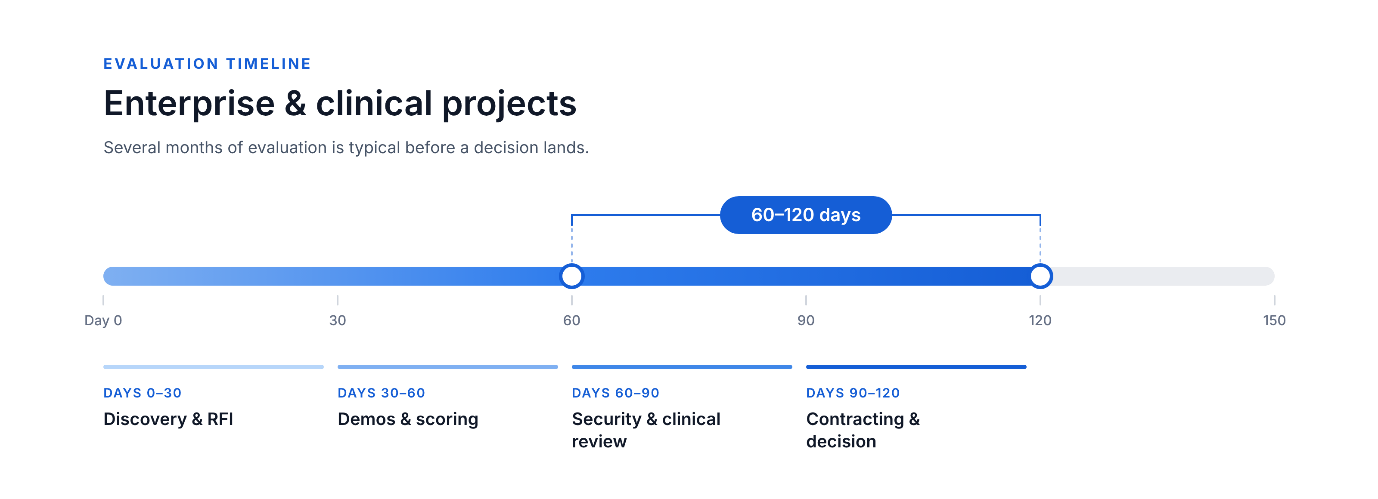
In fact, the data shows that enterprise and clinical projects can require several months of evaluation, typically 60 to 120 days. Requirements, demonstrations, internal approval, legal review, and security assessment take place before a selection is complete.  

Employers also operate on different plan years, fiscal calendars, budget cycles, and contract terms.  

Many public-sector and education organizations operate on fiscal years beginning July 1, and some align benefit renewals with that schedule.  

That creates a separate backward-planned procurement window, while employers with other plan years or off-cycle contract dates add further activity throughout the year.  

For example, a new workforce need, vendor acquisition, product withdrawal, sharp cost increase, or legal change can prompt a search outside the usual renewal cycle. 

Together, those factors create an extended period of formal evaluation rather than one narrow peak season. 

The Year-End Trough Is a Capacity Signal

What does the year-end drop in new projects actually tell us about demand? 

Employer needs do not disappear when project launches decline. Near year-end, buyer attention has often shifted from evaluating options to executing decisions already made. 

Benefits teams that were evaluating vendors earlier in the year are now working through approvals, contracting, implementation, enrollment, and employee communication. Preparations for January launches and year-end obligations absorb the capacity required to organize another formal search. 

For some products, a new project has become too late to be included in the next plan year. For others, the project remains possible but inconvenient because the relevant team lacks time or available budget.  

Some purchases are too late. Others become too inconvenient.  

In the end, different constraints produce the same outcome – fewer new evaluations begin.  

The RFP Is a Lagging Signal

The benefits procurement process starts before vendors receive an invitation. 

Shortlister’s research on the shrinking RFP shortlist explains why: brokers are researching more vendors while inviting fewer into formal evaluations.  

Marketplaces and other research tools now support much of the discovery and initial screening that once happened inside the RFP. 

By the time a project launches, the buyer may have already defined the problem, compared different solutions, and formed an early view of the credible options.

The calendar must therefore be read with the lead time.  

Raising project activity marks the point when research becomes formal, rather than the beginning of buyer interest.  

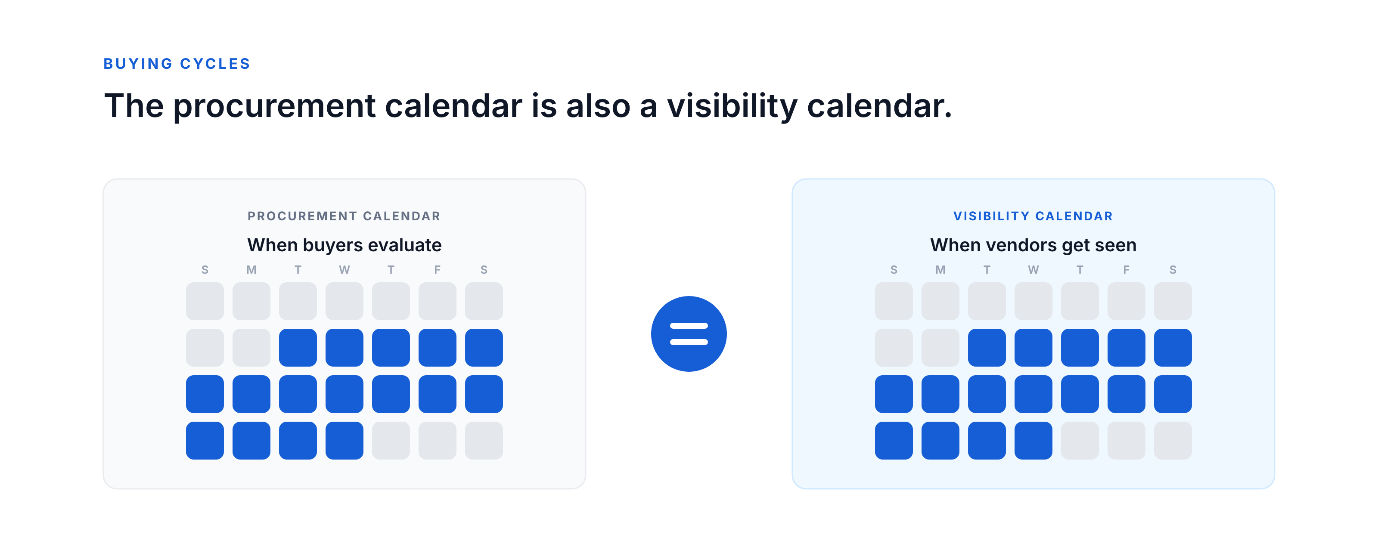
The procurement calendar is also a visibility calendar.

Product information, evidence, and category education need to be in place before formal project activity builds. 

What Prompts a Purchase and What Determines Its Timing

The event that creates demand is often different from the constraint that sets the project date. 

A difficult renewal, service failure, unexpected cost increase, vendor acquisition, product closure, or new legal requirement can create a reason to search.  

However, contract terms, budget availability, the intended effective date, implementation runway, and internal capacity determine when the search can move forward.  

The distinction helps explain the early-year ramp.  

Problems discovered during renewal or enrollment may remain unresolved while benefits teams finish year-end work. Once budgets open and capacity returns, postponed demand can become formal activity. 

Economic pressure may also change what employers buy more quickly than when they can buy it. A cost shock can increase urgency, while the formal project still has to fit around contracts, approvals, and implementation deadlines. 

What the Calendar Means for the Market

The practical advantage comes from acting before demand becomes visible in formal projects. 

Employers and Benefit Leaders Should Work Backward

The question of when employers should start a benefits RFP is best answered from the intended effective date.  

Internal approval, vendor evaluation, security review, contracting, implementation, and employee communication all require room on the schedule. 

Late-year planning can focus on the work that precedes a market search.  

Teams can document the current problem, confirm contract dates, identify the budget owner, and map technical dependencies before inviting vendors. 

Vendors Should Promote Before Demand Peaks

For vendors, the research curve precedes the RFP curve. 

Category education, outcome evidence, implementation guidance, and an up-to-date Shortlister vendor profile need to be available while buyers are still browsing for options.  

The final part of the year is better suited to relationship development, product data updates, and response preparation than immediate project conversion.  

Visibility created during the research window can influence which vendors receive invitations once formal activity rises. 

On a Final Note

Employee benefits procurement starts before the RFP and continues after the new project activity falls.  

Employers, advisors, and vendors gain more room to act when they recognize where buyer attention is moving and prepare before the formal market becomes busy. 

Written by Ivana Radevska

Senior Content Writer at Shortlister

Benefits Administration Companies

Browse our curated list of vendors to find the best solution for your needs.

Stay Informed

Subscribe to our newsletter for the latest trends, expert tips, and workplace insights!

Related Posts

The Death of the Yes/No Question 

Buyers are asking fewer questions, but each one demands more. Shortlister data reveals what the change means for benefits vendors and proposal teams.