Shortlister Data

Vendor Contracts: The 3-Year Lock-In is the Industry Default

With half of all benefits contracts spanning three years, the stakes and long-term value of the outcome become much higher for buyers and vendors alike.
In This Post:

Three years is now the default contract length for benefits vendors.

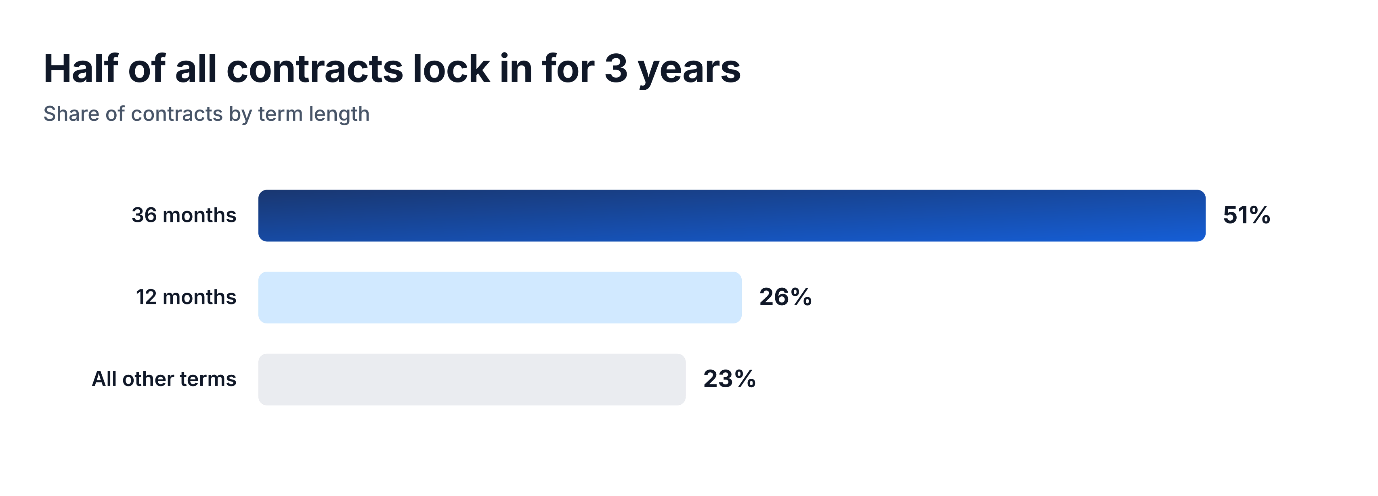
Based on deals won through the Shortlister platform, 51% of contracts had a 36-month term, while 26% had a 12-month term.

A longer contract changes the dynamics of how sides approach the buying process.

Buyers get price stability in exchange for a more demanding evaluation and a slower vendor contract negotiation process. 

For vendors, a three-year agreement creates a longer revenue runway and greater customer access, at the cost of a lengthier wait between opportunities to win new business.

Multi-Year Vendor Contracts Are a Broader B2B Pattern

Half of all winning bids in the benefits industry are locked in for three years. 

On its own, the number could read as a quirk of how this market prices and delivers services. But multi-year vendor contracts are becoming standard across B2B.

In IT and business services outsourcing, ISG’s index data shows the average managed services contract duration grew from 2.5 years in 2023 to 2.9 years in 2024, with a growing share of deals running for three years or more. 

Deal durations rose another 14% in 2025, according to ISG’s most recent industry update.

Software contracts run shorter, but they’re lengthening too.

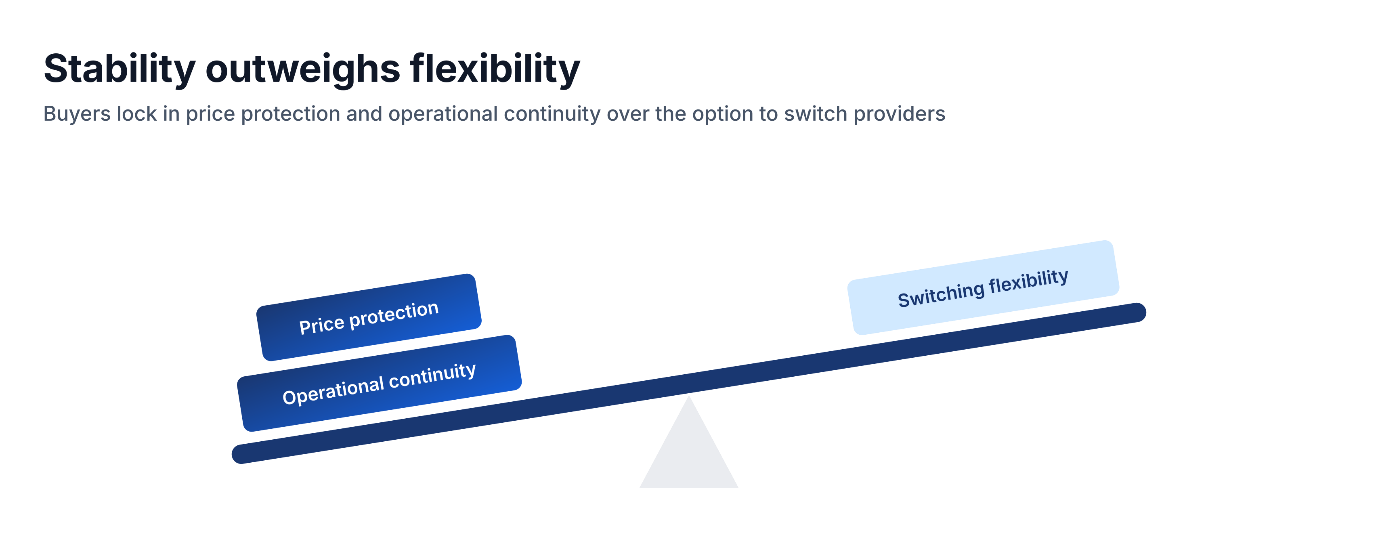
Vertice data shows the average SaaS contract length grew from 19.2 months in 2025 to 22.3 months in 2026, which Vertice attributes to buyers prioritizing price protection and operational continuity over the flexibility of switching providers.

As contracts extend, the initial vendor contract negotiation carries more weight and becomes the foundation for a longer, more complex relationship.

Employers Say They'll Switch Vendors; Few Actually Do

One reason multi-year vendor contracts have become the market standard is the gap between buyer intent and buyer action.

According to WTW’s 2025 Benefits Trends Survey, 73% of employers plan to improve value or switch to better-value vendors across health, retirement, and risk benefits. 

Another 63% plan to relocate or rebalance benefits spending, up from just 8% a year earlier.

Employers are willing to revisit vendor strategies. But market activity suggests those changes come slowly.

Most Large Purchasers Aren't Shopping in Any Given Year

The Purchaser Business Group on Health (PBGH), whose members represent roughly $350 billion in annual health spend and 21 million covered lives, reported that 37% issued RFPs for medical benefits this year and 23% did for pharmacy benefits.

That’s already up sharply from 2024, when just 12% of PBGH members were running a medical RFP. 

However, even a near-tripling still leaves most of the country’s largest, best-resourced health care purchasers out of the market in any given year, despite having every incentive and resource to shop.

Changing vendors remains a formidable undertaking given the cost and effort involved. Running an RFP cycle takes up a lot of resources and finishing one doesn’t guarantee a new vendor.

This gap between stated intent and follow-through is why benefits vendor renewal cycles span multiple years rather than resetting annually.

Buyers Commit Long, Switch Rarely, and Shortlist Brutally

None of the observed market characteristics exist in isolation. 

Multiple factors shape the three-year average for benefits vendor contract length.

Shortlister found that benefits buyers also spend more time on research and evaluation during longer sales cycles, and they shortlist more brutally before an RFP ever goes out.

Fewer Vendors, Longer Locks

Buyer behavior is driving the added complexity.

Vendor selection takes longer because buyers spend more time researching and evaluating, and fewer vendors reach the RFP stage.

Shortlister’s 2026 Workplace Wellness Trends Report found that vendor searches per RFP rose from 8.2 in 2023 to 14.3 in 2025, a 74% increase in research intensity over two years. 

Meanwhile, the average number of vendors invited to a benefits RFP fell from 18.5 in 2022 to 5.6 so far in 2026, a roughly 70% decrease over four years.

A slower, narrower process raises the stakes for everyone. 

Buyers invest more in getting the choice right, which makes them less willing to revisit it after signing. For vendors, the odds of getting invited to bid have fallen just as the value of winning has climbed.

The result is a benefits market where switching happens less often, but each decision carries more weight.

What This Means for Buyers

Three-year contracts can work in the buyer’s favor, especially for complex benefits programs. They cut the operational burden of repeated procurements and give companies time to see value from implementation and adoption.

Point solutions for conditions like diabetes management or musculoskeletal care often take longer to reach meaningful enrollment and engagement. A multi-year contract gives these programs room to move past the slow adoption curve and show real cost and utilization impact.

The trade-off, however, is fewer opportunities to reconsider the market.

As RFPs demand greater investment, the initial decision carries more weight, making vendor contract negotiation about more than just securing favorable terms. 

Buyers should use the process to establish expectations, governance, service levels, and review mechanisms that hold up for the life of the agreement.

When a 12-Month Deal Is the Right Call

Multi-year vendor contracts won’t be the right choice in every situation and for every employer.

Twelve-month terms account for about a quarter of won deals on Shortlister, and they make sense when buyers want flexibility.

For example, when they are exploring an emerging benefits category or vendor, or anticipating organizational change. They can also work where implementation risk is uncertain, and buyers want more evidence before committing to a longer contract.

Outside those cases, a longer term usually wins on price and account management.

What This Means for Vendors

For vendors, the three-year contract raises the stakes on both sides.

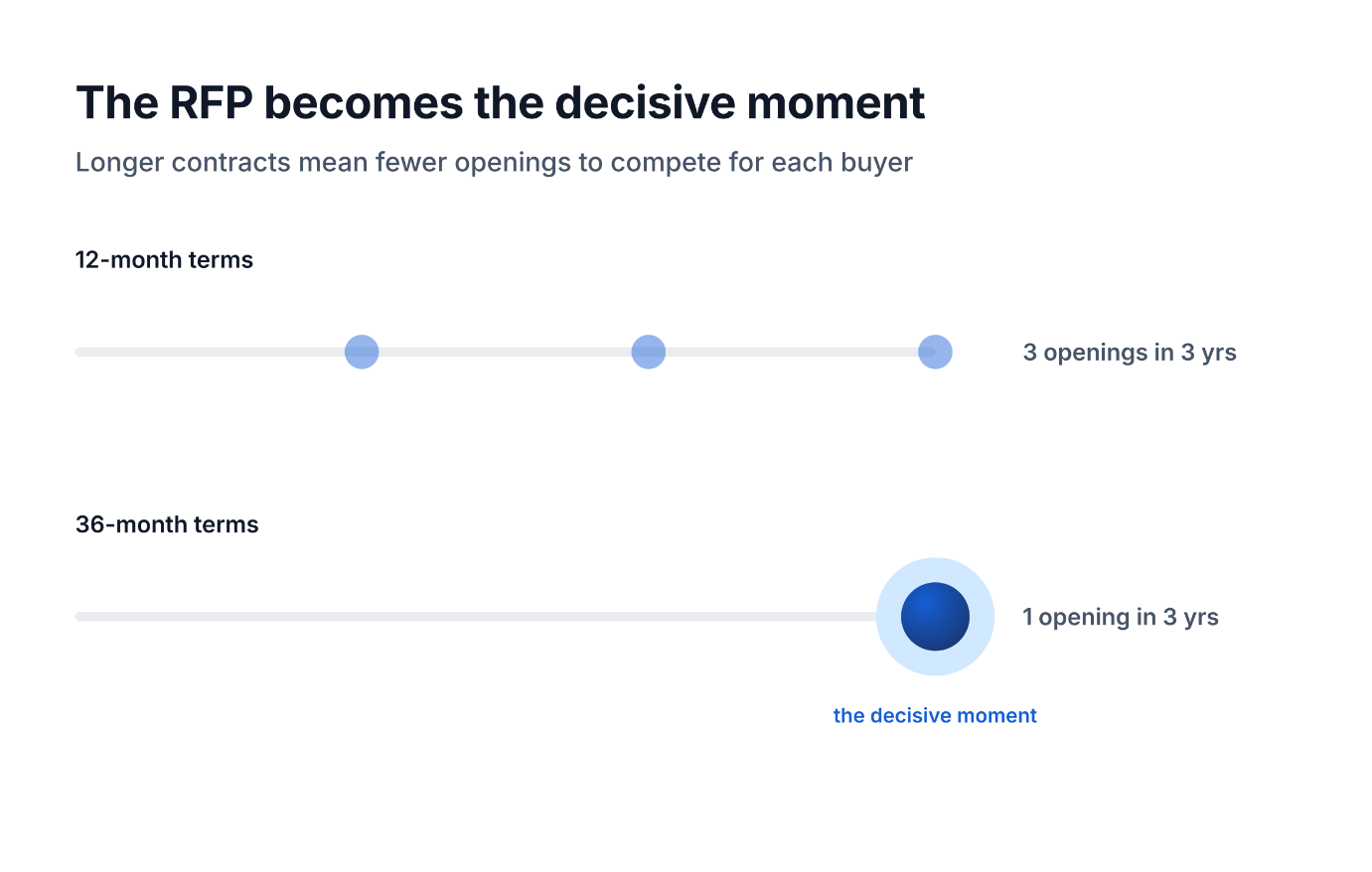
A signed agreement locks in years of the buyer’s spend, but a lost RFP means waiting years for the same opportunity to reopen.

That shift changes how vendors should think about the sales cycle. 

With fewer chances to compete for a given buyer, the RFP itself becomes the decisive moment, not a formality that precedes one.

Buyers enter three-year agreements after researching and comparing more carefully than before, so RFP readiness has to be built long before the process formally opens.

Over-Prepare for the RFP Moment

Longer contracts have raised the value of every competitive opportunity and shifted where vendors need to compete. 

Buyers are researching more and narrowing shortlists earlier, so the most important work often happens before the RFP is formally issued.

Pre-RFP visibility is now a competitive requirement.

Buyers rarely research every provider in a category, so a strong market presence and clear positioning determines whether a vendor makes the initial evaluation. Case studies with measurable results carry particular weight here, giving buyers proof to weigh against competitors.

Once a vendor is shortlisted, proving results gives way to proving execution. 

By the time vendor contract negotiation begins, buyers have often spent months narrowing their options and building confidence in a small number of providers, leaving less room to be one of several similar choices.

Understanding the buyer’s priorities, developing implementation plans, validating customer references, and refining the pricing strategy reduce execution risk and help buyers justify a long-term decision.

As three-year agreements become standard, the cost of missing the shortlist compounds. Over-preparing for the RFP gives the vendor control over the outcome and the terms that follow for the length of the contract.

Written by tamara jovanovska

Content Writer at Shortlister

B2B Saas Contract Management Software

Browse our curated list of vendors to find the best solution for your needs.

Stay Informed

Subscribe to our newsletter for the latest trends, expert tips, and workplace insights!

Related Posts

The Shrinking Shortlist

Shortlister data shows that the average RFP now includes fewer than six vendors. The vendor selection process has moved upstream, where research and AI increasingly decide who reaches the formal evaluation.