Shortlister Data

The Death of the Yes/No Question 

Buyers are asking fewer questions, but each one demands more. Shortlister data reveals what the change means for benefits vendors and proposal teams.
In This Post:

A vendor can give all the answers and still leave the buyer unconvinced. 

Shortlister’s analysis of published custom broker RFIs shows a clear transition from binary questions toward longer, open-ended promptsRFI question sets have also become leaner, making each response more consequential within the evaluation. 

The format change points to a broader change in purpose: the RFI is increasingly used to test how a solution works in practice.  

The Checkbox Is Losing Ground

Across the annual data sets Shortlister reviewed, yes/no questions declined consistently while open-ended prompts became more common. In addition, the average question grew longer 

A binary question is useful when the requirement is genuinely binary.  

In benefits administration, for example, a buyer may need to confirm whether a vendor supports the required integration, meets a data standard, or serves employees in a particular geography. 

However, many important capabilities today cannot be judged that way.  

The Limits of a Checkbox

AI is a useful example of what the format change looks like in practice. 

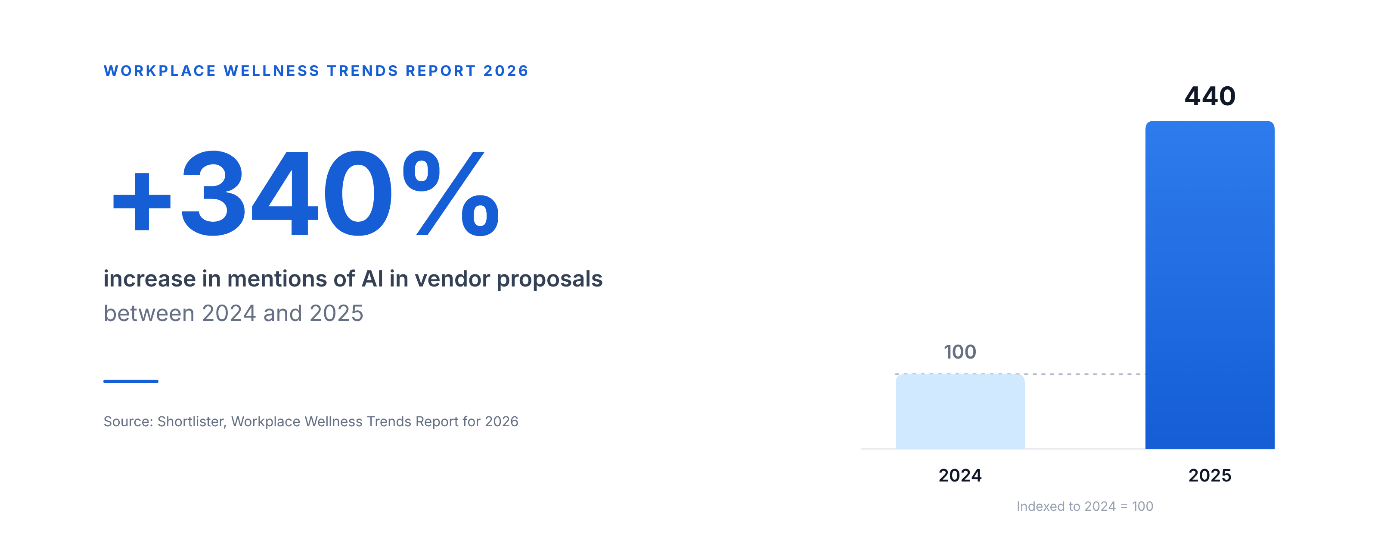
Shortlister’s Workplace Wellness Trends Report for 2026 found that mentions of AI in vendor proposals increased by 340% between 2024 and 2025, with employers now routinely expecting vendors to demonstrate AI-driven targeting and recommendations as part of finalist evaluations. 

So, consider the difference between the following binary and open-ended screening methods: 

  • Do you use AI in your platform?  
  • Describe how your platform uses AI to personalize recommendations, including the data inputs required, how recommendations are generated, and examples of measurable client outcomes. 

Both concern the same capability.  

However, the second, open-ended question requires the vendor to explain how the technology functions, the data it draws on, how recommendations are produced, and the results clients have recorded. 

A Shorter List, a Harder Test

The recent trend in RFI questions becomes clearer when set against a broader shift in benefits procurement. 

Firstly, brokers are doing more research before the benefits RFP begins. 

Shortlister’s analysis of the shrinking RFP shortlist found that broker research intensity increased significantly while the number of vendors invited to formal evaluations decreased nearly 70% since 2022.  

As more discovery moves upstream, the RFI appears to be doing more qualification work.

Request for information questions are adapting accordingly: yes/no questions are becoming less useful for evaluating complex capabilities, while open-ended questions reveal how a vendor approaches the problem and what evidence supports its claims.  

Secondly, AI is impacting both sides of the procurement process.  

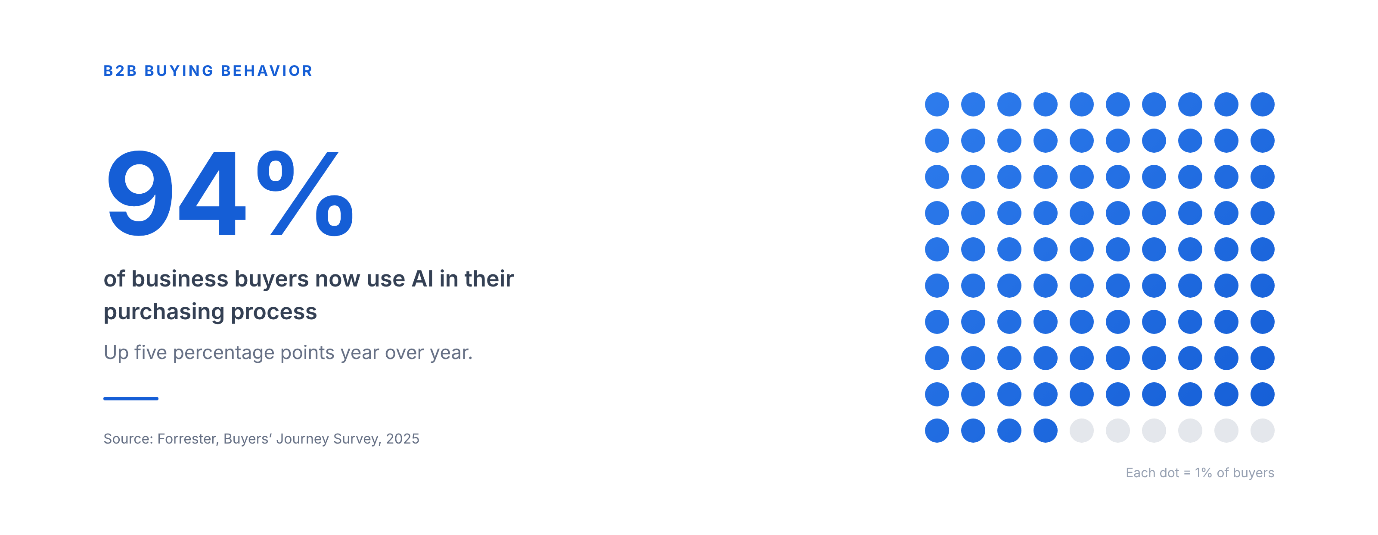
Forrester’s survey of global business buyers found that 94% now use AI in their purchasing process, with AI-based research outranking vendor websites and sales reps as a source of information.   

On the vendor side, 62% of proposal teams now use AI to generate specific RFP answers, a 16% increase from 2024.  

Together, these developments make shallow answers less useful.  

Buyers can enter an evaluation with far more information, while vendors can generate basic responses more easily. Specificity and evidence, therefore, carry more weight than  simple confirmation.   

Why Thin Answers Now Stand Out

Yet open-ended questions do not automatically produce better answers.  

Shortlister’s internal data indicates that the thinnest, most generic answers on the platform tend to cluster around exactly the topics brokers ask about most.  

In other words, the questions that receive the most attention from evaluators are frequently the ones that receive the least effort from vendors. 

Under the old format, a yes/no question could be answered correctly with a single word and still tell the broker something useful, because the question itself did the work of defining the issue.   

In an open-ended format, however, that burden falls to the vendor 

The vendor has to do more of the explaining, and a one-sentence answer to a multi-part prompt can come across as incomplete rather than concise. 

What Good Answers Look Like Now

The move from binary to open-ended questions changes what a competitive vendor RFI response requires. 

  1. Match the scope of the question 

A question with three parts needs an answer that addresses all three.  

Responding to “What is your implementation process, typical timeline, and how you handle data migration” with a single sentence about implementation speed leaves two-thirds of the question unanswered. 

2. Provide evidence, not assertions 

“Yes, we support outcomes reporting,” answered a binary question.  

The open-ended version of that question asks how, for whom, and with what results. Answering with specific details, such as which metrics are tracked, how often reports are delivered, and how clients have used them, is what separates a qualified response from a placeholder. 

3. Make the RFI response worth reading 

In a market where the RFP shortlist has contracted, and buyers arrive with more of their preliminary research complete, the RFI response may be the first extended explanation a broker reads from a vendor.  

Clarity, specificity, and structure all contribute to the impression.  

4. Keep the vendor profile current  

Brokers increasingly review marketplace profiles alongside RFI responses. Even a strong answer can create doubt if it conflicts with outdated profile information.  

Product capabilities, client references, outcomes data, and integration details should match across both surfaces.   

What Buyers Should Preserve

Even so, the decline of yes/no questions does not make every binary prompt obsolete.  

Binary questions still work well for hard eligibility requirements.  

When a condition is genuinely non-negotiable, a simple yes/no answer can quickly identify which vendors qualify for further consideration. That efficiency matters in an increasingly crowded benefits market 

Optum notes that the digital health landscape now includes more than 11,000 solutions, while 43% of employers say there are too many solutions available, and 51% find managing multiple solutions and vendor relationships difficult.  

In that environment, asking vendors to write long-form responses to basic eligibility questions can add unnecessary evaluation work. 

Open-ended questions serve a different purpose, but they also need to be carefully designed. Buyers should decide in advance what they want each question to reveal and what a strong answer should include. A scoring guide can define the expected evidence and level of detail. 

That keeps binary questions efficient and open-ended questions focused enough to produce useful, comparable responses. 

What Buyers Ask Now

As benefits shortlists contract, the vendors that reach a formal evaluation face deeper RFI questions from buyers who have already completed much of their discovery. 

A response now has to show the process behind the promise and the evidence behind the claim. 

Written by Ivana Radevska

Senior Content Writer at Shortlister

Benefits Administration Companies

Browse our curated list of vendors to find the best solution for your needs.

Stay Informed

Subscribe to our newsletter for the latest trends, expert tips, and workplace insights!

Related Posts