Shortlister Data

290+ Benefit Categories: The Complexity Problem No One Planned For

Over 290 categories later, the market is turning with more urgency to solutions whose primary function is to make sense of all the others.
In This Post:

The benefits industry has become remarkably good at solving problems.

Employers today can address employee needs with a level of specificity that was unavailable a decade ago, and the range of what they can offer has genuinely expanded. Shortlister currently tracks over 290 active product categories, with new solutions emerging regularly. Both new vendors and established companies introduce novel products and services every day. 

 Choice was supposed to improve benefits. And in many ways, it has.

What was harder to anticipate is what happens when the cumulative weight of all that choice lands on the teams responsible for managing it, and the employees expected to use it.

The expanding number of categories has created a navigation burden, one that Shortlister’s 2026 Workplace Wellness Trends Report identifies among the fastest-growing demands on the platform.

How We Got Here

In 2018, Shortlister surveyed leading benefits consultants and found that 79% had clients already adding point solutions to address specific employee needs.

The expectation at the time was that the market would eventually consolidate around a few dominant platforms.

Instead, it kept expanding.

Mental health solutions surged in the wake of the COVID-19 pandemic, with search activity increasing 21% between 2020 and 2025. Musculoskeletal programs addressed the health concerns tied to widespread remote work, becoming the third-most-searched category on the platform. Fertility benefits evolved from a niche offering into a competitive necessity, with RFP volume growing four to five times over five years.

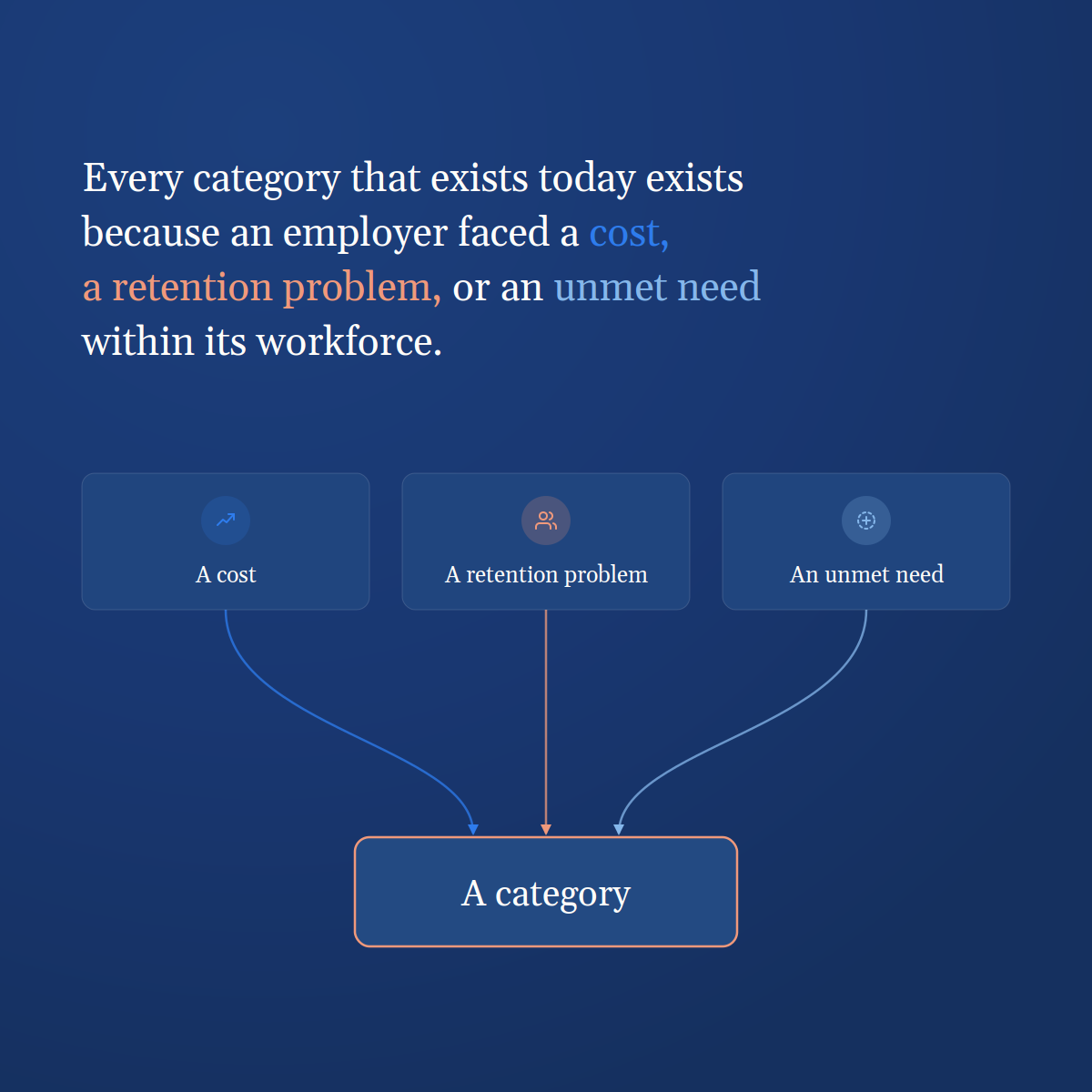
Every category that exists today exists because an employer faced a cost, a retention problem, or an unmet need within its workforce. Each solution closed a gap left open by traditional benefits design.

The 2026 report confirms this pattern has not slowed. 

Navigation services, cardiometabolic health, GLP-1 solutions, and menopause support are all categories generating meaningful RFP activity now, following notable growth over the past few years.

With each addition, the same two pressures intensify: the administrative burden on employers managing the stack, and the navigational burden on employees trying to use it.

The Cost of the Stack: Employer Side

Managing a large portfolio isn’t simply a matter of contracting with more vendors. Every point solution carries its own implementation process, contract cycle, reporting format, and renewal timeline.

For HR and benefits teams already handling significant workloads, a portfolio of a dozen or more solutions compound that burden in ways that are easy to underestimate.

A Wellframe study found that 50% of employers manage between four-and-nine-point solutions, while Castlight’s analysis puts the average for large employers at 12 health-focused solutions.

This fragmentation has a name in the industry: point solution fatigue

It occurs when companies or workers become overwhelmed by an abundance of disconnected solutions, leading to low engagement, confusion, and administrative burnout. According to a 2024 survey by Quantum Health and MedCity News, 84% of benefits consultants report it among their clients.

Less visible but arguably more costly is the “lost” time.

Evernorth research estimates that employers spend an average of 24 hours a week on vendor and benefits management, time diverted from plan design, cost analysis, or employee engagement. The more vendors an organization accumulates, the more its internal bandwidth shifts from strategy to administration.

Shortlister’s 2026 report shows this pressure extending to the advisory level. Broker research intensity increased by 74% over two years, with consultants averaging 14.3 vendor searches per RFP, up from 8.2 in 2023, and evaluation timelines stretching across enterprise and clinical categories.

The cost of a poor vendor decision has grown alongside the complexity of the decision itself. 

The result is a benefits landscape where the effort required to build and maintain a portfolio has become an operational challenge, growing more difficult to absorb with each vendor added.

The Cost of the Stack: Employee Side

While employers offer more, employees use less.

Castlight’s analysis, referenced earlier, shows that only 10% of employees regularly engage with the health-focused solutions their employers offer. Companies are aware of this issue, as 75% report that workers underutilize their benefits, according to Hartford’s 2025 Future of Benefits Study.

The root of that underutilization is not indifference.

A benefits portfolio that is difficult to administer is, almost inevitably, difficult for employees to navigate. When they cannot find or access a benefit, the investment in that program produces little value.

Businessolver’s 2023 Benefits Insights Report, which tracked 4.4 million members over five consecutive years, found that 85% of workers remain confused about their coverage options. According to Benefitfocus, 90% of employees simply re-select the prior year’s plan at open enrollment to avoid the decision altogether.

When the workforce defaults to what they know, it creates a compounding problem for employers. Every point solution added to the stack without a corresponding improvement in how employees access it widens the gap between what is offered and what is used.

The ROI Problem That Is Starting to Drive Decisions

When employees don’t understand what they have access to, usage numbers become an incomplete measure of the program’s value.

When internal teams are stretched across dozens of vendor relationships, few have the capacity to evaluate what each solution is contributing.

The result is a benefits portfolio that keeps growing while its overall effectiveness becomes harder to quantify.

A Willis Towers Watson vendor strategy survey found that 41% of employers believe they have too many point solutions or vendor partners, and 44% say vendor reporting does not provide employer-specific ROI

Each addition narrows visibility, leaving companies with more choices but less confidence in what to keep, what to replace, and where to invest next.

The administrative burden, the employee confusion, and the ROI gap are precisely what created the conditions for navigation to gain massive traction as a benefit category of its own over the past few years.

Navigation as a Response to Proliferation

There is a certain logic to how the market has responded to its own complexity. 

The same environment that produced over 290 benefit categories also delivered fast-growing solutions whose primary function is helping navigate all the others.

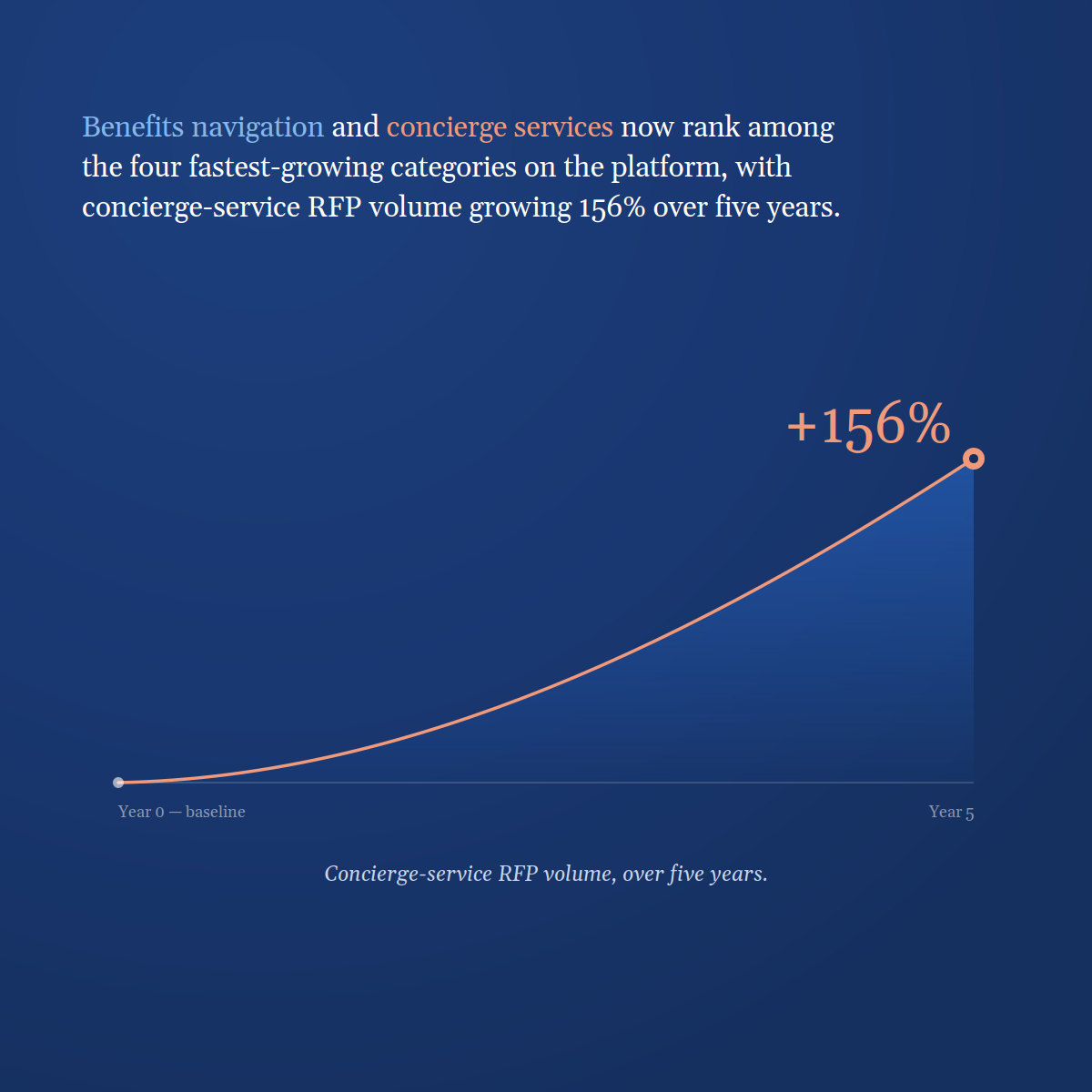
Findings from Shortlister’s 2026 report show that benefits navigation and concierge services now rank among the four fastest-growing categories on the platform, with concierge service RFP volume growing 156% over five years.

Complexity fatigue is directly driving demand for services that help employees find the right resources at the right time.

The data is consistent across the industry. 

Of the 84% of benefits consultants reporting solution fatigue among their clients, 63% say those clients are actively considering consolidating their digital health point solutions under a single healthcare navigation solution. 

Whether employers pursue consolidation, a navigation layer, or both, the underlying question is the same one: how do you build a benefits portfolio that employees can use?

What This Means for Benefits Strategies

The growth to over 290 categories reflect genuine market progress.

Most of the newer additions address needs that traditional benefits struggled to cover. The strategic challenge for employers now is not the breadth of what is available but the ability to manage that range in a way that produces measurable returns.

This process starts with auditing the existing portfolio through the lens of engagement rather than access. For each active point solution, ask the following questions:

  • Do eligible employees know it exists?
  • Can they reach it without friction?
  • Can the vendor provide outcome data specific to your organization?

Solutions that do not meet those criteria warrant closer examination at renewal.

On the question of consolidation versus a navigation layer, the right answer depends on the specifics of a given organization’s stack, workforce demographics, and budget.

Consolidation reduces administrative complexity and can simplify the employee experience, but it requires confidence that what remains serves the full range of workforce needs.

A navigation layer preserves the portfolio’s depth while improving how employees access it, though its effectiveness depends on genuine integration with the solutions it connects to.

In either case, vendor evaluation criteria need to reflect the market’s current state. 

The 2026 Shortlister report identifies personalization, flexibility, and measurable outcomes as the defining characteristics of effective benefits strategies moving forward.

A portfolio that few employees engage with is not a competitive advantage, regardless of how comprehensive it appears on paper. The employers most likely to get sustained value from their benefits investment are those who treat them as a system built not just to provide access, but to ensure employees can actually find and use what they’re offered.

Written by tamara jovanovska

Content Writer at Shortlister

Benefits Navigation

Browse our curated list of vendors to find the best solution for your needs.

Stay Informed

Subscribe to our newsletter for the latest trends, expert tips, and workplace insights!

Related Posts