Does Your Insurance Cover Freezing Eggs?
Explore women’s options for covering the cost of egg freezing with insurance, including financial assistance programs that may help cover expenses.
On Shortlister, oncology-related search volume has tripled over the past 2 years. The same category that barely registered employer interest before 2024 now draws RFP activity spanning hundreds of thousands of covered lives.
For most of corporate history, cancer only existed inside medical plans as a claims item. Employers funded treatment after diagnosis, but navigation, second opinions, and return-to-work planning were not part of the benefits conversation.
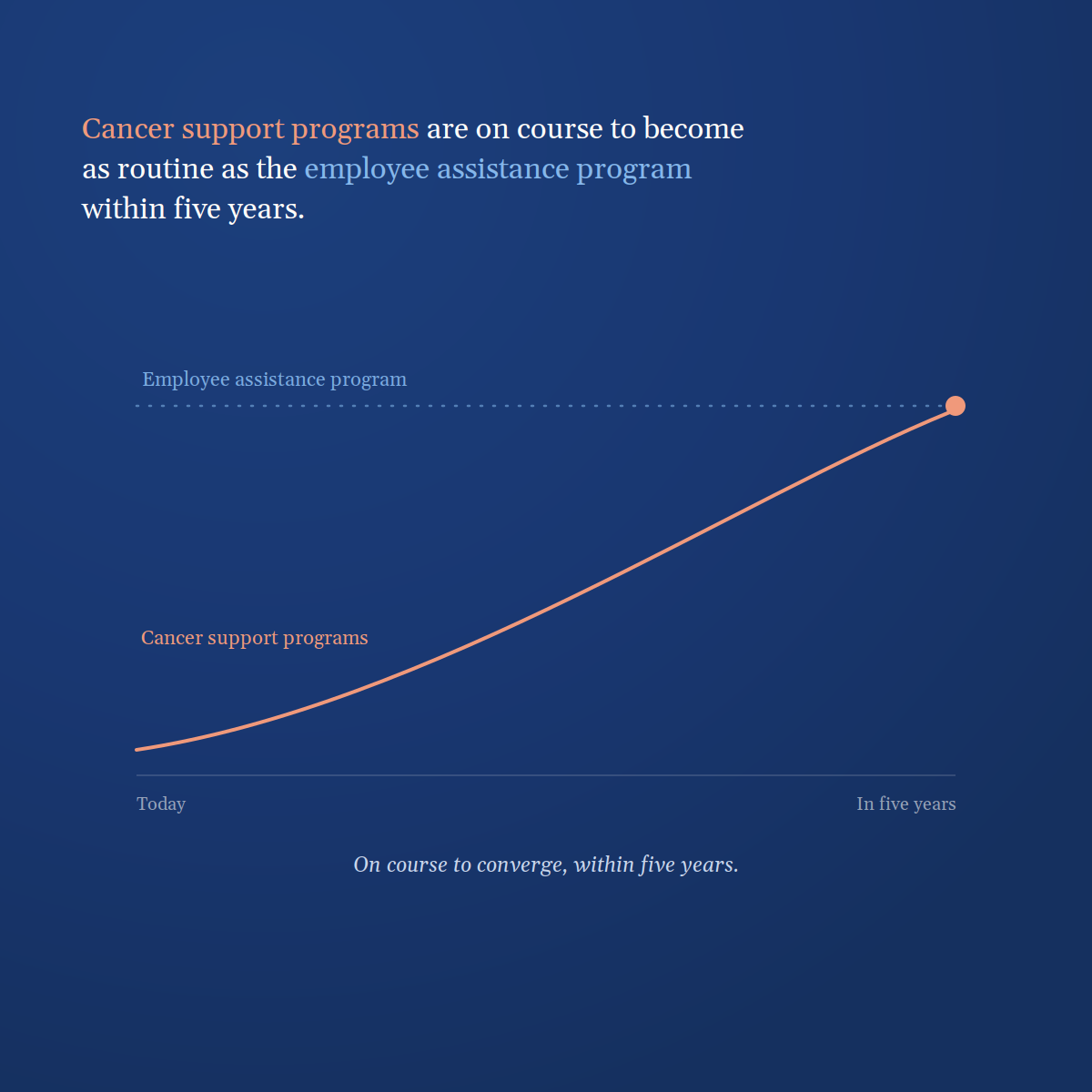
However, Shortlister predicts cancer support programs are on course to become as routine as the employee assistance program within five years. Whether it delivers more than EAPs did is a separate question, and the more interesting one.
The EAP comparison is useful because it gives HR leaders a benchmark that is both familiar and demanding.
According to SHRM’s 2024 employee benefits research, 82% of surveyed employers offered an employee assistance program. In the large-employer market, saturation is even higher – more than 97% of U.S. companies with more than 5,000 employees have an EAP. And access is broad across every workforce level, with BLS data showing that 61% of all workers had access to an EAP as of March 2024.
These numbers describe a category that no longer has to argue for its place. EAPs reached that point slowly, over decades.
They began as narrow workplace alcohol programs in the mid-twentieth century and expanded over time into broad services covering everything from mental health to legal questions, caregiving, and financial counseling.
That is the bar oncology is being measured against.
For cancer support to reach it within five years, the category would need to go from a feature large employers experiment with to a default selection.
Much of the attention this category is receiving is because cancer has become very hard to ignore, cost-wise.
Cancer has ranked as the single most expensive condition driving employer health spending for four straight years, according to Business Group on Health. Seventy-four percent of respondents said they were already seeing higher prevalence in their populations, with another 17% anticipating it.
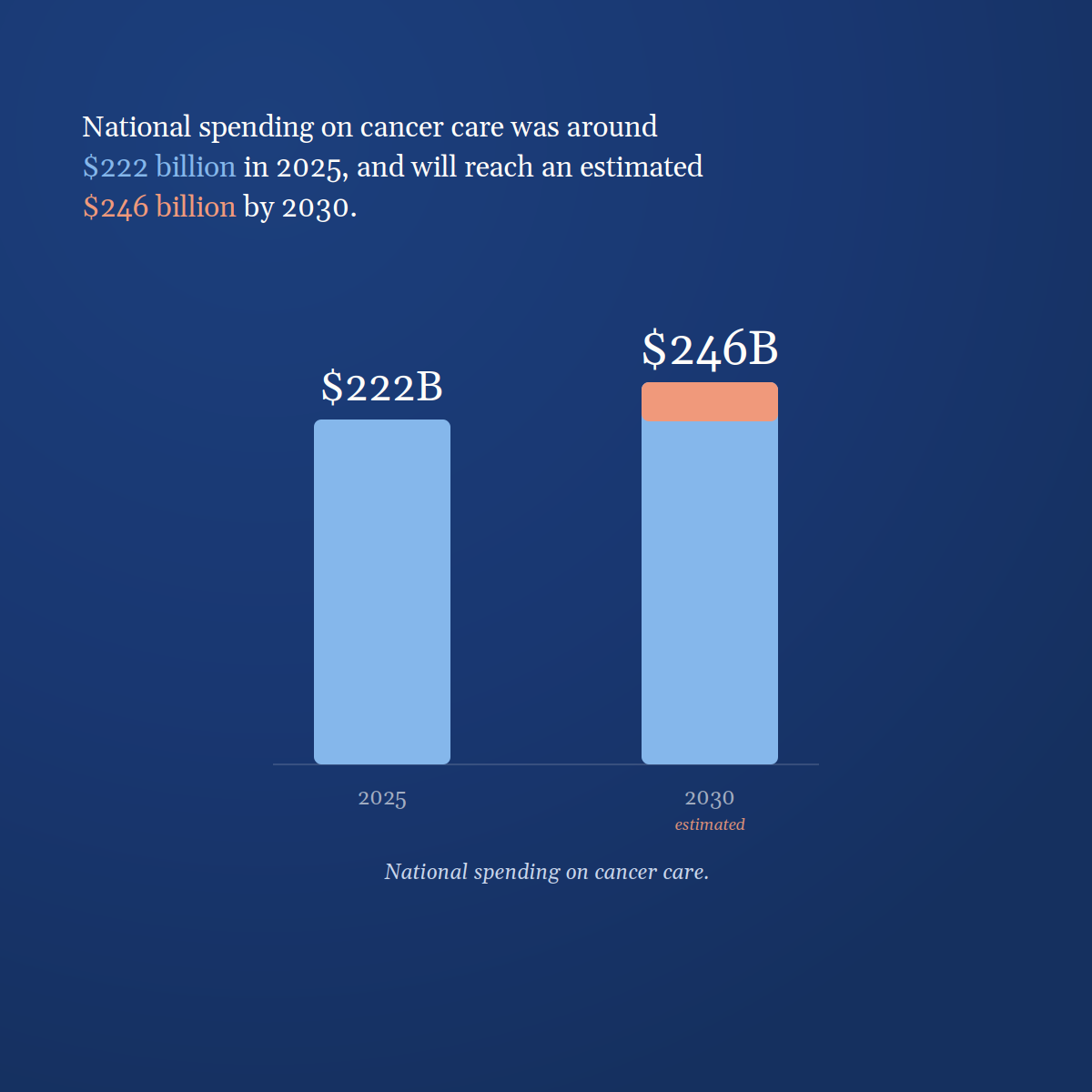
Meanwhile, national spending on cancer care was around $222 billion in 2025 and will reach an estimated $246 billion by 2030, up 34% from 2015.
Behind those totals are therapies priced unlike anything benefits managers budgeted for a decade ago. Aon forecasts annual increases of 11 to 21% in the cost of cancer care and pegs the median price of a new oncology medicine near $300,000 per patient.
When a single high-cost claim can absorb a smaller employer’s entire stop-loss buffer, the case for managing the condition upstream becomes more immediate.
Cancer has long been a disease of retirement age, the kind of risk that landed mostly outside the active employee population. However, that assumption is quickly changing.
Between 1995 and 2020, younger adults were the only age group with an increase in overall cancer incidence, rising 1% to 2% per year.
The same pattern surfaces across a number of cancers and across continents:
In 2024, projected new U.S. cancer cases were expected to cross 2 million for the first time on record. For 2026, the number of new cases is closer to 2.11 million.
Yale’s clinicians point out that early-onset patients often face delayed diagnosis, more aggressive disease in some cancers, alongside life pressures that have nothing to do with clinical care.
For employers, the early-onset trend has practical consequences.
Diagnoses are landing on people in their peak career-building, mortgage, parenting, and caregiving years, when health-plan dependency is the highest.
The most underappreciated part of the oncology support boom may be survivorship.
In reality, cancer care does not end cleanly when active treatment ends.
Survivors carry some combination of recurrence anxiety, fatigue, lingering side effects, fertility concerns, cognitive changes, and debt long after their final round of treatment.
Better treatment has produced a large and expanding survivor population.
The American Cancer Society counted 18.6 million Americans living with a history of cancer as of January 1, 2025, and projects more than 22 million by 2035. Around 45% of people diagnosed with cancer are between 20 and 64, which places the burden squarely within the workforce.
For these survivors, the support problem does not fit neatly into one program. The health plan pays for clinical care, disability replaces part of lost income, and leave policies protecting the job.
But none of those supports give an employee an informed path through second opinions, workplace accommodations, claims questions, or the surveillance appointments and return-to-work planning survivors need that can stretch on for years.
The benefits structure tends to fail both newly diagnosed and survivors at different points, which is why demand is rising for a single navigator who can follow an employee from diagnosis through survivorship.
Aging workforces, rising survivorship, administrative burden, financial strain, and emotionally complex care are all pushing employers toward a more connected model of oncology support.
Currently, cancer support is the benefit that fills this space.
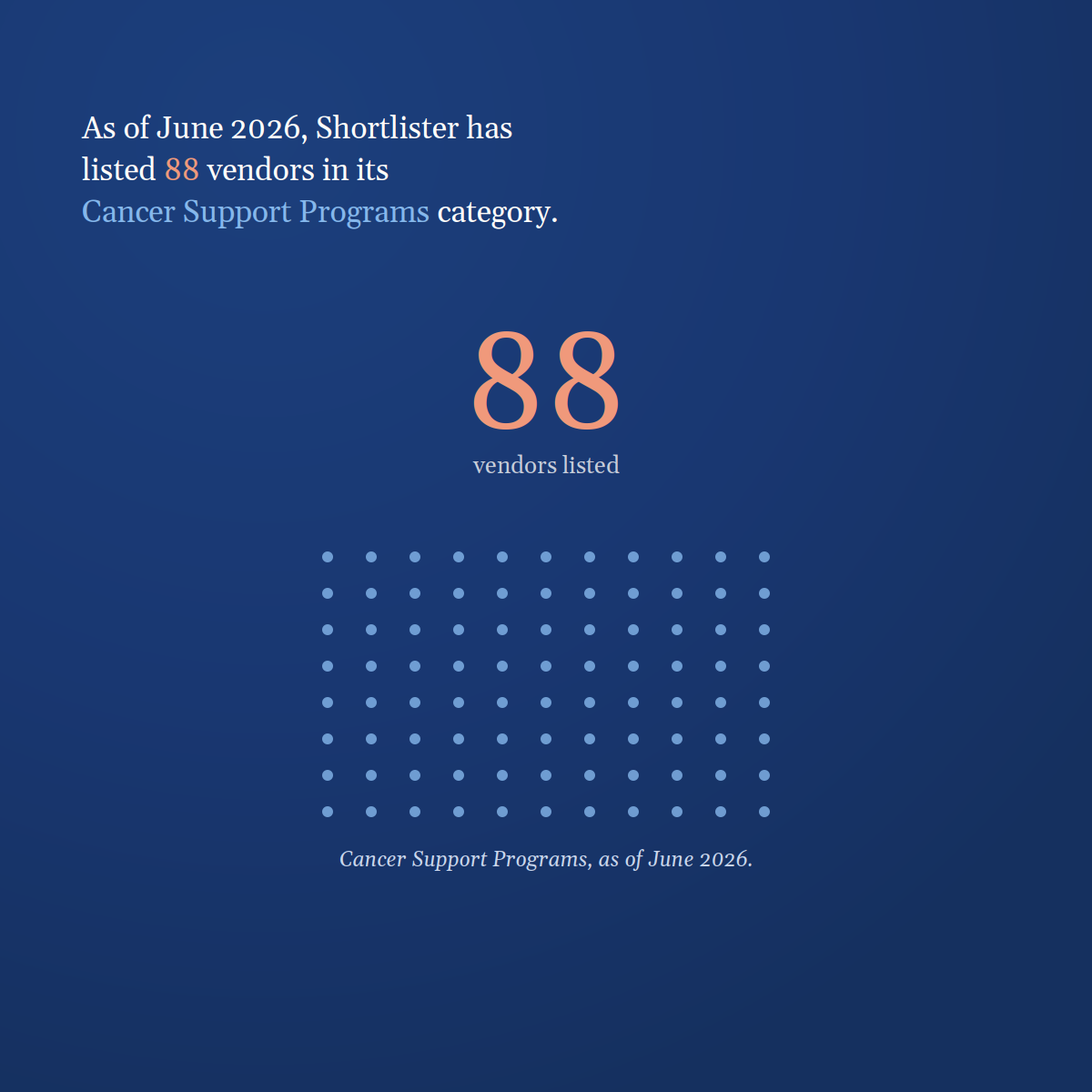
As of June 2026, Shortlister has listed 88 vendors in its Cancer Support Programs category, which is far beyond what an experimental niche typically looks like.
Instead, it maps a broader employer buying brief that includes cancer identification and diagnosis, navigation resources, workplace assistance, and preventive risk tests.
Shortlister’s 2026 Workplace Wellness Trends Report, based on actual market activity, further confirmed the rising demand, noting that cancer navigation and support went from “virtually nothing” in 2020 to a significant market segment.
If cancer support is following the EAP path, benefits leaders should borrow a few lessons from how that path unfolded.
EAPs only became “standard” once employers accepted that mental health, family strain, debt, addiction, and legal trouble could damage attendance and performance.
Cancer support is now approaching the same threshold.
Treatment is the obvious cost, but employers also absorb the confusion and delay that surround it, along with the productivity lost while an employee navigates care on their own.
However, high adoption has never guaranteed that employees use what is on offer, and EAPs are the cautionary case. Decades into near-universal availability, traditional EAP utilization has stayed stubbornly low.
Cancer support cannot afford to repeat that mistake. Low EAP utilization is costly, but a dormant oncology benefit can be worse.
If employees do not learn about the program until after treatment decisions have been made, the benefit misses some of its most important intervention points.
A program positioned as a passive phone number tends to reach the people already skilled at navigating care, while missing those with lower health literacy, limited time, fear of disclosure, language barriers, or distrust of employer-sponsored resources.
To succeed, cancer navigation has to be visible well before a diagnosis and still useful long after treatment ends.
The practical question for HR leaders planning their 2027 benefits strategy is not whether cancer support matters, but whether it fits in their stack and what to evaluate.
Roughly half of large employers plan to offer a cancer-focused Center of Excellence in their benefits package by 2026, with another 23% considering it by 2028.
Meanwhile, employer investment in cancer screening programs is also growing, with 87% of employers planning to have at least one screening method in place, recognizing that early detection directly reduces both human suffering and claims severity.
Several evaluation considerations are worth flagging for benefits teams exploring this category.
First, integration with existing benefits.
Cancer navigation should not exist as an isolated silo. Teams that evaluate vendors without considering how the service connects to existing medical, pharmacy, disability, and EAP benefits risk creating the fragmented experience that drives employees away.
Second, coverage scope.
The strongest programs extend beyond diagnosis and treatment into survivorship, financial navigation, and caregiver support, the exact areas where employer-sponsored medical plans typically drop off.
Some questions worth asking are:
Third, outcomes measurement.
Benefits leaders should be asking vendors for utilization data, time-to-treatment metrics, and cost-per-case comparisons, not just member satisfaction scores. Employers weighing options can compare Cancer Support Programs against those measures before signing.
The open question is whether employers absorb the EAP’s hardest lesson early, designing for engagement and navigation from day one rather than discovering later on that a well-funded benefit went unused.
Senior Content Writer at Shortlister
Browse our curated list of vendors to find the best solution for your needs.
Subscribe to our newsletter for the latest trends, expert tips, and workplace insights!

Explore women’s options for covering the cost of egg freezing with insurance, including financial assistance programs that may help cover expenses.

As we explore the value of regular health screenings, cost-effectiveness emerges as a major benefit for individuals, companies, and society.

Chronic disease management provides a dual advantage in the workplace, supporting employee health and organizational success. Learn how you can implement the right program for your company.

Explore the difference between group insurance and blanket health policies to help you choose the right insurance plan for your organization.
We're working hard to make it easy for you. Sign up for news, trends and insights.