The Words That Left the Room
The vocabulary of benefits procurement records how workplace concerns mature, change names, and become formal purchasing decisions.
Vendors are usually judged on what they offer. Yet, what they plan to add can be just as revealing.
In Shortlister, vendors can mark a capability as offered, not offered, or “on the roadmap.” On the roadmap simply means the vendor plans to add it, but does not offer it yet.
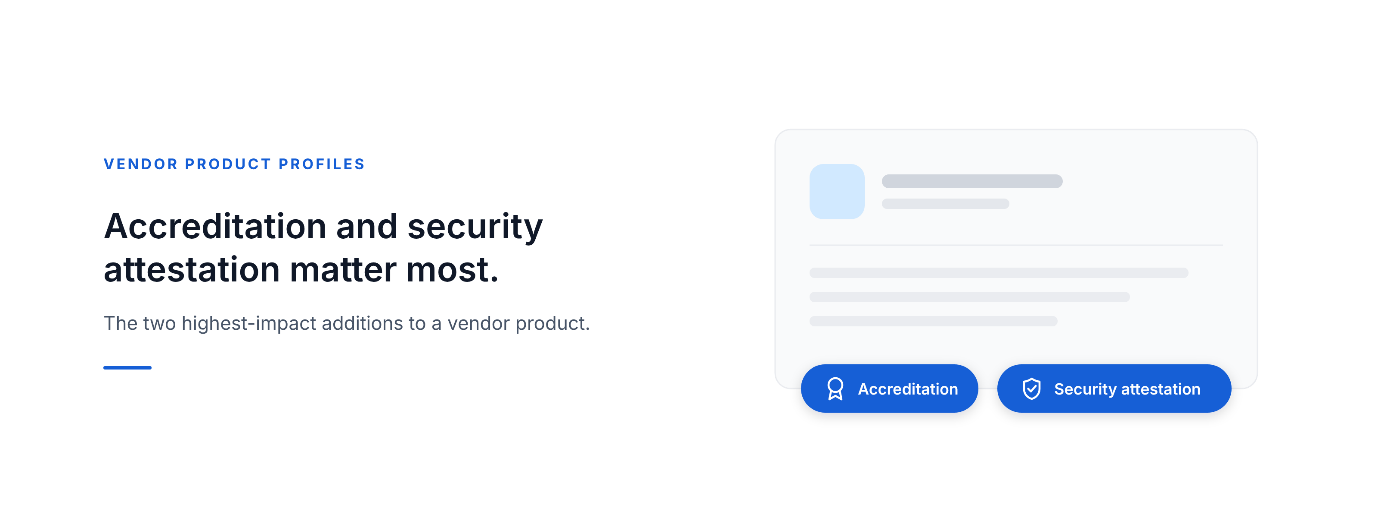
However, when those planned additions are compared across vendors, accreditation and security attestation rise to the top. Meanwhile, standard product capabilities sit near the bottom.
In other words, benefits vendors have built much of the technology buyers expect. Their next shared priority is proving that the company behind it meets an accepted standard.
The pattern also shows that the benefits vendor due diligence depends on evidence that cannot be tested in a product demonstration.
Shortlister does not use vendor roadmaps to predict when an individual company will deliver something.
Instead, the value comes from comparing vendors and identifying which capabilities repeatedly appear as planned rather than already available.
In that comparison, SOC reporting under SSAE standards, NCQA accreditation, and URAC accreditation are among the themes vendors are still working toward.
Core product functions are much less likely to remain unfinished.
One vendor pursuing accreditation is a company decision. But when the same credentials appear across many vendors’ plans, it becomes a market signal about where companies expect to spend time and money.
Why would an audit report or accreditation move ahead of another feature on a vendor’s priority list?
Simply because buyers can test a dashboard during a demonstration, but they cannot inspect an entire security program or clinical operation during an RFP.
The difficulty of conducting that review grows with every vendor in the portfolio.
PwC’s Employer Benefits Perspective Survey found that one-quarter of employers’ work with more than 20 health and wellness vendors, while most of the remaining employers manage at least eight to ten.
For portfolios of that size, benefits vendor due diligence needs a consistent starting point, and independent reports and accreditations provide one way for buyers to verify vendor claims.
Employers comparing telehealth services, for example, cannot judge a full care model from a demo. Accreditation gives them a structured way to examine the processes behind the experience.
Security attestation sits high in the queue because vendor systems are part of the buyer’s risk chain.
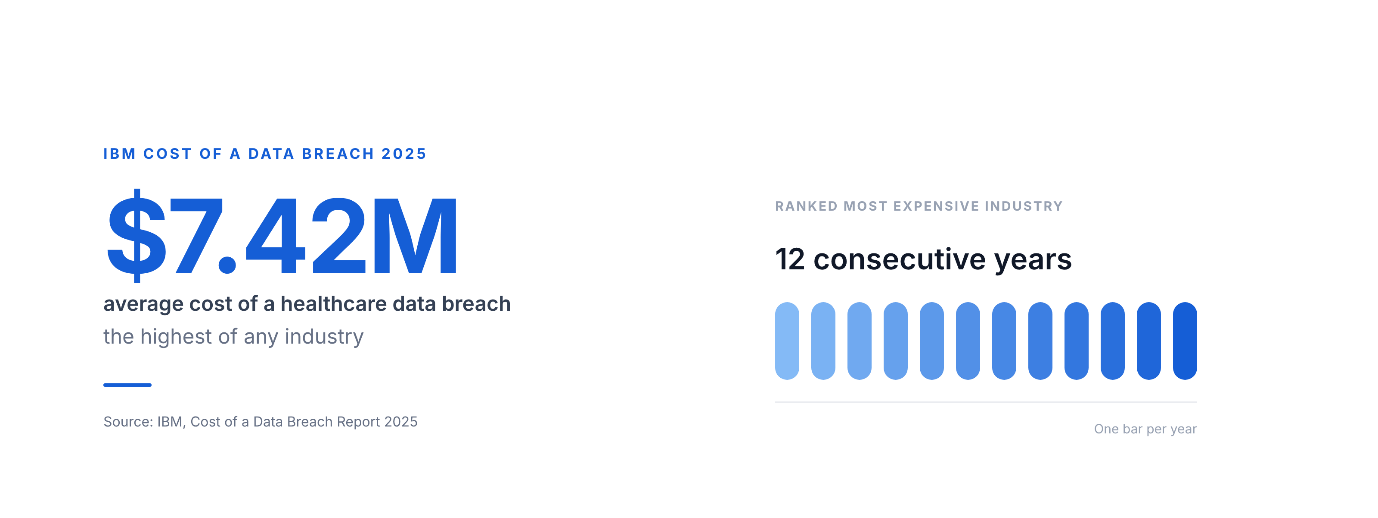
Healthcare has been the most expensive industry for data breaches for 12 consecutive years , with an average of $7.42 million per incident.
Benefits vendors sit inside that risk chain because many handle protected health information as business associates under HIPAA. As a result, they can face direct liability, while employer clients remain responsible for evaluating the vendors they choose.
One 2025 healthcare cybersecurity benchmarking study found that 72% of healthcare breaches trace back to third-party vendors.
Measured by the number of people affected, the share of breach victims whose data was exposed through a business associate climbed from 5% in 2015 to 65% in 2025. By the first half of 2026, business associates were named in 43% of reported healthcare cybersecurity breaches.
In fact, two of the three largest healthcare breaches on record happened at vendors rather than at hospitals or insurers. The 2024 Change Healthcare attack and the 2025 Conduent breach together exposed close to 255 million people.
Together, these pressures help explain why independent security reports are appearing so often among vendors’ planned additions.
Today, the commercial pressure to add AI to digital solutions is substantial.
Shortlister’s Workplace Wellness Trends report for 2026 showed that mentions of AI in vendor proposals increased by 340% between 2024 and 2025. Similarly, Rock Health found that AI-enabled digital health companies captured 54% of all sector funding in 2025.
However, AI adds another layer to vendor diligence because the company selling a product may not control every model or data source inside it.
The NIST Generative AI Risk Management Profile explains that generative AI systems often rely on third-party components and data sources, making it difficult to identify where a problem began.
As AI capabilities develop faster than the processes used to evaluate them, buyers will need clearer evidence of how models and data are governed.
Accreditation is beginning to follow these technology trends.
In September 2025, URAC launched the first Health Care AI Accreditation, a framework for the governance and oversight of AI in health settings.
The new program shows how quickly the credential list can grow as products change. A vendor can complete one review and still face a new governance question when it adds another technology.
The names often appear together in a vendor profile, but each one tells the buyer something different.
| Term | Simple meaning | What the buyer learns |
|---|---|---|
| SOC 2 report | An independent CPA checks the systems and rules the vendor uses | How the vendor protects customer data and keeps its systems reliable |
| SSAE | The professional rules the CPA follows during certain reviews | Which standards were used to prepare the report |
| NCQA accreditation or certification | NCQA checks a specific health program | Whether that program meets NCQA's quality standards |
| URAC accreditation | URAC checks a specific health care service | Whether that service meets URAC's requirements |
NCQA and URAC do award formal status, but only for the program or service they reviewed. A telehealth product may be accredited without every product owned by the same company being covered.
Accreditation takes time because the vendor must produce evidence about how its systems or care processes operate.
Reviewers may examine both formal documentation and day-to-day practices. That includes everything from written policies and training materials to evidence of how employees actually follow those procedures in their work.
That preparation can take months.
NCQA states that its health plan evaluation typically takes 12 months from application to decision. Many standards also have a six-month look-back period, meaning the organization must meet them well before the survey begins.
URAC says its process can take six months or less, depending on how ready the vendor’s documents and processes are.
None of it is quick or cheap.
A first SOC 2 Type 2 report takes six to twelve months and can cost a small company $25,000 and a large one more than $200,000 in the first year, and the expense recurs annually. URAC survey fees reach into the tens of thousands and are non-refundable if the vendor fails.
For these reasons, a vendor may place accreditation on its roadmap long before it can claim the status.
Because these reviews take time and money, the sequence matters more than the length of the list of credentials.
Clear the security gate first.
If a vendor security questionnaire repeatedly delays an evaluation, independent assurance may deserve priority. A SOC 2 report can answer many of the questions behind that review. For vendors that are ready for audit, Type I provides point-in-time assurance sooner while the company builds toward the operating history required for Type II.
Earn the category accreditation buyers actually ask for.
That could mean NCQA Wellness and Health Promotion for a wellness vendor, URAC Telehealth for a virtual-care provider, or another NCQA or URAC program that matches the service being evaluated.
Plan for renewal and ongoing maintenance.
Accreditation is not finished when the certificate arrives. Some programs have renewal cycles, reporting requirements, and continuing costs that need to remain on the compliance roadmap.
Vendors that treat credentials primarily as marketing assets tend to consider them only after buyers start asking.
Instead, the more useful approach is to treat them as part of product readiness and plan for them before they become an eligibility question.
An accreditation or security report makes benefits vendor due diligence easier, but the name alone is not enough.
Buyers should confirm that the credential is current, covers the product under evaluation, and applies to the correct company.
So, rather than simply relying on the phrase “SOC 2 compliant” on a sales page, buyers should check which systems were reviewed, what period the report covers, and whether the auditor found any problems.
The AICPA recently warned that promises of unusually fast or easy SOC reviews may weaken the quality and objectivity of SOC reviews.
Finally, product fit still matters.
A vendor can hold respected credentials and remain a poor match for an employer’s workforce or existing benefits model.
Therefore, accreditation works best as verified evidence inside a wider evaluation, rather than as a substitute for one.
A roadmap is usually read as a promise about the product. Here, it also records what vendors believe they must prove to stay in consideration.
The credential queue offers an early view of the next purchasing standard before every RFP explicitly states it. By the time the requirement appears in every questionnaire, the vendors that planned for it may already hold the advantage.
Senior Content Writer at Shortlister
Browse our curated list of vendors to find the best solution for your needs.
Subscribe to our newsletter for the latest trends, expert tips, and workplace insights!

The vocabulary of benefits procurement records how workplace concerns mature, change names, and become formal purchasing decisions.

Shortlister data shows that the average RFP now includes fewer than six vendors. The vendor selection process has moved upstream, where research and AI increasingly decide who reaches the formal evaluation.

Many benefits vendors already offer the expected product features. Shortlister data shows that security reviews and health care accreditation are moving to the top of their priority lists.

Four years of project data show when benefits demand becomes formal and why the buying cycle starts before the RFP.
We're working hard to make it easy for you. Sign up for news, trends and insights.