120+ Key Recruiting Statistics for Hiring Managers
Unlock essential recruiting statistics for hiring managers, gaining valuable insights to streamline and optimize your recruitment processes.
In March 2026, the U.S. Census Bureau recorded 491,941 business applications and projected 28,980 new business startups with payroll tax liabilities within four quarters of those applications.
Clearly, the appetite for entrepreneurship has remained strong since the post-pandemic boom. However, launching a business and operating one present drastically different challenges.
According to ADP’s November 2025 Market Pulse survey, the top concerns for small business owners are growth (26%), labor costs (24%), and talent sourcing (23%), all of which depend, in part, on functioning HR infrastructure.
Despite this, HR systems rarely make a founder’s early priority list. Yet, as soon as a startup begins hiring, paying, and managing people, the absence of such a structure creates a daily operational drag.
Where does an HRIS for startups fit into the picture?
An HRIS, or Human Resource Information System, is software that centralizes employee data, payroll, benefits administration, time tracking, and compliance documentation in a single system.
In large companies, an HRIS is usually part of a broader HR technology stack built for gaining efficiency at scale. For startups, the value proposition is less about building a sophisticated HR operation and more about control and reducing operational risk.
Where that difference shows up most clearly is in how mistakes compound. A midsize company with a dedicated HR team can absorb a missed filing or a benefits enrollment error.
However, a small startup where the founder also handles onboarding, payroll, and I-9 verification typically doesn’t have that same luxury.
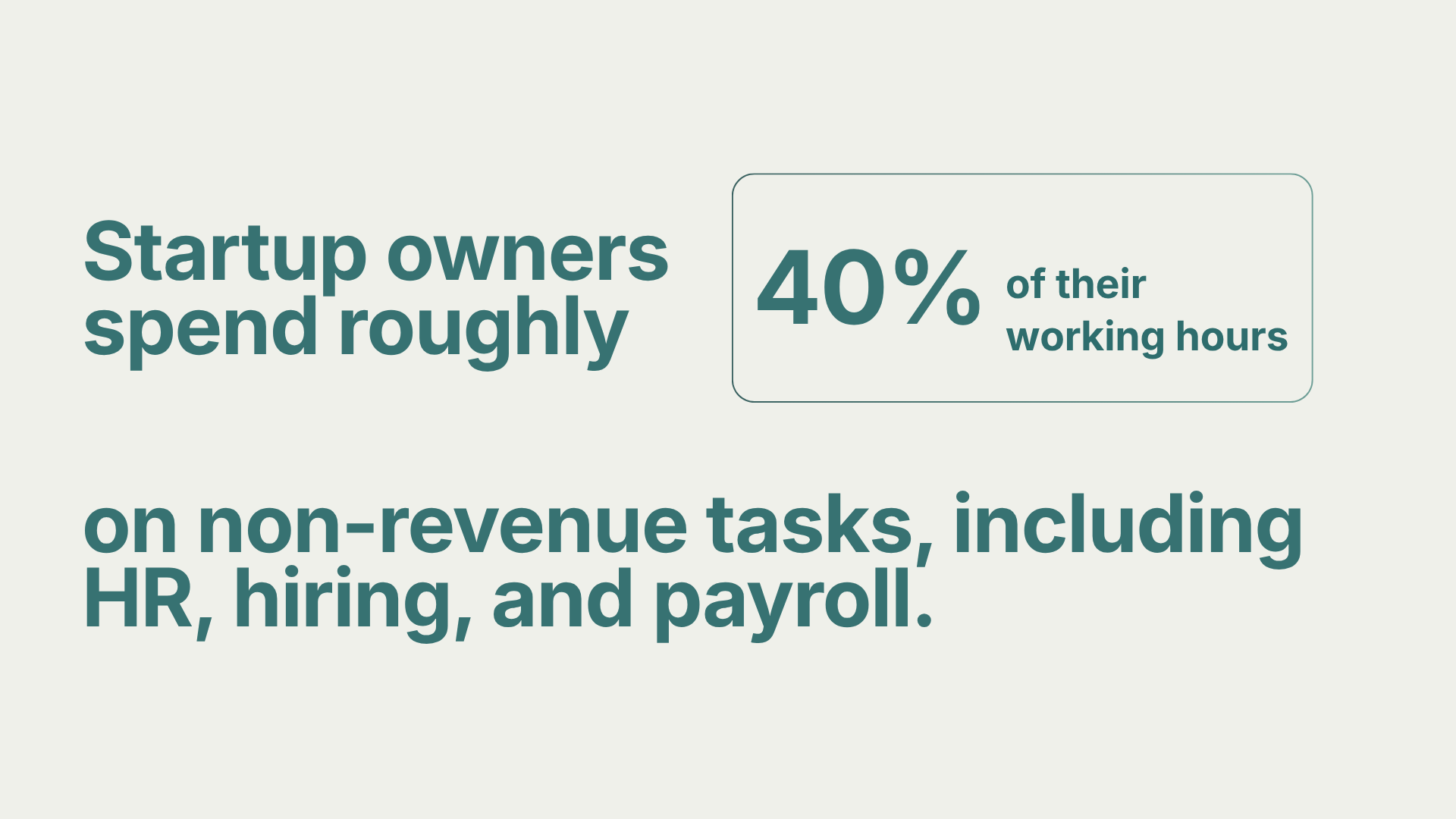
Startup owners spend roughly 40% of their working hours on tasks that generate no revenue, including hiring, HR administration, and payroll. Team-related issues also contribute to the failure of 23% of startups, placing HR management among the top three reasons new businesses collapse.
So, unlike established companies that can absorb a few months of administrative disorder, startups operate with almost no margin for that kind of risk.
What makes the startup context even more unique is the speed at which complexity arrives, which many business owners underestimate.
Typically, startups delay HR systems because the team is still small. For most of them, cash is limited, software fatigue is real, and founders do not want to add tools before they are needed.
However, the problem is that HR complexity does not arise only when the company grows.
A startup may hire its first employee in another state, or a contractor may need to be converted into a full-time employee. Another common scenario is an investor asking for detailed records and documentation.
These seemingly insignificant decisions carry tax or legal exposure that add up quickly without a proper system of record.
Therefore, a startup may be ready for an HRIS when:
Searches for which HRIS is best for startups usually lead to long vendor lists. These are useful later in the purchasing journey, but the first decision should be about the operating model. Ideally, the best HR software for startups should fit the next 18 to 24 months, while still being simple enough for non-HR users.
A practical stage framework would look like this:
| Startup stage | HRIS priority |
|---|---|
| 1 to 10 employees | Employee records, document storage, basic onboarding, PTO visibility |
| 11 to 25 employees | Payroll connections, approvals, employee self-service, policy access |
| 26 to 75 employees | Benefits administration, permissions, reporting, multi-location support |
| 75+ employees | Workforce analytics, performance workflows, integrations, audit-ready records |
For a broader view of available options, startups can compare HRIS systems based on company size, core capabilities, integrations, and support needs.
A company’s headcount can trigger different federal obligations, which means that these legal thresholds could also shape the buying decision.
For example, EEOC coverage generally begins at 15 employees for many federal anti-discrimination laws, while the ADEA applies at 20. FMLA coverage kicks in at 50 or more employees for at least 20 workweeks in the current or preceding calendar year.
Under the Affordable Care Act, employers averaging 50+ full-time employees (including full-time equivalents) during the prior year qualify as Applicable Large Employers and must offer minimum essential coverage to at least 95% of full-time employees or face penalties up to $2,900 per full-time employee annually.
In addition, state-level thresholds add another layer. Many states impose their own anti-discrimination, paid leave, and wage transparency requirements at lower headcounts than federal law.
Altogether, each headcount milestone adds new recordkeeping pressure, and having an HRIS that can absorb those obligations becomes a necessity.
Before comparing tools, startups should work through seven questions, and their answers will narrow the field more than any feature matrix.
1) What HR problem needs solving first?
List the two or three HR processes generating the most friction today, then evaluate whether the system under consideration reduces that friction in a measurable way.
2) Can non-HR users operate it?
Many startups do not have a full HR team. Founders, operations managers, or office coordinators may own HR workflows well into the later stages of the company.
If the HRIS system requires heavy configuration, constant training, or a dedicated administrator, it may create more burden than it removes. The right system should feel usable for the people who will run it, not just impressive in a product demo.
3) Does it reduce manual work, or relocate it?
An HRIS that does not connect reliably with payroll, benefits, time tracking, and accounting is just another place to re-enter the same information.
During vendor evaluation, ask specifically which integrations are native, which require middleware, and which are unsupported.
4) Can permissions protect sensitive employee data?
Employee records contain pay, tax IDs, health information, leave history, and personal contact details. Access to that information matters early, even when the company feels too small for formal governance.
Role-based permissions, audit trails, secure document storage, and clear rules about who can view, edit, approve, or export data should be treated as non-negotiables when choosing a system.
5) Will reporting help leaders make better workforce decisions?
Early-stage companies tend to undervalue workforce reporting right up until the moment they need it and cannot produce it. Headcount by department, compensation by role, PTO usage, attrition rates, and hiring pipeline status are all important metrics that guide budgeting and planning decisions.
6) Does the pricing model still make sense if headcount doubles?
Some HR platforms look affordable at 10 employees and expensive at 50. Others charge separately for payroll, benefits, onboarding, performance, time tracking, or support.
Compare the current cost with the likely cost at the next headcount milestone. A startup should understand what happens when it adds employees, modules, locations, or administrators.
7) How easy is it to leave?
Portability matters. Before deciding on an HRIS, ask how data can be exported, what happens to documents if the company switches systems, and whether implementation creates long-term lock-in. Startups change quickly, and it’s important that their HR infrastructure can adapt accordingly.

Overbuying usually happens when startups shop for the company they hope to become, rather than the company they are likely to operate over the next few years.
Therefore, the buying process should start with a careful assessment of the company’s next stage and its needs. A polished platform can still be the wrong fit if the startup lacks the team, time, or process maturity to use it well.
To avoid overbuying:
Free HR software for startups can be helpful in the earliest stage. A small team may only need basic employee records, document storage, time-off tracking, or onboarding checklists.
Cost, though, is only one part of the equation.
Free tools frequently have limits around reporting, payroll integration, compliance support, and customer service. Those limits rarely matter in the beginning, but they can become costly when the company needs cleaner data.
Once the company depends on the system for payroll accuracy, legal records, or workforce planning, the decision should change from “What is cheapest?” to “What is reliable enough?”
Several forces are converging that make the HRIS question more pressing for startups now than it was two or three years ago.
While startup formation remains elevated, the environment these companies are entering is far less forgiving of operational gaps.
After venture market corrections in 2022 and 2023, founders are under greater pressure to demonstrate operational rigor earlier in their lifecycle.
Investor diligence increasingly extends to people operations – payroll documentation, equity cap tables, and policy compliance. A startup that cannot produce clean records on request reveals a governance gap that can derail a funding round.
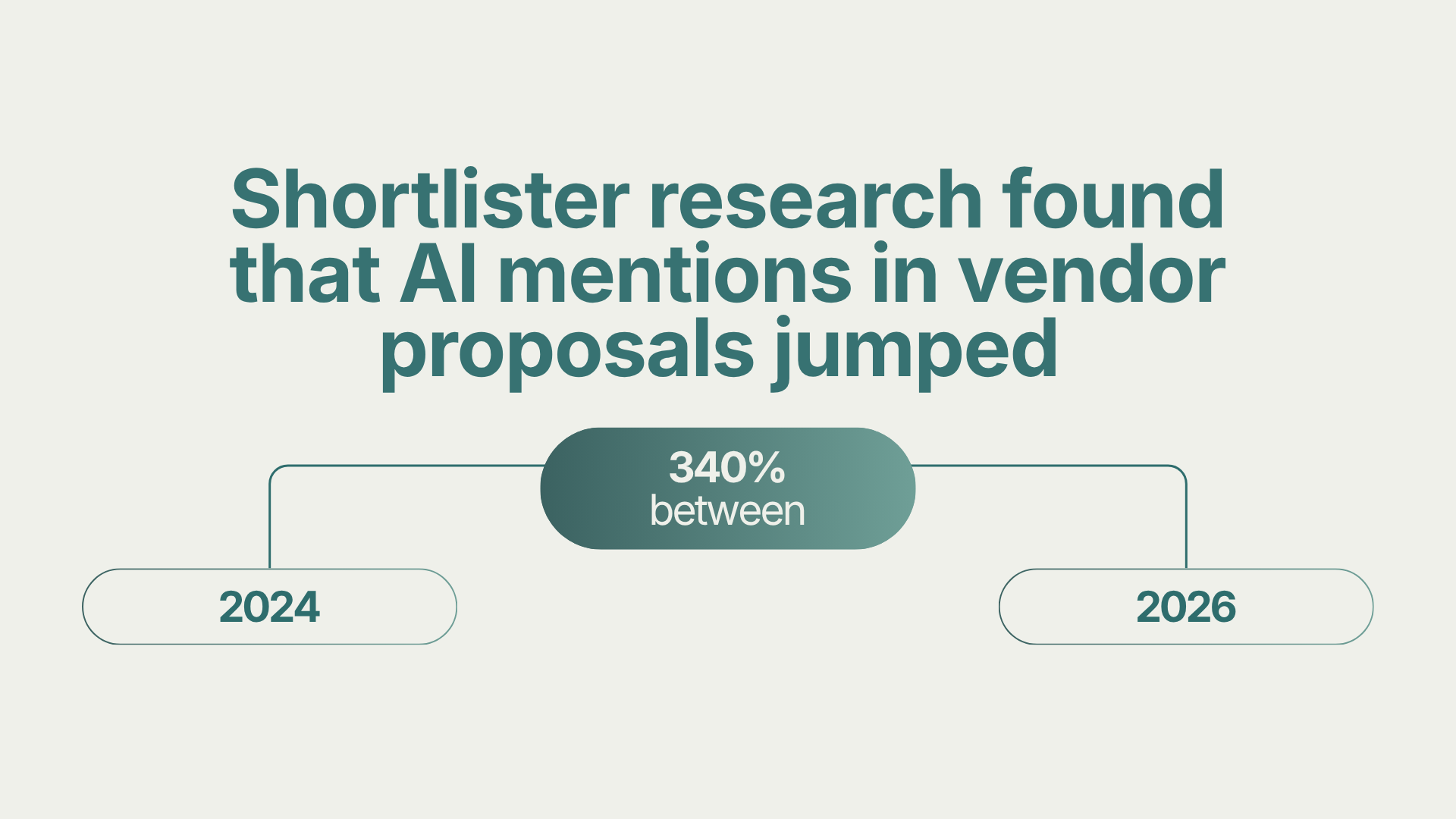
At the same time, AI is moving into ordinary business workflows faster than many founders realize. Shortlister’s Workplace Wellness Trends Report for 2026 found that AI mentions in vendor proposals jumped 340% between 2024 and 2026.
That change has reshaped the entire vendor landscape, from full-suite talent platforms down to tools built for a single stage of the hiring funnel.
Taken together, these pressures mean the HRIS buying decision in 2026 carries more weight than it did even recently.
HRIS for startups is rarely the most exciting line item in a budget, and it is almost never the reason a company succeeds. It is, however, often the reason a company avoids compliance fines, contested classifications, and disengaged early hires.
The cost of getting it wrong compounds the same way technical debt does, so building the foundation while the team is small lets the system grow with the company instead of against it.
Senior Content Writer at Shortlister
Browse our curated list of vendors to find the best solution for your needs.
Subscribe to our newsletter for the latest trends, expert tips, and workplace insights!

Unlock essential recruiting statistics for hiring managers, gaining valuable insights to streamline and optimize your recruitment processes.
From improved scheduling to increased productivity – explore why implementing an effective time-tracking and attendance system can be vital in the workplace.

Transform your survey process into a seamless journey with these free survey software options to gain valuable insights and enhance audience engagement effortlessly.

Managing a contingent workforce is inherently complex, but the right tools can turn the unpredictable nature of external talent into a controlled and purposeful operation.
Used by most of the top employee benefits consultants in the US, Shortlister is where you can find, research and select HR and benefits vendors for your clients.
Shortlister helps you reach your ideal prospects. Claim your free account to control your message and receive employer, consultant and health plan leads.