



Fair Workplace Practices

How Leaders Developing Leaders Drives Competitive Advantage

Leadership programs build the foundations. But the organizations gaining a competitive edge are the ones where leaders naturally develop the next generation.
In This Post:
Expert Contributors:
Picture of Joel Butterly

Joel Butterly

CEO and Founder of InGenius Prep

Picture of Steve Schwab

Steve Schwab

CEO of Casago

Organizations spend $98 billion a year on leadership development across the globe. Workshops, coaching programs, and executive retreats all play a valuable role in building the leaders of tomorrow. 

However, there is a growing body of evidence suggesting that the highest-performing organizations go a step further and build cultures of leaders developing leaders.  

In this article, we examine the cost of leadership gaps, the pressures reshaping what today’s leaders need, and why some companies build cultures where leaders actively develop other leaders.

The Economics of Leadership Gaps

In 1997, McKinsey coined the term “War for Talent” to describe the growing competition for leadership capacity. Nearly three decades later, the war has only intensified. 

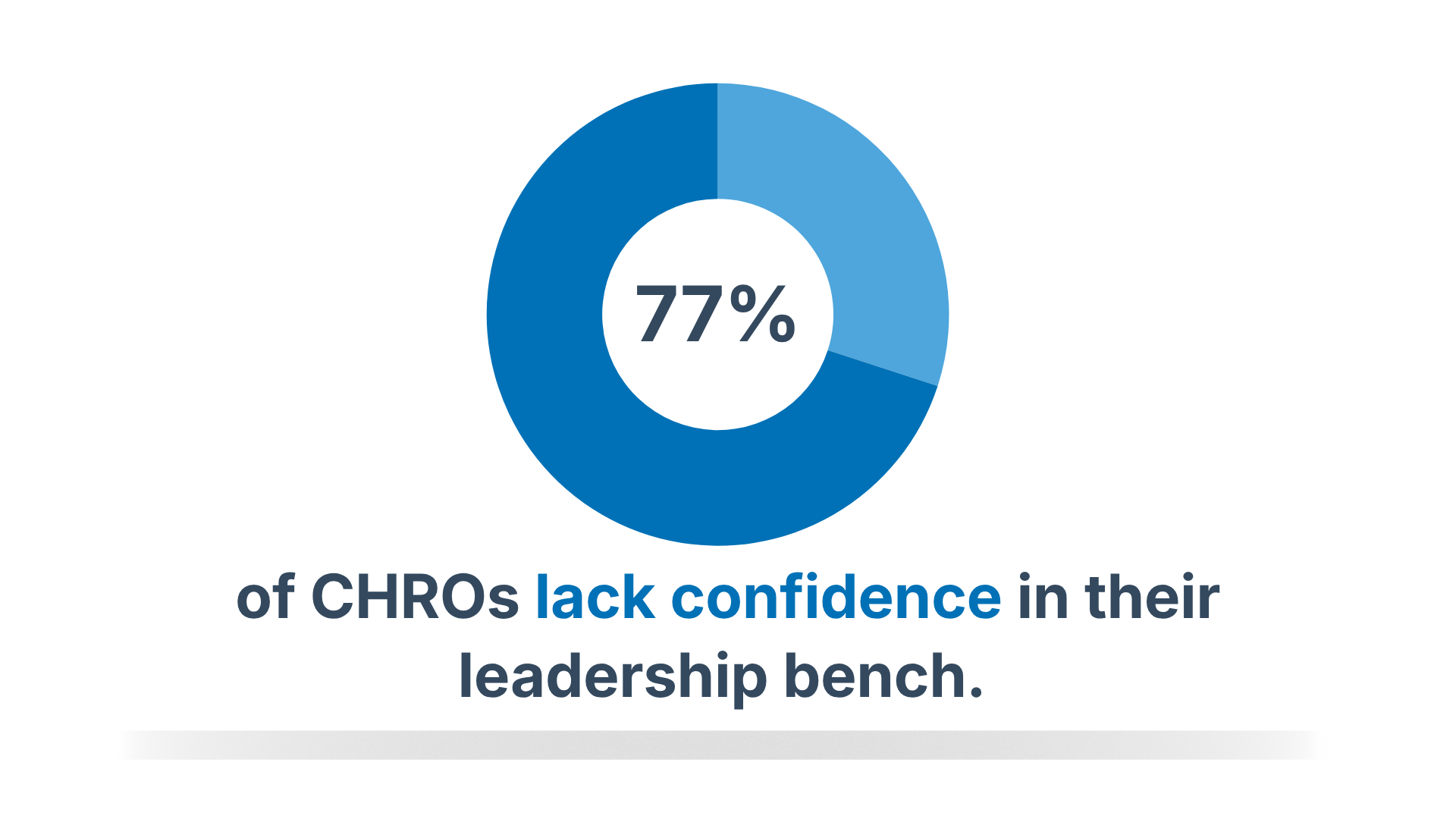
According to DDI’s Global Leadership Forecast 2025, 77% of CHROs lack confidence in their bench strength for critical roles. This lack of readiness carries risks that are as much operational as they are financial.

The reality is that when a key leader exits without a successor, it triggers a cascade of organizational losses. Institutional knowledge, team cohesion, and strategic momentum can all deteriorate in a matter of weeks, and none of them are easily recovered.

Research from the Center for American Progress has found that replacing a senior-level employee can cost up to 213% of their annual salary when you factor in recruiting, onboarding, and lost institutional knowledge. 

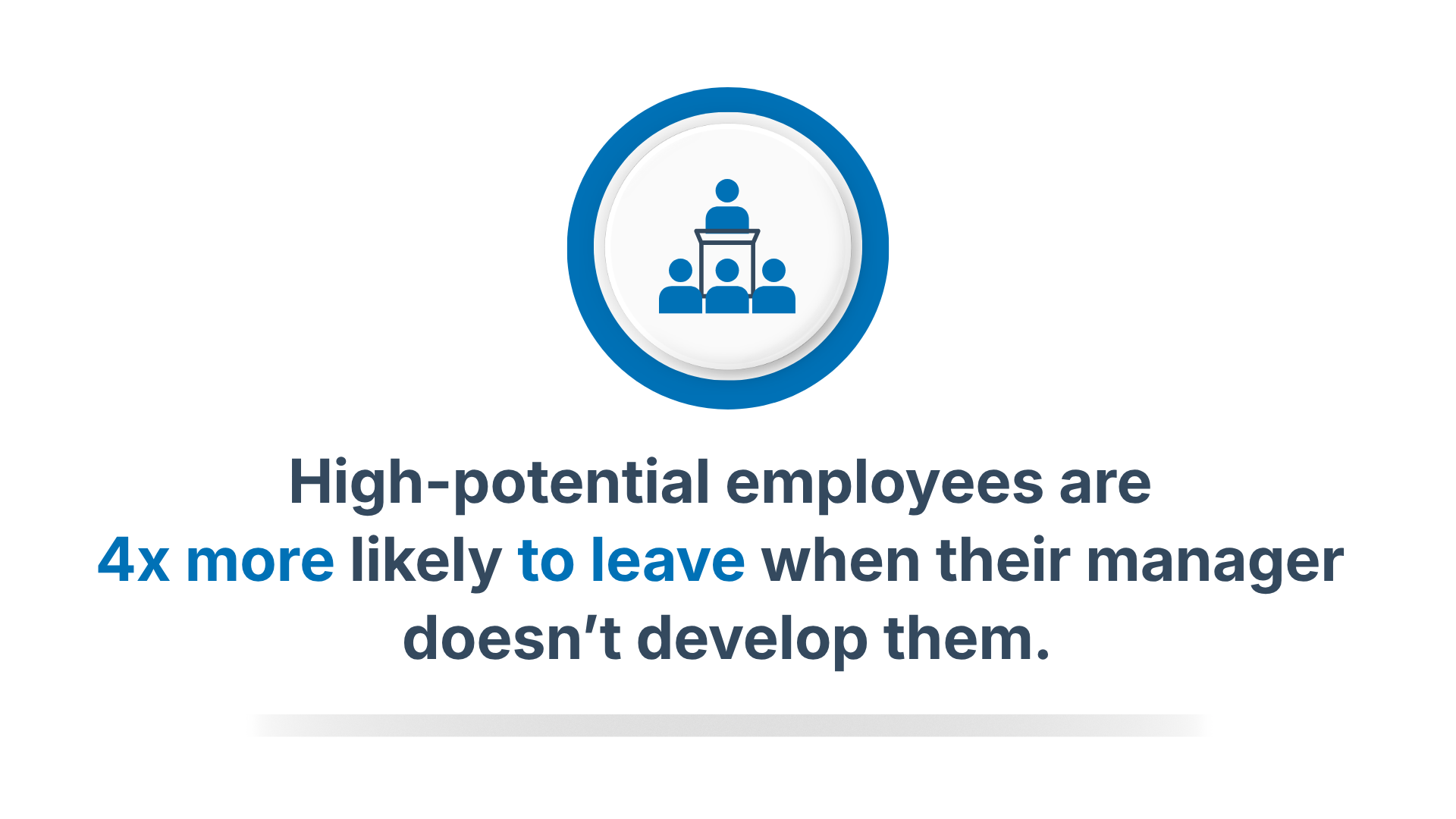
However, the cost is not only financial. DDI’s same study found that high-potential individual contributors are nearly four times more likely to leave within a year if their manager fails to regularly provide growth and development opportunities. 

In other words, when leaders fail to develop their people, they don’t just lose one leader – they lose the next generation of leaders along with them.

The question, then, is not whether leadership development creates value, but instead, how much it costs an organization to ignore it.

Why Leadership Development Has Become a Strategic Imperative

When most people think of competitive advantage, they think of better products, lower costs, or faster innovation. Rarely does leadership depth make the list, but research increasingly suggests that it should.

Organizations that invest in leadership development see a 25% improvement in business outcomes. 

In fact, research found that first-time manager training alone delivers a 29% ROI in just three months. Another analysis showed that for every dollar invested, organizations get $7 back on average. 

Despite these impressive results, 75% of organizations rate their own leadership development programs as “not very effective.” 

Part of the problem stems from the fact that for most of the 20th century, leadership was treated as a fixed trait. An employee either had it or didn’t, and many companies built hiring and promotion decisions around that idea. 

The result is a company culture that, in many organizations, was never designed to actually develop leaders.

So, what’s preventing organizations from closing the gap?

The Pressures Reshaping What Leaders Need

To understand why leadership development matters more now than it did even five years ago, it helps to look at the forces converging on today’s leaders – because these same forces explain why traditional programs alone can’t keep pace.

1) The Trust Collapse

DDI’s 2025 study found that trust in immediate managers fell to just 29% – a 17% decline from 46% in 2022. In an inversion of historical patterns, leaders now report trusting distant senior executives more than the managers they work with daily. This erosion of trust makes delegation, coaching, and sponsorship – the core behaviors of leader-driven development – significantly harder to sustain.

2) AI and Technological Disruption

As many as 94% of CEOs identify AI as their top in-demand capability, but only 35% feel they’ve adequately prepared their workforce. McKinsey’s 2025 AI workplace report concluded that the biggest barrier to adoption is not technology – it’s leadership. 

Frontline leaders in particular face the tension of implementing AI tools they didn’t choose, at a pace they didn’t set, with teams who are often anxious about what these tools mean for their roles.

3) The Leadership Opt-out

Over the last year, there has been a growing trend of “conscious unbossing”, where talented people are choosing not to pursue leadership roles because the personal cost feels too high. 

Deloitte’s 2025 Global Human Capital Trends report confirms this, finding that 36% of managers feel they weren’t adequately prepared for the people-management aspects of their role. When leadership feels unsupported and unrewarding, fewer people aspire to it – and the pipeline narrows further.

4) The Manager Engagement Crisis

Gallup’s 2025 report found that manager engagement fell from 30% to 27% in 2024 – the sharpest decline of any worker category. The drop was greatest among all managers under 35, as well as all women managers. Disengaged managers create disengaged teams, and the effect cascades throughout the organization.

5) Hybrid and Distributed Work

Leading teams across time zones, managing performance without physical proximity, and maintaining culture in a hybrid environment all require skills that most leadership development programs haven’t caught up with.

The Gap Between Learning and Readiness

Formal leadership programs are undeniably still valuable. Cohort-based workshops, 360-degree assessments, and executive coaching all build foundational skills that matter. 

However, the challenge is that many organizations treat these programs as the whole strategy, rather than as a foundation for the kind of development that happens through relationships and real work.

Therefore, the gap isn’t in content, but rather in context. Classroom learning struggles to replicate the pressures, ambiguity, and emotional weight of real leadership decisions.

As Joel Butterly, CEO and Founder of InGenius Prep, puts it:

“An embedded leadership culture is characterized by a focus on ongoing learning and intellectual mastery. Organizations that foster such a culture view development as an agile process, offering employees opportunities to take on new developmental challenges as they arise. One of the most common errors senior leaders make is believing that a single training program will meet the individual developmental needs of all employees.”

Butterly’s point about developmental challenges “as they arise” captures why coaching must be continuous rather than scheduled. 

Simply put, the pressures leaders face today arrive with a level of speed and complexity that outpaces how most organizations prepare leaders.

Expanding Access to Leadership Development

Another dimension of this challenge that often gets overlooked is access. 

Traditional high-potential programs, by definition, exclude most of the workforce. That means the vast majority of employees, many of whom have real leadership potential, never receive structured development at all.

As Steve Schwab, CEO of Casago, puts it, the answer to this problem may be simpler than most organizations realize.:

“I think that organizations where leadership development is embedded in the culture create better opportunities for all employees. When it’s treated that way, versus as a program, all employees inherently are involved. They don’t have to choose to be a part of the program or dedicate extra personal time toward it, so it’s more fair.”

When development is embedded in the culture rather than reserved for a select few, it stops being something employees have to opt into and starts becoming something they experience as part of their daily work. 

That kind of environment turns development into a management expectation rather than an extracurricular one, and leadership density builds at every level as a result.

Strong employee engagement is both a driver and an outcome of this kind of density. Leaders who feel genuinely invested tend to invest more in others, and over time, that cycle builds the kind of bench strength that formal programs alone rarely produce.

"I think that organizations where leadership development is embedded in the culture create better opportunities for all employees. When it's treated that way, versus as a program, all employees inherently are involved. They don't have to choose to be a part of the program or dedicate extra personal time toward it, so it's more fair."
Steve Schwab
CEO of Casago

What Does Embedded Development Look Like in Practice?

If you’re wondering how to develop future leaders and what this looks like in practice, consider a few approaches that high-performing organizations use:

  • Stretch assignments tied to real business problems, where emerging leaders own outcomes and experienced leaders coach alongside them
  • Skip-level meetings where senior executives engage directly with high-potential employees across the organization, regardless of hierarchy
  • Decision-shadowing, where rising leaders observe how senior leaders navigate ambiguity, make trade-offs, and communicate under uncertainty
  • Reverse mentoring, where junior employees share their expertise in areas like digital tools or generational market insights with senior leaders, creating a bidirectional learning relationship
  • Integration of leadership readiness into operational reviews, not only annual talent planning sessions
  • Treatment of developing future leaders as a performance expectation for every manager, reflected in evaluations and promotion decisions

Most importantly, McKinsey’s research on 21st-century leadership highlighted that CEOs must engage early and often with high-potential employees regardless of hierarchy. In fact, many of the most successful companies in the world already operate this way.

Apple’s Steve Jobs famously gathered 100 of the most influential people at the company, including young engineers, for strategy discussions. Nvidia’s Jensen Huang takes a similar approach, including new college graduates in meetings alongside senior executives. Under Indra Nooyi, PepsiCo became widely known as a ‘CEO factory’ – largely because Nooyi made it a point to give emerging leaders stretch assignments beyond their current capability.

Each approach looks different, but the underlying philosophy is that leaders must create space for emerging talent to engage with real strategic challenges.

Measuring the Impact of Leader-Developing Cultures

Building a succession culture is valuable, but proving that value to the rest of the C-suite requires data. In the corporate world, if you can’t measure it, you can’t defend it during the next budget cycle. 

Fortunately, leader-developing cultures produce signals that are quite measurable. 

According to HiBob’s 2024 workplace learning report, companies that invested in leadership training reported three key improvements: 

  • Enhanced team collaboration (57%)
  • Improved employee satisfaction and engagement (55%)
  • Improved employee performance (47%)

These connect directly to retention, productivity, and revenue.

Beyond survey data, organizations can also track more concrete indicators:

  • Internal fill rate for leadership roles, with a target above 60%
  • Time-to-productivity for newly promoted leaders compared to external hires
  • Retention rates of high-potential employees, particularly those whose managers actively coach and sponsor them
  • Engagement scores segmented by team, which reveal whether leadership quality varies across the organization

Organizations linking leadership development to bottom-line metrics report significant improvements, including reduced salaried turnover by 80% and hourly turnover by 25%.

The Future of Leadership Advantage

In the end, what separates the highest-performing organizations isn’t whether they invest in leadership development, but how. Programs can build foundations, but a lasting competitive advantage comes from something much simpler. 

The organizations that will lead their industries in the next decade will be the ones where leaders developing leaders is so deeply embedded in the culture that it no longer needs a formal initiative behind it.

Frequently Asked Questions

What Does "Leaders Developing Leaders" Mean?

Leaders developing leaders is a cultural approach in which experienced leaders actively coach, mentor, and develop emerging talent through everyday interactions such as stretch assignments, decision shadowing, and skip-level meetings.

Why Does Leaders Developing Leaders Matter for Competitive Advantage?

Organizations with deeper leadership benches can adapt faster, retain top talent more effectively, and handle succession with less disruption, which is why leaders developing leaders has become a strategic advantage, not just a talent initiative.

Is Leaders Developing Leaders Different from Traditional Leadership Development Programs?

Formal programs still matter, but they often work best when paired with manager-led development in the flow of work. Leaders developing leaders adds real-time mentoring, decision-making practice, and accountability that classroom learning alone cannot deliver.

How Do You Measure the Impact of a Leader-Developing Culture?

Key metrics include internal fill rates for leadership roles, retention rates of high-potential employees, time-to-productivity for promoted leaders, and engagement scores segmented by team. Organizations linking development to these metrics have reduced salaried turnover by up to 80%.

Written by Ivana Radevska

Senior Content Writer at Shortlister

Employee Engagement

Browse our curated list of vendors to find the best solution for your needs.

Stay Informed

Subscribe to our newsletter for the latest trends, expert tips, and workplace insights!

Related Posts

Companies with Unlimited PTO

As employers become more open to flexible time-off policies, unlimited PTO is emerging as a clear signal of people-centered thinking. Many companies are already leading the way, but could this approach work for your team?