
What Are Pre-Tax Deductions?
Learn how pre-tax deductions can be a great work perk to get many company benefits and insurance while saving money.

Once a cornerstone of traditional employment, the centralized, in-state, and on-site workforce has become one of many evolving models. With 19.5% of employees working remotely post-COVID-19, the modern workplace often traverses time zones, fixed schedules, and state lines to accommodate greater flexibility.
However, while this fundamental shift supports employee autonomy, it also introduces significant administrative challenges for employers.
They now must keep up with the state-level nuances of payroll taxes, benefits eligibility, and reporting requirements or risk costly compliance errors, possible legal penalties, and even employee dissatisfaction.
Shortlister’s multi-state payroll processing guide offers a clear roadmap for employers to navigate the often-overwhelming landscape of operating a business beyond state lines.
Managing payroll is already a high-stakes, detail-heavy process.
Doing it across multiple jurisdictions introduces a whole other layer of complexity.
Companies that expand their workforce beyond state borders encounter different tax structures, labor regulations, and compliance requirements.
Hence, the question remains, what exactly qualifies as a multi-state payroll? Does it apply to your business?
If so, what obligations come with it, and how can you remain compliant across multiple jurisdictions?
Before diving into specific legal, tax, and operational considerations, the following sections break down core aspects of multi-state payroll processing and provide a foundational understanding for employers with distributed teams.
Multi-state payroll refers to managing payroll for employees who live, work, or operate in more than one state. This process requires accurately calculating and withholding state and local taxes, remitting those taxes to the appropriate authorities, and ensuring compliance with state employment laws, wage and hour regulations, and benefit requirements.
Any business with employees working across state lines, regardless of industry, size, or type of employment, is subject to multi-state payroll requirements.
In other words, a company should assess its cross-jurisdiction obligations if:


The complexity of multi-state payroll processing increases with each additional jurisdiction involved. Therefore, its effective management should ensure compliance with state laws and tax obligations.
When done right, this supports operational efficiency, mitigates regulatory risk, and helps prevent costly penalties and interest for non-compliance.
It’s also a staple in maintaining employee satisfaction and a good reputation by ensuring accurate, reliable, and timely compensation.

Navigating multiple state tax regulations and withholding requirements can be challenging, as they are often conflicting or overlapping.
Each jurisdiction imposes unique calculation methodologies, filing deadlines, and documentation standards, creating a multidimensional compliance framework that needs regular monitoring.
What qualifies as compliant in one state may be a violation in another, requiring careful consideration of labor laws across states.
In this case, key challenges may include reconciling different minimum wage thresholds, overtime calculations, mandatory break requirements, etc.
An example is California’s $16.50 minimum wage, which far exceeds the $7.25 federal rate. Employers must track and apply the correct rate by location, creating complexity in payroll systems and increasing the risk of wage violations.
State-specific requirements for paid leave, disability insurance, health coverage, and retirement programs can increase the likelihood of compliance gaps unless carefully managed.
In addition, some jurisdictions have their own paid family and medical leave laws that may go beyond federal FMLA mandates, such as Massachusetts (up to 26 weeks), New Jersey (up to 12 continuous weeks), and Washington (up to 12 weeks).
Another challenge is the shift to remote work, which has increased the number of tax and legal jurisdictions an employer must comply with. Remote workers in different states are generally subject to the labor laws of their work location, not the company’s headquarters.
Payroll systems handle sensitive personal information, from social security numbers to tax IDs, and are subject to state-specific data protection laws.
For example, the California Consumer Privacy Act (CCPA) imposes stricter requirements for collecting, storing, and disclosing employee and consumer information.
Therefore, as states continue enacting separate data and cybersecurity regulations, employers across multiple jurisdictions face mounting compliance obligations.
Employers with operations or remote employees in multiple states may need to register their business in each applicable jurisdiction.
Determining whether the company has nexus (a taxable connection to a state) is essential, as failure to register properly can result in penalties, back taxes, or legal liability.
A closer look at multi-state payroll processing exposes its layered requirements, beginning with two foundational elements:
Multi-state payroll requirements apply when a business has employees working in multiple states, whether due to remote work, business expansion, or employee relocation.
Even temporary assignments or cross-border sales can subject an employer to multi-jurisdiction payroll laws.
Generally, employers must withhold income taxes for the state where an employee performs services, regardless of the company’s location or the worker’s residence. However, the specific requirements vary significantly from state to state.
Nexus refers to the legal threshold determining whether a business follows a state’s tax laws. It’s usually triggered when the employer has a sufficient connection to a state, such as:
Once the tax nexus is established (specific criteria vary by state), employers must register with the state’s tax department, obtain necessary tax accounts, and comply with that state’s employment tax requirements.
Running a business across multiple states often feels like a balancing act, even more so regarding payroll.
Employers must guarantee they meet federal tax obligations while navigating a patchwork of state and local rules that don’t always align. Add in the complexity of remote work and evolving policies, and suddenly, payroll management becomes a high-stakes task that demands accuracy and oversight at every step.
This section explores the major tax factors impacting multi-state payroll and offers guidance on remaining compliant across jurisdictions.
Navigating payroll starts with understanding federal tax obligations.
The following IRS requirements apply to all employers operating in the U.S., regardless of their employees’ location.
In most cases, employers report federal payroll taxes via IRS Forms 941 (quarterly), Form 940 (annual FUTA), and W-2 and W-3 at year-end. Deposits must be made electronically through the Electronic Federal Tax Payment System (EFTPS) or other IRS-approved channels.
While federal requirements provide a consistent foundation, they must coordinate with changing state-level requirements.
Income tax rates and structures vary significantly across the United States, impacting how companies manage multi-state payroll processing and withhold taxes.
According to the Tax Foundation’s state individual income tax rates and brackets data, as of 2025:
Employers should accurately withhold state income taxes based on where employees work, not the company’s location. This process also requires staying informed about each state’s tax rates, brackets, filing frequencies, and current legislative changes.
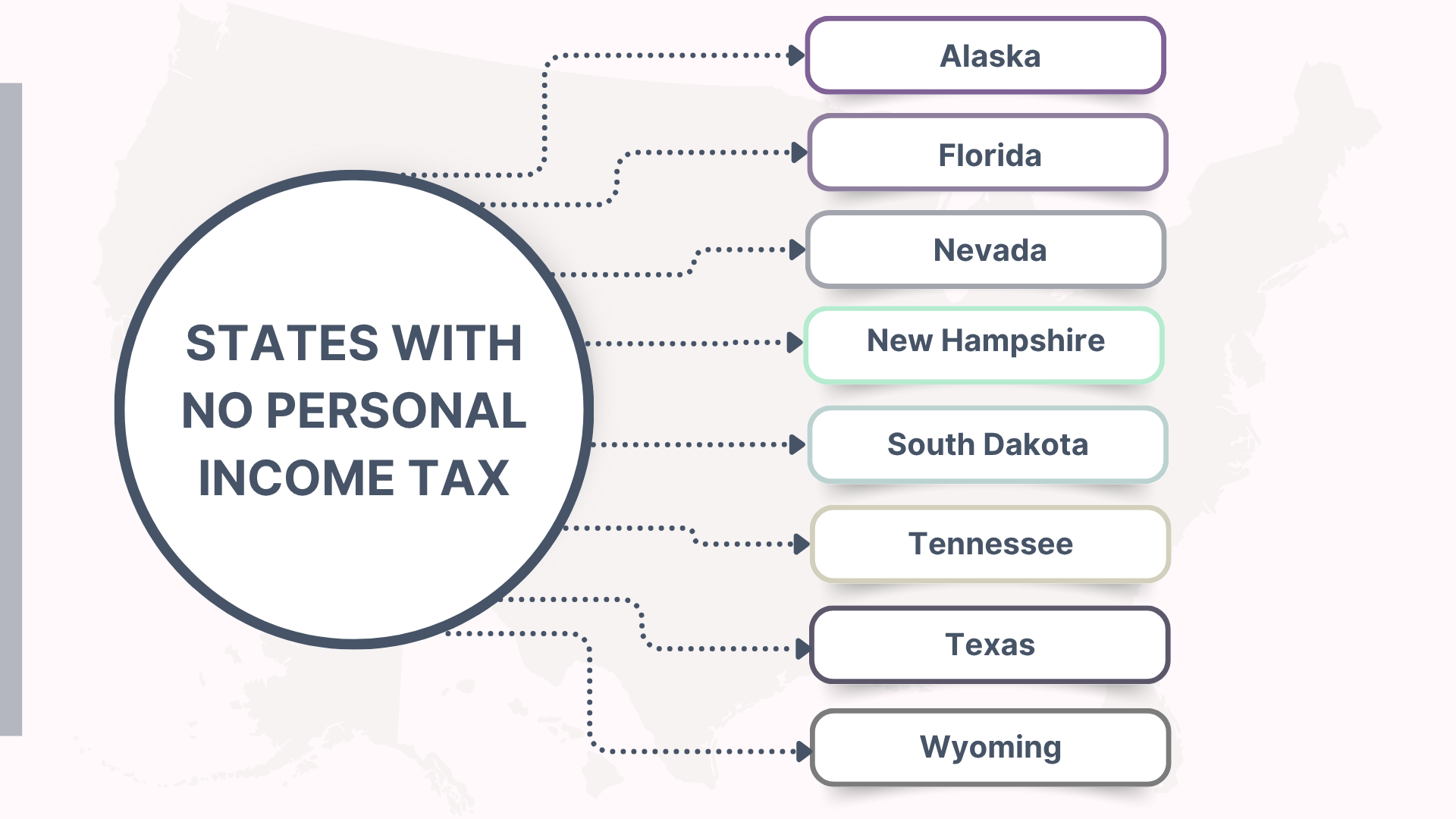
State unemployment insurance, also known as SUTA (State Unemployment Tax Act), is a mandatory payroll tax that employers pay to a state government to fund unemployment insurance programs in addition to FUTA.
Companies with operations or employees in multiple states must register and file unemployment taxes in each state where employees primarily perform their work.
Each worker should be assigned to a single state.
Since different states have different wage base limits, tax rates, filing, and payment schedules for SUTA contributions, determining the correct one is necessary to avoid double taxation and ensure compliance.
However, in some cases, this can be much more challenging.
The Department of Labor’s Localization of Work Provisions provides the “four factors test,” or a step-by-step framework to guide employers in assigning unemployment tax to the appropriate state.
Beyond federal and state requirements, many municipalities impose additional payroll levies, including:
Although not that common, according to the Tax Foundation, 5,055 local jurisdictions, including counties, cities, school districts, and special taxing districts, levy them in 16 states nationwide. They are most prevalent in Pennsylvania, Ohio, and Maryland.
While intended to fund local services or offset other taxes, these local levies require employers to track diverse rules, forms, and rates to ensure accurate withholding and reporting.
Some states have reciprocal tax agreements that simplify payroll for employees who live in one state but work in another. These agreements allow companies to withhold income tax only for the employee’s state of residence, avoiding double taxation.
Currently, 16 states and Washington, D.C, have reciprocal agreements with at least one other state.
They are either bilateral or unilateral.
Bilateral agreements are mutual and often vary by income type or state policy, while unilateral agreements extend reciprocity only if the other state offers the same.
One final aspect of tax considerations for multi-state payroll processing is the “convenience of the employer” rule, which can complicate taxation for remote workers.
Under this rule, if employees work remotely in a different state for personal convenience, not because the job requires it, they may still owe income tax to their home state.
This regulation can lead to double taxation unless an exception applies or the employee lives in a no-income-tax state. The good news is that it’s limited to a few states: New York, Delaware, Nebraska, and Pennsylvania.
Connecticut and New Jersey also tax nonresidents working remotely, but only if the individual’s home state imposes a comparable tax.
Wage and hour laws intersect with HR, legal, and payroll functions, especially in multi-state operations. Ensuring compliance means keeping up with changing pay practices, employee classifications, record-keeping rules, and more, which can differ significantly by jurisdiction.
The Fair Labor Standards Act (FLSA) sets the baseline for wage and hour protections in the U.S., including minimum wage, overtime pay, record-keeping, and child labor rules.
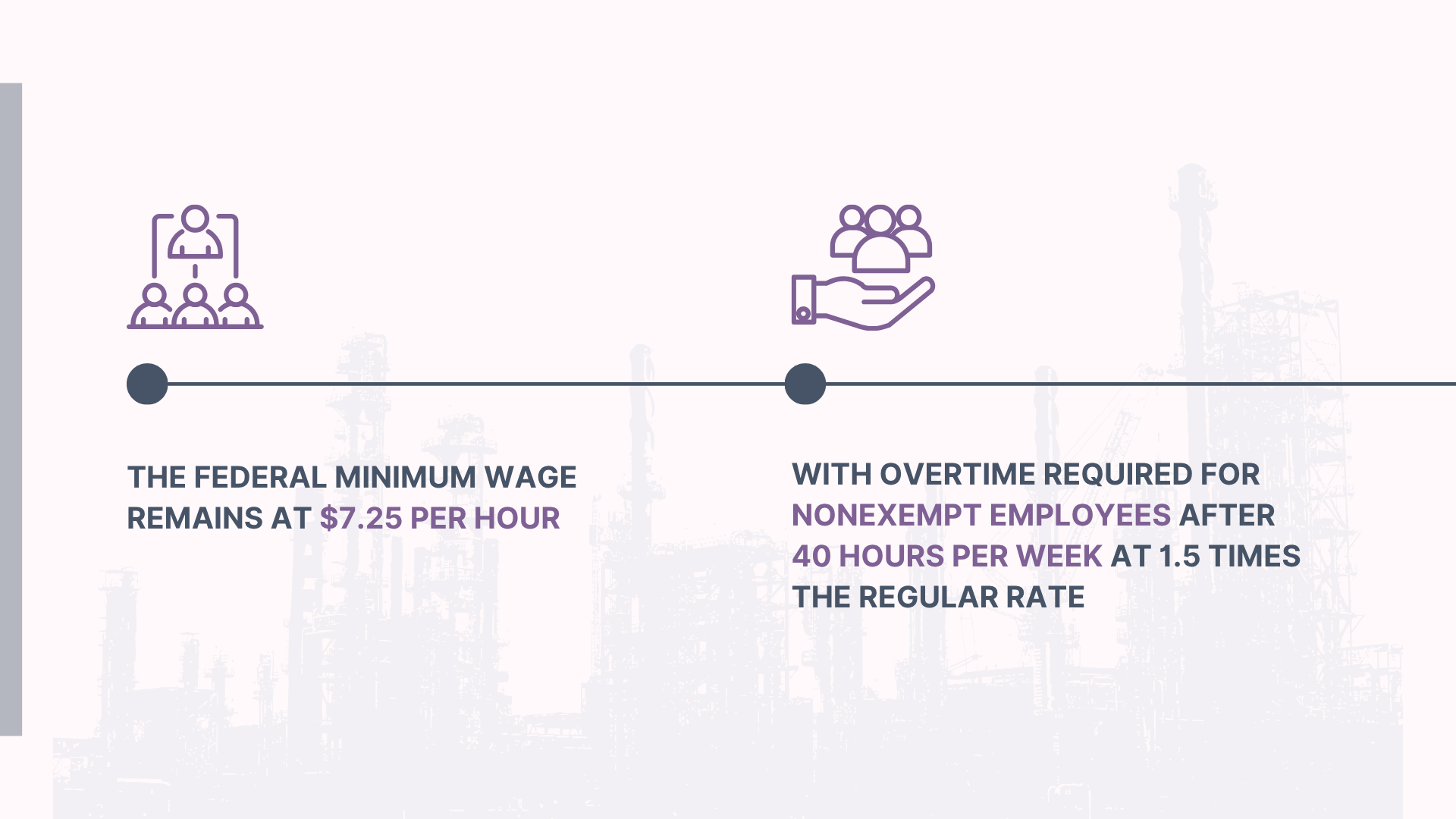
According to the Department of Labor, the federal minimum wage remains at $7.25 per hour, with overtime required for nonexempt employees after 40 hours per week at 1.5 times the regular rate.
Under the FLSA, companies must also comply with regulations for tipped employees and youth employment and maintain accurate time and pay records.
These standards apply nationwide, but employers must consider state-specific laws that may provide greater workforce protections.
Different jurisdictions may have their state labor laws that differ from federal standards, including:
Employers must apply the most employee-friendly provisions when federal, state, and local laws conflict. This approach ensures compliance and minimizes legal risks.
A full breakdown of labor laws by state is available here.
When operating across state lines, employers face the challenge of reconciling different and sometimes conflicting requirements. The following are common strategies they can use to manage these areas of tension:
Deciding whether to adopt a single company-wide policy that meets the most stringent requirements or create more complex state-specific policies
Implementing systems to track where work is performed to determine applicable laws
Ensuring managers understand different requirements for employees in various locations
Keeping detailed, state-specific records that demonstrate compliance in the event of audits or disputes
Regularly reviewing regulatory updates and adjusting internal policies and practices to align with new requirements
Benefits administration becomes exponentially more complex when conducted across multiple states.
Companies with distributed workforces face the challenge of balancing consistent employee experiences with the distinct regulatory environments of each jurisdiction.
Therefore, success in this area requires a vast knowledge of state mandates and keeping benefits flexible to accommodate these differences.
Although it’s not mandatory on a federal level, several states have individual mandates that make health care insurance a requirement: California, Massachusetts, New Jersey, Rhode Island, Vermont, and Washington, D.C.
That said, offering coverage, with or without a federal mandate, should be a priority for employers who want a healthy and productive workforce.
Unfortunately, it gets more complicated with dispersed employees.
For one, not all insurance carriers operate in every state, which might mean working with multiple providers to cover all employees. Even when they do, each state has different mandates regarding what benefits must be included, their coverage, premium contributions, etc.
At the same time, employers must ensure network adequacy so that workers in all locations can easily access in-network doctors and hospitals.
Most companies can solve these problems by partnering with large national insurance carriers with providers in many states or setting up separate regional plans for different employee groups.
Additionally, clear communication about how plans work in each location helps employees understand and use their benefits effectively, regardless of where they’re based.
Paid leave is another area where (some) state laws outpace federal standards.
While the federal Family Medical Leave Act (FMLA) provides up to 12 weeks of unpaid, job-protected leave, many states have implemented paid leave programs with their own eligibility rules, benefit structures, and funding mechanisms.
| LEAVE TYPE | STATES INVOLVED | CONSIDERATIONS |
|---|---|---|
| Mandatory Paid Family and Medical Leave | California, Colorado, Connecticut, Delaware, Maine, Massachusetts, Maryland, Minnesota, New Jersey, New York, Oregon, Rhode Island, Washington, plus Washington, D.C. | Funded mainly through employee payroll taxes, although some states include employer contributions |
| Voluntary Paid Leave Options | Alabama, Arkansas, Florida, New Hampshire, Tennessee, Texas, Vermont, and Virginia | Employers can opt in by purchasing paid leave coverage from private insurers |
| Paid Parental Leave for State Employees | Georgia, Nevada, New Hampshire, South Carolina, Texas, and Utah | Covers birth, adoption, or fostering – New Hampshire also allows medical or military-related leave |
| Paid Sick Leave | Arizona, California, Colorado, Connecticut, Illinois, Maine, Maryland, Massachusetts, Michigan, Minnesota, Nevada, New Jersey, New Mexico, New York, Oregon, Rhode Island, Vermont, Washington, plus Washington, D.C. | Private sector employers must provide paid sick leave (for illness, preventative care, or caring for a sick family member), but rules and hours vary by state |
| School Leave | California, Illinois, Massachusetts, Minnesota, Nevada, New Jersey, New Mexico, North Carolina, Rhode Island, Vermont, and Washington, D.C. | Provides limited annual hours for parents to attend school events, with variations in allowed time by state |
States also set different rules for how employees accrue paid leave, when and how they can use it, and whether they can carry over unused leave to the following year.
This patchwork of requirements creates significant administrative challenges for multi-state employers, often requiring customized time-off policies by location.
No mandates require private employers to offer retirement plans at the federal level.
However, over 25 states have proposed retirement legislation, and ten have active state-sponsored retirement plans.
Companies operating in multiple jurisdictions should be aware of such programs and their obligations under each state’s laws, which may include mandatory participation, auto-enrollment rules, specific plan types, and employer responsibilities for registering and facilitating contributions.
Multi-state employers must carefully coordinate retirement and pension plans to ensure compliance with all applicable state requirements while maintaining ERISA compliance at the federal level.
Failure to comply can result in penalties in some states.
With all the data involved in multi-state payroll processing, a compliant experience depends heavily on accurate record-keeping and reporting.
Employers must keep documentation supporting payroll tax filings, wage payments, and employment status.
At the federal level, the IRS mandates retaining payroll tax records for at least four years from the due date or the payment date, whichever is later. However, state and local requirements can extend up to eight years.
Many multi-state employers adopt the most conservative retention period across all jurisdictions to simplify compliance.
State reporting obligations can also differ significantly.
Typical requirements include reporting new hires, quarterly wage submissions, annual W-2 reconciliations, paid leave usage reports, and unclaimed wage filings.
Some states have additional rules, so tracking these variable standards and deadlines is paramount for minimizing legal exposure and ensuring smooth payroll operations across state lines.
Before digital solutions transformed payroll processing, managing taxes across multiple states meant drowning in paperwork, manual calculations, and constant compliance concerns. Finance teams relied on physical tax tables and filing systems, which consumed countless hours and risked errors.
Fortunately, nowadays, companies can leverage payroll software that automatically applies the correct tax rates and compliance rules based on employee locations.
These systems continually update with regulatory changes across jurisdictions, eliminating manual tracking of evolving state requirements. Even free payroll software for small businesses often includes automatic updates, easing the compliance burden for small or one-person departments with limited resources.
At the same time, integration capabilities connect payroll with time tracking and benefits systems, maintaining consistency while accommodating state-specific variations.
As companies adopt automated payroll systems, the distinguishing variable is how these tools are used.
Technology can do a lot, but it’s only as good (and effective) as the people who manage it.
Businesses that succeed in multi-state payroll management combine automation with deliberate strategies, coordinated teams, and continuous regulatory awareness.
Effective multi-state management begins with well-documented workflows for consistency and compliance.
This process includes creating standardized procedures for new state registrations, assigning responsibilities, and training staff to keep them current on administrative requirements and internal procedures.
Additionally, facilitate regular cross-department communication between HR, payroll, and finance departments to ensure timely information sharing about employee movements and changing compliance requirements.
State regulations evolve frequently, often with limited notification.
Therefore, rather than relying on reactive measures, companies must develop systematic monitoring methods, such as subscribing to jurisdiction-specific update services, engaging with professional networks for early insights, and establishing direct connections with state tax authorities.
Modern payroll platforms automatically update to reflect changes in tax rates, wage laws, and filing requirements across states. These tools often include compliance alerts, built-in tax tables, and jurisdiction-specific settings to help employers avoid errors.
However, having a formal regulatory review process with assigned responsibility for specific states creates further accountability and a safety net against compliance gaps.
Finally, proactive audits of payroll procedures and records can identify potential issues before they escalate into a liability.
These periodic reviews prevent costly penalties and create documentation demonstrating the company’s commitment to compliance, which is valuable evidence should state authorities conduct their examinations.
Audits should assess compliance with tax withholdings, wage and hour laws, benefits administration, and record-keeping practices.
Multi-state payroll processing presents several challenges that can lead to costly mistakes if not addressed proactively.
| CHALLENGE | SOLUTION |
|---|---|
| Tax Compliance Errors: Misapplying withholding rules or missing local or reciprocal tax obligations | Use payroll software that updates tax rates automatically and includes local tax coverage |
| Jurisdictional Registration Gaps: Failing to register with states or unemployment agencies when required | Maintain a compliance checklist for each state; register promptly when nexus is established |
| Work Location Tracking Issues: Inaccurate tracking of employee locations, especially for remote workers | Implement systems (e.g., time-tracking or geolocation tools) to log where employees work |
| Record-Keeping Issues: Disorganized or incomplete payroll and employee records | Standardize documentation practices across states and use secure payroll platforms |
| Missed Filing Deadlines: Failure to meet different state reporting deadlines | Create a centralized compliance calendar with reminders for all state and local deadlines |
| Noncompliant Payroll Policies: Using policies that conflict with specific state laws | Review and update internal policies regularly to align with each state's labor laws |
Multiple state tax laws, reporting requirements, and local regulations can make in-house payroll management a full-time burden. When this happens, outsourcing becomes an innovative and often necessary solution, allowing businesses to maintain compliance, reduce risk, and free up internal resources.
Below are three common outsourcing options for multi-state payroll, each with specific benefits depending on a company’s size and structure.
A Professional Employer Organization (PEO) is a co-employment partner that handles various HR responsibilities, including payroll, tax filings, benefits administration, and regulatory compliance.
In this arrangement, the PEO becomes the employer of record for tax and benefits purposes, while the company retains control over day-to-day operations and employee management.
They are invaluable for navigating multi-state payroll, providing proper tax withholdings, handling filings, and keeping up with regulatory changes while offering bundled services that streamline HR functions.
PEOs typically charge a percentage of payroll or a per-employee fee and are most suitable for small to medium-sized businesses.


Managed payroll services are third-party providers that take over the technical and administrative aspects of payroll processing, such as calculating pay, handling tax withholdings, filing reports, and issuing payments.
Unlike PEOs, they do not enter into a co-employment relationship, so the company remains the sole employer of record. Therefore, they are best suited for medium to large organizations that want specialized support without giving up complete control over HR functions.
Payroll consultants are independent experts who guide payroll strategy, compliance, and process improvement.
Rather than taking over day-to-day operations, they are typically brought in for specific challenges, such as navigating a multi-state expansion, implementing new software, or preparing for a compliance audit. These professionals can help assess the company’s payroll systems, identify risks or inefficiencies, and recommend solutions.
Consultants are a good choice for any employer that needs expertise on-demand rather than ongoing administration.
While changing state laws and employment regulations add an element of unpredictability, they also open the door for more innovative solutions.
The future of multi-state payroll processing heavily relies on continued advancement in automation, AI-driven tools, emerging technologies like RegTech, and data integration across HR, finance, and legal platforms. Expect features like geolocation-based tax calculations, predictive analytics, and real-time regulatory updates to become standard.
At the same time, payroll systems will need to support a more decentralized job market with tools that offer employee self-service, cross-border transparency, and financial literacy and wellness resources.
The bottom line is that payroll will evolve in lockstep as businesses adapt to a more mobile workplace, shifting employee priorities, and continuous demand for flexible work.
Disclosure: Some of the products featured in this blog post may come from our partners who compensate us. This might influence the selection of products we feature and their placement and presentation on the page. However, it does not impact our evaluations; our opinions are our own. The information provided in this post is for general informational purposes only.
Content Writer at Shortlister
Browse our curated list of vendors to find the best solution for your needs.
Subscribe to our newsletter for the latest trends, expert tips, and workplace insights!
Learn how pre-tax deductions can be a great work perk to get many company benefits and insurance while saving money.

When payroll errors can happen, there are ways for employees to get their money from the employer. Discover what retro pay is, how it happens, the differentiation from back pay, and its effect on taxes.
Organizations need a top-notch and reliable payroll system for digital financial tracking, eliminating the odds of manual errors. Empower your business with an automated payroll system that streamlines processes and maximizes efficiency.

Explore the advantages and disadvantages of payroll outsourcing to evaluate if it is the right solution for your business.
We're working hard to make it easy for you. Sign up for news, trends and insights.