





Best Paycom Competitors & Alternatives in 2025
While Paycom has set a high standard in payroll services, our guide to its top competitors and alternatives reveals other innovative solutions that can transform your HR and payroll operations.
Owner, SEO Optimizers
Head of Recruitment, Euristiq
Chief Marketing Officer, Nextiva
CEO & Tech Entrepreneur, InTechHouse
Payday may feel like just another date on the calendar, but it can be the difference between stability and stress for millions of employees.
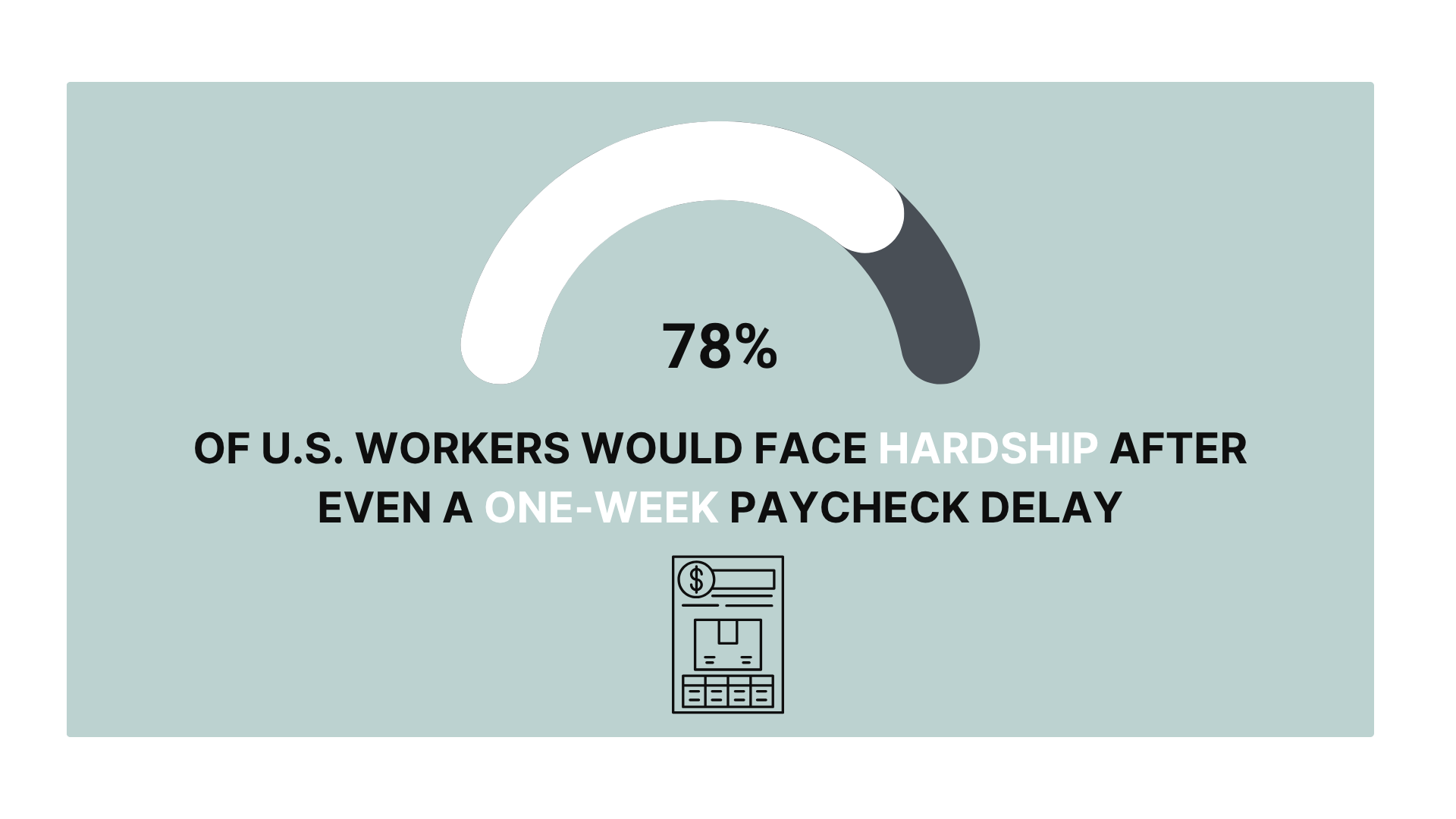
With 78% of American workers saying that even a one-week paycheck delay would cause hardship, payroll timing is more than an administrative choice.
Beyond simply determining when employees get paid, your pay schedule influences cash flow, compliance with state laws, and how much time you spend on administration.
In this article, we explore how to calculate pay periods in a year for various payroll schedules and why those numbers matter for your organization’s success.
At its core, a “pay period” is the recurring interval at which employees earn and receive their pay. Put simply, payroll frequency refers to how often paychecks are issued, whether that’s every week, every other week, twice a month, or any other interval.
So, how many paydays in a year do your employees see? Depending on your chosen schedule, the answer can typically range anywhere from 12 to 52 times.
On the surface, payroll frequency may seem like a trivial math dilemma for the HR department, but in practice, it’s a complex business decision that broadly impacts cost control, compliance, and workforce satisfaction.
As Brandon Leibowitz, Owner of SEO Optimizers, explains, “When deciding between weekly, biweekly, semi-monthly, or monthly payroll, companies need to weigh both operational efficiency and employee expectations.”
Most U.S. organizations choose between four standard payroll schedules.
Each schedule dictates a different number of pay periods in a year and carries unique pros and cons. Below, we break down the typical numbers and what they mean.
Weekly payroll means employees get paid once every week, resulting in 52 pay periods in a year.
The appeal of this payroll schedule centers on financial predictability. Employees receive consistent Thursday or Friday paychecks, which means bills, groceries, and other expenses can be handled on a weekly basis.
This is why weekly payroll makes particular sense when the workforce skews toward hourly employees who may lack a savings buffer.
According to the Bureau of Labor Statistics, 27% of U.S. companies maintain weekly schedules, making it the second most popular choice of payroll frequency.
Yet, the convenience for employees comes at a price.
Running payroll 52 times a year demands more time, a larger administrative budget, and increases the odds of error. As Leibowitz recalls from his small business experience, “Weekly payroll created unnecessary administrative strain.”
If you’re calculating how many biweekly pay periods in a year your company would have, the answer is typically 26. Under a biweekly schedule, employees are paid every two weeks, typically on a set day, such as every other Friday.
Occasionally, the calendar can align to include a 27th pay period in a year, but 26 is the norm.
While biweekly pay might seem straightforward, many businesses get caught off guard by one important detail: two months each year include three paychecks, creating temporary cash-flow pressure if not anticipated.
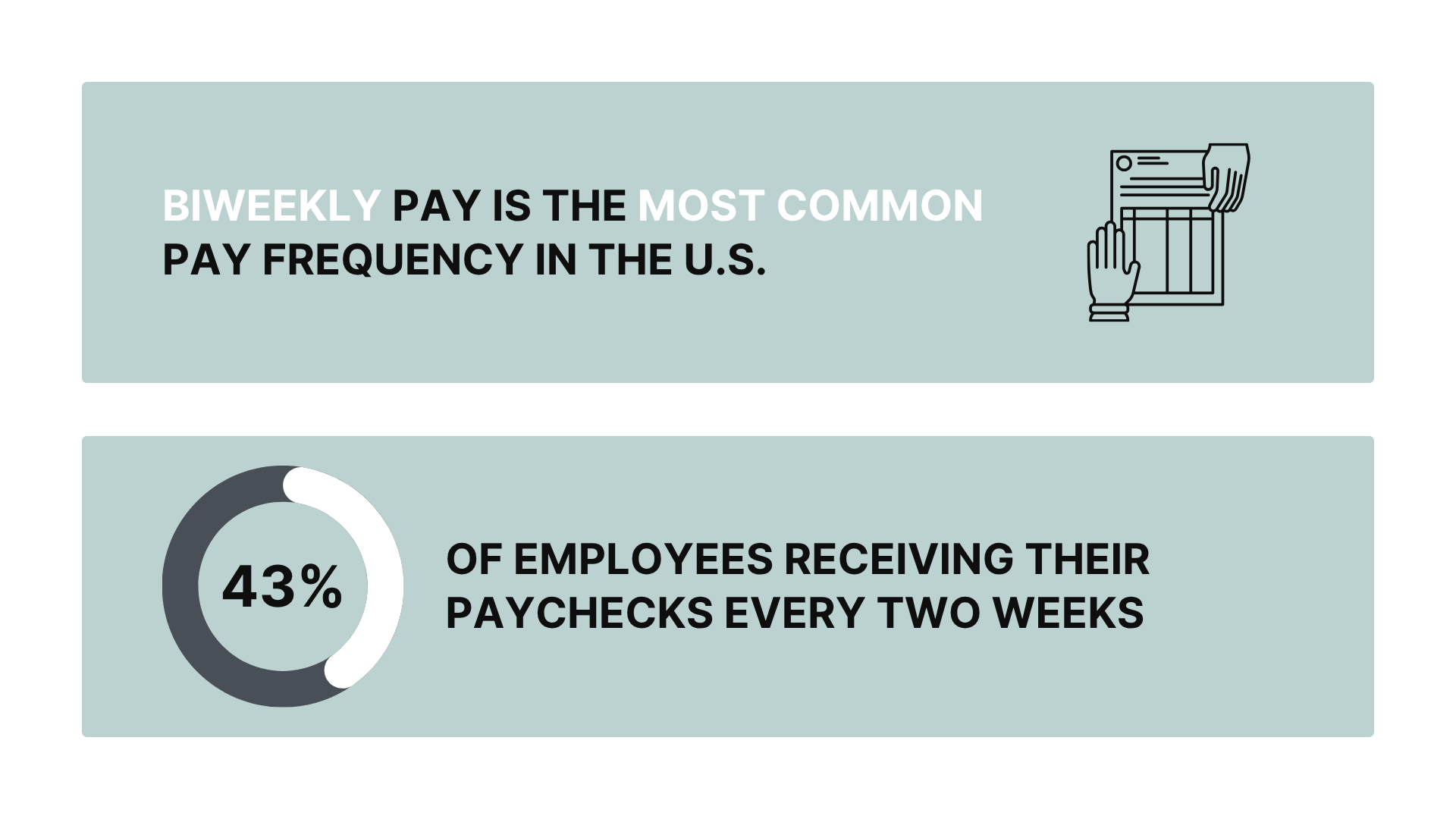
Despite this, biweekly pay is currently the most popular pay frequency in the U.S, with 43% of employees receiving their checks on a biweekly basis.
“I find a biweekly schedule optimal: it allows employees to plan expenses regularly, and the employer to maintain control over processes without unnecessary burden on HR and accounting. It is a certain balance between flexibility for employees and efficiency for the business,” says Mariana Cherepanyn, Head of Recruitment, at Euristiq.
Semi-monthly payroll means paying on two fixed dates each month – often the 15th and the last day – for a total of 24 pay periods in a year.
For employers, this two-paychecks-per-month pattern provides a predictable rhythm and can simplify monthly financial reporting. It’s especially common in finance, law, and other professional services – mainly industries built around regular billing cycles.
However, semi-monthly schedules introduce complexity that biweekly systems avoid.
Payday dates fluctuate when the 15th or 30th falls on weekends or holidays, requiring calendar adjustments that confuse employees and complicate processing. Leibowitz warns, “I’ve seen confusion arise when pay dates fall on weekends or holidays.”
Overall, the administrative efficiency gains are negligible compared to biweekly schedules, while the inconsistency undermines one of payroll’s primary functions: predictability.
Monthly payroll is the simplest in terms of count: 12 pay periods in a year, or one paycheck each month.
From an employer’s perspective, monthly pay is cost-effective and easy to administer, since payroll is run only a dozen times a year – saving time and reducing processing fees.
Yet, while monthly payroll may be the easiest to manage on paper, efficiency doesn’t always translate to effectiveness in practice.
For employees, monthly paychecks mean a long stretch between pay days, and many workers struggle with 30-day payment gaps. As Michal Kierul, CEO of InTechHouse, puts it, “Monthly payroll is simplest for employers, but often strains employees, especially younger ones without savings buffers.”
Unsurprisingly, monthly payroll is the least common schedule in the U.S. today and is generally the least preferred by employees.
Therefore, the savings generated by fewer payroll runs often pale in comparison to the potential negative impact on recruitment, morale, and productivity.
When choosing a schedule, companies often weigh several practical considerations against what their workforce prefers.
One of the first constraints on pay frequency is legal compliance. Employers must abide by federal and state laws that dictate how often employees must be paid.
While U.S. federal law doesn’t set specific pay interval requirements, many states do, and the rules can vary widely.
For example, Arizona mandates that paychecks be issued no more than 16 days apart, effectively requiring at least semi-monthly pay. On the other hand, states like Alabama, Florida, and South Carolina have no payday requirements.
Other states require weekly pay for certain types of employees. New York, for example, requires manual laborers to be paid weekly by law. Multi-state employers also face the added complexity of juggling different requirements in different jurisdictions.
Therefore, always verify the legal minimum pay frequency in the locations where you operate.
The more often you run payroll, the more work it requires. Each payroll run involves calculating gross wages, withholding taxes, processing direct deposits or checks, and handling deductions.
Doubling the number of pay periods, say from monthly to biweekly, doubles those tasks over the course of the year. Given that payroll often constitutes the largest expense for a business, up to 60% of total costs in some cases, even small inefficiencies can add up.
Outsourcing payroll services lightens the workload, but many providers charge per run or per employee, which means the frequency of your payroll directly impacts your operational costs.
Your payroll schedule also determines how money moves through your business.
If you pay employees monthly, you effectively hold onto cash longer throughout the month, which can improve short-term liquidity. With weekly payroll, there’s less time to accumulate funds between pay dates, so any dip in revenue or unexpected expense could create a cash shortfall.
Therefore, companies should coordinate their revenue inflows, including customer payments and receivables, to match payroll outflows.
Workforce demographics fundamentally shape payroll preferences. As the workforce becomes younger and more diverse, payroll frequency plays a larger role in attracting talent.
Research finds that younger employees strongly prefer frequent payments, while older generations and more established professionals care less about timing than total compensation.
Geography matters too. What feels like standard practice in one place might clash with employee expectations elsewhere. Mariana Cherepanyn gives an example, stating, “Biweekly payments are widely used in the U.S., while monthly payments are more common in Europe due to more convenient administration.”
Thus, companies expanding either domestically or internationally must adapt rather than impose familiar norms.
Ultimately, listening to your workforce and understanding their financial realities should inform your payroll scheduling decision.
Every organization operates differently, meaning the ideal number of pay periods in a year depends on various factors. Yet, clear patterns have emerged across industries.
For example, construction leads all sectors in weekly payroll adoption at 65.4%, mainly due to changing work hours and laws protecting high-turnover workers. Manufacturing is split between weekly (43.4%) and biweekly (46.6%) pay, depending on union contracts and company policies.
On the other hand, professional workforces with higher compensation levels can more easily manage longer gaps between paychecks.
Information and technology companies show 37.5% semi-monthly usage, often coordinating pay cycles with project billing rhythms and professional employees’ preference for predictable dates.
That’s why, as Yaniv Masjedi, CMO at Nextiva, notes, “The choice generally depends on the workforce composition and industry norms: employing hourly and shift-based staff requires weekly or bi-weekly schedules, while paying salaried staff requires a semi-monthly or monthly system.”
Economic downturns, rising debt, and shrinking savings have left many workers living paycheck to paycheck. A recent survey shows 67% of U.S. employees now fall into that category.
However, depending on how many pay periods a year companies schedule, employers may directly influence whether their workforce moves toward financial stability or deeper stress.
If employees are paid only once a month, many may resort to credit cards, payday loans, or other costly measures to bridge gaps – a scenario Mariana Cherepanyn warns against.
“When payments are too infrequent, employees can feel financial stress and resort to loans or credit. On the other hand, more frequent payments help reduce this pressure and increase loyalty to the company,” she says.
Evidence published in ScienceDirect links higher paycheck frequency with less credit card borrowing and fewer predatory loans.
The impact goes beyond personal finances. The organizational toll of financial stress is both measurable and costly, from higher turnover to lower productivity.
For example, financially stressed employees are twice as likely to seek new employment – 36% versus 18% for their financially secure peers. They’re also more distracted on the job – 56% of financially stressed employees spend three or more hours per week at work dealing with personal finances.
Of course, more frequent pay alone isn’t a cure-all for financial stress – underlying wage levels and budgeting habits matter greatly.
However, the number of paydays in a year is one lever employers can adjust to support employees’ financial wellness.
As workplace technology and employee expectations evolve, payroll practices are becoming more flexible.
One emerging trend is on-demand pay, also called earned wage access, which lets employees access a portion of their earned wages before the regular payday.
“One option I support is offering on-demand pay as a supplement. Not everyone needs it, but giving employees the option to access earned wages early for unexpected expenses reduces financial anxiety without forcing weekly payroll on the company,” says Kierul.
We’re also seeing a shift in how companies view the role of payroll frequency in the overall employee experience. It’s increasingly understood that payroll isn’t just a back-end function but a front-line factor in employee satisfaction.
“More progressive companies are now considering payroll as an instrument to amplify employee experience and retention rather than just another administrative chore,” observes Masjedi.
Ultimately, choosing the right payroll schedule is not just about counting pay periods in a year – it’s about aligning with the financial needs of your workforce and the operational realities of your business.
Senior Content Writer at Shortlister
Browse our curated list of vendors to find the best solution for your needs.
Subscribe to our newsletter for the latest trends, expert tips, and workplace insights!

While Paycom has set a high standard in payroll services, our guide to its top competitors and alternatives reveals other innovative solutions that can transform your HR and payroll operations.

Streamline your payroll processes and ensure accuracy with free payroll software solutions.

Weighing the pros and cons of a disregarded entity can help make a more informed decision in selecting the type of business entity that would be the best choice for new business entrepreneurs.

Paylocity has secured a spot as one of the top payroll providers thanks to its convenience and comprehensive features. However, as companies’ needs evolve, we explore Paylocity alternatives and competitors that stay current with these changes.
Used by most of the top employee benefits consultants in the US, Shortlister is where you can find, research and select HR and benefits vendors for your clients.
Shortlister helps you reach your ideal prospects. Claim your free account to control your message and receive employer, consultant and health plan leads.