Shortlister Data

Why Cancer RFPs Rose 45% in 2026? 

Shortlister’s latest figures suggest that cancer benefits are moving further into procurement, where clinical promises have to withstand financial scrutiny.
In This Post:

At Shortlister, we track a number of useful data points, and some of the buying signals we monitor for every benefit category include search volume and RFPs.  

Search volume is how often brokers, consultants and employers look up a category on the platform while researching vendors. It measures interest.  

RFP volume is how often they take the next step and ask vendors in that category for a formal proposal for a specific employer. It measures buying intent. 

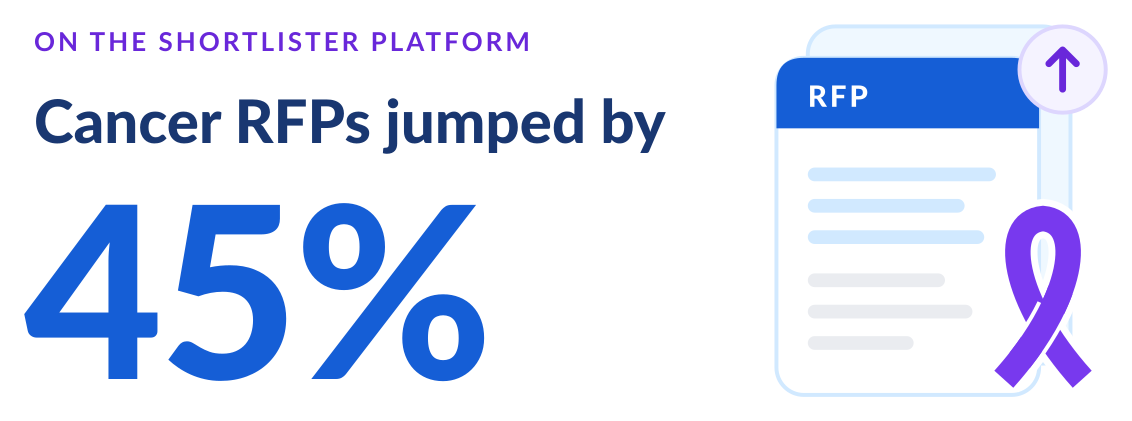
For cancer solutions, the second signal is pulling ahead of the first. From 2025 to 2026, cancer search volume rose 15%, while cancer RFP volume rose by an impressive 45%. 

When requests for proposals grow three times faster than research, buyers have stopped asking what’s out there and started asking what it will cost. 

cancer rfps 2026

The Research Happened Before the RFPs

Cancer support benefits were familiar territory for many benefits buyers well before 2026. In fact, earlier Shortlister data showed that oncology-related searches tripled over two years. 

Research on that scale usually ends in a decision at some point. 

Shortlister’s benefits procurement calendar shows that a January launch often requires a vendor decision months before open enrollment.  

In other words, many cancer RFPs issued in 2026 are often decisions about 2027. 

So, what pushed so many employers from reading to buying?  

Oncology Costs Reached the Renewal Table

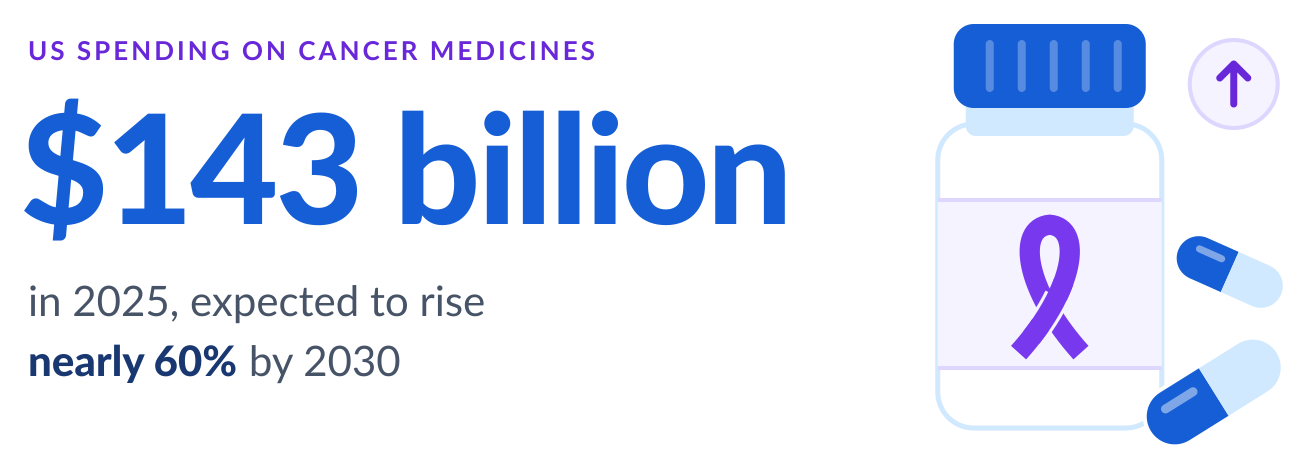
Part of the answer lies in the cost of treatment, since US spending on cancer medicines reached $143 billion in 2025 and is expected to rise nearly 60% by 2030. 

Oncology has become the clearest case of specialty drugs driving up pharmacy trends, and oncology navigation now ranks among the care management priorities set for health plans. 

Cancer care has become a recurring topic in employer strategy conversations, as alarmingly more adults under 50 receive a diagnosis. 

At that scale, cancer care costs for employers are unlikely to ease on their own. 

Instead, the growing burden of cancer calls for a program that engages at diagnosis, when a navigator can still guide the choice of specialist and treatment before the largest bills are set. 

For that reason, a growing number of employers now include cancer support programs and oncology-focused benefits navigation in their RFPs as cost controls and employee support. 

Employees Expect Cancer to Cost Far Less

Meanwhile, employees tend to picture a far smaller bill than the one they could actually face. 

In the latest Aflac WorkForces survey of 2,001 employees, three-quarters estimated that an insured American would pay less than $2,000 out of pocket in the year after a cancer diagnosis. 

In reality, the federal rules allow a much higher figure, since a group health plan can set its 2027 in-network out-of-pocket maximum as high as $12,000 for self-only coverage, up from $10,600 in 2026. 

Treatment that starts in the fall can also cross into a new plan year, and the patient may then face a second deductible. 

Interestingly, that misjudgment also shapes how cancer programs get scoped.  

When employees expect a small bill, voluntary critical illness coverage may seem optional at enrollment, and questions about money only surface after a diagnosis. 

Employers can close that gap by including cost education and financial counseling, so employees understand what they may owe and where to turn for help covering those costs. 

More Treatment Options, Harder Decisions

Cancer care is also getting harder for patients to navigate, largely because the range of treatment options keeps widening.  

Science is advancing well beyond what seemed possible only a few years ago, from a personalized mRNA melanoma vaccine to robot-assisted mastectomy and even a chewing gum that cuts cancer-linked HPV levels in lab tests. 

Newer approaches, such as cell and gene therapies, now account for 35% of cancer trials, and an average of 26 new cancer medicines were launched each year between 2020 and 2024. 

Every new option, however, adds another decision for a patient who has often just received life-changing news. 

For employers, that complexity makes decision support as important to a cancer benefit as help with the bills. 

Why Prevention Belongs in the Cancer RFP

Cancer RFPs can include prevention and screening, as well as support after diagnosis.  

A global analysis published in February 2026 traced 7.1 million of the 18.7 million new cancer cases in 2022 to modifiable risk factors such as tobacco and alcohol, close to 38% of the total. 

Treatment costs also depend on the stage at diagnosis. 

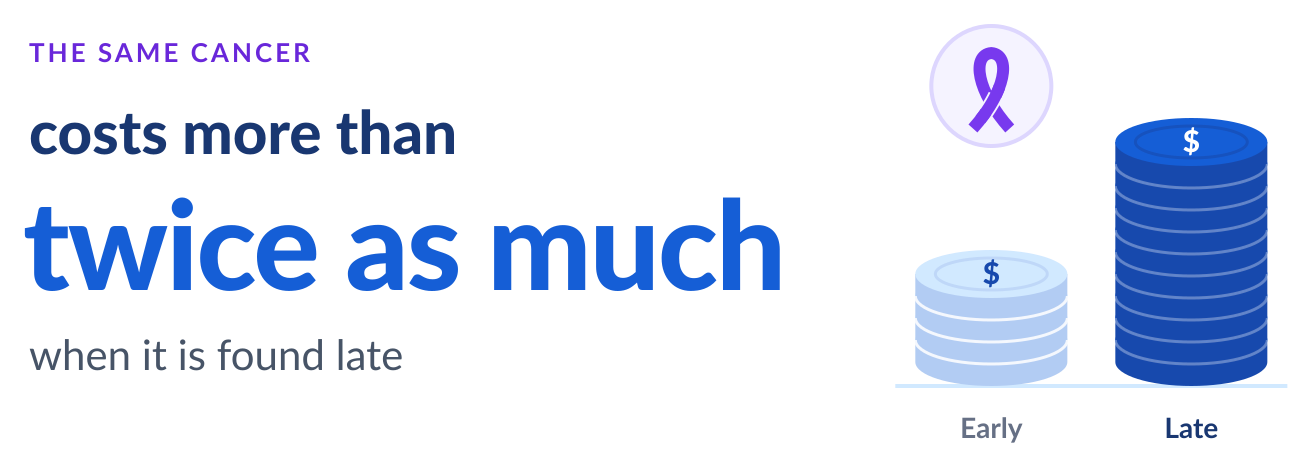
A July 2026 study of older Medicare patients put first-year medical costs for colorectal cancer at $49,000 for early-stage disease and $116,000 for advanced-stage disease. 

Put differently, the same cancer costs more than twice as much when it is found late. 

After guidelines lowered the colorectal screening age to 45, screening among adults aged 45–49 rose 62% between 2019 and 2023. Early-stage diagnoses in that group increased 50% in a single year.  

Why, then, does prevention so often slip out of scope? 

Part of the answer is psychological, since treatment costs appear in claims data, whereas savings from prevention must be estimated. 

Employers can counter that bias by writing prevention into the scope of work. 

Pairing outreach with annual health screenings is a starting point, and RFPs can ask vendors how they measure stage at diagnosis across a covered population. 

Clinical Promises Face a Financial Test

Seventy percent of large employers named cancer their top cost driver in 2026, up from 58% a year earlier, and actual health costs have exceeded forecasts for three consecutive years. 

In response, procurement habits have tightened too.  

Nearly all large employers (95%) have issued an RFP for at least one vendor category, and 83% are widening the performance guarantees in their contracts. 

Employers may also have to defend vendor costs in court.  

In March 2026, a federal judge allowed part of an ERISA lawsuit against JPMorgan Chase to proceed over allegations that its health plan overpaid for prescription drugs.  

The ruling signals that vendor arrangements may need to be justified on cost. 

On a Final Note

Cancer RFPs climbed 45% in 2026 because employers had finished most of their research earlier, and the steepest cost outlook in 17 years left little reason to wait. 

Higher cost-sharing limits, a faster treatment pipeline, and closer financial review then shaped what those bids ask for. 

In the end, the programs that win these bids will be the ones that help employees understand their costs and their options before any treatment decision is made, and that can show a finance team what that help was worth. 

Written by Ivana Radevska

Senior Content Writer at Shortlister

Cancer Support Programs

Browse our curated list of vendors to find the best solution for your needs.

Stay Informed

Subscribe to our newsletter for the latest trends, expert tips, and workplace insights!

Related Posts

The Shrinking Shortlist

Shortlister data shows that the average RFP now includes fewer than six vendors. The vendor selection process has moved upstream, where research and AI increasingly decide who reaches the formal evaluation.