Why is Mentorship Important?
In times of increased globalization and rapid technological advancement, mentoring tightens the gap caused by skill shifts and empowers employees, making it an irreplaceable asset in career growth.
Head of Sales and Marketing, Osbornes Law
Chief Culture Officer and Co-Founder, NativePath
“What gets measured gets managed” is a familiar business principle. When it comes to pay equity, however, most companies still fall short.
HR and business leaders today face many pressures to achieve fair compensation and equal opportunity across their organizations. Yet, many are working with incomplete data, manual processes, and inconsistent systems that allow equity gaps to remain.
This article makes the case for adopting workplace equity software as a key solution to fix this problem.
The gender wage gap worsened in 2023 for the first time in two decades, with women earning just 82.7 cents for every dollar earned by men.
Despite years of conversation and policy, the World Economic Forum reported that Northern America’s economic gender gap has remained virtually unchanged since 2006.
Instead of making progress, the dreams of closing disparities seem to be slipping further out of reach. At the current pace, it could take more than 40 years to reach pay parity between men and women.
Additionally, these delays also carry a growing financial cost.
Every year, when a company postpones correcting pay disparities, the price tag to fix them rises significantly. One analysis found that the average cost to remediate pay gaps increases by about $439,000 for each year an organization fails to take action.
In other words, inequity only becomes more expensive over time.
The motivation for equity changes stems from different pressures: job candidates, internal stakeholders, and regulatory updates – all demanding greater transparency.
In short, HR teams are dealing with a more complicated pay landscape than ever before.
In the United States, state-level pay transparency mandates have multiplied in the past few years.
By November 2025, around fifteen U.S. states and some localities will have pay transparency laws, requiring employers to disclose salary ranges in job postings or share pay scales upon request.
What started in a few “progressive” places, such as California and New York, has quickly become a nationwide trend.
This trend isn’t exclusive to the United States.
Globally, the push for transparency is expanding. More than two dozen jurisdictions worldwide now mandate some form of pay gap reporting or salary disclosure.
The EU Pay Transparency Directive, for example, which comes into effect on June 7, 2026, will require large companies to report gender pay gaps and justify differences.
The message from policymakers is clear: employers must address pay fairness or face legal requirements to do so.
These new laws have also created a compliance crisis for employers. The problem is not just the volume of regulations – it’s their inconsistency across regions.
Companies operating in multiple cities or states face a mix of rules that can be difficult to navigate.
One state might require pay ranges in job ads for any employer with more than 15 employees, while another only needs them for companies with more than 100 employees and only upon candidate request.
Job posting requirements, record-keeping, disclosure timing, and covered roles all vary.
Adding to the complexity, many companies are shifting toward skill-based pay models rather than traditional job titles. With remote work now the norm, compensation strategies must account for geographic differences in cost and market rates.
All factors considered, it becomes clear why HR teams need better, more current data about compensation to navigate all these changes successfully.
Beyond laws and regulations, employees themselves are demanding equity and transparency.
Today’s workforce, especially younger generations, expect fair pay practices and openness as a basic standard from their employers.
A recent survey found that about a third of U.S. workers (33%) now rank pay transparency and equity as their top job priority, on par with compensation and benefits. Among Gen-Z workers, this number is even higher – as many as 44% put pay transparency at the top of their list.
Considering Gen-Z is projected to make up roughly 30% of the workforce by 2030, companies cannot afford to ignore these preferences.
In response, more employers are taking visible steps to meet these rising expectations.
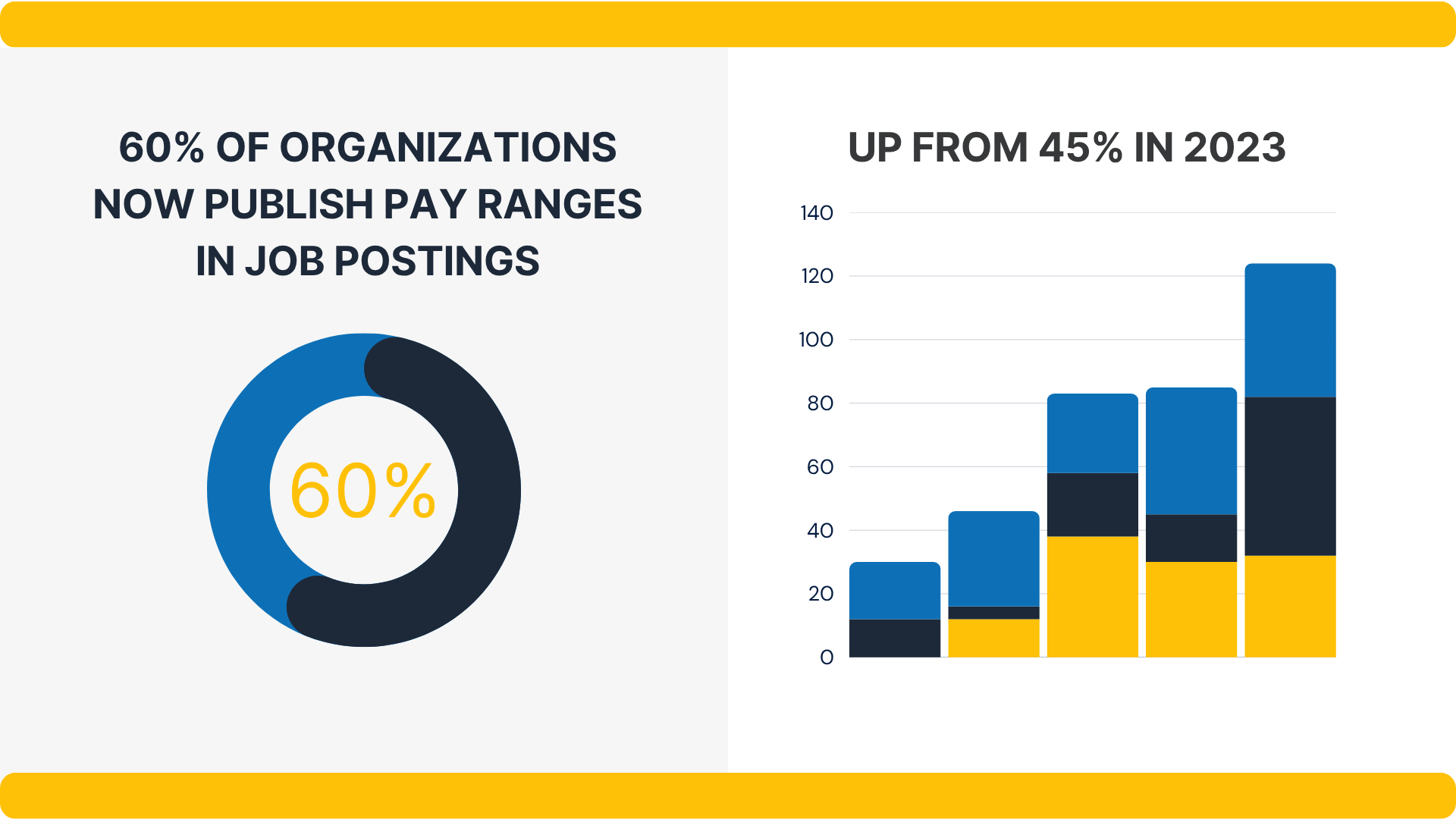
According to Payscale’s study, 60% of organizations now publish pay ranges in job postings, up from 45% in 2023.
Let’s consider a hypothetical: what happens if a company ignores these signals or looks the other way to pay inequities?
The cost of inequity will be most apparent in three key areas: legal risk, reputation, and talent.
Perhaps the most immediate risk of failing to address pay equity is legal trouble.
Pay discrimination claims have been rising, and both government agencies and private attorneys are increasingly aggressive in pursuing unequal pay cases.
The Equal Employment Opportunity Commission (EEOC) has prioritized combating pay discrimination and “has recovered millions of dollars for workers” in recent years.
Major companies have also paid huge sums to settle wage bias lawsuits – Disney recently paid $43M and Goldman Sachs $215M to settle claims of underpaying women.
Another layer to consider is how new pay transparency and equity laws can trigger even more legal action. For example, after Washington state implemented a strong Equal Pay and Opportunities Act in 2023, there was a notable spike in class-action lawsuits alleging pay disparities.
In some cases, a lack of proactive audits has resulted in years of backpay and reputational damages.
Simply put, inequitable pay practices put a legal target on a company’s back and can quickly escalate under evolving laws.
Legal fines are one thing, but what about the damage to your company’s reputation if pay inequities are exposed?
In the digital age, news travels fast, with bad news traveling even faster.
A single viral tweet, reel, or Glassdoor review about unfair pay practices can reach thousands of eyes in a day. A reputation for inequity can seriously damage your brand in the eyes of both consumers and potential hires.
On the other hand, being known as a fair and transparent employer is a competitive advantage.
Research shows that job seekers today actively evaluate a company’s record on equity and diversity when considering job offers. In fact, 92% of job seekers say that transparency about pay and benefits is important to them when weighing an offer.
If your organization develops a reputation for underpaying certain groups or for secretive, unfair pay policies, you will lose a sizeable talent pool.
As Chris Aubeeluck of Osbornes Law puts it, “The transparency the software brought to the process helped people understand that decisions weren’t arbitrary or biased. Simply knowing there was a system watching over fairness eased frustrations and helped reduce turnover caused by feelings of unfair treatment.”
According to a 2025 survey, one out of three employees said they would seriously consider leaving their job if they discovered a coworker in the same role was earning more for no valid reason.
Pay inequity, or even its perception, is a huge driver of employee turnover.
Truthfully, no one wants to feel undervalued, and high performers won’t stay if they suspect they’re being underpaid due to bias or neglect.
Even those who haven’t uncovered a specific disparity might still move on if they doubt their employer’s fairness.
In one study, 58% of workers, and particularly 70% of Gen-Z workers, said they would consider switching jobs to an employer that offers more pay transparency than their current one.
Therefore, openness and demonstrated fairness are becoming key components of the employer value proposition (EVP). Companies that lag on these fronts risk a talent drain and losing employees to competitors who promise a more equitable deal.
Manual pay audits or hiring consultants once every few years simply can’t keep up with the fast-paced and complex landscape we described.
Dr. Chad Walding, Co-Founder of NativePath, explained what trying to keep up looks like in practice, saying, “We were hiring quickly and needed a clear way to compare total comp across people in similar roles without relying on memory or outdated spreadsheets.”
After implementing workplace equity software, he shares, “It highlighted over $80K in unexplained comp difference across just eight roles. That created a real discussion with our ops team about how compensation had been shaped unintentionally based on manager discretion instead of objective inputs.”
Stories like this are exactly why more companies are turning to technology as the solution. Specifically, dedicated workplace equity or pay equity software has become key for spotting gaps and correcting them fast.
What does workplace equity software actually do?
In essence, it uses data and analytics to maintain unbiased, consistent pay for all roles.
These tools integrate with your HRIS and payroll data to analyze compensation across the company, controlling for factors like role, tenure, location, performance, and more.
Advanced platforms not only flag unexplained pay gaps with interactive dashboards and reports, they also create opportunities to integrate financial literacy initiatives and help employees understand their total compensation.
When evaluating workplace equity software solutions, it’s important to know which features truly drive results. You will want to choose a platform that identifies pay issues, helps you solve them, and sustains equity over time.
When selecting a tool, look for platforms that:
Some platforms go beyond job titles and use AI-driven analytics to compare roles based on actual responsibilities and assess whether employees doing similar work are paid fairly.
These capabilities allow HR teams to make informed, strategic decisions aligned with their company’s compensation philosophy.
While many companies strive to achieve pay equity, the road to getting there isn’t always clear.
To set the foundation for success, consider these key strategies:
Get Leadership Involved and Set Clear Targets
Build the business case with a focus on legal protection, talent retention, and values alignment. Leadership support is a must, especially when compensation adjustments are needed. Set targets, and once those are achieved, stay ahead of pay gaps by setting unbiased starting salaries, monitoring equity in real-time, and making data-informed adjustments as roles evolve.
Build a Cross-Functional Team
Bring together HR, legal, IT, compensation, and communications. HR may take the lead, but legal addresses the compliance aspect, and IT handles data security. A cross-functional team ensures you address both the technical and human aspects of implementation.
Prepare and Standardize Your Data
Before importing data, audit your HRIS for gaps, such as inconsistent titles, missing demographics, or outdated records. Clean, structured data with standardized job levels leads to better insights.
Start Small, Then Scale
Test the tool in one business unit or region. Gather feedback and refine your approach. Use pilot insights to improve the broader implementation.
Make It Part of Everyday Work
Embed the software into your annual compensation reviews and hiring processes. Equity checks should become routine and not be treated as a one-off exercise.
Train and Communicate Early
Explain the “why” to your teams. Offer clear training to those using the tool and decide how much to share with employees. Transparency around the effort can build trust and signal action.
Handle Sensitive Data with Care
Pay data is sensitive. Limit access, safeguard privacy, and consider legal protections like attorney-client privilege for audits.

In conclusion, future-proofing your equity strategy is about being proactive and agile.
Forward-looking companies aren’t waiting for a legal mandate to act. They see pay equity as part of a broader people strategy that fuels retention, engagement, and performance.
In the end, workplace equity software is the solution that turns good intentions into measurable, lasting change.
Disclosure: Some of the products featured in this blog post may come from our partners who compensate us. This might influence the selection of products we feature and their placement and presentation on the page. However, it does not impact our evaluations; our opinions are our own. The information provided in this post is for general informational purposes only.
Senior Content Writer at Shortlister
Browse our curated list of vendors to find the best solution for your needs.
Subscribe to our newsletter for the latest trends, expert tips, and workplace insights!

In times of increased globalization and rapid technological advancement, mentoring tightens the gap caused by skill shifts and empowers employees, making it an irreplaceable asset in career growth.

Paylocity has secured a spot as one of the top payroll providers thanks to its convenience and comprehensive features. However, as companies’ needs evolve, we explore Paylocity alternatives and competitors that stay current with these changes.

With “taking pride in work” as a core value, WorkProud delivers features that make employees feel recognized, creating a sense of purpose and building a positive work culture.

Explore HRIS statistics for informed decision-making and streamlined human resource management.
Used by most of the top employee benefits consultants in the US, Shortlister is where you can find, research and select HR and benefits vendors for your clients.
Shortlister helps you reach your ideal prospects. Claim your free account to control your message and receive employer, consultant and health plan leads.