Leveraging Employee Incentive Programs for Small Businesses
Can small businesses truly compete with corporate giants by leveraging employee incentive programs, and what unique strategies can they employ to motivate and retain top talent?
Employers are no strangers to job prospects altering their resumes.
To clear out fraudulent candidates, a quick reference check can help recruiters and companies better represent the applicant’s educational background and work experience.
However, there are more pressing matters than fabricated or enhanced credentials—for example, possible red flags like criminal convictions or other violations.
A survey by NAPBS revealed that up to 95% of employers conduct employment background screenings.
By looking into the applicant’s past work history and education and their potential criminal activity, organizations can select the best fit for the job and the team. In fact, this helps them avoid harm or legal liability like workplace violence, theft, negligence, etc.
For some employers, reference checks are an outdated method that fails to accurately depict the applicant’s personality, qualities, and potential.
However, past performance can be a strong indicator of a person’s ability, motivation, and expertise, especially at later stages of career development. It’s also a practical way to sort out and discard candidates that can pose a potential risk for the company and its employees.
Recent background check statistics show that hiring the wrong person has costly repercussions for businesses, so businesses frequently request background checks on job prospects for employment screening.
To safeguard the organization and its workers, employers should make background checks a common practice, especially for roles requiring high security or trust.
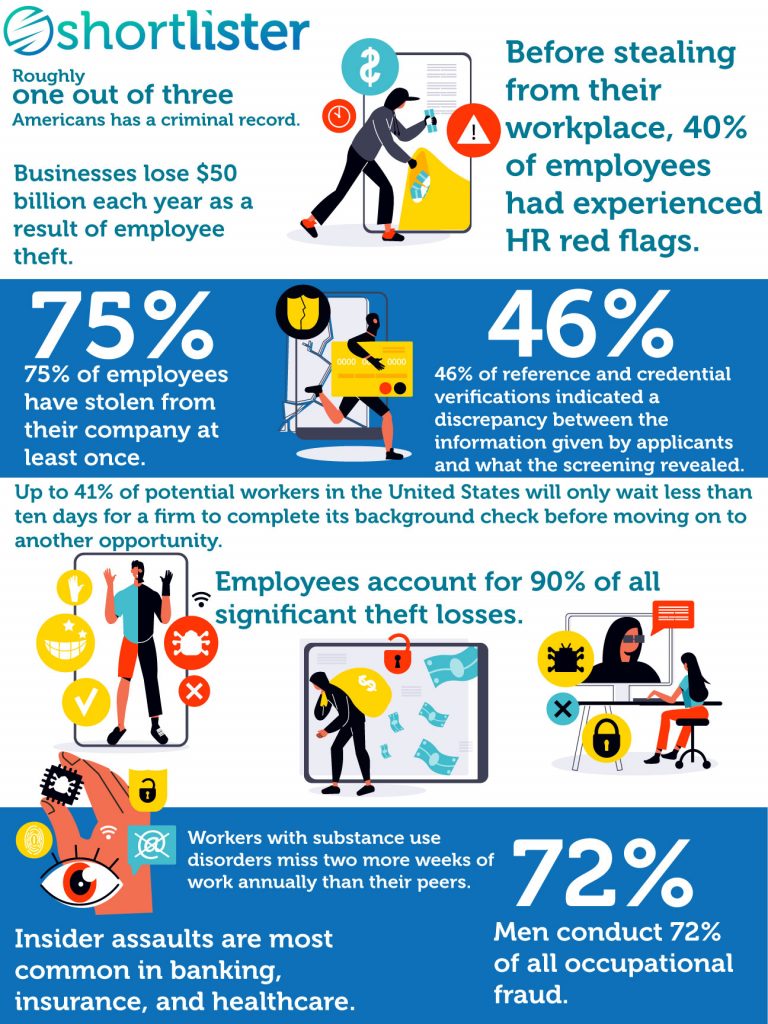
Here are some background check statistics that show the trends in this field:
On paper, many job seekers might seem like the perfect candidate.
But in reality, this could be very different. A misjudgment of a job prospect in the recruitment or onboarding process can seriously affect companies and their current employees.
So, as the first line of defense against a bad hire, background checks can verify the reliability of an applicant.
Depending on the complexity and seriousness of the role, companies can decide the scope of the employee screening processes. It can be anything from simple reference check-ups to inspecting credit scores, criminal records, sex offender registries, motor vehicle reports, and conducting obligatory drug testing.
Overall, background check statistics are showing a rising trend; because remote work is now more attainable than ever, some employers and recruiters are placing even greater emphasis on completing background checks and following up with employees’ references. And by doing so, they are ensuring they can stay on top of the company’s safety.
Browse our curated list of vendors to find the best solution for your needs.
Subscribe to our newsletter for the latest trends, expert tips, and workplace insights!

Can small businesses truly compete with corporate giants by leveraging employee incentive programs, and what unique strategies can they employ to motivate and retain top talent?

From traditional benefits to personalized rewards to creative team challenges, these employee incentive ideas can motivate individuals and teams, leading to better performance and organizational growth.

Dress codes have gone vague and viral. But could your look be quietly costing you trust, influence, or even a lawsuit?

Look ahead to the promising future of PEOs, uncover industry trends, and examine the numerous PEO benefits they offer businesses, solidifying their role as strategic allies.
We're working hard to make it easy for you. Sign up for news, trends and insights.