Shortlister Data

The Fertility Benefits Nobody Was Asking About Two Years Ago 

A benefit can be new to the questionnaire and long overdue for the employee. As buyers pay closer attention to fertility and caregiving, what other needs are still waiting to enter the conversation? 
In This Post:

An employee caring for an aging parent keeps asking to leave early. A colleague undergoing fertility treatment describes the appointments only as a medical issue.  

In both cases, an employer may notice the disruption long before recognizing a need for benefits support. 

That gap also matters when interpreting procurement data: buyer questions show which needs have reached the purchasing discussion, while many other invisible needs may still remain outside it.  

Shortlister’s recent analysis of vendor questions points to greater buyer interest in family building and fertility benefits, with a smaller, early signal around caregiving.  

Those questions reveal what buyers are starting to investigate, though they cannot confirm what employers have ultimately purchased. They also raise a harder question: how many employee needs still go unnoticed? 

What the Question Data Shows

Shortlister’s analysis of the shrinking shortlist suggests that more vendor research now happens before an RFP, inside marketplace databases, and AI tools. By the time a topic appears as a formal question, buyers may already have spent considerable time investigating it. 

Formal questions, therefore, capture only part of buyer interest, and several may come from the same organization. To assess how widely that interest is shared, Shortlister considers both the volume of questions and the number of distinct brokers who raise the subject. 

A topic that recurs across multiple organizations provides stronger evidence of broader buyer interest. 

Within the questions reviewed, fertility provides the clearest indication of interest across brokers, while the caregiving signal is more limited. Benefits that address menopause in the workplace remain too narrow for a broad procurement trend, although the employee research gives employers grounds to consider support. 

Looking at each category separately shows how differently employees’ needs can translate into buyer attention. 

Fertility Benefits Already Have a Head Start

Fertility benefits are the clearest example of buyer questions catching up with a benefit that was already gaining ground.  

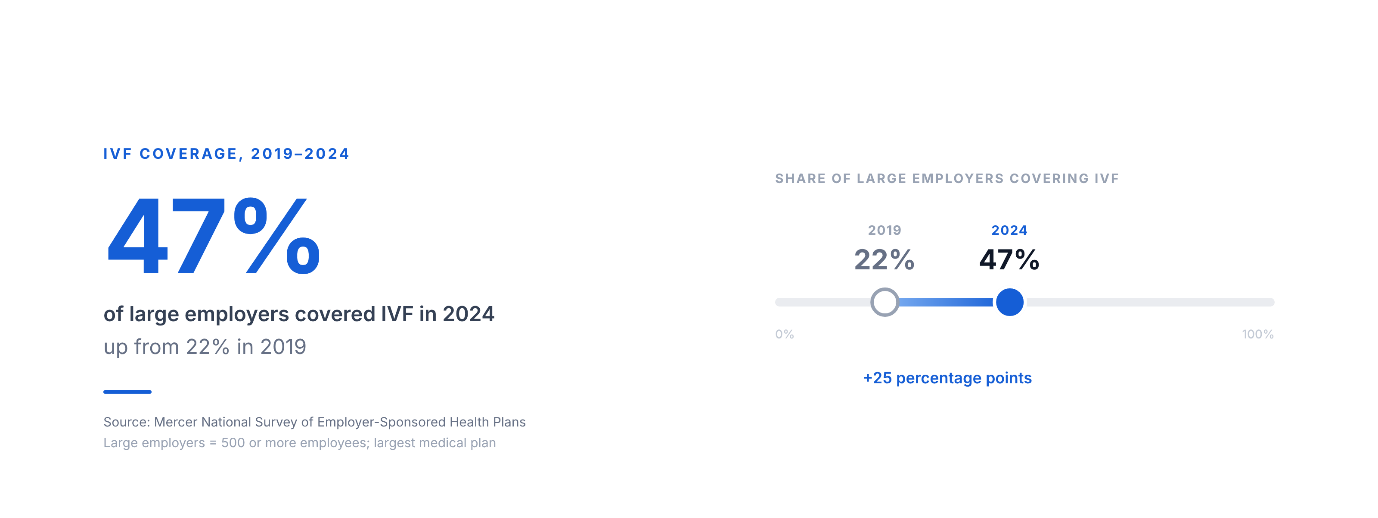
Among employers with at least 500 employees, IVF coverage in the largest medical plan rose from 22% in 2019 to 47% in 2024, well before fertility became more prominent in Shortlister’s question data. 

The increased attention gives buyers a reason to look beyond whether fertility coverage exists and examine what employees can actually access. A study of 165 plan documents from 45 self-insured employers found widespread lifetime limits on IVF coverage.   

In fact, the study warned that a covered benefit could still leave patients unable to afford a single attempt.  

For buyers comparing fertility benefits providers, the useful question is what an employee would pay across a realistic course of treatment.  

“Is IVF covered?” leaves too much unanswered.  

The same scrutiny applies to broader family-building benefits. Employers need to know who qualifies, including single employees and same-sex couples, and what adoption or surrogacy assistance actually pays for. 

At the same time, recent policy developments add another reason to revisit benefit design.  

In May 2026, federal agencies proposed a new category of limited excepted fertility benefits that would allow qualifying coverage outside the main health plan. 

Fertility, then, is not emerging because employers have only just discovered the need.  

The more interesting development is that buyer questions appear to be moving further into the details of access, eligibility, and the level of support the benefit provides once an employee actually tries to use it. 

Caregiving Extends Beyond the Health Plan

The demographic case for caregiving support is stronger than the buyer signal suggests.  

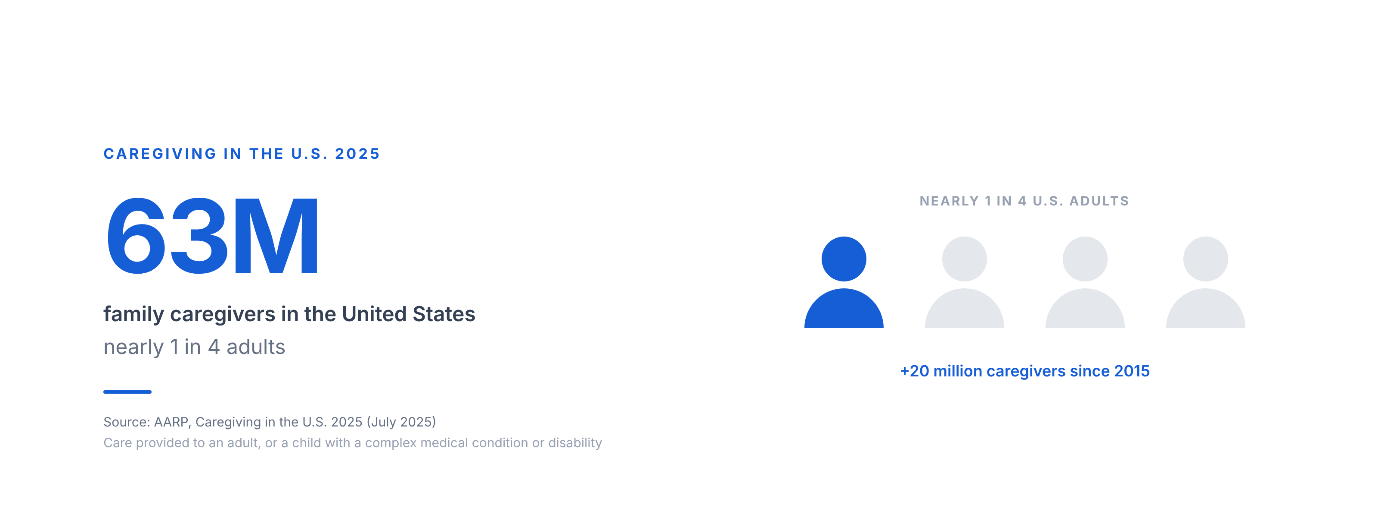
AARP and the National Alliance for Caregiving count 63 million family caregivers in the United States, and six in ten of them hold a job while providing care.  

In this context, the rise in broker questions about senior care and caregiver support vendors looks overdue and small next to the scale of the need.  

Why would so large a need produce so faint a signal? 

Part of the answer lies in where the care recipient sits.  

An aging parent may live elsewhere and carry separate insurance, so the employer’s claims data never registers the problem.  

Costs are absorbed privately as well.  

In the same survey, nearly half of caregivers reported a major financial setback, such as taking on debt or halting savings.  

Much of that may never reach HR, leaving buyers with an incomplete picture of the help employees need.   

For employers evaluating caregiver benefits, the questions should therefore start with the work employees manage on their own and how much of it a provider will take off their hands. 

Consider someone arranging help after a parent leaves the hospital. A list of local agencies is a start, yet calling them and checking availability can still take up a whole working day.   

That distinction should guide the evaluation of elder care benefits providers. Buyers need to establish where the service’s work ends, and the employee’s begins. 

Menopause in the Workplace Requires Its Own Attention

Menopause in the workplace adds a related consideration – an employer cannot assume that employees will explicitly name every need that affects their work.  

And yet, workplace research offers a reason to examine support even when there is little direct demand for it.   

A Mayo Clinic study published in 2023 found an association between menopause symptoms and adverse work outcomes, including missed work. The study also described concerns about stigma that may discourage employees from discussing symptoms at work. 

Waiting for explicit requests can therefore leave employers unaware of needs that are already affecting the working day. 

Employers can begin by checking whether existing coverage gives employees access to appropriate menopause care without requiring them to disclose symptoms to HR.  

A review of menopause support can then focus on gaps in that access. 

Employee Silence Is a Poor Measure of Demand

Benefits planning becomes difficult when the evidence an employer sees depends on what employees feel able to disclose. 

In the AARP and National Alliance for Caregiving report, only 49% of working caregivers of adults said their supervisor knew about their caregiving responsibilities. 

Menopause research points to a similar reluctance to disclose.  

In a 2023 survey, among women who had not told their manager that menopause caused their absence, 41% worried that others would presume their performance was affected.   

Even when support exists, low participation can leave employers with an incomplete picture of need. A low enrollment figure could indicate limited demand, but it could also reflect an unfamiliar program or eligibility rules that exclude people who need help.   

A benefit’s usage should be judged against the need it is designed to serve. 

Fertility support, for example, will be relevant to a particular group at a particular time. Measuring it against the entire workforce can obscure whether that group receives useful care.  

Anonymous employee feedback can help identify unmet needs without making personal disclosure to a manager. Program reviews should also examine where eligible people stop seeking help, especially after learning what they must pay or arrange themselves.  

Find the Gap Before Adding the Benefit

The questions entering procurement today may concern problems employees have managed for years.  

Their growing visibility gives employers a reason to revisit what the current benefits package actually addresses, particularly where employees still absorb the cost or organize the help themselves. 

Before adding another benefit, employers should be aware of where current support fails and what the proposed service would change. That means examining what happens when an employee tries to use the support already available, including where they give up and why.  

Otherwise, an employer may expand its benefits offering while leaving the employee’s problem much as it was. 

Written by Ivana Radevska

Senior Content Writer at Shortlister

Fertility Companies

Browse our curated list of vendors to find the best solution for your needs.

Stay Informed

Subscribe to our newsletter for the latest trends, expert tips, and workplace insights!

Related Posts

The Death of the Yes/No Question 

Buyers are asking fewer questions, but each one demands more. Shortlister data reveals what the change means for benefits vendors and proposal teams.