Best Paycom Competitors & Alternatives in 2025
While Paycom has set a high standard in payroll services, our guide to its top competitors and alternatives reveals other innovative solutions that can transform your HR and payroll operations.
Workforce reductions have become a recurring headline across the United States. In this environment, few payroll tasks carry as much legal risk and emotional weight as issuing a final payment to someone who has just lost their job.
Yet, for many HR teams, processing wages in lieu of notice remains one of the most error-prone steps in the entire employee exit process.
In this article, we explain what wages in lieu of notice is, how to calculate them, and the payroll steps HR professionals need to follow to remain compliant during workforce reductions.
Wages in lieu of notice, also known as PILON (Payment in Lieu of Notice), is a payment an employer makes when ending employment immediately rather than requiring the employee to work through a contractual or statutory notice period.
The concept exists because requiring someone to work their final weeks often creates more problems than it solves.
Following mass layoffs, having dozens of people sitting at desks knowing their jobs are already gone is bad for morale and security. Therefore, paying them out and letting them begin their job search is frequently the most responsible and operationally sound option.
While the concept sounds simple, in practice, the meaning of pay in lieu depends on what’s written in the employment contract, the jurisdiction, and whether the termination is part of a mass layoff.
Typically, employers resort to paying in lieu of notice during situations that require an immediate separation. The most common scenarios include:
Regardless of the reason, the common theme across most of these situations is urgency.
Severance and PILON are not the same thing, even though they frequently appear together in termination paperwork. While both terms involve paying a departing employee, they serve entirely different purposes.
The simplest way to differentiate the two terms is that PILON replaces something the employee was owed, while severance is giving something extra.
In other words, in lieu of notice pay is a contractual obligation covering the notice period itself. Severance, on the other hand, is typically more of a goodwill gesture or negotiated payment, often dependent on years of service, and offered in exchange for a signed release of claims.
The distinction also matters for tax purposes. In the U.S., PILON is treated as regular wages, which means it is fully subject to income tax and FICA withholding.
The question of how to properly process wages in lieu of notice has taken on renewed urgency in recent years. The United States has experienced a sustained wave of workforce reductions that shows no signs of slowing down.
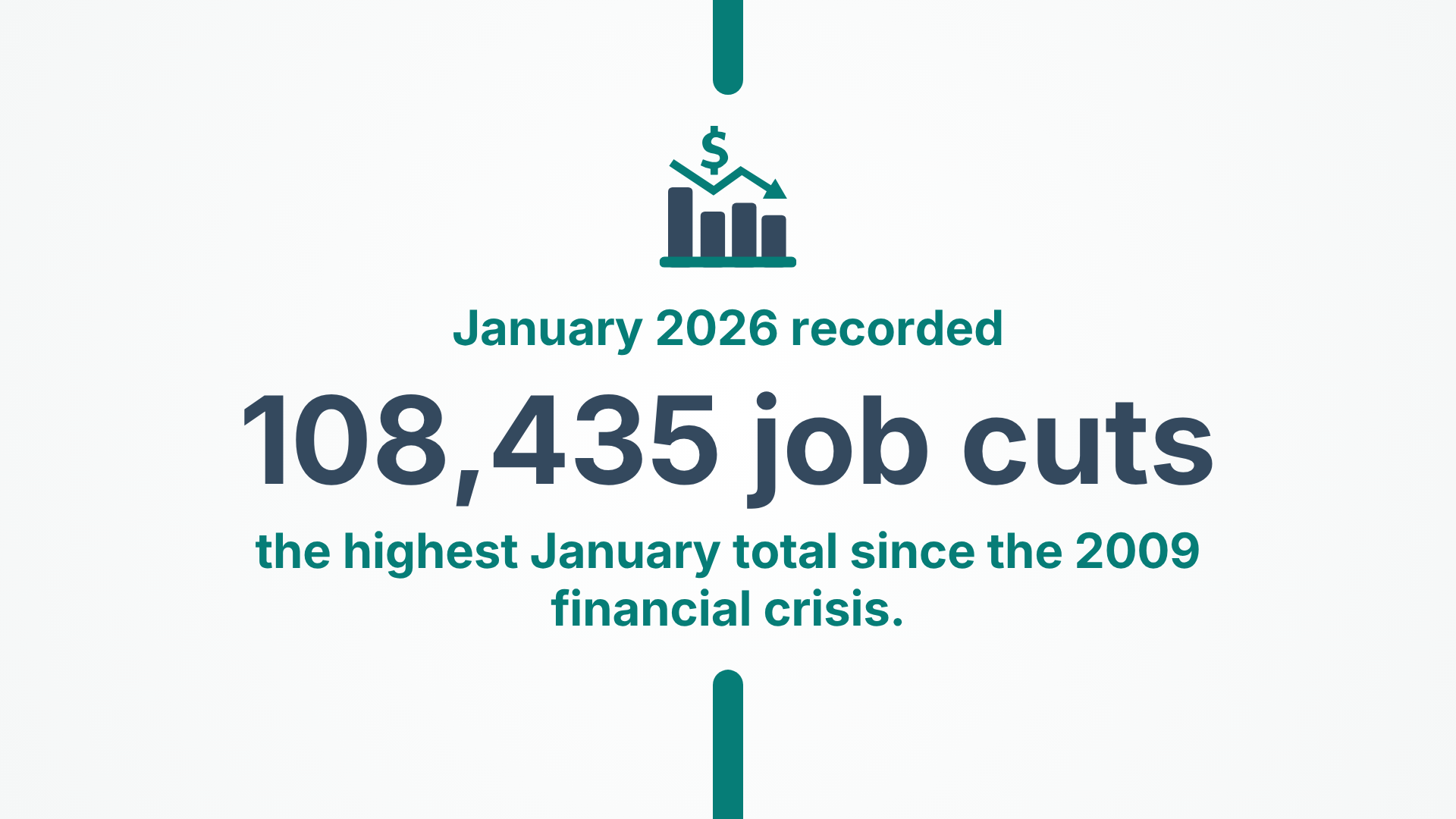
In 2025, U.S. employers announced 1.2 million job cuts, a 58% increase over 2024 and the highest total since 2020. January 2026 opened with 108,435 announced cuts, the highest January figure since the 2009 financial crisis.
The pressure on HR teams to process separations accurately and at scale has rarely been higher. A survey from SHRM found that more than one in seven HR professionals reported that their organization had conducted a reduction-in-force in the prior 30 days.
In addition, the character of layoffs is also changing. Rather than single large-scale events, employers are increasingly conducting rolling reductions and smaller recurring cuts. Glassdoor’s Worklife Trends 2026 says sub-50-worker layoffs rose from 38% of layoff notices in 2015 to 51% in 2025, a change described as the “forever layoff”.
Ultimately, more frequent separations mean more frequent PILON obligations, and organizations without a repeatable process will find errors compounding across those events.
Calculating wages in lieu of notice is generally straightforward, though the specific formula will depend on the employee’s pay structure and the length of the required notice period.
For salaried workers, the calculation is relatively easy. Take the employee’s annual salary and divide it by the number of working days in the year (typically 260). Then, multiply by the number of working days in the notice period.
Wages in Lieu of Notice = (Annual Salary ÷ 260) × Notice Period Working Days
For example, an employee earning $78,000 annually with a two-week (10 working days) notice period would be owed: ($78,000 ÷ 260) × 10 = $3,000 in wages in lieu of notice.
If the employee regularly earned supplemental pay through commissions, bonuses, or shift differentials, some jurisdictions require those to be factored into the PILON calculation.
Hourly workers introduce more variability. The standard approach is to calculate average weekly earnings over the prior 12 weeks and multiply by the number of notice weeks owed.
Wages in Lieu of Notice = Hourly Rate × Average Weekly Hours × Notice Period Weeks
For example, an hourly employee earning $22/hour who works 40 hours per week with a two-week notice period would be owed: $22 × 40 × 2 = $1,760 in lieu of notice pay.
Additional compensation, such as regularly scheduled bonuses, commissions, or shift differentials, may also need to be included depending on the terms of the employment agreement and applicable state laws.
Beyond internal payroll challenges, employers must also pay attention to a federal compliance layer.
The Worker Adjustment and Retraining Notification (WARN) Act requires employers with 100 or more employees to provide 60 days’ written notice before a mass layoff or plant closure. If they fail to do so, they must substitute that notice with 60 days of pay.
However, WARN-level pay is broader than standard contractual PILON. Under WARN, the payment must cover not only base salary but also the value of benefits such as health insurance and retirement contributions.
It should be noted that employment contracts do not override WARN obligations, and paying only base salary when benefits should be included can trigger back pay liability and civil penalties.
In addition to federal requirements, several states have enacted “mini-WARN” laws with stricter requirements.
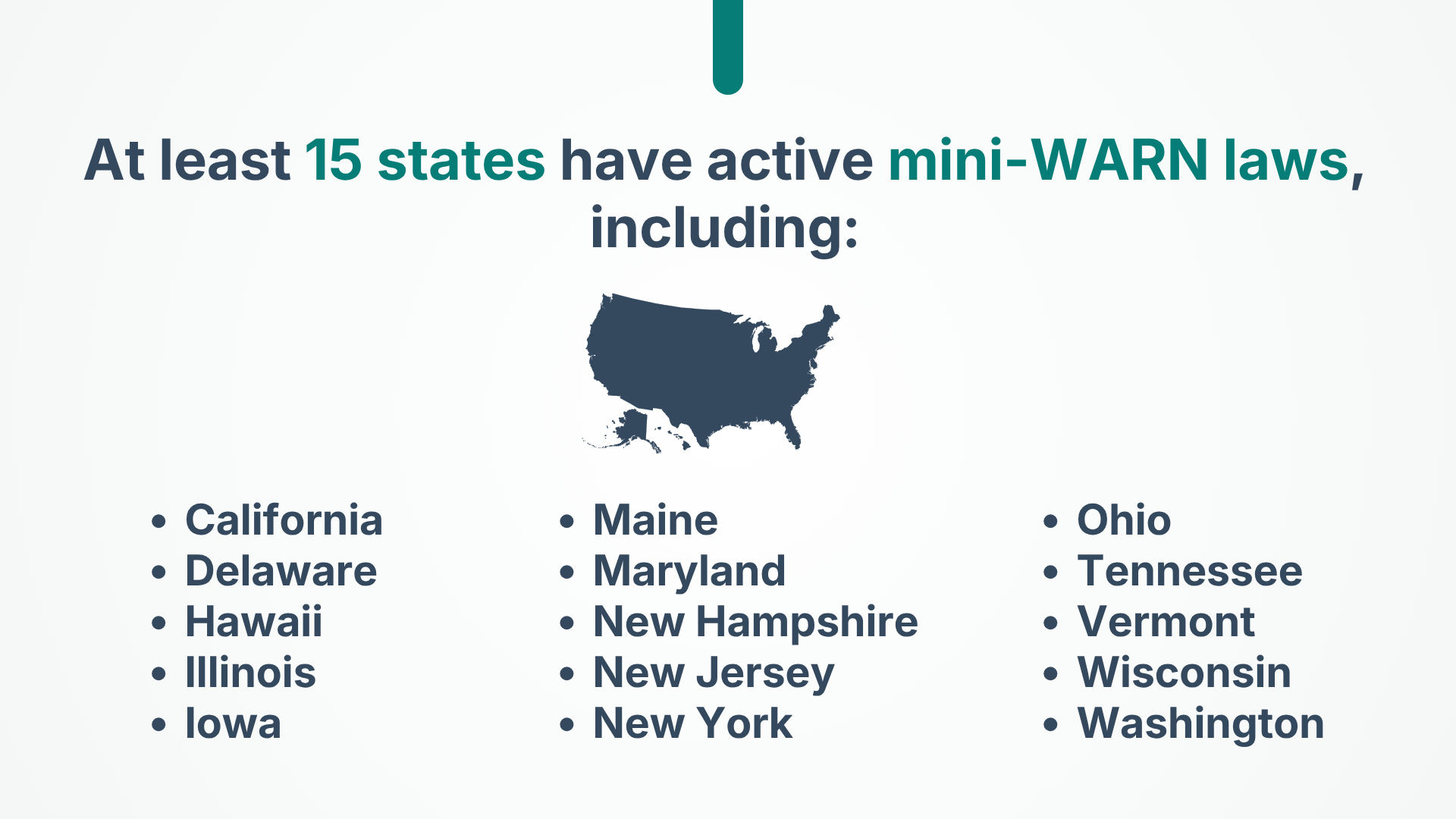
As of late 2025, at least 15 states have active mini-WARN laws: California, Delaware, Hawaii, Illinois, Iowa, Maine, Maryland, New Hampshire, New Jersey, New York, Ohio, Tennessee, Vermont, and Wisconsin. Washington State became the latest addition in July 2025.
These mini-WARN laws introduce lower thresholds, lengthen notice periods, or add separate notice recipients and remedies.
When processing wages in lieu of notice alongside final paychecks, accrued PTO payouts, and severance, the margin for error widens considerably.
Here are some of the most common mistakes HR teams make:
Fortunately, each of these mistakes is preventable. When it comes to processing wages in lieu of notice specifically, the following best practices can help HR teams navigate the process more effectively:
1) Determine the notice period
Review the employee’s contract, company handbook, or any applicable state or federal requirements (such as the WARN Act) to establish the correct notice period duration.
2) Calculate the lump sum
Using the formulas above, calculate the total amount owed based on the employee’s pay rate and notice period length.
3) Run the payment as a separate payroll
Best practice is to process the PILON payment as a separate, off-cycle payroll run rather than combining it with the employee’s final regular paycheck. Doing so helps maintain accurate records and simplifies tax reporting.
4) Apply all standard withholdings
Federal income tax, state income tax, Social Security, Medicare, and any other applicable deductions must be withheld just as they would be on a regular paycheck.
5) Issue the final pay stub
Provide the employee with a detailed pay stub that clearly itemizes the wages in lieu of notice, all deductions, and the net amount paid.
6) Update records
Make sure the payment is accurately reflected in the employee’s W-2 and that the separation is documented in the HRIS or payroll system.
Ultimately, layoffs will keep happening as industries restructure around AI, new trade policies, and evolving consumer demand.
While layoffs will always be difficult, how wages in lieu of notice are calculated, communicated, and delivered is entirely within the employer’s control. Done right, it won’t undo the difficulty of a layoff – but done wrong, it compounds it in entirely avoidable ways.
Senior Content Writer at Shortlister
Browse our curated list of vendors to find the best solution for your needs.
Subscribe to our newsletter for the latest trends, expert tips, and workplace insights!

While Paycom has set a high standard in payroll services, our guide to its top competitors and alternatives reveals other innovative solutions that can transform your HR and payroll operations.

Discover state unemployment insurance, how it works, what benefits it provides, and how state unemployment insurance programs can help people while looking for a new workplace.

Payday might feel like just another date on the calendar, but it’s the difference between stability and stress for millions of employees.

Explore the concept of imputed income, its tax implications, and the importance of accurate reporting to understand how employers handle imputed income on pay stubs and tax forms.
Used by most of the top employee benefits consultants in the US, Shortlister is where you can find, research and select HR and benefits vendors for your clients.
Shortlister helps you reach your ideal prospects. Claim your free account to control your message and receive employer, consultant and health plan leads.